Understanding Level 2 and Level 3 Credit Card Processing
Every time a customer pays with a corporate card, your payment processor captures a set of data fields and routes them to the card network. The number of fields you send determines the processing level your transaction qualifies for, and that level sets your interchange rate.
Most merchants default to Level 1 without realizing there's anything else. That means overpaying on every B2B card transaction they run. Level 2 processing requires a handful of extra fields — tax amount, purchase order number, customer code — and card networks respond by cutting your interchange rate anywhere from 0.45% to 0.75%. Multiply that across a year of transactions and the savings get serious.
This guide covers credit card processing levels in full: what each tier requires, realistic savings estimates, which businesses actually benefit, and what Visa's 2026 shift to CEDP changes for merchants today.
What Are the Credit Card Processing Levels?
Visa and Mastercard classify every transaction into one of three processing levels based on how much transaction data the merchant submits. More data, lower interchange rate. The system rewards merchants who provide richer payment data, since detailed information cuts fraud risk and gives card issuers better tools to verify legitimate purchases.
Three credit card processing levels, compared:
| Feature | Level 1 | Level 2 | Level 3 |
|---|---|---|---|
| Data complexity | Basic (card, amount, date) | Summary-level (tax, PO number, zip) | Line-item detail (product codes, unit prices, quantities) |
| Typical use case | Retail, consumer e-commerce | B2B, corporate card purchases | Government contracts, large enterprise orders |
| Interchange savings | Baseline (0%) | 0.45%–0.75% | 0.80%–1.05% |
| Card types | All cards | Corporate, purchasing, government cards | Government purchasing cards, large corporate |
| Networks supported | All | Mastercard; Visa CEDP (2026+) | Mastercard; Visa CEDP (limited) |
Consumer retail transactions are mostly standardized and low-risk. B2B and government purchases run on corporate accounts with procurement workflows that generate useful data at every step. Card networks give merchants a discount for submitting it.
What Is Level 2 Processing? Data Requirements Explained
Level 2 processing sits between basic retail transactions and the full line-item detail of Level 3. For most B2B merchants, it's the most practical first move — the data requirements are manageable and the interchange savings on commercial card volume are real.
To qualify, your payment gateway must submit the following level 2 data with each transaction:
- Sales tax amount — dollar amount of tax collected, submitted separately from the total
- Merchant postal code — your business zip code
- Merchant tax ID — your business tax identification number
- Customer reference number — purchase order number or cost center code from the buyer
- Invoice number — the transaction identifier in your system
- Shipping destination zip code — delivery location for goods or services
Card type matters as much as the data itself. Level 2 rates apply only to commercial cards: corporate cards, purchasing cards (P-cards), and government-issued cards. Standard consumer Visa and Mastercard credit cards aren't eligible, regardless of how much data you submit.

Level 2 vs Level 1: What's the Difference?
Level 1 is the default for retail and e-commerce. It captures the essentials: card number, expiration date, transaction amount, merchant name, date. Enough to authorize the payment, not enough to qualify for enhanced interchange rates.
Level 2 adds a layer of business data on top. The transaction still processes the same way. What changes is the set of fields being passed to the card network at settlement. For most payment processing setups, enabling Level 2 data submission is a configuration change, not a development project — and there's no additional cost in most cases.
Level 3 Processing: Data Requirements and Eligibility
Where Level 2 submits a summary, Level 3 goes line by line. Instead of a single transaction total with supporting context, you're sending detail on each product or service individually — a structured invoice embedded in the payment itself.
Required level 3 data fields:
- Product/commodity code — standardized identifier for the type of goods
- Item description — brief description per line item
- Quantity purchased — units per line item
- Unit of measure — each, hour, pound, etc.
- Unit price — price per unit before tax
- Line item total — quantity × unit price
- Freight amount — shipping costs, if applicable
- Duty amount — import duties, if applicable
- Destination zip code — delivery address
- Ship-from zip code — origin of shipment
Level 3 processing targets government procurement and large enterprise B2B. The eligible card types are narrower than Level 2: primarily government purchasing cards and large corporate procurement cards. American Express supports Level 2 enhanced data but doesn't participate in Level 3 programs.
Data fields at a glance:
| Data Field | Level 2 | Level 3 |
|---|---|---|
| Sales tax amount | ✓ | ✓ |
| Merchant postal code | ✓ | ✓ |
| Customer reference / PO number | ✓ | ✓ |
| Invoice number | ✓ | ✓ |
| Shipping destination zip | ✓ | ✓ |
| Product/commodity codes | — | ✓ |
| Line-item descriptions | — | ✓ |
| Quantity and unit price | — | ✓ |
| Freight and duty amounts | — | ✓ |
| Ship-from zip code | — | ✓ |
If your business already issues detailed invoices — most B2B software, ERP systems, and wholesale platforms do — the data needed for Level 3 is already sitting in your system. Getting it into your payment flow is an integration step, not a data problem. Submitting complete level 3 data on eligible transactions typically reduces interchange rates by 0.80%–1.05%, which adds up quickly at volume.
Benefits of Level 2 and Level 3 for Your Business
Lower fees are the headline. But merchants who enable Level 2 and Level 3 data submission tend to see improvements in a few other areas too.
- Lower interchange fees — 0.45%–1.05% reduction per eligible transaction, depending on level and network
- Fewer chargebacks and disputes — richer transaction data makes purchase verification easier and deters friendly fraud
- Cleaner accounting — detailed transaction data flows into ERP and accounting systems without manual reconciliation
- Faster dispute resolution — line-item records make it straightforward to prove the legitimacy of a transaction
- Better B2B vendor relationships — corporate buyers using purchasing cards expect detailed data in their systems; submitting it correctly removes friction from the procurement process
Industry processing fees vary quite a bit by sector. According to Helcim's merchant data, certain industries see the biggest cost reductions:
- Contractors and home services — up to 17% reduction in processing costs
- SaaS platforms and apps — up to 17%
- Utilities and government — up to 17%
- Wholesale distributors — up to 16%
- Professional services (legal, consulting, accounting) — up to 16%
- Automotive — up to 16%
- Retail goods — up to 15%
- Restaurants — up to 15%
The common thread across the high-savings categories is frequent B2B and corporate card usage. If your customers are businesses paying with company accounts, the numbers are worth running.
How Much Can You Save? Interchange Rate Breakdown
The interchange fee is what goes to the card-issuing bank on every transaction. It's typically 70%–80% of your total processing cost. Cutting the interchange rate is the most direct lever you have.
Current savings across card networks:
| Network | Program | Savings vs. Standard Rate |
|---|---|---|
| Mastercard | Level 2 | ~0.75% per transaction |
| Mastercard | Level 3 | ~0.80% per transaction |
| Visa | CEDP (replaces L2) | 0.45%–0.75% (data quality dependent) |
| Visa | Large Ticket (>$8,000) | Rate: 1.45% + $35 flat |
| Mastercard | Large Ticket (>$10,000) | Rate: 1.20%–0.70% + flat fee |
Worked example: $500,000 in annual B2B card volume
Standard corporate card interchange rate: 2.95%.
- Level 1 (no enhanced data): $14,750/year in interchange fees
- Level 2 enabled (0.75% savings): $11,000/year — saves $3,750 annually
- Level 3 enabled (1.05% savings): $9,500/year — saves $5,250 annually
These lower interchange rates apply only to commercial card transactions — corporate, purchasing, and government cards. Consumer credit and debit cards don't qualify. Actual savings depend on what share of your volume comes from commercial cards.
A B2B software company where 80% of revenue comes from corporate card payments could save $3,000–$4,200 on that $500K. A consumer e-commerce store with mostly personal card payments would see minimal impact.
Who Should Use Level 2 and Level 3 Processing?
One question decides it: do your customers pay with commercial cards? If yes, enabling enhanced data is almost always worth enabling.
Strong fit:
- B2B merchants selling products or services to other businesses
- Government contractors accepting government purchasing cards
- SaaS companies billing enterprise clients on corporate accounts
- Wholesale distributors with volume B2B relationships
- Professional services firms billing legal, accounting, or consulting work
- Manufacturing and industrial suppliers
Moderate fit:
- E-commerce stores with a B2B segment alongside consumer sales
- Healthcare providers billing institutional clients (some compliance nuances apply)
- Staffing and HR firms with a mixed client base
Poor fit:
- Consumer retail where nearly all payments come from personal cards
- Restaurants and QSR chains processing mostly debit and consumer credit
- Subscription consumer products with high debit card volume
Quick Eligibility Checklist
Before enabling Level 2 processing, run through these:
- Your payment processor or gateway supports Level 2/3 data submission on your account type
- You can capture sales tax amounts separately from transaction totals at checkout
- Your system generates and stores invoice numbers and PO/customer reference numbers
- Your customers regularly pay with corporate, purchasing, or government-issued cards
- You process enough card transaction volume to justify any setup costs (most processors charge nothing extra)
Four out of five boxes checked means the ROI is essentially immediate. Once the data fields are configured, the processor handles submission at settlement automatically — no ongoing manual effort.
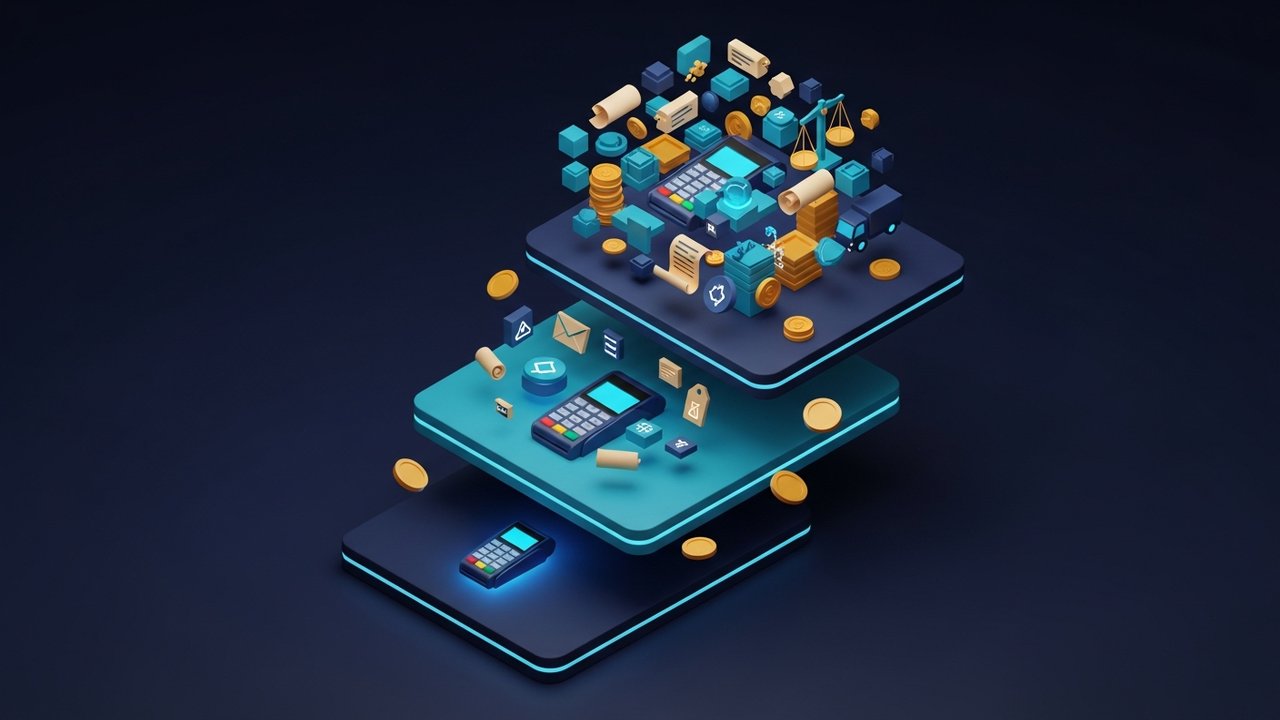
Is Level 2 Processing Going Away? Visa CEDP Explained
In January 2026, Visa retired its traditional Level 2 and Level 3 enhanced data programs and replaced them with the Commercial Enhanced Data Program (CEDP). Visa is the largest card network by volume. This change matters.
What changed:
- Data submission format and field specifications have been updated
- The fee structure now runs on data quality tiers, not fixed Level 2/3 categories
- Processors and gateways need updated integrations to submit data in the new CEDP format
What stayed the same:
- The core mechanic: submit enhanced business data, receive lower interchange rates
- Mastercard hasn't changed anything — Level 2 and Level 3 programs continue on Mastercard's standard framework
- American Express enhanced data programs are unaffected
If your processor was correctly submitting Level 2/3 data o n Visa transactions before January 2026, you need to verify they've moved to CEDP compliance. Some made the transition automatically. Others require merchants to opt inor update their gateway settings.
The check is simple: ask your payment processing provider directly whether they're currently submitting CEDP-compliant enhanced data on your Visa commercial card transactions. If they can't answer that question, your Visa interchange savings may have quietly stopped.
Thinking Beyond Card Processing
Interchange fees are a structural cost of accepting credit cards. Card networks set them, processors pass them on, merchants absorb them. Level 2 and Level 3 processing reduce that cost, but they don't eliminate it.
Some businesses are now accepting crypto payments alongside cards, particularly for B2B invoices. Crypto transactions don't carry interchange fees. For companies already managing the overhead of enhanced data submission, adding crypto rails can simplify payment operations while removing the per-transaction fee layer.
Plisio handles crypto payment processing for businesses, including invoice tools and B2B payment acceptance. It works well as a complement to your existing card processing setup — especially for international B2B transactions where cross-border interchange fees add another cost layer on top of everything else.