Interchange Revenue Explained: How It Works and Who Earns It

Every card transaction generates interchange revenue. Most merchants see it as a cost. Most consumers never think about it at all. But for the financial institutions on the other side of each payment, interchange is one of the largest and most reliable income streams in banking.
US merchants paid roughly $130–145 billion in interchange fees in 2024, part of a record $185 billion in total card processing costs. That money doesn't disappear. It flows to the banks, fintechs, and platforms that issued the cards being swiped. Understanding how interchange revenue works explains why neobanks can offer free accounts, why card rewards programs exist, and why the payments industry looks the way it does.
What Is Interchange Revenue?
Interchange revenue is the income earned by a card-issuing bank every time one of its cardholders completes a purchase. When a customer pays with a Visa or Mastercard card, a small percentage of the transaction flows from the merchant's bank back to the customer's bank as an interchange fee. That fee is interchange revenue for the issuer.
On a $100 purchase, the card issuer collects roughly $1.80 in interchange income. The rate is typically 1.5% to 2.5% for credit cards, lower for debit. Small per transaction. Enormous at scale.
Visa and Mastercard set interchange rates and facilitate the network, but they don't collect interchange themselves. They earn separate service fees assessed on transaction volume. The interchange fee goes entirely to the issuer — a distinction that matters when comparing who actually profits from card payments.
The term "interchange revenue" describes this income from the issuer's perspective. From the merchant's side, the same money is an operating cost. That asymmetry is why card payment economics can be so opaque: merchants pay it on every transaction, but most never see a breakdown of where it actually goes.

How Interchange Works: The Money Flow
The path from a merchant's terminal to an issuer's balance sheet involves four parties and happens in milliseconds.
- Customer pays — swipes, taps, or enters card details at point of sale or online checkout
- Merchant's bank (acquirer) receives the transaction — processes the card payment and forwards the authorization request
- Card network routes it — Visa or Mastercard sends the request to the card issuer for approval
- Issuing bank approves and earns — the customer's bank confirms funds and approves; at settlement, it receives the interchange fee from the acquirer
- Merchant receives net proceeds — the acquirer collects the full transaction amount from the card network, deducts its own fees plus interchange, and settles the remainder to the merchant
The merchant discount rate bundles interchange, network fees, and acquirer markup into one number. Interchange is the biggest piece, typically 70–80% of the total fee a merchant pays on each card transaction.
Interchange Rates: How They Are Set
Card networks set interchange rates, not the banks. Visa publishes over 60 rate categories. Mastercard has more than 243. Each category applies to a different combination of card type, transaction method, and merchant category.
| Card type | Typical interchange rate | Notes |
|---|---|---|
| Rewards credit (in-person) | 1.5%–2.5% | Higher rewards = higher interchange |
| Standard credit (in-person) | 1.3%–1.8% | Base consumer credit rate |
| Debit (regulated, US) | 0.05% + $0.22 | Capped by Durbin Amendment (large banks) |
| Debit (exempt, US) | 0.5%–1.0% | Small issuers, exempt from Durbin cap |
| Corporate/purchasing card | 2.0%–3.5% | B2B cards carry higher interchange |
| Cross-border transaction | +0.4%–1.0% surcharge | Added on top of base rate |
Several factors push rates up or down:
- Card type — premium rewards cards carry higher interchange than basic debit cards
- Transaction channel — card-present (in-store) rates are lower than card-not-present (online), because fraud risk is higher online
- Merchant category code (MCC) — some industries (supermarkets, utilities) qualify for reduced rates; luxury retail does not
- Issuer size — in the US, large banks face Durbin Amendment caps on debit interchange; small issuers are exempt and earn significantly more per transaction
- Geography — the EU caps credit card interchange at 0.3% and debit at 0.2% under the Interchange Fee Regulation; US rates are much higher
Who Earns Interchange Revenue?
The card issuer is the primary beneficiary of interchange income. But the full picture is more layered.
Card-issuing banks and credit unions receive the interchange fee directly. This is the dominant revenue stream for many consumer card programs, covering fraud losses, rewards costs, and the overhead of maintaining card infrastructure.
Fintech issuers work through banking-as-a-service partners. Neobanks like Chime, Current, and Revolut issue cards this way and earn a share of interchange revenue on every customer transaction. Chime reported approximately $600 million in interchange income in 2020, its primary revenue source.
Card networks are often misunderstood here. Visa and Mastercard don't earn interchange directly. They charge network service fees assessed on transaction volume separately, which is a different revenue stream entirely.
Acquirers and processors sit on the other side. They collect the merchant discount rate, pass interchange through to the issuer, and keep their own margin from what's left. Platforms with card programs, including corporate expense tools and embedded finance providers, capture interchange as a revenue stream on their users' commercial spend.
How Fintechs and Platforms Use Interchange Income
Interchange revenue changed what was possible in fintech. Free checking accounts, cashback on debit cards, no-fee international transfers — most of these products are subsidized by interchange income generated when customers use their cards.
The math is compelling. A neobank with 5 million active users, each spending $1,000 per month, generates $50 billion in annual card volume. At a blended interchange rate of 1.5%, that's $750 million in annual interchange income before costs. The economics explain why so many fintechs rushed into card issuing.
Platforms use interchange in several ways:
- Direct card programs — issue branded debit or credit cards to their users and retain the interchange on every transaction
- BaaS partnerships — partner with a licensed bank to issue cards, earning a negotiated share of interchange without needing a banking license
- Rewards funding — use interchange income to fund cashback, points, or miles programs that drive card activation and spending behavior
- Embedded finance — SaaS platforms embed card products for their business users and monetize through interchange on those users' commercial spend
The Durbin Amendment (US, 2010) capped debit interchange for banks with over $10 billion in assets at $0.21 + 0.05% per transaction. Large issuers took a significant revenue hit. Smaller banks and fintechs operating below the threshold kept higher debit rates, which shaped exactly which players built card programs around debit interchange.
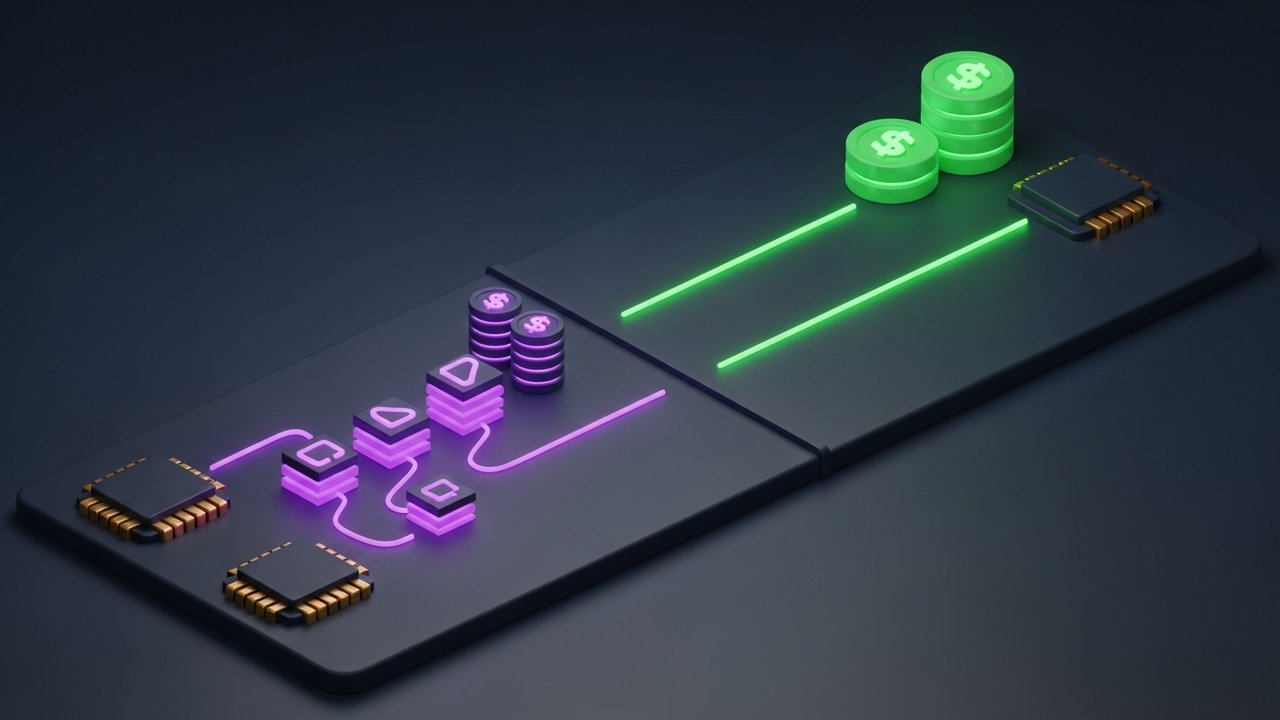
Interchange Revenue vs. Crypto Payments
Traditional interchange is complex, variable, and increasingly regulated. The EU Interchange Fee Regulation caps credit card interchange at 0.3% and debit at 0.2%, a fraction of US rates. US regulatory pressure on credit interchange has grown steadily since Durbin. Meanwhile, blockchain-based payments operate on an entirely different cost structure, one with no issuing bank to compensate and no network rate table to navigate.
| Factor | Traditional card interchange | Crypto payment |
|---|---|---|
| Fee structure | Variable (0.2%–3.5%+ by card type) | Fixed or low flat fee |
| Who earns fees | Card issuer + network + acquirer | Network validators / payment gateway |
| Settlement speed | T+1 to T+2 business days | Minutes to hours |
| Cross-border surcharge | 0.4%–1.0% additional | Same fee regardless of geography |
| Regulatory risk | Durbin, IFR caps, ongoing review | Evolving, but no interchange equivalent |
| Chargebacks | Yes — costly dispute process | Transactions are generally irreversible |
Merchants who accept cryptocurrency bypass the interchange layer entirely. No issuing bank collecting 1.8%, no card network fee on top, no acquirer markup below that. The fee is what the gateway charges, one number instead of three stacked on each other.
The tradeoff is adoption. Card acceptance is universal; crypto payment acceptance is still building. But stablecoin adoption is accelerating, particularly in cross-border commerce where a traditional interchange surcharge of 0.4%–1.0% for international transactions adds up fast. A merchant processing $1M annually in cross-border card payments could be paying $4,000–$10,000 in interchange surcharges that simply don't exist in a crypto payment model.
For merchants looking to add crypto alongside traditional card acceptance, Plisio provides a crypto payment gateway that handles conversion, settlement, and wallet infrastructure without the interchange complexity, a transparent fee structure instead of a 243-category rate table.