What Is AML Transaction Monitoring and How Does It Work?

Every minute, financial institutions and crypto platforms process millions of transactions. Somewhere in that flow, a small fraction are attempts to move dirty money through the system disguised as ordinary payments. AML transaction monitoring is the discipline built to catch them.
For banks, fintechs, and crypto businesses alike, it's no longer optional. Regulators expect a working transaction monitoring system, and the penalties for getting it wrong run into the billions. This guide breaks down what AML transaction monitoring actually involves, how the process works step by step, and where crypto businesses fit into the picture.
What Is AML Transaction Monitoring?
Strip away the jargon and it's simple: someone (or something) is watching what money does after it enters an account. Deposits, withdrawals, transfers, trades. AML transaction monitoring reviews all of it, looking for patterns that line up with money laundering or other financial crime. Banks lean on it, so do payment processors, so does every virtual asset service provider that wants to keep its license.
It doesn't try to catch every transaction, and it shouldn't. Most activity is boring, and boring is fine. What it hunts for are the ones that break from a customer's normal pattern, or that match a known laundering playbook — someone structuring deposits to dodge a reporting threshold, say, or money bouncing through five accounts in an afternoon for no obvious reason, or a payment to a counterparty in a jurisdiction that already makes compliance nervous.
Under the hood, most systems blend rule-based logic with statistical or machine-learning scoring. Cross a threshold and the system fires an alert. A human picks it up from there and decides: explainable, or worth escalating?
Why AML Transaction Monitoring Matters for Financial Institutions
Nobody wants their name next to "money laundering" in a headline, sure. That's not really the point, though. It's the law. Transaction monitoring is a legal obligation under anti-money laundering and counter-terrorist financing rules, and skipping it (or half-doing it) costs a lot more than an awkward warning letter.
Three cases make that pretty concrete:
- TD Bank was fined more than $3 billion after regulators found its transaction monitoring program failed to catch over $400 million in laundering tied to fentanyl trafficking.
- Metro Bank was fined $21.5 million for failing to monitor 60.5 million transactions worth a combined $65 billion.
- Under the Bank Secrecy Act, US civil penalties can reach $1 million or 1% of an institution's assets per day, whichever is greater, and criminal penalties add fines up to $250,000 plus prison time for willful violations.
The fine's just the number that makes headlines. What actually hurts comes after it: correspondent banks quietly walking away, a license getting pulled, years spent trying to earn back trust even once the check has cleared.
Regulators rarely stop at money, either. A remediation plan usually shows up next, plus an independent monitor and a much heavier reporting schedule, and running all three often costs more than the original fine did. Banks stuck under a consent order have burned years and tens of millions of dollars rebuilding their systems while growth and new products sat on ice. That's usually when a board finally stops treating compliance like something to trim and starts treating it like the thing keeping the lights on.
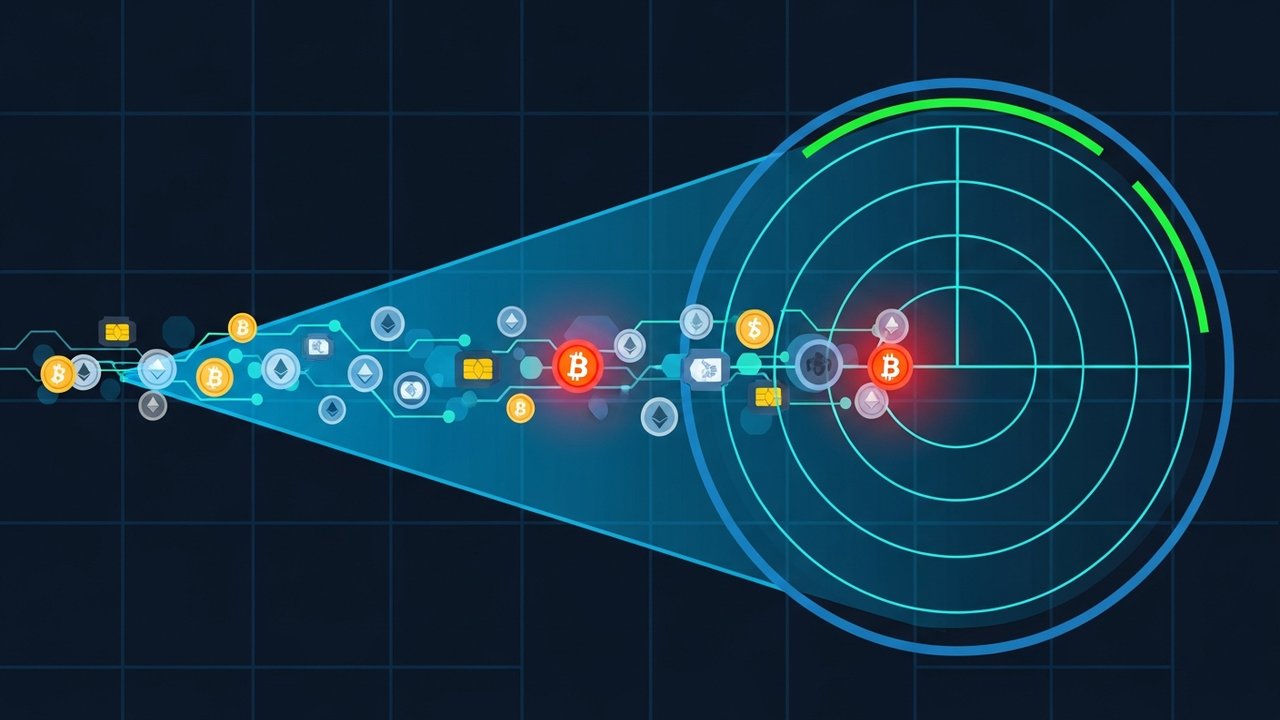
How the AML Transaction Monitoring Process Works
A mature transaction monitoring process runs continuously across the full customer lifecycle, not just at onboarding. Most programs follow the same core sequence, whether the institution is a retail bank or a crypto exchange.
- Customer risk profiling. Assign each customer a risk score based on industry, geography, transaction history, and product usage.
- Rule and scenario configuration. Build detection rules calibrated to that risk profile — thresholds for cash deposits, velocity checks, geographic risk flags.
- Continuous monitoring. Screen transactions in real time or in scheduled batches against the configured rules.
- Alert generation. Flag any transaction or pattern that breaches a rule or scores above the risk threshold.
- Investigation. An analyst reviews the alert, gathers context, and determines whether it's a false positive or genuine suspicious activity.
- Suspicious Activity Report filing. If the activity looks suspicious, the institution files a Suspicious Activity Report (SAR) with the relevant financial intelligence unit.
- Rule tuning. Feed investigation outcomes back into the system to refine thresholds and reduce noise over time.
This risk-based approach to aml is what lets institutions put investigative resources where they matter, on the customers and transaction types that actually carry elevated risk, instead of treating every account the same.
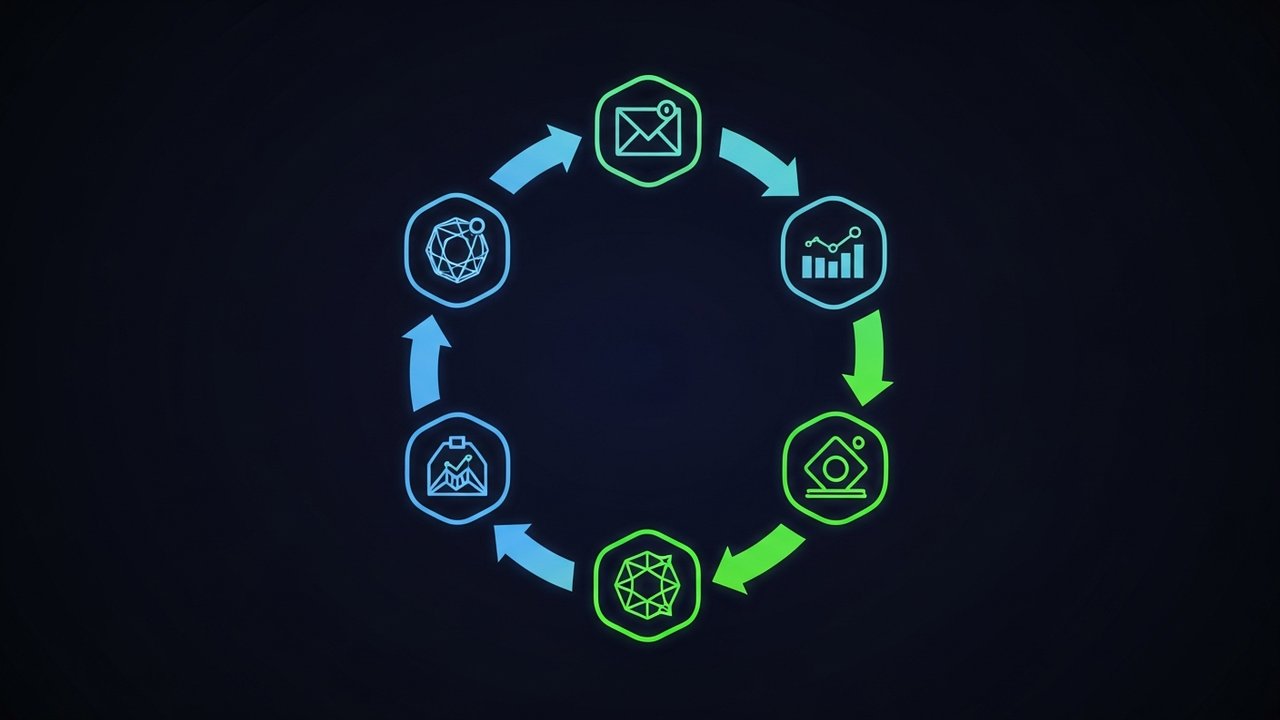
None of these steps works well in isolation. A risk profile that's never updated goes stale the moment a customer's behavior changes, and rules that never get tuned drift out of sync as criminals adapt their methods. The institutions that perform best treat the whole sequence as a loop, not a one-time setup: investigation outcomes constantly reshape the rules and risk scores feeding the next round of alerts.
Transaction Monitoring vs. Transaction Screening: Key Differences
These two terms get used interchangeably, but they cover different parts of aml compliance. Transaction screening checks a transaction or counterparty against sanctions lists and watchlists before or during processing. Transaction monitoring looks at patterns of behavior over time.
| Aspect | Transaction Screening | Transaction Monitoring |
|---|---|---|
| Timing | Real time, at point of transaction | Ongoing, across account history |
| What it checks | Names, entities, addresses against sanctions/watchlists | Behavioral patterns and anomalies |
| Primary purpose | Block prohibited counterparties | Detect suspicious activity for investigation |
| Typical trigger | Match against a static list | Deviation from a risk-based rule or model |
| Regulatory output | Blocked or held transaction | Suspicious Activity Report (SAR) |
Both processes typically sit alongside know your customer checks performed at onboarding, forming a layered defense rather than a single control.
Real-Time vs. Batch AML Transaction Monitoring
Institutions generally choose between two operating modes for transaction monitoring, and many run both in combination depending on risk level.
| Factor | Real-Time Monitoring | Batch Monitoring |
|---|---|---|
| Speed | Flags anomalies as the transaction happens | Reviews transactions after the fact, on a schedule |
| Best for | High-risk transfers, large payments, instant blocking | Pattern detection across weeks or months of activity |
| Resource demand | Higher infrastructure and processing cost | Lower cost, easier to scale |
| Weakness | Can produce more immediate false positives | Slower to catch and stop an in-progress scheme |
Real-time transaction monitoring has become the default expectation for high-risk sectors, including crypto, because it can stop a suspicious transfer before funds move further downstream.
Common Red Flags an AML Transaction Monitoring System Detects
A well-tuned transaction monitoring system watches for specific behavioral signals rather than just raw transaction size. Common red flags include:
- Structuring: multiple deposits just below reporting thresholds to avoid detection
- Rapid movement of funds through several accounts with no clear business purpose
- Transactions involving high-risk or sanctioned jurisdictions
- Large transactions inconsistent with a customer's known income or business profile
- Frequent use of new or unverified counterparties
- Sudden changes in transaction volume or frequency compared to historical baseline
- Use of shell companies or nominee accounts to obscure beneficial ownership
None of these signals is proof of money laundering on its own. What matters is the combination. A system that treats one flag as decisive will drown analysts in noise, while one that requires corroborating signals produces higher-quality alerts.
Experienced analysts also weigh context that's hard to encode as a rule: a customer's stated business purpose, the plausibility of a stated income source, and whether a transaction pattern matches known typologies for a specific crime type like trade-based laundering or romance scams. That's why even the most advanced transaction monitoring system still routes ambiguous cases to a human rather than auto-closing or auto-escalating them.
Key Regulatory Requirements Behind Transaction Monitoring Rules
Nobody dreams up transaction monitoring rules in a vacuum. They trace back to real regulatory frameworks, and the granddaddy of them all is the Financial Action Task Force. Most national AML laws copy FATF's standards almost word for word, including its stance on risk-based supervision and figuring out who actually owns a shell company.
In the US that runs through the Bank Secrecy Act. Cash move over $10,000? File a Currency Transaction Report. Something that smells wrong, regardless of the dollar amount? File a Suspicious Activity Report. The EU does something similar through its Anti-Money Laundering Directives, just with a lower cash threshold, usually around €10,000.
Crypto doesn't get a pass anymore either. FATF now treats exchanges the same as banks for reporting purposes, which drags SAR filing, recordkeeping, and travel rule compliance straight into crypto platforms across most major markets.
And it's not just a US-EU story. Regulators across Asia-Pacific and Latin America have spent the past few years tightening up to match FATF's playbook, closing off the loophole crypto firms used to exploit by basing operations somewhere with looser rules. Try copying a rule set from one region into another and it usually breaks, since thresholds, filing windows, even the definition of a reportable transaction all shift depending on who's regulating.
Challenges: False Positives and Alert Fatigue in AML Transaction Monitoring
Ask any AML analyst what actually eats their day and the answer is almost never the sophisticated laundering scheme. It's the false positive rate. A rule set that's calibrated too loose throws off thousands of alerts for stuff that's completely normal: a bonus hitting a paycheck, a one-off big purchase, a small business's seasonal cash swing.
Some legacy rule-based setups sit at a 90-95% false positive rate, which means analysts spend most of a shift clearing alerts that never deserved attention in the first place. That's expensive, and worse, it buries the handful of genuinely suspicious cases in all the noise. The fix most institutions are reaching for now is behavioral baselining per customer instead of one-size-fits-all static thresholds, and it's cutting false positive volume without letting real risk slip through.
AML Transaction Monitoring for Crypto Businesses
Crypto throws in a few extra wrinkles. Wallet addresses that don't map to a name. Cross-border transfers with no bank sitting in the middle. Settlement in seconds instead of days. Crypto-specific monitoring, often called Know Your Transaction or KYT, takes that same detection logic and points it at on-chain activity, tracing where a wallet's funds actually came from and flagging any brush with sanctioned addresses, mixers, or darknet markets.
Try building that in-house and you end up maintaining blockchain analytics tooling, sanctions screening, and a SAR filing process on top of whatever your actual business is supposed to be. That's exactly the kind of overhead a payment processor with compliance baked in can take off your plate.
The stakes are real for merchants too, not just exchanges. A business that accepts crypto payments without any transaction monitoring in place can unknowingly become a laundering conduit, accepting funds that trace back to a compromised wallet or a sanctioned address with no way to detect it after the fact. Regulators have started holding payment facilitators to similar standards as the exchanges they route through, which makes the choice of payment processor a compliance decision as much as a technical one.
Plisio handles crypto payment processing with transaction monitoring and compliance controls already built into the platform, so merchants can accept crypto payments without standing up an AML transaction monitoring system from scratch.
Transaction monitoring isn't going to stand still. Regulators keep pushing for faster detection and fewer false positives, and as crypto adoption grows, more of that burden lands on exchanges and payment processors. Whether you're running a bank's compliance desk or just accepting crypto payments as a merchant, the basics don't change: know your risk, keep watching, and be ready to act on what the data actually shows.