BharatPe Valuation 2026: Inside the $2.85 Billion Fintech Unicorn

Everyone in Indian fintech seems to be watching one number right now: BharatPe valuation talk is everywhere, from investor decks to secondary-market listings. It started as a single QR code that let small shopkeepers in Gurugram accept UPI payments from any app on the planet. Today it's worth $2.85 billion, confirmed by a fresh secondary share sale in mid-2026 — the same headline figure BharatPe first hit back in 2021. The difference is who's showing up at that number this time. This BharatPe is profitable, has cleaned up its boardroom, and is openly gearing up for an IPO.
So where does the valuation actually stand, how did eight years of funding rounds get it there, and what does any of this have to do with the broader shift toward digital and crypto payment infrastructure?
What Is BharatPe's Current Valuation?
BharatPe's current valuation sits at $2.85 billion, roughly ₹20,100 crore, based on a secondary transaction completed in mid-2026. In that deal, Gujarat-based family offices acquired a 2.6% stake from BharatPe's 27% common equity pool through the wealthtech platform Wylth. It was the company's first secondary transaction of this kind since 2021.
What makes this number notable isn't just the size. BharatPe held it steady. Plenty of Indian startups that hit unicorn valuations during the 2021 funding boom saw sharp markdowns in the years that followed, sometimes losing half their paper value or more. BharatPe's valuation essentially flatlined at $2.85 billion instead of falling, and investors are reading that as a sign of stability heading into a potential IPO.
Secondary sales like this one matter more than they might seem to at first glance. There's no public order book setting BharatPe's price every day, since the company is private. A secondary transaction is one of the few real-world data points showing what sophisticated buyers will actually pay for existing shares, rather than what a company claims it's worth. Family offices buying into BharatPe's cap table at $2.85 billion, rather than at a discount, backs up the wider BharatPe valuation story.
Here's how that valuation compares across BharatPe's growth stages:
| Stage | Approx. valuation | Year |
|---|---|---|
| Series C | $400 million | 2020 |
| Series D | $900 million | 2021 |
| Series E (unicorn) | $2.85 billion | 2021 |
| Latest secondary sale | $2.85 billion | 2026 |
BharatPe Funding Rounds and Key Investors
BharatPe has raised a total of $584 million across 18 funding rounds from 59 investors since its founding in 2018. The path from a two-person idea to a $2.85 billion company followed a fairly typical, if fast, venture trajectory.
Here's the funding history that shaped BharatPe's valuation:
| Round | Date | Amount raised | Lead investor(s) | Valuation after round |
|---|---|---|---|---|
| Seed | Oct 2018 | $2 million | Sequoia Capital India, Beenext | Undisclosed |
| Series A | Feb 2019 | $14.5 million | Sequoia, Insight Partners, Beenext | Undisclosed |
| Series C | Feb 2020 | $75 million | Coatue Management | ~$400 million |
| Series D | Feb 2021 | $108 million | Coatue Management | $900 million |
| Series E | Jul–Aug 2021 | $350–370 million | Tiger Global | $2.85 billion |
The Series E round is the one that matters most for BharatPe's valuation story. Tiger Global led a $370 million raise in August 2021 that pushed the company past $2.85 billion and into unicorn territory almost overnight. Other backers along the way included Ribbit Capital, Steadview Capital, Amplo VC, and Dragoneer Investment Group, a roster stacked with the funds most active in global fintech during that period.
How BharatPe Reached a $2.85 Billion Valuation
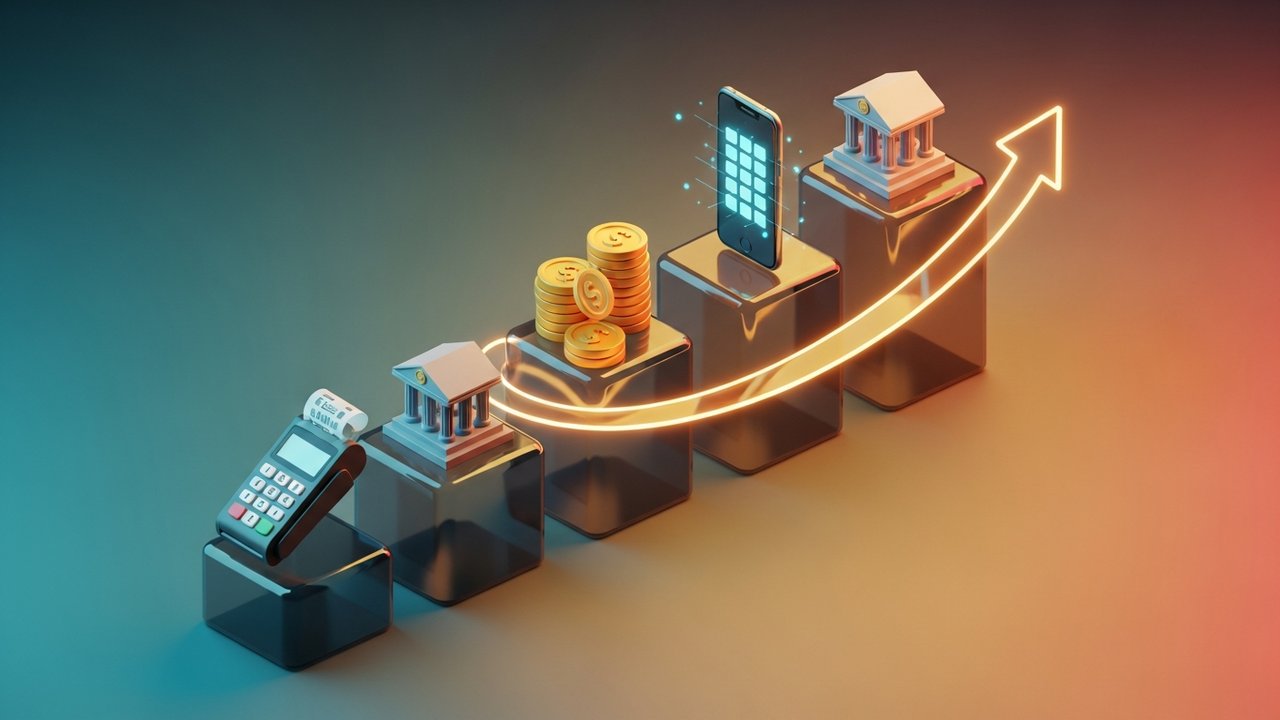
A single funding round doesn't fully explain the BharatPe valuation on its own. Three things happened, roughly in this order:
- Merchant network scale. BharatPe's core UPI QR product became a payments partner to over 1.7 crore (17 million) merchants across India, giving it the kind of distribution investors pay a premium for.
- Product expansion. The company layered on POS terminals, merchant lending, and the BharatPe One device, turning a single QR code business into a multi-product fintech platform.
- A marquee funding round. Tiger Global's Series E investment in 2021 put a $2.85 billion price tag on that growth story, and BharatPe has defended that number ever since, including through the governance crisis that followed.
BharatPe's valuation survived a period most companies wouldn't: the very public 2022 ousting of co-founder Ashneer Grover over alleged financial irregularities. The fact that the valuation held rather than collapsed says as much about the underlying merchant business as any funding round does.
BharatPe's Business Model and Revenue
Money comes in from a few different directions here. There's merchant lending, which does most of the heavy lifting. Then fees from POS and card-swipe devices. Float on UPI transaction volume. And subscription-style revenue from BharatPe One, the company's all-in-one payment device for merchants.
Revenue hit Rs 1,734 crore in the fiscal year ended March 2025, roughly 30% higher than the year before and right in line with what management had been targeting. Small, cash-first merchants aren't usually where you'd expect that kind of top-line growth, but it's exactly what kept investors interested even while fintech funding cooled elsewhere.
Lending is really the engine here. A merchant who's been swiping payments through BharatPe's QR code every day for months has, without even trying, built a credit history the company can underwrite against. That means BharatPe can hand out short-term working-capital loans faster and with less paperwork than a bank ever could. Knowing what a merchant actually earns, rather than guessing from documents, is why the lending side scales more profitably than payments alone.
Is BharatPe Profitable in 2026?
Yes, finally. BharatPe closed the fiscal year ended March 2025 with a profit before tax of Rs 6 crore, excluding ESOP expense. The year before that, it lost Rs 342 crore. Not a rounding error — a real swing.
Seven years from founding to profitable. Paytm needed 15. That gap is a big deal if you're trying to figure out what BharatPe's valuation is actually worth ahead of an IPO, because growth used to be the entire pitch and now investors want proof the business works on its own.
The path there was messy. 2022 and 2023 were mostly spent cleaning up after Ashneer Grover left — cutting costs, rebuilding the board, bringing in leadership that could get the numbers moving again.
One thing to flag: Rs 6 crore excludes ESOP expense. Nothing unusual there, stock compensation is a non-cash line item for most growth-stage companies, but anyone sizing up BharatPe before an IPO should still want to see the profit hold once ESOP and one-off costs get added back.
BharatPe IPO Plans and Pre-IPO Investment
BharatPe's leadership has been direct about where the company is headed next: public markets. CEO Nalin Negi has said BharatPe is targeting an IPO within 18 to 24 months, though the company has ruled out listing during FY26 given current market conditions.
Ahead of that listing, BharatPe is working through a pre-IPO capital raise that will set a fresh benchmark for the BharatPe valuation. Key details investors are watching:
- Target raise: ₹800–1,200 crore ($95–145 million) in fresh pre-IPO funding
- Implied valuation multiple: roughly 11.5–12x revenue, based on FY25 financials
- Purpose: strengthen the balance sheet and fund expansion ahead of a public listing
- Timing: no listing planned for FY26; company is targeting a window in the following one to two years
Public-market investors want a read on BharatPe before shares are even available to them, and that's a big part of why this pre-IPO positioning has become such a debated number.
The comparison to Paytm looms large in how analysts frame BharatPe's IPO prospects. Paytm's own public listing in 2021 was followed by a steep stock decline and years of losses before it turned profitable. That experience has made both investors and BharatPe's leadership more cautious about timing. Delaying the listing past FY26 buys BharatPe more runway to post a second consecutive profitable year, a track record IPO investors are likely to demand after watching how Paytm's debut played out.
Can You Buy or Sell BharatPe Stock?
Not directly, at least not yet. BharatPe operates under the legal entity Resilient Innovations Pvt Ltd and remains privately held. There's no public ticker, and shares don't trade on the NSE, BSE, Nasdaq, or NYSE.
That said, BharatPe isn't entirely out of reach for outside investors. A handful of pre-IPO marketplaces and secondary platforms, the kind used in the 2026 family-office transaction, allow accredited investors to buy or sell existing shareholders' stakes. A few things worth knowing before considering that route:
- Access is typically restricted to accredited or institutional investors, not retail buyers
- Pricing is set by negotiated secondary transactions, not a public order book, so it can lag or diverge from the "headline" valuation
- Shares bought this way are illiquid; there's no guaranteed exit until an IPO or acquisition happens
- Existing shareholders may hold rights of first refusal that can complicate a sale
Until BharatPe actually lists, any "stock price" quoted for the company reflects private secondary market activity, not a tradable public valuation.
BharatPe Leadership Team
The people running BharatPe today aren't the ones who started it. Nalin Negi took over as CEO and has since become the public face of the company's IPO push, leaning hard into governance and financial discipline — a deliberate contrast to what came before.
What came before: Ashneer Grover and Shashvat Nakrani founded the company in 2018, with Bhavik Koladiya also credited as a co-founder. Grover, a former investment banker, was loud. He built BharatPe's early brand recognition through an aggressive, highly visible media presence that got the company noticed fast. Then came 2022 — a very public exit after an internal investigation into alleged financial misconduct. Headlines everywhere. Yet the valuation held. So did the merchant business.
Nakrani, who reportedly dreamed up the QR code concept as a teenager, stuck closer to the product side of things and stayed out of the spotlight. Under Negi, the leadership team has spent the years since patching up investor trust: more independent directors, tighter board oversight, audited financials instead of loose ones. It seems to be working, given where the company is headed next.

BharatPe vs Its Competitors
BharatPe operates in a crowded Indian payments and merchant-fintech market. Here's how it stacks up against its closest rivals:
| Company | Approx. valuation | Profitability status | Core offering |
|---|---|---|---|
| BharatPe | $2.85 billion | Profitable (FY25) | UPI QR, POS, merchant lending |
| Paytm | Publicly listed (market cap fluctuates) | Profitable (FY26) | Payments, wallet, lending, wealth |
| Pine Labs | ~$2–5 billion (varies by round) | Mixed | POS terminals, merchant financing |
| Mswipe | Smaller, private | Not disclosed | Card acceptance, POS devices |
BharatPe's edge is speed to profitability relative to its size and the breadth of its merchant network. Paytm's public listing and larger scale still make it the benchmark competitor most analysts use for comparison. Pine Labs, which filed for its own IPO, competes most directly with BharatPe on POS hardware and merchant financing. Mswipe stays smaller and more narrowly focused on card acceptance, without the same lending ambitions.
Merchant reach paired with a lending book that turns payment data into a second revenue stream is what actually separates BharatPe from the rest of this list. That combination explains a lot about why BharatPe's valuation has stayed anchored near $2.85 billion even as funding conditions for Indian fintech have tightened since 2021.
What BharatPe's Valuation Says About the Future of Digital Payments
Rapid merchant growth, a funding-fueled valuation spike, a governance meltdown, then a hard-won climb to profitability — that's the BharatPe valuation story in short. It's also a pattern showing up across digital payments worldwide. Growth alone doesn't cut it with investors anymore. They want proof a platform can scale to millions of merchants and still come out profitable on the other side.
That same pressure is changing how businesses think about payment rails generally, crypto included, as an alternative to card networks and UPI-style systems. Merchants who've watched fintech valuations swing wildly on funding cycles and regulatory shifts are looking for payment infrastructure that isn't tied to one company's cap table or IPO timeline. For e-commerce businesses weighing that option, Plisio offers a crypto payment gateway that lets merchants accept digital assets directly, without depending on the fortunes of a single fintech intermediary.