What Is a Payment Service Provider? PSP Types, Costs, and How to Choose
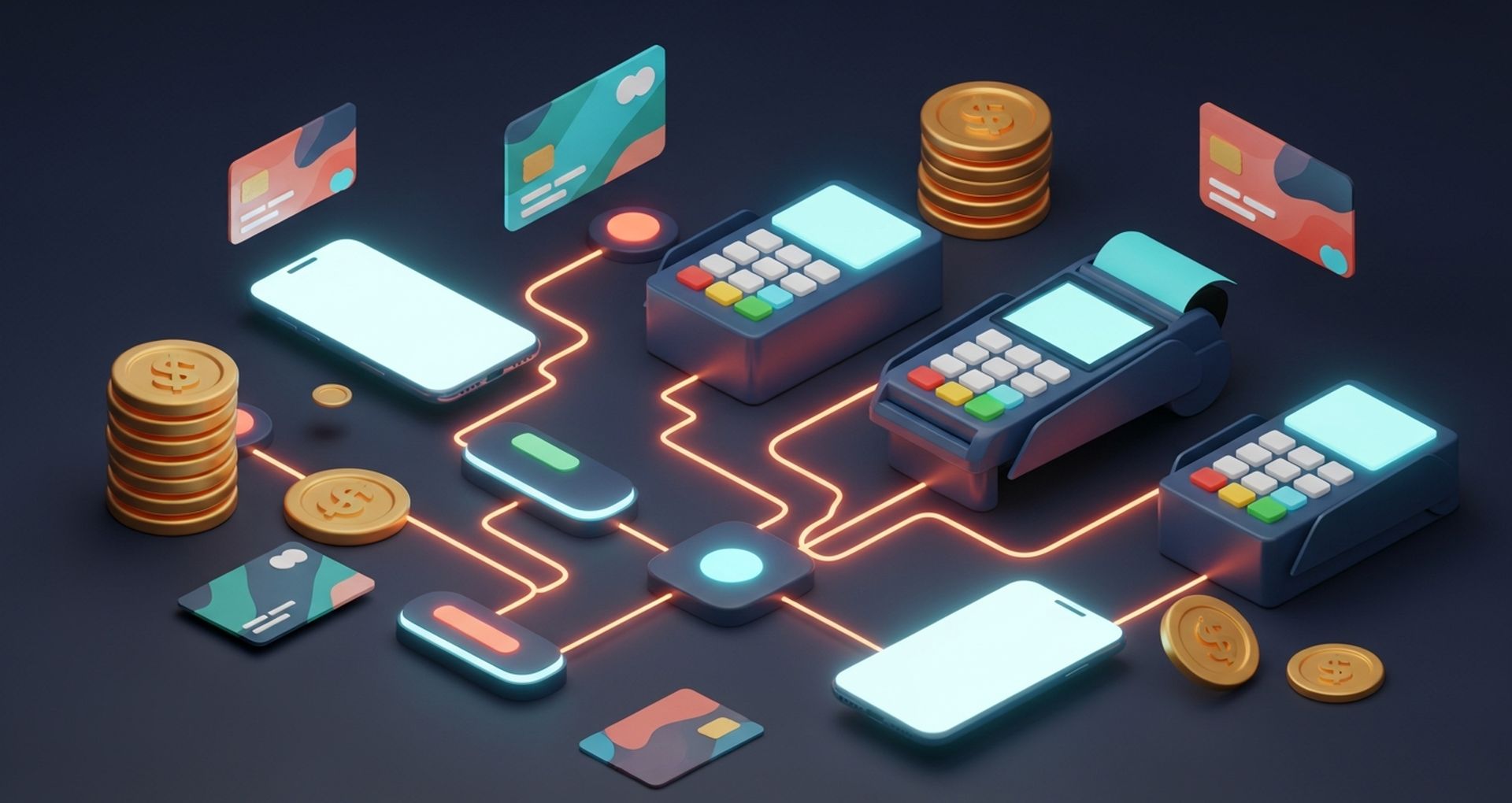
Every time a customer pays online, a payment service provider is doing the work behind the scenes. The merchant never sees it. The customer rarely thinks about it. But without a PSP, that transaction doesn't happen.
A payment service provider delivers payment services: the technical infrastructure and financial connections businesses need to accept money. Card payments, bank transfers, digital wallets, cryptocurrency — rather than building their own acquiring relationships and compliance stack, most merchants plug into a PSP and start processing within days.
The global digital payments market is heading toward $36.09 trillion by 2030, with mobile wallet users expected to reach 5.2 billion by 2026. That growth runs mostly through PSPs. Picking the wrong one — or not understanding how they differ from gateways, processors, and acquirers — is how businesses end up overpaying or missing payment methods their customers actually want to use.
What Is a Payment Service Provider (PSP)?
A payment service provider connects merchants to the payment networks. Visa, Mastercard, bank systems, wallets — the PSP handles the technical routing, fraud screening, currency conversion, and settlement of funds back to the merchant's account.
Core functions every PSP performs:
- Payment acceptance — processing card, bank transfer, and wallet transactions
- Authorization — routing the transaction to the relevant card network or bank for approval
- Fraud screening — running real-time checks before approving a charge
- Settlement — transferring cleared funds to the merchant, typically within T+1 or T+2 business days
- Reporting — providing dashboards, transaction logs, and reconciliation data
- Chargeback management — handling dispute processes when customers contest charges
PSPs remove the need for a direct relationship with an acquiring bank. They've already built those connections and handle compliance at scale. A merchant accesses a full suite of payment services through a single integration, without managing the underlying infrastructure.
How a Payment Service Provider Works
The path from a customer clicking "Pay" to money landing in a merchant's account runs through several systems in seconds.
- Customer initiates payment — enters card details or selects a wallet on the merchant's checkout
- PSP receives transaction data — the merchant's integration passes payment details to the PSP's API
- PSP routes to the card network — Visa or Mastercard receives the authorization request
- Issuing bank approves or declines — the customer's bank checks available funds and fraud signals, then responds
- PSP relays the result — approval or decline goes back to the merchant in under 2 seconds
- Settlement batch runs — at end of day (or in real-time, depending on the PSP), approved funds move through the acquirer to the merchant
- Merchant receives funds — net of PSP fees, typically 1–2 business days later
The PSP abstracts every layer of this from the merchant. No direct bank contract, no card network membership, no separate fraud tools to license and maintain.

PSP vs. Payment Gateway vs. Payment Processor vs. Acquiring Bank
These four terms describe different pieces of the same infrastructure, and they overlap in ways that create genuine confusion.
| Entity | Role | Merchant relationship | Holds merchant funds |
|---|---|---|---|
| Payment gateway | Encrypts and routes transaction data | Technical only | No |
| Payment processor | Moves transaction data between networks | Technical only | No |
| Acquiring bank | Holds the merchant account, settles funds | Financial and contractual | Yes |
| Payment service provider | Full stack — gateway + processing + acquiring access | Technical and financial | Often yes |
Take the payment gateway first. It's a data conduit: it takes the card number, encrypts it, and sends it forward. No settlement, no financial risk assumed. Stripe started as a gateway but became a full PSP.
Payment processors are different. Worldpay, TSYS — they route transaction data between the merchant, card network, and bank. Infrastructure providers. The merchant's business isn't their concern, and if chargebacks pile up, that's not their problem either.
The acquiring bank is where money actually lives. It holds the merchant account and bears the financial risk of disputed transactions. For most of payment history, merchants needed a direct acquirer relationship. PSPs changed that: they hold the master relationship and onboard businesses as sub-accounts underneath it.
So a modern payment service provider does all three through a single contract. That's the actual distinction that matters.
Types of Payment Service Providers
PSPs don't all operate the same way. Four main categories exist, and they serve different merchant needs.
Full-stack PSPs are what most businesses mean when they say "PSP." Stripe, Adyen, PayPal, Checkout.com, Mollie — one integration covers payment acceptance, fraud tools, reporting, and payouts. Works from solo operators to enterprise. The cost: less pricing flexibility than a direct acquirer relationship, especially at lower volumes where you can't negotiate the network rate.
Gateway-only providers sit on a narrower piece of the stack. NMI and Authorize.Net, for example, focus on the routing layer and let merchants bring their own merchant account. This makes sense when a business has already negotiated favorable interchange rates with an acquirer and just needs a technical integration to sit on top.
Acquirer-processors combine the bank function with processing infrastructure. Worldpay (when operating with its own merchant accounts), Global Payments, Elavon. These are typically what full-stack PSPs are built on — the underlying infrastructure layer most merchants never deal with directly.
Crypto payment service providers handle Bitcoin, Ethereum, stablecoins, and similar assets, with automatic conversion to fiat, wallet management, and settlement. The pitch is straightforward: accept digital assets without holding or managing wallets yourself. For businesses expanding into crypto payments alongside traditional methods, Plisio provides a crypto payment gateway that handles wallet infrastructure and conversion so merchants don't need to build any of it themselves.
How PSPs Make Money
PSP pricing looks simple on the surface. The complexity is in the stack of fees that sit below the headline rate.
The main revenue streams:
- Transaction fees — typically 1.5%–3.5% per transaction, depending on card type (debit vs. credit vs. corporate), geography, and negotiated volume discounts. Most of this flows through to interchange paid to the issuing bank and network fees paid to Visa/Mastercard; the PSP keeps the spread.
- Monthly/platform fees — subscription fees for access to dashboard, reporting, developer tools, and support tiers
- FX markup — 1%–2% added on top of mid-market exchange rate for cross-border transactions; often the largest hidden cost for international merchants
- Chargeback fees — typically $15–$25 per dispute, win or lose
- Payout fees — charges for instant settlement or payouts to non-standard accounts
- Fraud and compliance tools — premium fraud detection, 3DS2 authentication, PCI compliance add-ons charged separately
A PSP showing 2.9% + $0.30 may actually cost a merchant 3.4%+ once FX markup and chargeback fees are counted at any real volume. The headline rate rarely tells the full story.
Key Features to Look For in a PSP
Not all PSPs offer the same payment services or the same depth. These are the features that actually matter at scale:
- Payment method coverage — does it accept all the methods your customers use? Local payment methods (iDEAL in Netherlands, PIX in Brazil, SEPA in Europe) can meaningfully lift conversion in specific markets
- Settlement speed — standard T+1/T+2 or instant settlement available? For cash-flow-sensitive businesses, settlement timing matters more than the transaction rate
- API quality and documentation — how well is the integration documented? How stable is the API? Poor documentation creates ongoing developer overhead
- Fraud tooling — built-in machine learning fraud scoring, 3DS2 support, configurable risk rules; or is fraud tooling an expensive add-on?
- Chargeback management — automated dispute response tools, clear chargeback ratio monitoring, and escalation paths
- PCI DSS scope — using a PSP that handles card data tokenization significantly reduces PCI compliance burden for the merchant
- Reporting and reconciliation — granular transaction-level data, exportable in formats your accounting stack can ingest
- Support quality — 24/7 access for high-volume merchants, dedicated account management above certain volume thresholds
Payment orchestration deserves a mention here. Platforms like Primer and Spreedly sit above the PSP layer, routing transactions dynamically across multiple providers based on cost, approval rate, or geography. For merchants processing across many markets, orchestration often improves approval rates and cuts overall cost in ways a single PSP relationship can't match.
Top Payment Service Providers Compared
| PSP | Best for | Transaction fee | Key strength | Weakness |
|---|---|---|---|---|
| Stripe | Developers, SaaS, platforms | 2.9% + $0.30 | API depth, global coverage | Complex pricing at scale |
| Adyen | Enterprise, marketplaces | Interchange++ | Direct acquiring, global licenses | Not for small merchants |
| PayPal | Consumer-facing, marketplaces | 3.49% + fixed | Brand trust, buyer protection | High fees, dispute process |
| Checkout.com | High-growth, international | Interchange++ | Local acquiring, FX tools | Setup complexity |
| Mollie | Europe SME | 1.8% + €0.25 | European local methods | Limited outside Europe |
| Airwallex | Cross-border, FX-heavy | Interchange+ | Multi-currency, FX rates | Less strong fraud tooling |
Adyen and Checkout.com both use interchange-plus pricing — the merchant pays actual interchange costs plus a markup. At volume, this is nearly always cheaper than flat-rate pricing. Stripe's flat rate is simpler, but it gets expensive above roughly $1M annual volume.

Should Your Business Use a PSP?
For most businesses, a PSP is the right choice. The question is which one and whether a full-stack provider makes sense versus a gateway-plus-acquirer setup.
Use a full-stack PSP if:
- You're processing under $10M annually and don't have the volume to negotiate direct acquiring rates
- You need fast time-to-market — a PSP gets you accepting payments in days, not weeks
- Your team doesn't want to manage separate contracts with an acquirer, gateway, and fraud tool vendor
- You're expanding internationally and need built-in multi-currency support and local payment methods
Consider a gateway-plus-acquirer setup if:
- You process over $10M annually and have leverage to negotiate interchange rates directly
- You need specific acquiring relationships for regulatory or banking reasons
- You've already built integrations with your existing acquirer and switching costs are high
There's a real structural cost to the PSP model: you pay for the convenience of one provider managing compliance, acquiring, and fraud. At low volumes, that's a good deal. At high volumes, the markup over raw interchange adds up. Running the math at your actual volume, across your actual card mix and geography, is the only way to know if a PSP's standard pricing is actually the right fit.