HeyGen AI Video: Avatars, Crypto, and Deepfakes
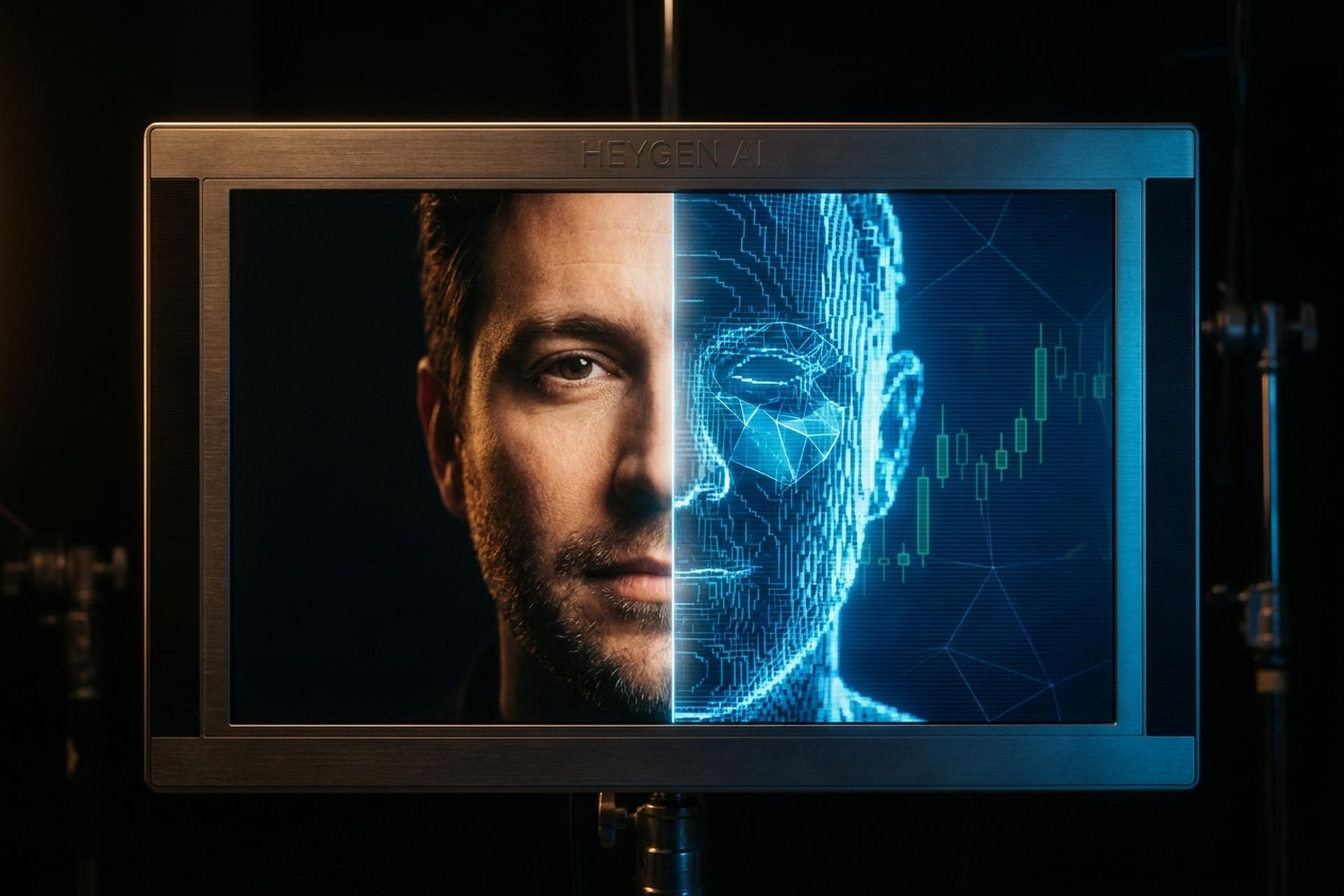
The same AI face can host your onboarding video, dub your ad into thirty languages, and read a sales script that never makes a mistake. That same technology, pointed the wrong way, once sat on a video call and talked a finance worker into wiring $25 million to criminals. HeyGen AI is the polished, legitimate side of synthetic video. Crypto users are increasingly meeting the dangerous side. This article looks at both: what HeyGen actually does, what it costs, how you might pay for it with crypto, and why anyone who holds digital assets needs to understand how a believable fake face now works as a financial weapon.
How the HeyGen AI Video Generator Works
HeyGen is an AI video creation platform, and at its simplest it is text to video. You give it a script; it gives you back a video of a realistic person reading that script aloud. The company was founded in 2020 as Surreal by Joshua Xu, an early Snap engineer, and Wayne Liang, and it now runs out of Los Angeles. The loop is quick. Type the words, pick an avatar and one of its AI voices, wait a couple of minutes, and a talking-head clip comes out with the lips already matched. No camera. No studio. No editor. That collapse of effort is why marketers flocked to it. It is also why scammers did.
Avatars, voice cloning, and lip-sync
The core of HeyGen is the avatar. You can pick from a library of more than a thousand stock avatars, or create a custom one by uploading a short clip of yourself. There is also a photo avatar option that animates a single still image, and a digital twin built from a longer recording for people who want their own likeness reading scripts on demand. The platform clones the voice as well, so the avatar speaks in a tone that resembles the original speaker, and you can have it deliver text you type or audio you upload. The lip-sync is the part that sells the illusion: the mouth tracks the words closely enough that, on a small screen, most people would not question it. HeyGen markets its latest avatar model as its most lifelike yet, and the gap between a real recording and a generated one keeps narrowing with each version. It also bundles a browser-based video editor, branded AI Studio, for trimming and reordering scenes, and the output reaches studio quality on the higher tiers.
Video translation into 175 languages
The feature that pushed HeyGen into the mainstream is video translation. Feed it a clip and it will redub the speech into another language while keeping the speaker's voice and adjusting the lips to match the new audio. The platform supports more than 175 languages and dialects. When Argentina's president had a World Economic Forum speech translated and lip-synced this way, the clip spread widely, because the result no longer looked like dubbing. For a marketer trying to reach buyers in twenty countries, that is a genuine shortcut. For a fraudster, it removes the language barrier from a scam.

HeyGen Pricing: Free, Creator, and Business Plans
Pricing follows the usual freemium ladder. The free plan is really a demo: it watermarks every clip and caps the length. Pay, and the watermark goes, the videos get longer, custom avatars unlock, and you finally get commercial rights to what you make.
| Plan | Price (approx.) | Best for | Watermark |
|---|---|---|---|
| Free | $0 | Testing the tool | Yes |
| Creator | $29/mo | Solo creators | No |
| Pro | $49/mo | Regular video output | No |
| Business | $149/mo + $20/seat | Teams | No |
| Enterprise | Custom | Large orgs, API | No |
The numbers behind those plans climbed fast. Revenue was about $1 million in early 2023. By mid-2024 it was near $35 million, and by late 2025 reporting put it close to $100 million. A June 2024 round led by Benchmark valued HeyGen at $500 million, and the company claims north of 100,000 paying customers. The enterprise crowd still mostly buys Synthesia, which is larger and worth more. HeyGen owns the other end of the market: creators and small teams, not the Fortune 100.
Paying for HeyGen AI With Crypto
A monthly software subscription sold to creators in every country is close to a textbook case for crypto payments. The customers are global, card acceptance is patchy outside a few regions, and every renewal hands a fee to a card network. As of 2025, the rails to charge that subscription in crypto are no longer experimental.
Why crypto fits AI subscriptions
A stablecoin payment lands the same way whether the buyer is in Manila or Madrid, and it does not require a card the buyer might not hold. For the seller, the appeal is cost and finality. Stablecoin transactions can cost roughly half what card processing does, and once they confirm they do not reverse. That last point cuts both ways, and it is worth holding onto: irreversibility is a gift to a merchant and a problem for a victim — a theme that returns later in this article.
Stablecoins, Stripe, and gateways like Plisio
In October 2025, Stripe began offering stablecoin subscription billing in USDC, the first time a mainstream processor handled recurring crypto payments at scale. Stablecoins moved on the order of $33 trillion across 2025. You do not need Stripe's scale to do this, though. A crypto payment gateway lets any software business bill customers in Bitcoin or USDT and settle the proceeds without running its own bank rails. That is the route a tool like HeyGen could take to accept crypto. The honest caveat is that HeyGen does not advertise a crypto checkout today, so for now this is the rail, not a button on its pricing page.
AI Avatars for Crypto and Web3 Marketing
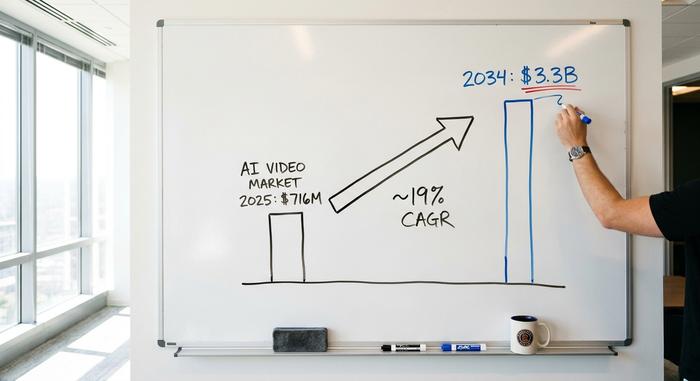
Crypto projects are natural early adopters of AI video, and the reason is reach. A new token or exchange wants to explain itself to audiences in dozens of languages at once, and producing AI videos is far cheaper than filming a live presenter for each market. An AI avatar reading a translated script does that in an afternoon. A single explainer can be cloned into Spanish, Hindi, Vietnamese, and Turkish before lunch, each version lip-synced so it does not read as dubbed. Some teams go further and build a recurring AI host whose avatar videos front every update, a kind of synthetic spokesperson who never asks for a fee or a day off. The broader market reflects the pull: the AI video generator sector was around $716 million in 2025 and is projected to pass $3.3 billion by 2034, a compound growth rate near 19%.
The same speed that helps a legitimate project also lowers the bar for a misleading one. A polished avatar can make a thin project look like a funded one, and an AI presenter never fumbles a disclaimer it was told to skip. The production gloss that used to signal a serious team now costs almost nothing, so it no longer signals anything. If you produce crypto video content this way, label it as AI, and if you consume it, treat production quality as no evidence at all of whether a project is real.
The Deepfake Problem: HeyGen AI and Crypto Scams
Here is the dark mirror of everything above. The technology that makes a friendly training video also makes a convincing fake of a real person, and in crypto a convincing fake is a way to move money that never comes back.
When a fake face moves $25 million
The clearest case happened at the engineering firm Arup. In early 2024, an employee in its Hong Kong office joined a video call with what looked like the company's chief financial officer and several colleagues. Every participant except the victim was a deepfake. Convinced by faces and voices he recognized, the worker made 15 transfers totaling about $25.6 million before the fraud was discovered. No malware was involved. The whole attack was social, built on synthetic video that was good enough to survive a live call.
Why crypto is the favorite target
Fraudsters favor crypto for the same reason merchants like stablecoins: payments are final. There is no bank to call, no chargeback to file, and no central authority that can claw a confirmed transfer back. Chainalysis reported around $17 billion in crypto scam losses for 2025, with impersonation fraud up sharply year over year, and found that scams using AI tools earned far more per operation than those without, on the order of several million dollars each against a few hundred thousand for the old-fashioned kind. Video is what makes the difference, because a face and a voice clear the suspicion that a text message or an email never could. Fake endorsement videos are now a staple of the playbook. A deepfaked Elon Musk promoting a crypto giveaway helped take $1.7 million from a single Canadian victim, and a synthetic clip of Nvidia's Jensen Huang was used to push a bogus token. The face on the screen is borrowed; the loss is real.
| Incident | Year | Loss | How the fake was used |
|---|---|---|---|
| Arup (Hong Kong) | 2024 | $25.6M | Deepfaked CFO on a live video call |
| "Elon Musk" giveaway | 2024 | $1.7M | Fake endorsement video for a crypto scam |
| Jensen Huang token | 2025 | Undisclosed | Synthetic clip promoting a bogus token |
Consent, Likeness, and the AI Law
The law is scrambling, and it is a patchwork. In the US, the TAKE IT DOWN Act passed in May 2025, but it mostly targets non-consensual intimate imagery, not financial deepfakes. The bigger one is the NO FAKES Act, which would hand people a federal right over digital copies of their face and voice. It was reintroduced in 2025. It still has not passed. Denmark took the boldest swing of all: a proposal to let you hold copyright over your own face, the first of its kind in Europe.
And HeyGen itself? It leans on consent. You have to verify your identity before it will build a custom avatar of you, the company carries SOC 2 and GDPR certifications, and it says you own the videos you make. All useful, all a little beside the point. None of it stops a criminal who rips a CEO's face from a conference livestream. That is why, for now, the laws matter less than your own habits.
How to Spot a HeyGen-Style Deepfake
I now treat any unexpected video request to move money as fake until proven otherwise, and you should too. That one rule would have stopped the Arup loss. The rest is common sense. Call back on a number you already trust, never the one offered during the call. Ask the person to do something live that a pre-built avatar fumbles, like turning fully sideways or waving a hand across their face. Watch the hairline, the edges, the teeth; that is where the artifacts still hide. Listen for a voice that sits a little too flat. None of it is foolproof, and the models keep improving, which is the whole reason the callback beats the eye test. Trust the phone, not the face.
What HeyGen AI Means for Crypto Users
HeyGen AI is genuinely useful and genuinely dangerous, and the same trait drives both — it makes a believable person out of a few lines of text. For a marketer that is an edge. For someone holding crypto, it is a reason to change how you verify anyone who asks you to send funds. The deciding factor is not the technology, which will only get better, but whether you confirm requests through a channel a fake face cannot reach. So the next time a familiar face on a screen tells you to move money, ask yourself the only question that still works: have I checked this any way other than by looking and listening?