ElevenLabs: Inside the $11B AI Voice Generator
You have heard ElevenLabs. You just did not know it. The narrator on a YouTube explainer, the dubbed dialogue on a foreign film, the voice on the other end of a support line: plenty of that audio is generated now, and plenty of it runs on one company most people outside tech could not name. ElevenLabs makes AI voices. In February 2026 it raised money at an $11 billion valuation for doing exactly that. Two friends from Poland started it in 2022, and today its AI voice generator sits inside apps used by more than a billion people. So what does it actually do, what does it cost in 2026, and why does the safety crowd keep losing sleep over it?
What ElevenLabs does: AI voices and more
It began as a humble text to speech tool. Now it is a full audio stack, and the voices are only the part you notice first. The breadth of the rest is what justifies the price tag. The two founders came at the problem from odd angles: Piotr Dabkowski had been a machine-learning engineer at Google, Mati Staniszewski a strategist at Palantir. Their shared frustration was simple. Synthetic speech back then could pronounce words but could not act them. Fix that, they figured, and everything else follows. Most of what the company ships still flows from that one bet.
Text to speech and lifelike AI voices
Start with the core: it turns written text into spoken audio. The newest model, Eleven v3, shipped in June 2025. It reads more than 70 languages and takes inline tags like [whispers] or [laughs], so you can direct the delivery line by line. Need speed instead? A lighter model called Flash trades a little polish for near-instant output, which matters for live apps. The result is genuinely lifelike. That is why creators reach for ElevenLabs for voiceovers, podcasts, and narration on ai video, where a robotic read would break the spell.
What makes v3 stand out is control. Older engines read everything in the same flat tone. Not this one. Mark a sentence to be whispered, rushed, or delivered with a sigh, and a single block of text starts to carry an actual performance. The first time you hear it land a sarcastic line, it is a little unsettling. The older Multilingual v2 still covers 29 languages and stays the default for long, stable narration, where consistency beats range.
Voice cloning, dubbing and multilingual audio
Two features push it past plain narration. The first is voice cloning. Feed it a short sample and it copies a specific voice, either a quick instant clone from about a minute of audio or a sharper professional one. The second is AI dubbing. Hand it a finished video and it re-voices the whole thing in another language while keeping the speaker's tone, so multilingual localization that used to mean a studio booking becomes a few clicks. There is also a shared voice library, where users publish and license voices to each other.
The professional clone is the one studios care about. Give it thirty minutes of clean audio and a consent check. In return, it captures the cadence and accent of the original so closely that voice actors now license their own clones and collect a cut while they sleep. The instant clone is faster and looser. Fine for a quick prototype, easy to spot as synthetic.
Scribe, AI music and conversational agents
The suite runs the other direction too, from audio back into text. Scribe is the speech-to-text model. It transcribes with speaker labels and timestamps, and the v2 version handles 99 languages while tagging who said what with roughly 98% accuracy. Then there is Eleven Music, added in 2025, which spits out cleared background tracks on demand. Conversational AI agents go further still: stitch speech-to-text, a language model, and text to speech together and a bot can listen, answer in real time, and hand off to a human in one seamless flow. Round it out with sound effects and a voice isolator for rescuing noisy recordings.
Scribe is where this platform shows real depth. It does more than spit out a transcript. It tags non-speech sounds, marks word-level timestamps, and pulls apart overlapping speakers, which is why podcasters and researchers lean on it to turn messy recordings into searchable, editable text. And v2 runs about 40% cheaper than the first release. An AI product getting better and cheaper at once? That is rare.
How ElevenLabs became an $11B AI company
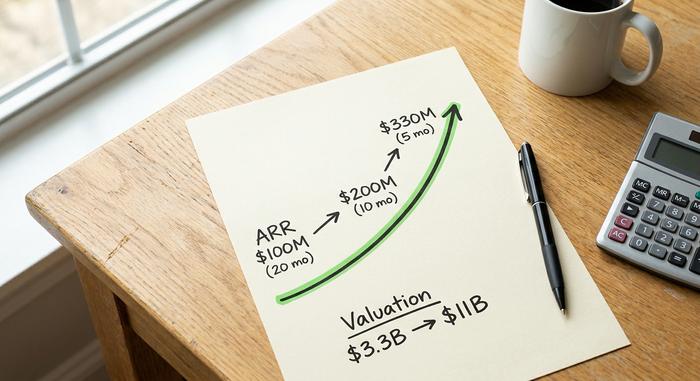
The product pages skip the wildest part: the money. Look at the funding and the growth stops looking normal. Early in 2025, ElevenLabs raised a $180 million Series C that valued it at $3.3 billion, with Andreessen Horowitz and ICONIQ Growth co-leading. Thirteen months on, Sequoia led a $500 million Series D and the price tag hit $11 billion. Triple, in a year, for the same company.
The revenue explains the appetite. ElevenLabs crossed about $330 million in annual recurring revenue by the end of 2025. What makes investors lose their composure is the pace. Twenty months to reach $100 million. Then 10 months to double it. Then just 5 months to hit $330 million. Each lap shorter than the one before. And by the company's own January 2025 count, people at more than 60% of Fortune 500 firms had already touched the platform.
| Round | Date | Raised | Valuation |
|---|---|---|---|
| Series B | Jan 2024 | $80M | $1.1B |
| Series C | Jan 2025 | $180M | $3.3B |
| Series D | Feb 2026 | $500M | $11B |
Across five rounds, ElevenLabs has raised roughly $781 million, and its founders have openly discussed an eventual IPO. What convinces investors is not the consumer app but the infrastructure beneath it: every company adding a voice to a product is a potential customer, and the market for synthetic speech barely existed three years ago. The bet is that voice becomes a default interface the way the touchscreen did.
ElevenLabs pricing: free and paid plans
You can use ElevenLabs without paying, and the free plan is more than a teaser. The paid tiers mostly buy you more monthly credits, which are spent as you generate audio, rather than unlocking entirely different features. Here is the 2026 structure.
| Plan | Price / month | Monthly credits |
|---|---|---|
| Free | $0 | 10,000 |
| Starter | $6 | 30,000 |
| Creator | $22 | 121,000 |
| Pro | $99 | 600,000 |
| Scale | $299 | 1,800,000 |
| Business | $990 | 6,000,000 |
Credits roughly map to characters of speech, so a 10,000-credit free plan is enough for a few minutes of audio a month. The Creator plan at $22 is the practical starting point for anyone publishing regularly, and commercial usage rights kick in on the paid tiers. Developers pay per use through the API rather than a flat monthly fee.
Above Business sits a custom Enterprise tier with dedicated support, higher rate limits, and the contractual terms most large buyers require. The API meters by characters generated, so a high-traffic app pays in proportion to use instead of guessing a plan in advance. One thing to watch — credits do not roll over, so an unused month is money left on the table.
Who uses ElevenLabs and for what
The interesting users are not hobbyists making novelty clips; they are businesses replacing studio time. Audiobook publishers narrate whole catalogs without booking actors. YouTubers and course creators add voiceovers in a language they do not speak. Game studios voice minor characters at scale. Accessibility apps read articles aloud through the ElevenReader app. Call centers run conversational agents that answer routine questions before a human steps in. Localization teams dub training videos for global staff.
That reach is why the valuation holds up. The company says its API powers products that collectively serve more than a billion users, with customers including Meta, Epic Games, and Salesforce. For most of these buyers, ElevenLabs is plumbing: invisible audio infrastructure inside a product with another name on the door.
A few examples make the scale concrete. The ElevenReader app reads articles, PDFs, and ebooks aloud in a chosen voice, which has become a real accessibility tool for people with dyslexia or low vision. Newsrooms auto-generate audio versions of written stories. Indie developers give non-player characters distinct voices that once needed a recording budget they did not have. The common thread is production audio that used to require a studio, now coming out of a text box.
The deepfake problem and AI voice safety
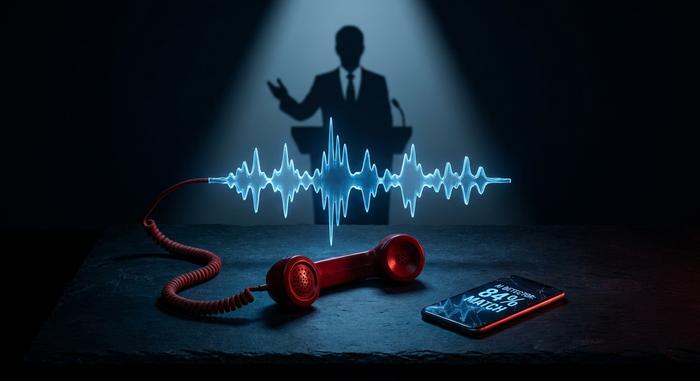
Voices this good are also a weapon. ElevenLabs learned that the hard way. In January 2024, a faked robocall in President Biden's voice told New Hampshire voters to skip the primary. It was not really him, of course. The security firm Pindrop ran the clip, traced it back to ElevenLabs, and reported an 84% match from its classifier. The company banned the account behind it.
That episode dragged the safety question into daylight. ElevenLabs now runs an AI Speech Classifier that checks whether a clip came from its tools, blocks cloning of certain high-risk public figures, and demands identity verification before a professional voice clone. Does any of it fully work? No. Detection always lags generation, and a determined bad actor can just walk over to a sloppier provider. So here is the honest read: the company has built genuine guardrails around a tool that is dual-use to its core, and the race between making fakes and catching them is nowhere near over.
Regulators have noticed. Several US states moved to restrict AI-generated robocalls after the Biden incident, and the company has joined industry work on audio watermarking, embedding signals that survive compression and help trace a clip to its source. Critics counter that watermarks can be stripped and that voluntary measures are no substitute for law. ElevenLabs sits in an awkward but honest spot: the most capable tool in the category carries the most responsibility to police it.
ElevenLabs vs other AI voice generators
ElevenLabs is widely treated as the leading AI voice generator on quality, but it is not the only option, and it is not always the right one. The choice usually comes down to how much realism you need versus how much you want to spend.
| Tool | Main strength | Best for |
|---|---|---|
| ElevenLabs | Most realistic voices, 70+ languages, strong API | Production audio, dubbing |
| Murf | Simple interface, lower cost | Quick business voiceovers |
| Play.ht | Large stock voice library | Podcasts and long-form |
| OpenAI / Azure | Bundled with other AI services | Developers already in that stack |
If your priority is the most human output and broad language support, ElevenLabs is hard to beat — I have yet to hear a rival match v3 on a genuinely tricky line. If you want a cheap, simple tool for an occasional corporate video, a rival may serve you better for less.
How to start with ElevenLabs AI voices
Your first clip out of the ElevenLabs AI voice generator takes about three minutes, start to finish. Make a free account. Open the speech tool and pick a voice, either from the library or your own clone. Paste your text, choose the model and language, hit generate. Listen back. If the delivery feels off, nudge the stability and style sliders and try again, then download the MP3. That is the whole loop.
Developers skip the dashboard and call the API directly with a key, passing text and a voice ID and receiving audio back. That is how those billion-user apps wire ElevenLabs into their own products.
Why ElevenLabs leads AI voice generation
ElevenLabs went from a transcription side-project to an $11 billion platform faster than almost any software company before it, and the voices are good enough that the hype is mostly earned. The free tier lets anyone test that claim in minutes. But the same realism that wins customers is exactly what worries regulators and security researchers, and the Biden robocall will not be the last incident. The technology is here and improving monthly. The open question is whether the rules, and the detection tools, can keep pace with voices that already fool most listeners. Where would you draw the line?