What is Tether (USDT) and why does it dominate the stablecoin market
Here is a number that catches people off guard: more than $77 billion worth of Tether USDT moves every day. On many trading days, that beats Bitcoin and Ethereum combined. Tether went from a niche trading tool to the digital currency powering most of the crypto economy. Exchanges, DeFi, remittances, freelancer pay - USDT is everywhere. Over 550 million people use it. The market cap? Over $184 billion. Only BTC and ETH are bigger.
So why does everyone use it? Simple. USDT is boring on purpose. The price does not move. It stays near one dollar, transfers happen quickly on multiple blockchains, and no bank gets involved. The questions worth asking are different ones. What actually backs all those tokens? Can Tether survive a real audit? And what happens to crypto if the answer turns out to be ugly?
How Tether actually works
The idea is dead simple. You give Tether one dollar. They mint one USDT token and send it to your blockchain address. When you want your dollar back, you return the token, Tether burns it, and wires the cash. Mint, circulate, burn. That loop keeps the number of USDT tokens in circulation matched to real reserves. Price stability is the entire point: 1 USDT should trade at or very near $1.00, always.
There is no Tether blockchain, by the way. USDT is a guest on other chains. Pick one based on what you are doing:
- Ethereum (ERC-20) - where the DeFi money is. Lots of liquidity. Gas fees bite though.
- Tron (TRC-20) - half of all USDT volume goes through here. Fees basically zero. Big in Asia and Africa.
- Solana (SPL) - fast and cheap. Trading bots love it.
- BNB Smart Chain (BEP-20) - if you live inside Binance, this is your chain.
- TON - Telegram users are starting to move USDT here through mini-apps.
- Avalanche, Polygon, Arbitrum, Optimism, and 70+ more through bridges.
Tron handles about half of all USDT volume globally. If you have ever gotten paid in USDT by a freelance client, there is a decent chance it came over TRC-20.
What backs Tether: inside the reserves
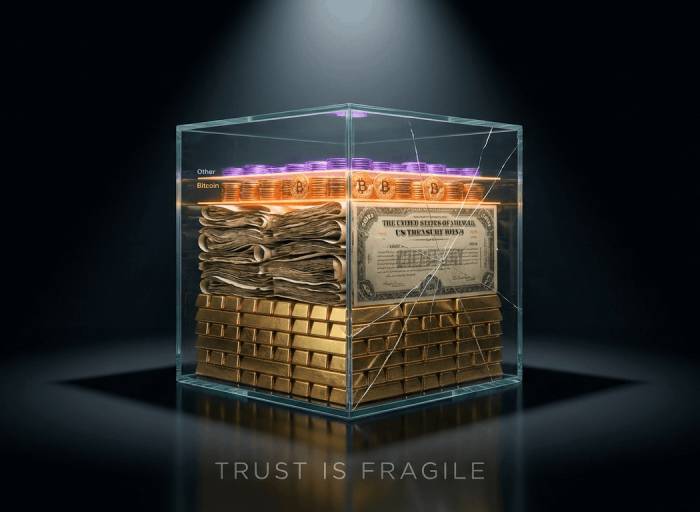
This part gets people arguing on Crypto Twitter every other week. For years, Tether's website just said tokens were backed "100% by Tether's reserves." That was it. No breakdown. No details. Skeptics and regulators pounded on this until the company started putting out quarterly attestation reports. At least now the public can see what they claim to hold.
Year-end 2025 filings show this:
| Asset class | Amount | Share of reserves |
|---|---|---|
| US Treasury securities (direct) | $122 billion+ | ~65% |
| Overnight reverse repos and Treasury exposure | $141 billion+ (total) | ~75% |
| Cash and bank deposits | Included in cash equivalents | Part of 87% bucket |
| Precious metals (gold) | ~$8 billion | ~4% |
| Bitcoin | ~$5 billion+ | ~3% |
| Secured loans | ~$5 billion | ~3% |
| Other investments (AI, energy, fintech) | $20 billion+ | ~11% |
Add it up: $192.9 billion in assets versus $186.5 billion in USDT-related liabilities. That leaves a $6.3 billion cushion.
Two things jump out here. The Treasury-heavy portfolio throws off massive yield. Tether posted $13 billion in profit in 2024 and over $10 billion in 2025, mostly from interest on government debt. Think about that. A stablecoin company earning more than most banks. The second thing is that "other investments" line. Tether keeps buying into AI startups, Bitcoin mining rigs, and media companies. I get the logic: spread your bets. But every dollar in a speculative investment is a dollar that is not sitting in T-bills backing someone's USDT.
Cantor Fitzgerald custodies a big chunk of those Treasury holdings, which gives Tether a Wall Street adjacent profile it never had before. Flip side: it means one custodian holds a lot of the keys to this thing working.
The audit question
Let me be clear about something: Tether has never had a full audit. What they publish are attestations, and those are not the same thing. An attestation is a snapshot. A firm checks that reserves exist on one specific day. An audit digs deeper. It looks at how money flows in and out, whether controls work, and whether the books hold up over months, not just one afternoon.
That gap has been the single biggest criticism of Tether for years. It changed on March 24, 2026, when Tether announced it had signed a formal engagement with a Big Four accounting firm to conduct its first full independent financial statement audit. The firm was selected through competitive bidding, but Tether has not disclosed which one. The audit will cover digital assets, traditional reserves, tokenized liabilities, internal controls, and financial statements. Tether called it "the biggest ever inaugural audit in the history of financial markets."
Separately, Tether already tapped Deloitte to audit reserves for its new US-regulated stablecoin USAT, which launched under the Genius Act framework. That first USAT report showed $17.6 million in reserve assets backing 17.5 million tokens. Small numbers, but the Deloitte relationship signals that Tether is getting serious about serious, audit-grade transparency.
If they pass, the "Tether is a scam" crowd finally has to find something new to talk about. If they do not? Well, 59% of a $318 billion stablecoin market is a lot of dominoes to knock over. Almost every exchange and DeFi pool touches USDT somewhere. A real crisis would not stay local.
A short history of Tether
Back in 2014, Brock Pierce, Reeve Collins, and Craig Sellars took J.R. Willett's Mastercoin ideas and built RealCoin. Terrible name. Someone fixed it to "Tether" within four months. Bitfinex was the first exchange to pick it up, in January 2015.
And here is the thing that will come up in literally every Tether conversation: Bitfinex and Tether share the same parent company, iFinex Inc., based in the British Virgin Islands. That single fact has launched a thousand conspiracy threads on Reddit and also several very real regulatory investigations. It is baked into the DNA of this project.
Key moments in Tether's timeline:
| Year | Event |
|---|---|
| 2014 | Launch as RealCoin, rebrand to Tether, first tokens on Bitcoin's Omni layer |
| 2015 | Listed on Bitfinex, early banking through Taiwanese banks and Wells Fargo |
| 2017 | $31 million in USDT stolen from Tether's treasury wallet |
| 2019 | New York Attorney General obtains court order against Tether and Bitfinex. Investigation reveals Bitfinex borrowed ~$700 million from Tether reserves to cover frozen funds at Crypto Capital Corp |
| 2021 | Settlement with NY AG: $18.5 million fine, commitment to publish reserve reports. CFTC separately fines Tether $41.6 million for falsely claiming 100% fiat backing |
| 2022 | Brief de-peg to ~$0.995 during TerraUST collapse. Tether rebounds within hours, honoring all redemptions |
| 2024 | Record $13 billion annual profit. Surpasses 350 million users |
| 2025 | Relocates headquarters to El Salvador. Acquires minority stake in Juventus F.C. Launches USAT under the Genius Act. Paolo Ardoino confirmed as CEO. Circulating supply crosses $186 billion. Over 550 million users |
| 2026 | Signs Big Four accounting firm for first full independent audit (March 24). USDT gains regulatory approval in Abu Dhabi Global Market. Deloitte audits USAT reserves |
Through all of this, USDT never permanently broke its peg. The closest call was 2022 when TerraUST imploded and billions fled the stablecoin market overnight. USDT dipped to $0.995, and the internet briefly lost its mind. Tether processed every single redemption and the peg was back within hours. That moment, honestly, did more for Tether's credibility than any attestation report ever could.
Beyond USDT: the Tether ecosystem
Tether stopped being "just a stablecoin" a while ago. The company has quietly built out an entire product line.
They issue stablecoins pegged to other currencies too: euros (EURT), Mexican pesos (MXNT), yuan (CNHT), pounds (GBPT), dirhams (AEDT). None of these move much volume next to USDT, but they are there.
Tether Gold (XAUt) is the commodity bet. One token, one troy ounce of real gold sitting in a Swiss vault. About $8 billion in market cap by mid-2025. Want gold on a blockchain without ETF paperwork or a safe deposit box? XAUt handles that.
Then it gets weird. Tether is building Plasma, its own Layer 1 chain just for stablecoin payments. They fund Keet, an encrypted video chat app on the Holepunch protocol. They mine Bitcoin. They invest in AI startups and energy deals. They own a chunk of Juventus, the Italian football club. Paolo Ardoino's Tether looks less like a stablecoin company and more like a crypto conglomerate.
Is all of this necessary? Probably not. USDT generates virtually all of Tether's revenue. But the spread makes sense as a hedge. If regulators squeeze the core stablecoin business, having revenue streams from gold, mining, and tech investments provides a cushion.
Who actually uses USDT and why
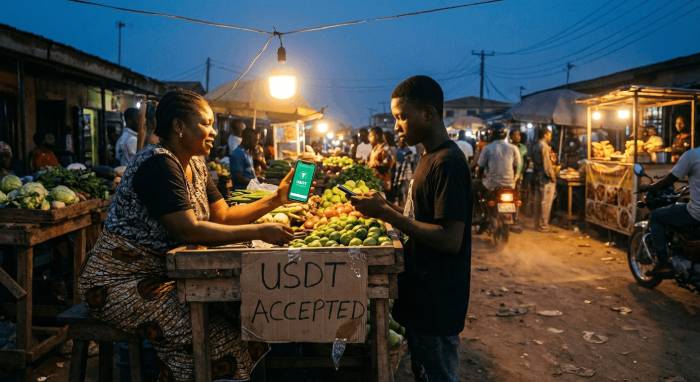
Forget the crypto-bro trading narrative for a moment. Most of the 550 million people using USDT are not day-traders. They are freelancers, migrant workers, and small business owners trying to solve real money problems.
Independent workers in Argentina, Nigeria, Turkey, and Pakistan get paid in USDT through platforms like Deel or local P2P marketplaces. A graphic designer in Buenos Aires might sit on her USDT for weeks and only convert to pesos when the exchange rate hits a good spot. Try doing that with a traditional wire transfer that takes five days and charges you 4% on the way in.
Remittance corridors run on USDT now. Think about the Dubai-to-Nairobi remittance corridor. A bank charges 5-8% and takes days. USDT on Tron? Fraction of a cent, arrives in minutes. I talked to a Kenyan student whose brother sends her USDT from Dubai monthly. She gets it on her phone and swaps to Kenyan Shillings at a local exchange. No bank account, no waiting.
DeFi runs on USDT too. Aave, Compound, Venus - these lending platforms all take USDT as collateral. Liquidity providers park USDT in trading pools and collect fees. Since USDT exists on so many chains, it plugs into pretty much every DeFi ecosystem worth using.
Online retailers in Eastern Europe and Southeast Asia accept USDT for international orders. Crypto payment gateways let them receive USDT and auto-convert to fiat if they want. Some merchants say USDT now covers 30-40% of their international sales.
Then there is the inflation hedge crowd. In countries where the local currency loses 30-50% of its value per year, holding USDT on a phone is basically holding dollars without a US bank account. A delivery driver in Karachi keeps USDT as his emergency fund, accessible any time, even when banks are shut. This single use case is probably the biggest growth driver for Tether outside of trading.
Tether vs Bitcoin: different tools for different jobs
I keep seeing "Tether vs Bitcoin" debates online, and honestly, it is like comparing a checking account to a stock portfolio. Different tools, different jobs.
| Tether (USDT) | Bitcoin (BTC) | |
|---|---|---|
| Purpose | Stable store of value, payments | Decentralized money, value appreciation |
| Price behavior | Pegged to $1.00 | Volatile, market-driven |
| Governance | Centralized (Tether Limited) | Decentralized (miners, nodes) |
| Supply | Elastic, backed by reserves | Fixed at 21 million |
| Primary use | Trading pairs, transfers, DeFi | Long-term holding, speculation |
| Income for holder | None (unless deposited in DeFi) | None (price appreciation only) |
Bitcoin is something you buy hoping it goes up. USDT is something you hold while you figure out what to do next. Traders move into USDT during volatility to preserve value without leaving the crypto ecosystem. Businesses price services in USDT because a Bitcoin invoice that is accurate at 9 AM might be off by 5% at noon.
Is Tether a good investment?
Short answer: no. And that is by design. A stablecoin pegged to the dollar is not going to make you rich. One USDT today should be worth one USDT next year. If you want price appreciation, look elsewhere.
What USDT gives you is utility. Park funds between trades. Earn yield by supplying it to DeFi lending pools (though that brings smart contract risk). Move money across borders for almost nothing. These are real use cases, just not investment theses.
The risks deserve honest treatment. Tether is a centralized company, and your USDT is only worth something as long as Tether can maintain reserves and process redemptions. A regulatory crackdown, a botched audit, or a bank partner going under could all crack the peg. The CFTC found that between 2016 and 2018, Tether maintained full dollar backing only 27.6% of the time. The reserves look much healthier now, but that track record is only a few years old.
And then there is the crime angle. TRM Labs found that USDT was connected to $19.3 billion in illicit transactions in 2023 alone, making it the most-used stablecoin for money laundering and sanctions evasion. Tether has pushed back by freezing wallets tied to sanctioned entities like the Russian exchange Garantex in March 2025. But the sheer scale of misuse adds a regulatory target on the company's back that every USDT holder inherits.
Regulatory landscape and what comes next
Stablecoin regulation is moving fast. The US, EU, UK, and several Asian jurisdictions are all writing rules that will directly affect how Tether operates. Here is where things stand.
Reserve requirements. The Genius Act, passed in 2025, limits the types of assets that can back stablecoins and requires larger issuers to move under federal oversight. Tether's launch of USAT as a fully compliant US stablecoin and its Big Four audit engagement both respond directly to this legislation.
Licensing. The EU's MiCA regulation requires stablecoin issuers to obtain authorization in at least one EU member state. USDT's MiCA compliance status remains a live question that could affect its availability on European exchanges. Meanwhile, USDT secured regulatory approval as an approved fiat-referenced token in the Abu Dhabi Global Market (ADGM), opening doors in the Middle East.
UK regulation. New FCA and Bank of England rules taking shape in 2026 will create another compliance front for both Tether and Circle.
Sanctions enforcement. The October 2024 federal investigation into potential sanctions violations by Tether has not concluded publicly. How this plays out could reshape the company's relationship with US regulators and banking partners.
Competition. Circle's USDC now holds $77 billion in circulation and recently captured 64% of total stablecoin transaction volume, surpassing USDT for the first time in nearly a decade. USDC processed roughly $18.3 trillion in transaction volume in 2025 alone. PayPal's PYUSD and other bank-issued stablecoins are entering the market. Tether still holds 59% of the stablecoin market by market cap, but the volume shift toward USDC signals that big money may be favoring the more audited option.
How to buy and store USDT
Getting USDT is not complicated. Binance, Coinbase, Kraken, OKX, Bybit - basically every exchange you have heard of lists it. Bank transfer, credit card, or swap from another crypto asset. Pick whichever works.
Where you keep it matters more than how you buy it. You can leave USDT on an exchange, which is fine for trading but risky if the exchange goes down (FTX holders learned this the hard way). Or you go self-custody. Ledger and Trezor hardware wallets handle USDT on multiple chains. Software options like MetaMask, Phantom, or TronLink work too. You hold the keys, you bear the risk if you lose them.
Quick tip on networks: Tron (TRC-20) is cheapest for basic sends. Ethereum (ERC-20) if you are doing DeFi stuff. Solana splits the difference with speed and low fees. Just make sure the wallet on both ends supports the same chain, or your USDT goes nowhere.