Most Popular Payment Methods for Online Payments
Walk into an e-commerce checkout in 2026 and you might see a dozen ways to pay. Credit card, PayPal, Apple Pay, Klarna, bank transfer, crypto — and that's before the regional options kick in. Merchants who offer the wrong mix lose sales to cart abandonment. Eleven percent of shoppers leave checkout when their preferred payment method isn't available.
Digital payment volumes are growing faster than any point in history. Online payments now account for the majority of global consumer spending growth, and the mix of accepted options at checkout directly determines who completes a purchase and who doesn't.
This guide covers the most popular payment methods globally, how each works, what they cost merchants, and how to build a digital payment stack that actually converts.
What Are Payment Methods and Why They Matter
At its core, a payment method is how a buyer gets money to a seller. Simple enough. But the category stretches well beyond the obvious — cards and bank transfers share space with digital wallets, BNPL products, prepaid instruments, and cryptocurrency, each serving different user needs and carrying different costs.
Why does this matter for merchants? Because the wrong mix at checkout costs real money. When a shopper's preferred payment method isn't available, 11% abandon the cart entirely. That's not a conversion problem you can fix with better copy or faster load times.
The main categories of online payment methods:
- Cards — credit and debit cards, the legacy infrastructure of global payments
- Digital wallets — Apple Pay, Google Pay, PayPal, Alipay, and similar apps
- Bank-based payments — direct bank transfers, ACH, SEPA, UPI, Pix
- Buy Now Pay Later — installment products from Klarna, Afterpay, Affirm
- Prepaid and voucher-based — Paysafecard, prepaid debit cards, gift cards
- Cryptocurrency — Bitcoin, stablecoins, altcoins processed through crypto gateways
Getting a handle on the full range of different payment methods available globally is foundational to any real payment strategy. An online store targeting US customers needs different payment methods than one selling to Southeast Asian markets — the overlap is smaller than most assume.
Credit and Debit Cards: Still the Global Leader
Forty years of infrastructure don't disappear overnight. Credit and debit cards still account for roughly 38% of global e-commerce by transaction value, and while that number is slowly shrinking, cards aren't going anywhere. Consumer trust runs deep. Rewards programs in the US and UK actively push people toward credit cards. And merchant acceptance is essentially universal.
Visa and Mastercard handle the network layer for most card transactions worldwide, with American Express and UnionPay holding significant regional share. UnionPay controls China's domestic market; Amex has strong penetration in premium US segments. For merchants, this means choosing which networks to accept — most processors bundle Visa and Mastercard by default, Amex is usually an add-on.
Online card transactions run as card-not-present (CNP), meaning the buyer types in details rather than tapping a physical card. CNP carries more fraud risk than in-person payments. That risk shows up in higher interchange fees and greater chargeback exposure for merchants.
The debit versus credit distinction matters more than most merchants realize. Debit draws directly from a bank account; credit extends a line that gets repaid later. Debit dominates in markets with lower credit penetration, while credit is the preferred payment method in the US, UK, and other markets where rewards programs drive card choice. Most processors handle both under a single integration, so merchants rarely need to think about it separately.
Digital Wallets: The Fastest-Growing Payment Option
The numbers on digital wallets are hard to ignore. Five point three billion users globally. Fifty-three percent of global e-commerce spending already flowing through them. That share is projected to hit 65% by 2030, up from 53% now, with total digital wallet spending at $3.6 trillion in 2024 alone. In most Asian markets, wallets passed cards by volume years ago. In Western markets, the gap is closing fast.
The technical mechanism is tokenization. When a buyer pays with Apple Pay or Google Pay, their actual card number never leaves the device. Instead, a unique token tied to that specific device and merchant gets transmitted. If intercepted, it's worthless. Fraud rates drop, and checkout compresses to a single biometric tap.
Which wallet matters depends entirely on where your customers are:
- Apple Pay — dominant in the US, UK, Australia, and Western Europe; requires an Apple device; uses Face ID or Touch ID
- Google Pay — strong in Southeast Asia, India, and continental Europe; works across Android devices
- Samsung Pay — adopted in South Korea and markets with high Samsung device penetration
- Alipay — 53% of China's mobile payment market; expanding internationally through Alipay+
- WeChat Pay — 42% of China's mobile market; embedded in the WeChat super-app
For merchants, the practical case is simple: digital wallets at checkout reduce friction, especially on mobile. Manual card entry on a phone is clunky. A single Face ID tap isn't. Integration runs through Stripe, Adyen, or a similar processor — most bundle the major wallets under one setup, so adding them doesn't require separate work per wallet.
PayPal and Platform-Based Online Payments
PayPal is its own category. With 400 million active accounts globally and 71% penetration among US online shoppers, it functions as a trusted third party for digital payments where buyers don't want to share card details with the merchant directly.
The PayPal checkout flow takes the buyer off the merchant's site into PayPal's interface — both a strength and a friction point. Buyers who trust PayPal complete that flow readily. Those without a PayPal account may drop off.
Merchant fees run 2.9% plus $0.30 per transaction in the US, which runs higher than card interchange for many transaction types. The trade-off is buyer protection. PayPal's dispute resolution tends to favor buyers, which increases merchant chargeback exposure on top of standard card chargebacks.
Venmo, owned by PayPal, has become a significant peer-to-peer payment method in the US and is expanding into merchant payments. For businesses with younger US customer bases, Venmo acceptance can move the needle.
Bank Transfers and Account-to-Account Payments
Account-to-account (A2A) payments move money directly between bank accounts, bypassing card networks entirely. As a payment method for online payments, A2A has the lowest processing cost of any option on this list. Global A2A payment volume reached $834 billion in 2025 and is growing fast in markets where real-time payment rails have launched.
The major A2A systems by region:
- ACH (US) — batch processing, 1–3 business day settlement; used for payroll, recurring billing, large B2B payments
- SEPA (Europe) — euro-denominated bank transfers with same-day and instant options; dominant for B2B and many consumer use cases
- UPI (India) — real-time interbank payments; handles over 50% of India's digital transactions
- Pix (Brazil) — instant A2A payment system that processed 252.1 million transactions in December 2024 alone
- Faster Payments (UK) — near-instant domestic bank transfers, widely used for e-commerce
Bank transfers carry low processing fees and no chargeback risk — payments are irrevocable once sent. Settlement is slower for international corridors, and consumer adoption varies by market. B2B merchants processing large invoices often prefer this payment method specifically because of the irrevocability and lower fees compared to cards. For high-value transactions, the economics are simply better across the board.
Buy Now Pay Later: The BNPL Boom
Five years ago BNPL was a niche product. Now it's table stakes for fashion, electronics, and home goods. There are 360 million BNPL users globally, and that number keeps growing — particularly among younger buyers who'd rather split a purchase than carry a credit card balance.
The mechanics favor merchants on paper. The BNPL provider pays the full invoice upfront. The consumer repays in installments, typically four payments over six weeks at 0% interest, though longer terms with interest exist. Credit risk stays with the provider. Merchants get paid immediately.
The major players:
- Klarna — dominant in Europe, strong in the US; offers Pay in 3, Pay in 30, and longer financing
- Afterpay — popular in Australia, US, UK; owned by Block (formerly Square)
- Affirm — US-focused, strong in higher-ticket purchases; partners with Amazon and Walmart
- Sezzle — US and Canada; targets younger demographics
Average order value typically increases 30–40% when BNPL gets added at checkout. That's the upside. The fees — 2–8% of transaction value — run well above card interchange, returns are more complicated to reconcile, and regulators in the EU and Australia are tightening their oversight as consumer debt concerns build. BNPL is worth it at the right order values; at smaller basket sizes the fee eats the margin.
Prepaid Cards and Alternative Payment Methods
Not everyone has a bank account. Not everyone qualifies for credit. For those 1.4 billion unbanked adults globally, prepaid cards are often the only realistic payment option — load them with cash, spend them anywhere Visa or Mastercard is accepted, no financial history required.
The prepaid category is wider than most people think:
- General-purpose prepaid cards — Visa or Mastercard prepaid cards, sold at retail
- Gift cards — merchant-specific stored value, high usage in gifting and employee incentives
- Crypto vouchers — Paysafecard and similar products that bridge cash users to online payments
- Mobile money — M-Pesa and similar systems in Africa, where mobile money serves as the primary account for 50 million+ users
Cash on delivery is another story — it's not a card product, but it functions as a critical payment method in Southeast Asia, MENA, and parts of Eastern Europe. Card penetration is low in these markets, and consumer trust in online merchants is still building. Merchants who ignore COD in these regions cut themselves off from a real chunk of potential buyers.
Cryptocurrency as a Global Payment Method
Cryptocurrency holds a structurally different position among different payment methods. Unlike every other option on this list, crypto transactions are irreversible by design. There's no bank, no card network, no dispute window. The payment settles on the blockchain and stays settled.
For merchants, this eliminates the chargeback problem entirely. No chargebacks means no chargeback fees ($15–$100 per dispute), no monitoring program risk, and no representment process. For businesses in high-fraud categories — digital goods, gaming, subscriptions — that's a material operational benefit, not a theoretical one.
Stablecoins (USDT, USDC) have made cryptocurrency practical as a payment method for everyday commerce by removing price volatility. A payment in USDC is worth $1 when it leaves the buyer's wallet and $1 when it arrives in the merchant's account. This makes crypto a viable payment method for online payments where price certainty matters.
Cross-border crypto payments bypass the correspondent banking system entirely: no intermediary bank fees, no SWIFT delays, settlement in minutes rather than days. For merchants with international customer bases paying high fees on card or wire transactions, this changes the unit economics.
Plisio lets merchants accept over 20 cryptocurrencies through a single integration, with no monthly fees and no chargeback exposure. For businesses adding cryptocurrency to their checkout alongside cards and wallets, it's the cleanest technical path.
Most Popular Payment Methods by Region
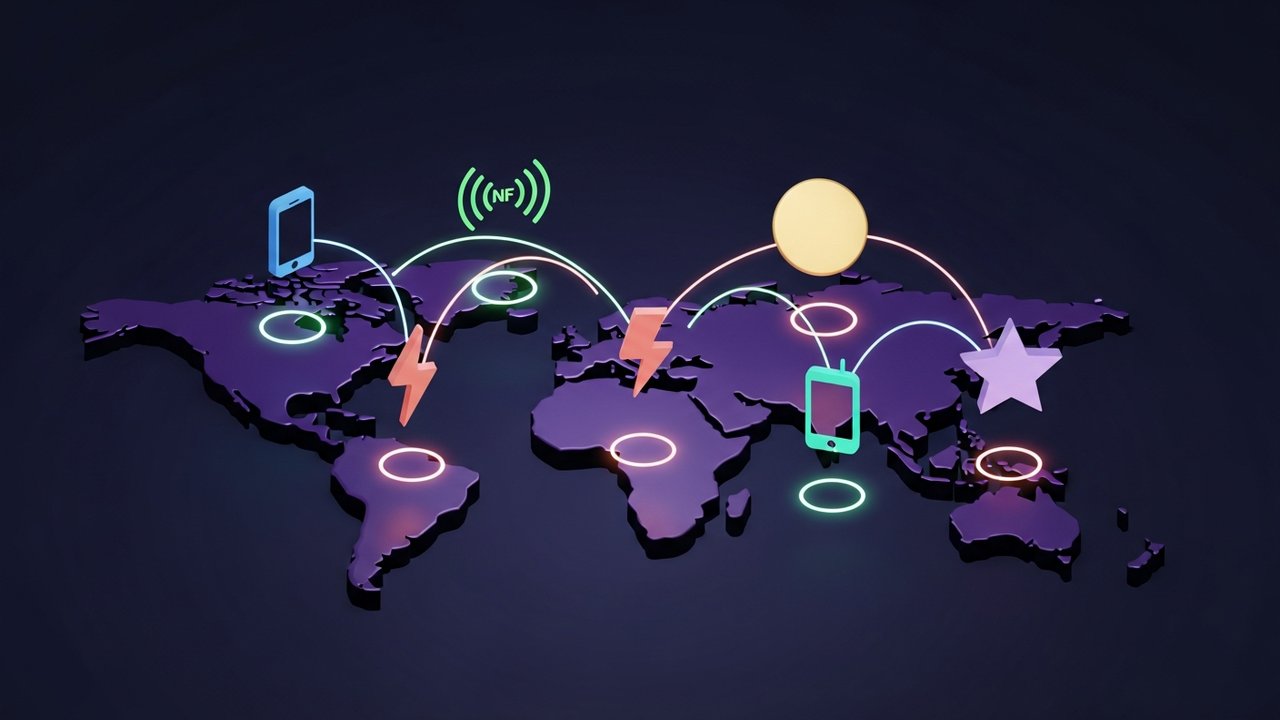
Payment preferences are deeply regional. A payment method that converts well in the US may be irrelevant in India or Brazil. Merchants expanding internationally need to map their payment stack to the markets they're entering.
| Region | Leading payment method | Key alternative |
|---|---|---|
| United States | Credit/debit cards (~38% of e-comm) | PayPal (71% penetration), Apple Pay |
| Europe | Cards + SEPA bank transfer | Klarna, iDEAL (Netherlands) |
| China | Alipay (53%), WeChat Pay (42%) | UnionPay cards |
| India | UPI (50%+ of digital transactions) | Debit cards, credit EMI |
| Brazil | Pix — 252M+ monthly transactions | Credit cards, boleto |
| Southeast Asia | Digital wallets (GoPay, GrabPay, Touch 'n Go) | Cash on delivery |
| Africa | Mobile money (M-Pesa, MTN Mobile) | Prepaid cards |
How to Choose the Right Payment Methods
Offering too few payment methods loses customers to abandonment. Offering too many creates decision paralysis and raises integration overhead. The goal is a curated stack that covers your customer base without unnecessary complexity. Not every payment option fits every business — a B2B software company has different needs than a fashion retailer.
- Map your customer geography. Where do your buyers live? Regional payment preferences override global trends. A store with 60% US traffic needs cards, PayPal, and Apple Pay. One with 40% Indian traffic needs UPI as its primary payment method.
- Segment by transaction size. Small purchases (under $50) complete faster with wallets and cards. Large B2B invoices often prefer bank transfers for the irrevocability and lower fees — a different payment method choice for a different use case.
- Calculate total cost per method. Interchange plus chargeback risk plus integration cost plus ongoing maintenance. A payment method that looks cheaper on processing fees may be expensive when chargebacks are factored in.
- Prioritize mobile. More than half of e-commerce traffic is now mobile. Digital wallets like Apple Pay and Google Pay drastically reduce friction on mobile compared to manual card entry.
- Add BNPL for higher-ticket items. If your average order value is above $100, BNPL adds meaningful conversion lift for buyers who won't put the full amount on a card.
- Test before committing. A/B test checkout configurations. The payment method combination that converts best for your specific product won't always match what works for other businesses.