Klarna vs Affirm: Which BNPL Service Is Right for You?
Klarna and Affirm look similar from the checkout page. They’re not. One reports your loan to Experian; the other doesn’t. One charges late fees; the other never does. Getting this wrong can quietly hurt your credit score or cost you more than you expected — so here’s how they actually compare.
What Is BNPL and How Do Klarna and Affirm Work?
Both are BNPL services — buy now, pay later — which means you split a purchase into smaller installments rather than handing over the full amount upfront. Most plans are interest-free if you stick to the schedule, but the conditions vary depending on which service and which payment option you pick.
How Klarna Works
Klarna’s most-used option is Pay in 4: four equal payments every two weeks, no interest, no fees unless you miss one. Pay in 30 works differently — you get the item first and have a month to pay the full amount, which suits anyone who needs to test a product before committing.
For bigger purchases, monthly financing is available, with interest rates that vary by creditworthiness. There’s also a virtual card, which lets you use Klarna at stores that haven’t officially partnered with the service — more useful than it sounds for in-store shopping.
How Affirm Works
Affirm runs on two structures: a Pay in 4 option (biweekly, interest-free) for smaller purchases, and longer installment plans from 1 to 36 months for larger ones. The extended plans carry an APR anywhere from 0% to 36%, depending on your credit profile and the merchant. One thing Affirm is firm about: no late fees, ever. Miss a payment and you won’t be hit with a penalty — interest still accrues on interest-bearing plans, but there’s no punitive fee stacked on top.
Klarna vs Affirm: Key Differences
Nine factors, side by side.
|
Feature |
Klarna |
Affirm |
|---|---|---|
|
Pay in 4 (interest-free) |
Yes, biweekly |
Yes, biweekly |
|
Longer payment plans |
Up to 24 months |
Up to 36 months |
|
APR range |
0%–33.99% (varies by plan) |
0%–36% |
|
Late fees |
Up to $7 per missed payment |
None |
|
Soft credit check at approval |
Yes |
Yes |
|
Hard credit check |
No |
Yes (for longer plans) |
|
Reports to credit bureaus |
No (Pay in 4) |
Yes (all loans, via Experian) |
|
Virtual card |
Yes |
No |
|
Available countries |
45+ |
Primarily US |
|
Merchant fee (approx.) |
~5–6% + fixed fee |
~5–6% + fixed fee (higher for long-term) |
Interest Rates and Fees: What You’ll Actually Pay
The “0% interest” pitch is real — but only under specific conditions, and klarna and affirm draw those lines differently.
Klarna’s Fee Structure
Klarna’s Pay in 4 is genuinely interest-free as long as you pay on time. Miss a payment and you’ll face a late fee of up to $7. Pay in 30 is also interest-free. Monthly financing plans, however, do carry interest — Klarna calculates your rate at checkout based on a soft credit check.
Affirm’s APR and Loan Terms
Affirm shows you the exact total you’ll pay before you confirm — interest included, no surprises at the end. Zero-percent offers exist through select partner merchants; Apple and Walmart both run 0% APR promotions through Affirm. Outside those deals, standard plans run from 10% to 36% APR for longer loans.
Key fee differences at a glance:
- Affirm charges no late fees on any plan; Klarna charges up to $7 per missed installment
- Affirm shows your total repayment amount before you confirm; Klarna’s monthly plan costs depend on a post-approval rate
- Klarna’s Pay in 30 has no fees if paid on time — Affirm has no equivalent
- Both services offer interest-free Pay in 4 for qualifying purchases
- Affirm’s APR can reach 36%; Klarna’s monthly plans cap at around 33.99%
Does Klarna or Affirm Affect Your Credit Score?
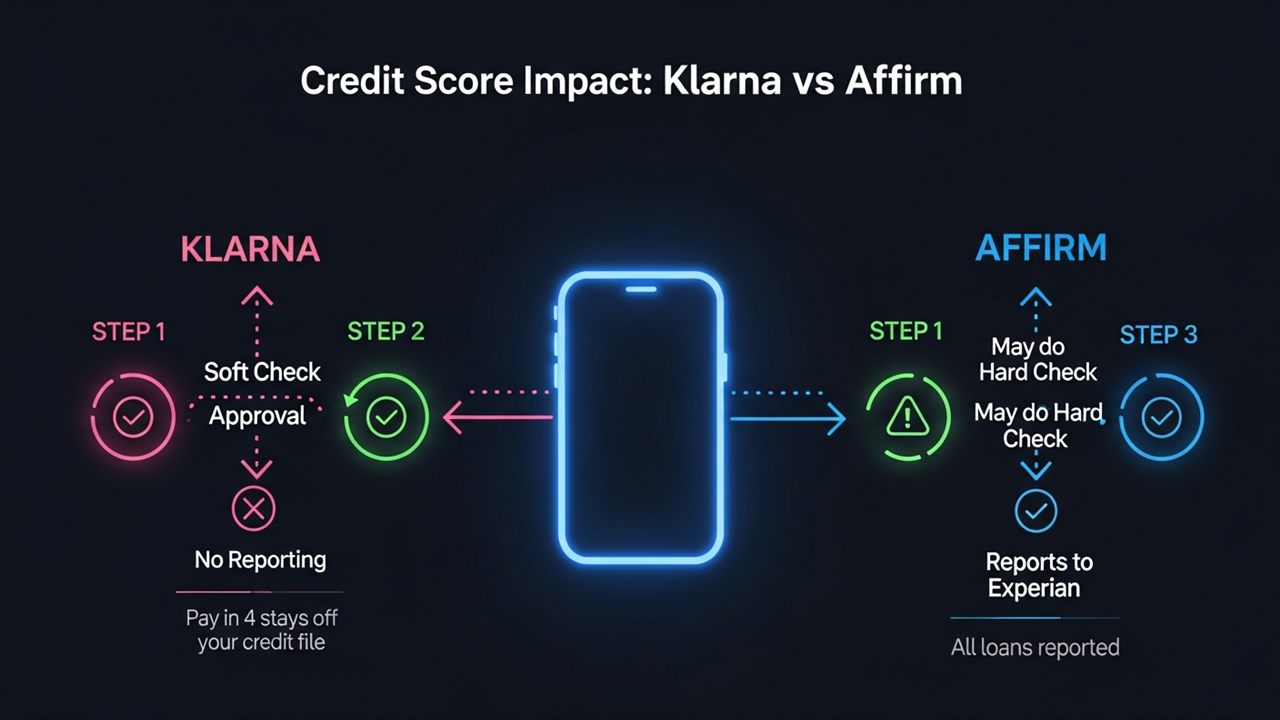
Both services run a soft credit check when you apply — this does not affect your credit score. But what happens after approval is where they differ significantly.
Klarna does not report Pay in 4 or Pay in 30 loans to credit bureaus. This means on-time payments won’t build your credit history, but missed payments also won’t damage it directly. Monthly financing plans may be reported.
Affirm reports all loans to Experian. Every payment you make is recorded. Pay on time and you gradually build credit history. Miss payments and your credit score takes a hit.
For borrowers who want BNPL to work toward their credit rating, Affirm is the only meaningful option. Those with thin or poor credit who can’t afford any reporting risk are better off with Klarna’s Pay in 4.
Affirm may also run a hard credit check for longer loan terms — this leaves a temporary inquiry on your report, typically dropping your score by a few points. Klarna skips hard checks entirely.
When to Choose Klarna vs Affirm
There’s no universal winner. The right BNPL service depends on your situation:
- Frequent smaller purchases (under $500): Choose Klarna. Pay in 4, Pay in 30, and the virtual card give you flexibility across categories without credit reporting risk.
- One large purchase (over $1,000): Choose Affirm. Longer plans up to 36 months and transparent APR disclosure make it better suited for big-ticket items like furniture or electronics.
- Building credit history: Choose Affirm. It reports to Experian, so consistent on-time payments count toward your credit score. Klarna’s standard plans don’t offer this.
- Shopping outside the US: Choose Klarna. It operates in 45+ countries; Affirm is primarily US-based with limited international reach.
- Shopping in-store without a partner retailer: Choose Klarna. The virtual card works anywhere Visa is accepted, giving you more coverage than Affirm’s merchant network.
If you want to compare more options beyond these two, the Klarna alternatives guide covers Afterpay and other BNPL services worth considering.
Which BNPL Service Is Better for Merchants?
For merchants, klarna and affirm are close in cost but different in reach and conversion impact.
Both charge roughly 5–6% of the transaction value plus a fixed per-transaction fee — the exact payment plan cost depends on loan length and merchant agreement. Affirm’s rates trend slightly higher for long-term financing plans, which require more underwriting. Klarna often negotiates custom rates for high-volume merchants.
On integration, both connect easily to Shopify and offer an API for custom implementations. Klarna’s larger international footprint makes it the default choice for businesses selling outside the US. Affirm’s strength is the US market, particularly for merchants selling high-value goods — its longer installment plans cut cart abandonment on $500–$3,000 purchases more effectively than Pay in 4 alone.
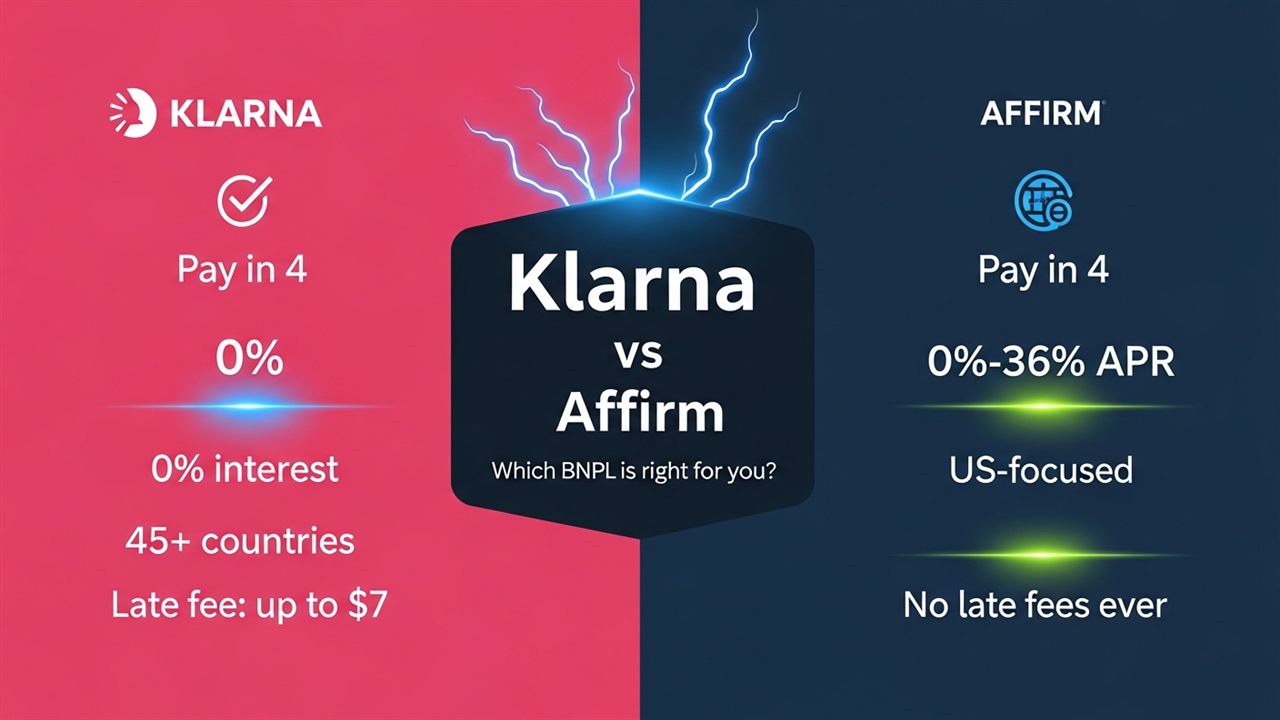
Affirm’s no-late-fees policy is also worth putting in front of customers at checkout. Shoppers who worry about penalty fees are more likely to commit when they know the total cost is locked in upfront.
Beyond BNPL: Adding Crypto Payments to Your Store
BNPL and crypto solve different problems. BNPL helps customers who want the product now but prefer to spread the cost. Crypto lets customers who already hold digital assets spend them directly — no bank, no card required.
For e-commerce merchants, adding crypto alongside Klarna or Affirm expands your payment coverage without touching your existing setup. If you want to understand how crypto compares to other payment methods, the operational gap is smaller than most merchants expect. A crypto payment gateway like Plisio handles conversion, wallet management, and settlement automatically — you receive funds in your preferred currency and carry no volatility risk.
A well-designed crypto payment strategy doesn’t replace BNPL. It runs alongside it.
Final Verdict: Klarna or Affirm?
Credit reporting and plan length are the two things that actually matter here. If you need longer repayment terms and are comfortable with your loan appearing on your Experian report, Affirm is the stronger pick. If you want flexibility, international coverage, or a virtual card — and you’d rather keep BNPL off your credit file — Klarna is the better fit.
For merchants: Klarna edges ahead if you sell internationally or across many product categories. Affirm is the right call for US-focused stores where monthly financing on high-value items is a real conversion driver.
Neither klarna vs affirm is the right answer in every situation. But with the comparison above, you now know exactly which one fits yours.