How to Invest in Meme Stocks: 2026 Investment Guide
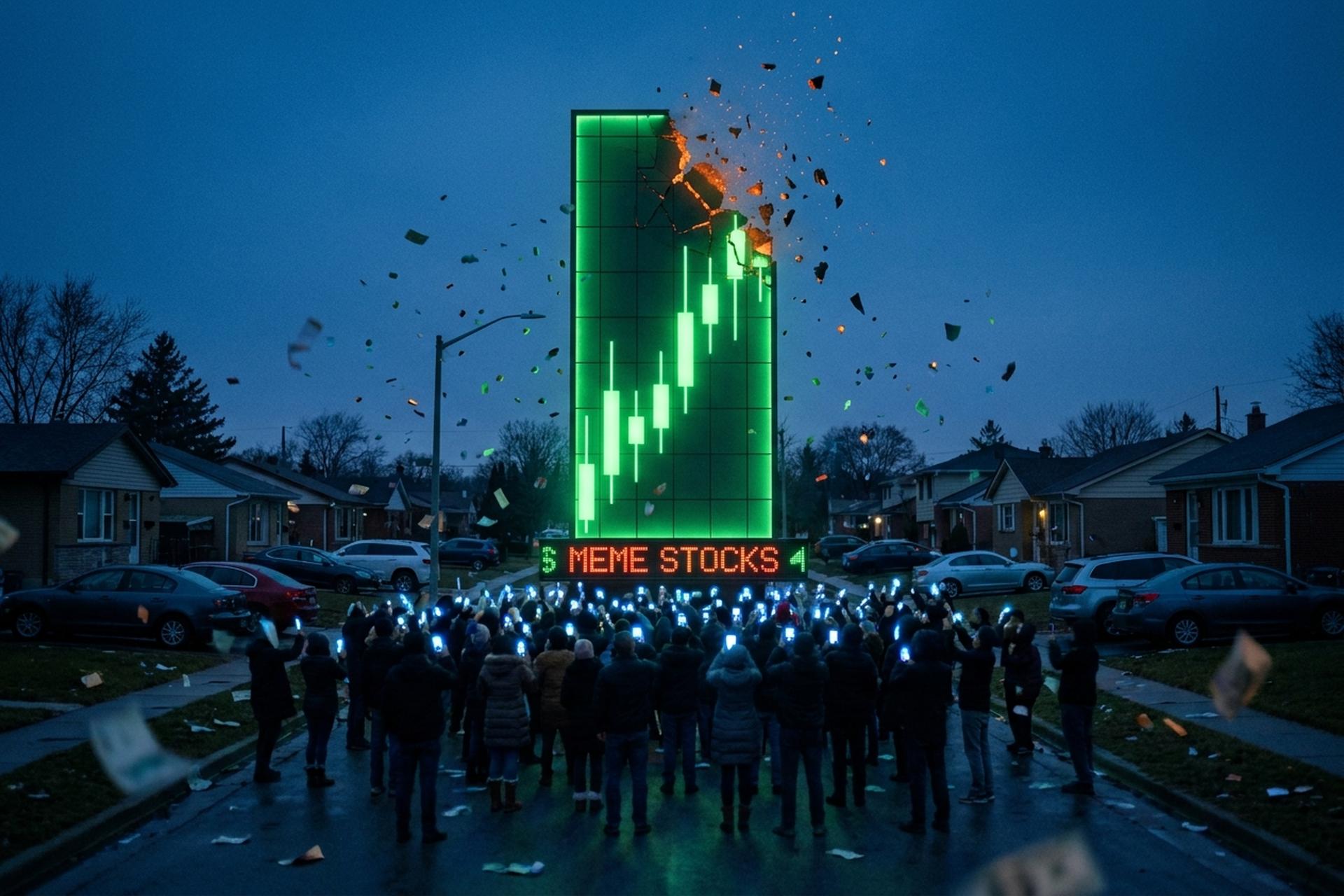
Strip away the smartphone app and the meme stock is three centuries old. In 1720, Londoners remortgaged their lives to buy shares in a company that did almost no real trade, watched the price soar, then lost nearly everything when it collapsed. The mechanics have barely changed. The crowd has, and so has the speed. When GameStop ran from about $5 to $483 in a handful of January days in 2021, it was the South Sea Bubble with a Reddit account.
This is no longer a curiosity in the stock markets. Retail traders made up a record 36% of US equity order flow in April 2025, according to J.P. Morgan. So it pays to understand the thing properly: what a meme stock actually is, how to buy one, whether the ETF route makes sense, how it compares to its crypto cousin the memecoin, and where it can quietly ruin you.
What a meme stock is and how meme stocks work
A meme stock is a sentiment instrument wearing an equity's clothes. Its price moves on attention and coordination, not on earnings. The company underneath is real, but on the days that matter, the balance sheet is almost beside the point. The name is literal: these are stocks that spread the way internet memes do, through repetition and in-jokes, and the label stuck after 2021.
What makes meme stocks work is social media. Communities on Reddit's r/wallstreetbets, on X, and on YouTube talk a name up, post the memes, and buy together, and the buying itself becomes the story. The targets are usually recognizable consumer brands that have seen better days, companies retail investors know and feel something about. The result is volatility detached from fundamentals, and the honest description, the one even Fidelity and Britannica reach for, is that this is trading, not investing. The distinction matters more than it sounds, and the rest of this guide keeps coming back to it.
The first meme stock: GameStop and the 2021 squeeze
Every later wave is a remake of GameStop. Get this one and you get all of them, including the part the legend tends to leave out: who got hurt.
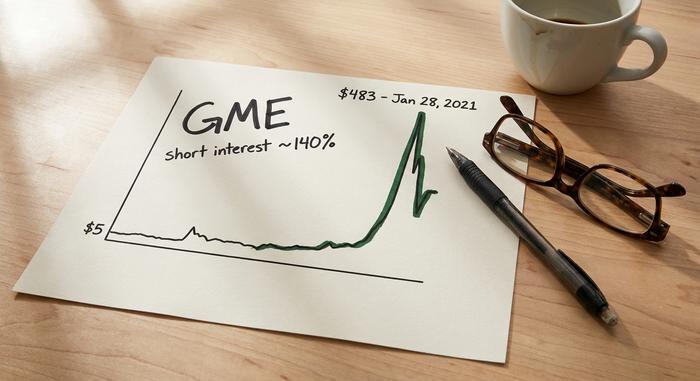
The setup was almost boring. GameStop, ticker GME, was a fading mall retailer selling video games in the age of downloads, and a slice of Wall Street had bet heavily that it would keep sinking. Too heavily. By January 2021 short interest hit roughly 140% of the public float. Read that again: traders had borrowed and sold more shares than actually existed. A crowd on r/wallstreetbets did the math, saw the trap, and bought. The stock ran from about $5 to $483 intraday on January 28, 2021. AMC, the cinema chain limping out of the pandemic, became meme stock number two and spiked to $72.62 that June.
Then came the bill, and it landed on both sides. Melvin Capital, one of the funds short GME, lost around 53% of its value in January, about $6.8 billion. r/wallstreetbets nearly tripled in a week, from 2.06 million subscribers to 6.3 million. And the brokers blinked. On January 28, Robinhood switched off the buy button for GameStop and other names, choking the rally and infuriating the very users it was built for. The fines came later: $70 million to FINRA, a record at the time, then another $29.75 million in 2026. When the SEC finally published its staff report that October, the finding was almost anticlimactic. No grand conspiracy. Just ordinary people buying the same stock at once, with halts driven by clearinghouse collateral math rather than collusion. Some early buyers got rich. Plenty of late ones bought the very top and are still waiting to get even.
| 2021 meme stock saga | Figure | Source |
|---|---|---|
| GameStop intraday peak (Jan 28) | $483 | Wikipedia / TheStreet |
| GME short interest at peak | ~140% of float | MarketBeat |
| Melvin Capital January loss | ~53% / ~$6.8B | CNBC / WSJ |
| r/wallstreetbets growth (1 week) | 2.06M to 6.3M | Washington Post |
| AMC all-time high (Jun 2) | $72.62 | TradingSim |
| Robinhood FINRA fine | $70M | CNBC |
How short selling and short squeezes drive meme stock prices
The core mechanic behind every meme stock surge is simple once you see it. A short seller borrows shares, sells them, and hopes to buy them back cheaper later, pocketing the difference. The bet pays when the price falls. It bleeds when the price rises, and unlike a normal stock purchase, the potential loss has no ceiling.
Picture it with numbers. A trader borrows 100 shares at $10 and sells them for $1,000, planning to rebuy at $6 and keep the $400 difference. If the stock instead runs to $50, buying those 100 shares back costs $5,000 — a $4,000 loss on a position that started at $1,000. Multiply that across a crowded short, and the panic explains itself.
A short squeeze is what happens when that bet goes wrong at scale. As the price climbs, short sellers rush to buy shares and close their positions before losses grow, and that forced buying pushes the price even higher, which forces more of them to buy. When more shares are sold short than exist, as with GameStop, the exits are too narrow for everyone at once.
There is a second engine that gets less credit: the gamma squeeze. When retail traders buy huge volumes of call options, the dealers who sold those options hedge by buying the underlying stock. The more the price rises, the more they must buy, which lifts the price again. Stack a gamma squeeze on top of a short squeeze and you get the near-vertical chart that defines the genre. Neither mechanic needs the company to be doing anything at all.
How to invest in meme stocks through a brokerage
The how-to is the easy part. Open an account with a brokerage such as Robinhood or Fidelity, fund it, search the ticker, and buy. Most platforms allow fractional shares, so you can put in $20 rather than the price of a full share. Robinhood alone ended 2024 with about $193 billion in assets and 27.4 million funded customers, which tells you how low the barrier now sits.
The hard part is everything after the buy button. You can hold the shares for simple price exposure, or trade options for leverage, which multiplies gains and losses alike and is how a lot of meme traders blow up. Decide your exit before you enter: the price you take profits at, and the price you accept defeat at. Without that rule, the crowd decides for you, usually late. Do the minimum homework first: check the short interest and the float, notice whether a name is already up several hundred percent, and ask who would be selling to you at today's price. If the answer is people who bought far lower, you are arriving late to their party. Remember the tax drag too, since a position held under a year is taxed as a short-term gain, at your ordinary income rate. The discipline here is position-sizing, not stock-picking. Treat it as money you have already mentally spent.
Is there a meme stock ETF? Roundhill and BUZZ
Yes, you can buy the basket instead of betting on one name. The Roundhill MEME ETF is the literal meme stock ETF, built to track companies with high social-media sentiment and high short interest. The VanEck Social Sentiment ETF, ticker BUZZ, takes a similar approach at a 0.75% expense ratio.
A fund spreads your risk across many names, so a single blow-up does not wipe you out. That is the appeal and, honestly, the contradiction. The whole draw of a meme stock is the lottery ticket, the chance that one name goes vertical; a diversified basket smooths exactly the spikes you came for. An ETF is the sensible way to hold an inherently unsensible asset. For some people that trade-off is the right one. For others it removes the only reason they were interested. Either way, you buy a meme stock ETF exactly as you buy any share, through a brokerage, which makes it the lowest-effort way into the theme for anyone who does not want to pick a single name.
Meme stocks vs memecoins: the crypto crossover
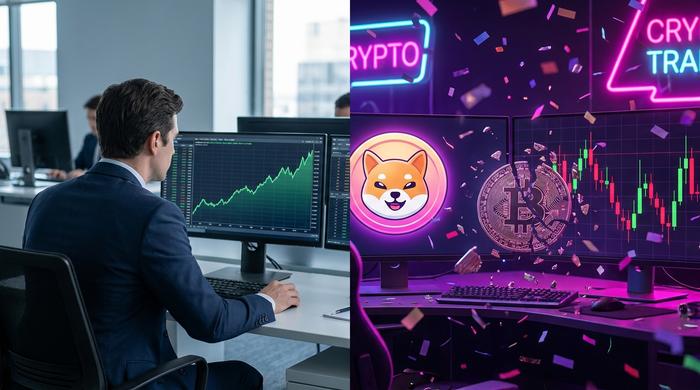
Meme stocks and memecoins are the same psychology running on different rails. Both move on social hype and community energy, both produce short, violent rallies, and both leave most latecomers underwater. If you understand one, you are most of the way to understanding the other.
The differences are where the risk lives. A meme stock is a regulated security with a real company behind it, traded through a brokerage during market hours. A memecoin is usually a token with nothing underneath but the joke, trading 24/7 on crypto exchanges — and anyone at all can mint one. That open door changes the scale of the carnage. The memecoin sector peaked near $150.6 billion in December 2024 and fell to roughly $36.5 billion by January 2026, a 76% collapse, with Dogecoin alone making up about 47.3% of what remained. On the launchpad pump.fun, more than 6 million tokens were created, and fewer than 2.1% ever reached a major exchange. Investors lost over $500 million to memecoin rug pulls and scams in 2024 alone.
The lesson reads cleanly across both worlds: the lower the barrier to creating the hype, the more wreckage it leaves. Memecoins also move faster because nothing slows them down: no market hours, no broker halts, no listing committee. A token can launch, peak, and collapse between breakfast and lunch. Meme stocks at least come attached to an audited business. Most memecoins come attached to nothing.
| Meme stocks | Memecoins | |
|---|---|---|
| Underlying | Real company | Usually nothing |
| Venue | Brokerage | Crypto exchange |
| Hours | Market hours | 24/7 |
| Who can issue | Listed companies | Anyone |
| Typical lifespan | Years (company survives) | Often days |
| Main risk | Buying the top | Rug pull / zero |
The risks: volatility, timing and meme stock mania
This is where I would tap the brakes. The house edge in meme stock mania is timing, and almost nobody has it.
The volatility is not a bug; it is the entire product. In July 2025, a basket of names traders nicknamed "DORK" surged on hype, with Krispy Kreme jumping around 50% despite falling revenue, then sliding nearly 20% from its peak within weeks. Prices like these are disconnected from fundamentals, which means there is no floor to catch you when sentiment turns. The uncomfortable truth is that if you buy after a stock is already trending, you are often the exit liquidity for the people who bought earlier. FOMO and social proof push you to act exactly when the risk is highest. The 2024 GameStop revival, sparked when Keith Gill, known online as Roaring Kitty, resurfaced, is the cautionary case: a real spike that faded, leaving late buyers down. None of this means you cannot win. The odds are simply built to take retail investors apart, and treating it as a strategy rather than a gamble is the mistake.
There is a structural shift worth naming, too. Retail is no longer a sideshow. At 36% of order flow it is half the room, which means these manias now arrive more often and move faster than the 2021 original did. More frequent is not more survivable. It just hands out more chances to be the one left holding the stock when the crowd moves on to the next ticker.
Should investors hold meme stocks in 2026?
For most people, a meme stock is fine as a small, pre-budgeted gamble with an exit rule, and ruinous as a strategy or with money you actually need. If you can lose the whole stake without it changing your life, and you decide your exit before you buy, go ahead with eyes open. If you are reaching for it to catch up, or betting the rent, that is the moment the mania has already won. So the real question is not which ticker is about to run. It is whether you can walk away with a profit you planned, or only with a story.