QUBT Stock: Is Quantum Computing Inc Worth the Risk?
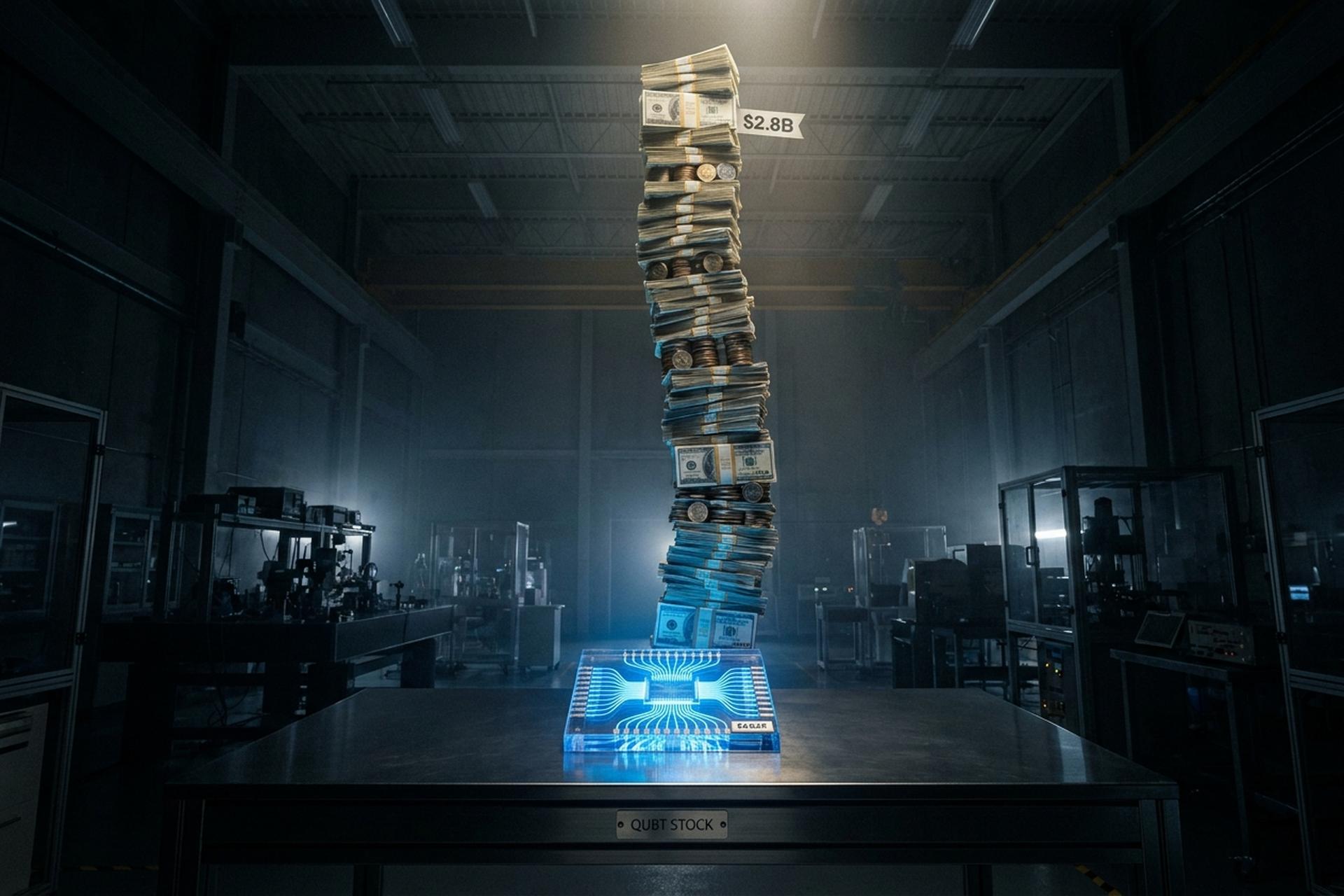
Start with one number. Last year, Quantum Computing Inc sold about $682,000 worth of its own products. Its stock carries a market value near $2.8 billion. That gap, between what the company actually earns and what investors are paying for it, is the entire story of QUBT stock.
Everything else is detail around that fact. Yes, there is a real lab. Yes, there are real chips and real government contracts. But the price is not set by the business. It is set by hope about what quantum computing might become a decade from now. So before you buy, you have to decide whether you are investing or whether you are buying a lottery ticket. Be honest about which one.
What QUBT Stock and Quantum Computing Inc Are
When you buy QUBT stock, you own a sliver of Quantum Computing Inc, a small photonics and quantum company that trades on the Nasdaq. Emphasis on small. This is a pre-commercial business with a science-project feel, wrapped in one of the hottest stories on the market.
Its history should make you cautious. The company we now call Quantum Computing Inc was not born in a quantum lab. It came from a 2018 reverse merger involving a former beverage company, complete with a 200-to-1 reverse stock split and a name change to QUBT. From soda to qubits, on paper.
Today it is run by CEO Dr. William McGann and headquartered in Hoboken, New Jersey, classified in the technology sector among computer hardware names. The shareholder base tells you who is really driving the stock: institutions own only about 4% of the shares. The rest is retail. That matters, because a stock owned mostly by enthusiastic individual investors trades on sentiment and momentum, not on the cold arithmetic of revenue and earnings. Keep that in mind for everything that follows.
What Quantum Computing Inc Actually Builds
This is the genuinely interesting part. The technology is real, even if the business is barely born.
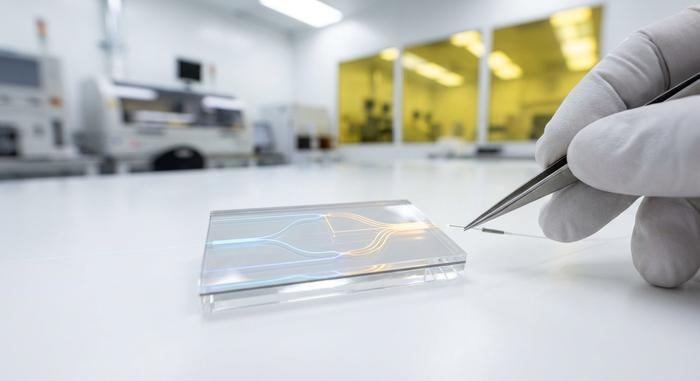
Quantum Computing Inc focuses on photonics, using light rather than the supercooled circuits most quantum rivals rely on. Its specialty is thin-film lithium niobate, or TFLN, a material for making photonic chips that move and process data as light. It also sells what it calls Dirac entropy quantum optimization machines, built for specific optimization applications rather than general computing. In May 2025 it opened its own TFLN chip foundry in Tempe, Arizona, which is a genuine piece of infrastructure, not a slide deck. The pitch for photonics is that it can run at room temperature, sidestepping the bulky, supercooled refrigerators that rivals like IonQ and Rigetti depend on. If that works at scale, it could be cheaper and simpler to deploy. The word doing the heavy lifting there is if.
There are real customers, too, just small ones. The company won a NASA subcontract worth roughly $407,000 to use its Dirac-3 machine for LiDAR data, and a contract from the US standards agency NIST for photonic chips. These are credibility markers, and they help explain why QUBT stock attracts attention from investors who follow government-tech contracts. They are not yet a business. A few hundred thousand dollars of government pilots does not pay for a foundry, which is exactly the tension at the heart of the stock.
QUBT Stock Price: A $6-to-$26 Rollercoaster
The QUBT stock price does not behave like a normal equity. It behaves like a casino chip for the quantum theme. Over the past year it has swung between $6.18 and a high of $25.84, reached in October 2025, and a recent QUBT stock quote shows it around $12. That is not volatility around a fair value. That is a stock with no fundamental anchor, blown around by headlines and bursts of heavy trading volume.
It helps to remember the backdrop. Quantum stocks as a group caught fire in late 2024 after Google unveiled a new quantum chip, and a wave of retail money flooded into almost anything with quantum in its name. QUBT rode that wave harder than most peers, which cuts both ways on the way down.
| QUBT stock snapshot | Figure |
|---|---|
| Recent price | ~$12 (late May 2026) |
| 52-week range | $6.18 - $25.84 |
| Market cap | ~$2.76B |
| Short interest | ~32% of float |
| Institutional ownership | ~4% |
Look at that short interest. Nearly a third of the available shares are sold short, which means a large crowd is betting the stock falls. In the broader stock market, a 32% short interest is a rare and pointed signal. When a heavily shorted, retail-loved stock catches a quantum headline, it can rocket on a short squeeze, then collapse just as fast. If you cannot stomach a 40% move in a week, in either direction, this is not your stock. Simple as that.
QUBT Revenue and Earnings: The Tiny Reality
This is the section that should give you pause, so read it slowly. Strip away the financial engineering and Quantum Computing Inc sells almost nothing.
Organic revenue for full-year 2025 was about $682,000. Not million. Thousand. For a company valued in the billions, that figure is almost hard to believe. The first quarter of 2026 looked far better on the surface, with $3.7 million in revenue against just $39,000 a year earlier, a jump that sounds explosive until you see the cause. It came almost entirely from acquisitions, chiefly the purchase of Lumina Semiconductor and the smaller NuCrypt, not from selling quantum machines.
Worse, that acquired revenue came with costs. Gross margin actually turned negative in the first quarter of 2026, meaning the products sold for less than they cost to make. The company loses money and is not close to profitability.
| QUBT financials | Figure |
|---|---|
| FY2025 organic revenue | ~$682,000 |
| Q1 2026 revenue | $3.7M (mostly acquired) |
| Q1 2026 gross margin | negative (~-15%) |
| Net income | Ongoing losses |
| Dividend | None |
So when you read that revenue "grew 9,000%," understand what happened. The company bought revenue. Its own quantum technology still generates next to nothing. That is the single most important fact in this entire article.
Dilution and the $1.4 Billion Cash Pile
Here is where bulls and bears stare at the same fact and see opposite things. Quantum Computing Inc sits on roughly $1.4 billion in cash. The bulls love it. The bears point at how it got there.
The company raised about $1.64 billion since late 2024, including a $750 million private placement in October 2025 and a $200 million raise in June 2025, by selling new common stock at market prices. That is a real war chest, enough to fund the foundry and operations for years. It removes the immediate risk that this pre-revenue company runs out of money. Management has been open that it raises when the share price is high, which is smart for the company and a warning for the shareholder. Selling stock near the top funds the business cheaply, but it means buyers are piling in just as the company issues more supply.
But every one of those dollars came from issuing stock, and that has a cost the headline cash figure hides. Share count exploded from about 37 million in 2022 to roughly 225 million by early 2026, a sixfold increase. If you had owned QUBT in 2022 and simply held, your slice of the company would have shrunk dramatically, even before any change in the stock price.
That is the trap with a story stock that funds itself by printing shares. The cash pile keeps the lights on and lets management chase the dream. It also quietly transfers value away from existing shareholders with every raise. A strong balance sheet built entirely on dilution is not the unambiguous good it first appears to be.
QUBT Valuation: A 4,000x Price-to-Sales Stock
Now the number that tends to end the debate. No analyst covering Quantum Computing Inc stock has produced a traditional price target that reconciles with this: on its organic revenue, QUBT trades at roughly 4,059 times sales.
Read that again. Most investors consider a software company expensive at 15 or 20 times sales. A richly valued AI darling might fetch 40 or 60 times. QUBT trades at over four thousand times its own product revenue. There is no traditional valuation framework in which that is reasonable, because traditional frameworks assume a business underneath the stock. Put it plainly. At this price, every dollar of the company's own annual product sales is valued at roughly four thousand dollars of market capitalization. No single year of growth closes a gap that wide. It would take many years of flawless execution just to grow into a merely expensive valuation.
What you are actually buying at this price is not a company. It is a speculative asset, and the bet is a specific one: that quantum computing becomes a massive industry, that photonics wins a meaningful share of it, and that this particular small company is one of the survivors. If all three come true over the next decade, today's price could look cheap. If any one of them fails, there is almost no fundamental floor under the security to catch the fall. That is the deal. The valuation is the risk.
QUBT vs IonQ, Rigetti and D-Wave
It helps to place QUBT among its quantum peers, because the comparison is unflattering. The sector is full of pre-profit companies, but QUBT is the smallest and most speculative of the bunch.
| Company | Ticker | Scale vs QUBT |
|---|---|---|
| IonQ | IONQ | ~$130M revenue, ~190x QUBT organic |
| Rigetti | RGTI | Larger, superconducting approach |
| D-Wave | QBTS | Larger, annealing approach |
| Quantum Computing | QUBT | ~$682K organic revenue |
IonQ, itself far from profitable, generated around $130 million in 2025, roughly 190 times QUBT's organic revenue. Rigetti and D-Wave take different technical paths and are also bigger. None of these are safe stocks, and all trade on quantum hope. But QUBT sits at the far end of the risk spectrum: the least revenue, the most dilution, the thinnest commercial track record. If you want quantum exposure, the honest question is why start with the most speculative name in the group. Investors who want the theme without single-stock risk can also buy quantum-themed ETFs that hold the whole basket, spreading the bet across IonQ, Rigetti, D-Wave, and QUBT at once. None of this means QUBT cannot outrun them. The smallest, hottest name sometimes posts the biggest percentage gains when a theme is running. But it also falls the hardest when the theme cools, and it has the least underneath it to cushion the landing.
The Bull and Bear Case for QUBT Stock
The straight read is that this one is not close. The bull case and the bear case are not balanced.
The bull case is a call option on the future. Quantum Computing Inc owns a real photonic chip foundry, has government contracts that lend technical credibility, and now sits on $1.4 billion in cash to fund its ambitions. If quantum computing scales and photonics proves important, a tiny company with money and a foundry could become something real. Buyers are paying for that optionality, the small chance of an enormous payoff.
The bear case is just the arithmetic. Organic revenue is $682,000. The valuation is over 4,000 times sales. Shares have multiplied sixfold. Nearly a third of the float is sold short, and formal analyst rating coverage is thin. The core technology is years, maybe a decade, from generating meaningful revenue. Every one of those is a fact, not an opinion.
| Bull case | Bear case |
|---|---|
| Real TFLN foundry + NASA/NIST contracts | ~$682K organic revenue |
| ~$1.4B cash runway | ~4,059x price-to-sales |
| Optionality if quantum scales | 6x share dilution since 2022 |
| Quantum-theme momentum | 32% short interest, pre-commercial |
My honest read is that this is a lottery ticket, not an investment, and the two should be sized very differently. There is a working company here, with credible technology and, now, a funded balance sheet. There is also a price that assumes a future that may never arrive. Both things are true, and the price is doing all the talking.

Conclusion: Is QUBT Stock Worth It in 2026?
QUBT is a fascinating company and a wildly speculative stock, and those two statements do not cancel out. The foundry exists, the cash is in the bank, the government pilots are signed. The revenue is almost nonexistent, the dilution is severe, and the valuation is detached from any normal measure of worth. You can find that exciting or terrifying. Both reactions are rational.
So answer one question honestly before you buy QUBT stock. Are you putting in money you can afford to lose entirely, as a small bet on a quantum future you believe in? If yes, size it in your portfolio like the lottery ticket it is and sleep fine. If you are reaching for it as a serious investment because the chart went up, that is exactly how speculative stories end in tears.