
Palantir Stock: Is Palantir Technologies (PLTR) a Buy?
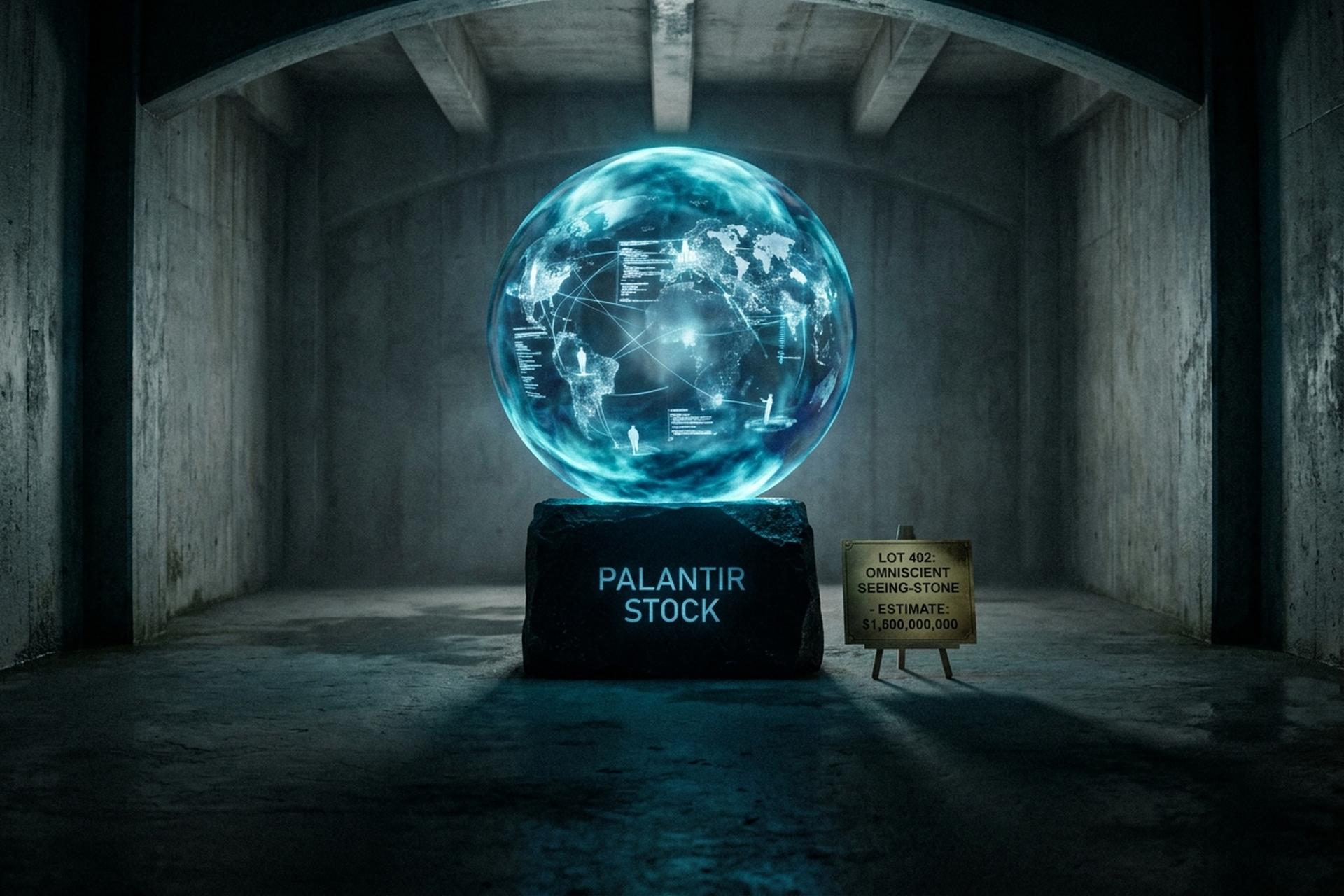
Here is the puzzle in one line. Palantir is growing revenue 85% a year and printing real profits, and its own insiders are selling roughly nine shares for every one they buy. Both things are true at the same time, and squaring them is the entire job of anyone thinking about Palantir stock.
So this is not the usual question of whether the company is good. It clearly is. The harder question is what you are paying for that quality, because PLTR is priced like almost nothing else in the market. The business is rarely the argument. The price always is.
What Palantir Stock and PLTR Actually Are
When you buy Palantir stock, you are buying a piece of Palantir Technologies, Inc., a data and software company that builds what it likes to call operating systems for institutions. It trades under the ticker PLTR. The company started in the spy world, and it has never fully left it.
Palantir was founded in 2003 by Peter Thiel, Alex Karp, and a small group of others, partly with early CIA-linked venture funding, to help the intelligence community make sense of scattered data through large-scale data integration. Karp is still the CEO, and he is one of the more unusual figures running a large US company. Palantir is headquartered in Denver, having left Silicon Valley in 2020. Karp himself is hard to file: a philosophy PhD who quotes theorists on earnings calls and talks openly about Palantir arming the West. That voice, love it or hate it, has become part of what the stock trades on.
It went public that same year through a direct listing on the NYSE, then moved its PLTR stock listing to the Nasdaq in late 2024. So when you trade it today, you are trading a Nasdaq name with a two-decade history and a very particular culture. The point to hold onto is simple: this is a software business, not a meme. What you are weighing is the price of that software.
What Palantir Technologies Does: Gotham, Foundry, AIP
Palantir Technologies sells three core products, and understanding them explains the whole Palantir stock thesis.
Gotham came first. It is the platform built for governments, defense, and intelligence: it pulls together messy, scattered data so an analyst or a soldier can act on it. For years this was the business, steady and quiet and tied to government budgets.
Palantir Foundry is the commercial version. It gives a company a single operational backbone, connecting supply chains, finances, and operations into one place that managers can actually query. Think of it as a data nervous system for a large enterprise.
Then came the one that changed the story. AIP, the Artificial Intelligence Platform, launched in April 2023, and it is the reason the stock went vertical. AIP plugs large language models into a company's real-time operational data, but in a controlled way: instead of a chatbot that guesses, it suggests actions an operator can approve inside the systems Palantir already runs. Crucially, this is analytics wired into operational decision-making, not a toy. A fourth, quieter product called Apollo handles the continuous deployment that keeps all of this running across secure and classified environments.
Palantir sells AIP through an unusual move called a bootcamp, where it drops engineers into a prospect's business for a few days and builds something working on their actual data. It is a sales tactic disguised as a workshop, and it has converted skeptics fast. That single shift, from selling software slowly to proving it in days, is what turned a sleepy government contractor into the most talked-about name in enterprise AI.

Palantir Stock Price: From $6 to $200 and Back
The PLTR stock price chart is one of the great runs of the AI era, and also a lesson in how far even a strong business can overshoot. The 2020 direct listing carried a reference price of $7.25. By December 2022, in the depths of the tech bear market, the stock had sagged to an all-time low of $5.92. Almost nobody wanted it.
What flipped it was not one earnings beat but a narrative. AIP handed investors a clean story about Palantir winning the enterprise-AI land grab, and a wave of retail buyers piled in behind it, turning the stock into a genuine cult favorite.
Then AI happened. Over the next two and a half years PLTR climbed roughly 35 times off that low, reaching a 52-week high of $207.52. As of late May 2026 it trades around $138, down about 20% so far this year, which gives Palantir Technologies a market value in the $330 to $344 billion range.
| Palantir stock snapshot | Figure |
|---|---|
| Recent price | ~$138 (late May 2026) |
| 52-week high | $207.52 |
| All-time low | $5.92 (Dec 2022) |
| Market cap | ~$330-344B |
| Listing | Direct listing 2020; Nasdaq since 2024 |
| 2026 year-to-date | down ~20% |
A run like that does two things at once. It mints believers, and it sets a price that the company then has to grow into. That second part is where the real argument lives.
PLTR Revenue and the AIP Growth Engine
This is the part bears tend to underrate, so be fair about it. Palantir's growth is not fading — and it is the reason PLTR stock has held a premium even after a 20% pullback. It is accelerating, and the profits underneath it are real.
Full-year 2025 revenue came in at $4.475 billion, up 56% from the year before. Then it got faster: first-quarter 2026 revenue hit $1.63 billion, up 85% year over year. The engine is US commercial, the Foundry-and-AIP business, where 2025 revenue jumped 109%. For 2026 the company guided to roughly $7.65 billion, another 71% jump.
What makes this unusual is that the profits are GAAP profits, not the adjusted kind that quietly hides stock compensation. Palantir earned $1.625 billion in GAAP net income in 2025, a 36% margin, and in the first quarter of 2026 it posted $871 million in GAAP net income at a 53% margin. Its Rule of 40 score, which adds growth rate to profit margin, hit 127% late in 2025. Most software companies celebrate clearing 40.
| Palantir financials | Figure |
|---|---|
| FY2025 revenue | $4.475B (+56% YoY) |
| Q1 2026 revenue | $1.63B (+85% YoY) |
| US commercial FY2025 | $1.465B (+109%) |
| FY2025 GAAP net income | $1.625B (36% margin) |
| Rule of 40 (Q4 2025) | 127% |
| FY2026 revenue guidance | ~$7.65B (+71%) |
The company also joined the S&P 500 in September 2024 and the Nasdaq-100 that December, which forced index funds to buy it whether they liked the valuation or not. On the business alone, this is one of the best growth-and-profit profiles in software. Remember that when you read the bear case, because the bear case does not dispute any of it.
The PLTR Valuation Debate: Priced for Perfection
Now the part that actually decides whether Palantir stock is a buy. The valuation.
At around $138, PLTR trades at roughly 65 times sales and about 91 times forward earnings, with an enterprise value near 166 times EBITDA. Read those numbers slowly. Most healthy software companies trade somewhere between 5 and 15 times sales. Palantir trades at a multiple several times higher than that, which means the market is not pricing this year's business. It is pricing a decade of near-flawless growth, paid for up front.
That is what priced for perfection means. The company can keep growing 50% or 60% a year, beat every quarter, and the stock can still fall, simply because so much good news is already baked in. The risk here is not that the business breaks. The risk is that the multiple, the price investors are willing to pay per dollar of sales, comes back toward earth. History is unkind here. Cisco kept growing for years after its 2000 peak and still saw its shares cut in half, because the multiple normalized even as the business did not break. A great company can be a poor stock for a long time if you overpay at the entry.
Two more numbers sharpen the worry. Insiders are selling about nine shares for every one they buy, and they cashed out billions in 2024. Stock-based compensation ran about $684 million in 2025, roughly 15% of revenue, which quietly dilutes existing shareholders every year. None of that means the company is in trouble. It means the people closest to it are happy to take the current price, which is worth noting when you are deciding whether to pay it.

Analyst Forecast and Price Targets for PLTR
Wall Street's forecast on PLTR is a study in disagreement. The consensus rating is a Buy, drawn from about 31 analysts, yet the average price target sits near $184, which is above the recent price but far below where the stock traded at its peak.
| Analyst view | Figure |
|---|---|
| Consensus rating | Buy (~31 analysts) |
| Average price target | ~$184 |
| High target | $255 (BofA) |
| Low target | $70 (Jefferies) |
| Recent price | ~$138 |
Look at the spread. The high target is $255 and the low is $70, a gap of more than three and a half times on the same company. When the optimists and pessimists are that far apart, and even retail-favorite outlets like the Motley Fool split from cautious institutions, it tells you the honest answer is that nobody can value this with confidence. The numbers are clear. The price they justify is anything but.
PLTR vs Nvidia: Two Very Different AI Bets
People love to file PLTR and Nvidia in the same drawer marked AI. That comparison is mostly wrong, and the difference matters for risk.
Nvidia sells the shovels. Its chips are the physical picks of the AI gold rush, it has enormous revenue, genuine pricing power, and despite a huge market cap it trades at a far lower multiple of sales than Palantir. Palantir sells the software that runs on top, a much smaller revenue base priced far more richly. One is a hardware giant; the other is a high-growth software bet on artificial intelligence being put to work inside organizations.
| Factor | PLTR (Palantir) | NVDA (Nvidia) |
|---|---|---|
| AI role | Software / analytics layer | Chips / infrastructure |
| Revenue base | Smaller (~$4-8B) | Very large |
| Price-to-sales | ~65x | Far lower |
| Main risk | Valuation reset | Demand cyclicality |
So choosing between them is not picking the better AI stock. It is choosing which risk you would rather hold: Nvidia's exposure to a chip-demand cycle, or Palantir's exposure to a valuation that has very little room for disappointment.
The Bull and Bear Case for Palantir Stock
Time for my actual read. What makes Palantir stock so hard to call is that the bull and the bear agree on the facts and still reach opposite conclusions.
The bull case is strong and simple. Palantir is the clearest leader in applied enterprise AI, it is growing faster as it gets bigger, it makes real GAAP money, AIP has a widening lead, index inclusion brings steady buying, and Karp runs it with a conviction that has been right more often than critics expected. If AI adoption inside large institutions is a decade-long wave, Palantir is riding the front of it.
The bear case does not argue with one word of that. It just points at the price. At 65 times sales, the stock has already priced in years of this, so even excellent results can disappoint a market expecting perfection. Add the 9-to-1 insider selling, the ongoing dilution, and a still-heavy reliance on government contracts in an uncertain budget climate, and you have a great company strapped to a fragile multiple.
| Bull case | Bear case |
|---|---|
| Growth accelerating (85% in Q1 2026) | ~65x sales, priced for perfection |
| Real GAAP profit, Rule of 40 at 127% | Insiders selling 9:1 |
| AIP moat in enterprise AI | ~15% of revenue lost to dilution |
| S&P 500 index buying | Government revenue concentration |
My read is that this is one of those rare stocks where you can admire the company and still refuse the price. The business deserves a premium. Whether it deserves this premium is a different question, and it is the only one that matters at $138.
Conclusion: Is Palantir Stock Worth It in 2026?
Palantir is the unusual case where almost everyone agrees the company is excellent and still cannot agree on the stock. The growth is real, the profits are real, the AI leadership is real. The valuation is also real, and at roughly 65 times sales it asks you to pay today for a decade of flawless execution.
So ask yourself the only question that counts before you buy: are you comfortable owning a wonderful business at a price that leaves almost no room for it to stumble, and can you hold it through a multiple reset that could cut the stock hard even if revenue keeps climbing? If yes, Palantir stock is a front-row seat to enterprise AI. If the price makes your stomach turn, that instinct is worth listening to.



