
What is a block reward: how bitcoin miners get paid and why the money keeps shrinking
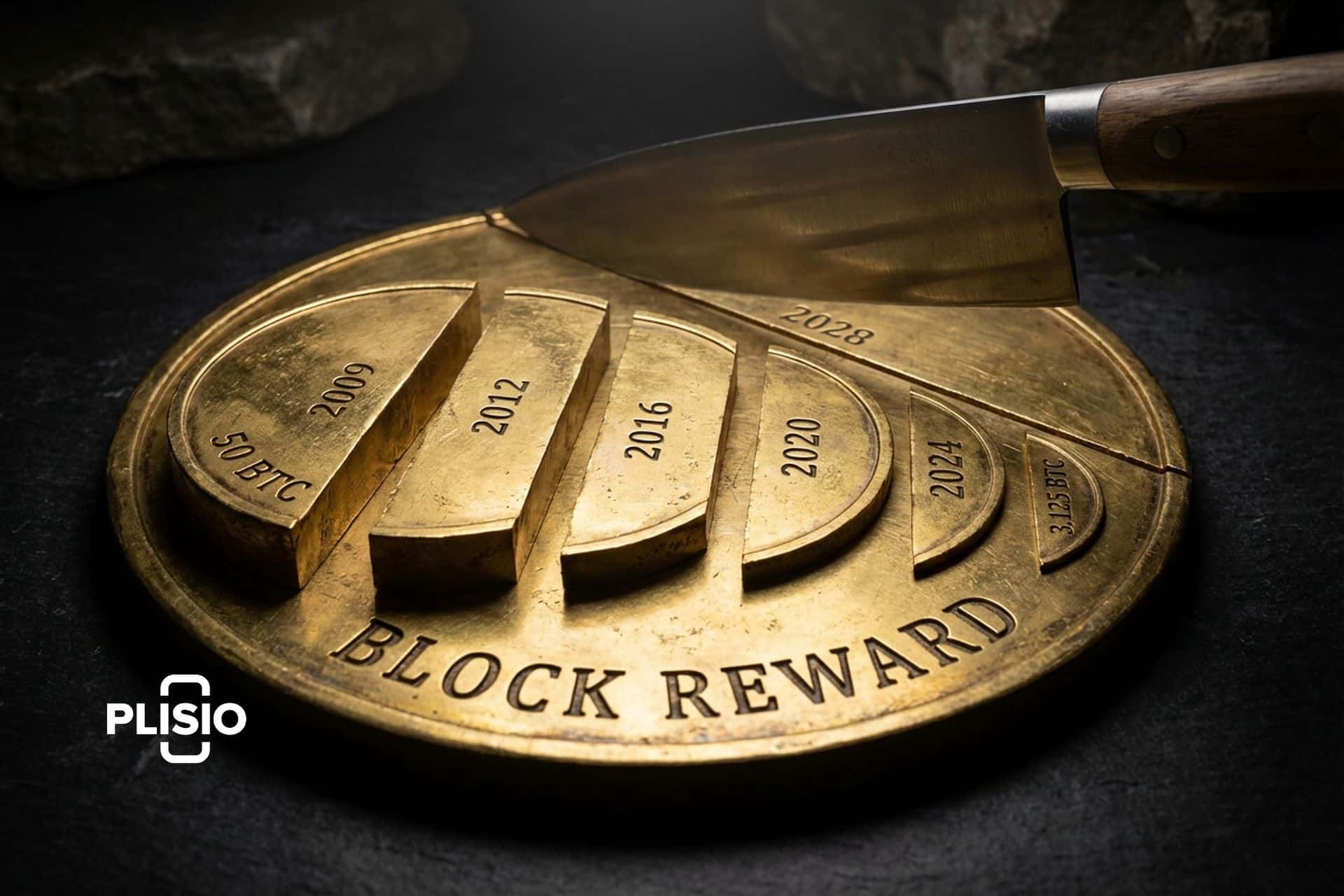
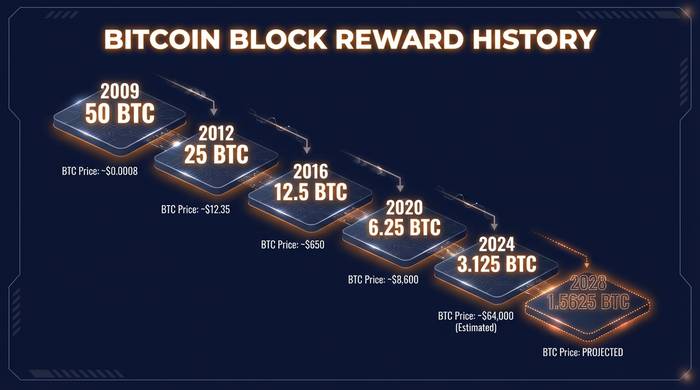
There's a story that circulates in Bitcoin forums about a developer named Laszlo Hanyecz who, in May 2010, spent 10,000 BTC on two Papa John's pizzas. People love to do the math on what those coins would be worth now (about $685 million), but what gets less attention is where those 10,000 BTC came from in the first place. Laszlo had mined them, earning 50 BTC at a time as block rewards, using hardware that most people today would call a doorstop. The block reward that created those coins was 50 BTC, a number that hasn't been available since 2012 because four halvings have cut it down progressively to 3.125, where it sits today until the next cut in 2028 brings it to 1.5625.
Without block rewards, Bitcoin doesn't work. Full stop. The entire security model depends on miners being paid enough to keep burning electricity, because that electricity is what makes the network too expensive for anyone to attack. The awkward part is that the payment has been declining on an automatic schedule since Satoshi mined block zero in January 2009, and the schedule's endpoint is zero. No more new coins, ever. Whether fees will be enough to fill that gap is a question nobody can answer with data because we haven't gotten there yet, and the people who claim certainty in either direction are guessing. What follows is a breakdown of how block rewards actually work, what happened at each halving, how miners adapted, and where the incentive structure goes from here as the subsidy winds down toward nothing.
Block reward definition: the two pieces of a miner's paycheck
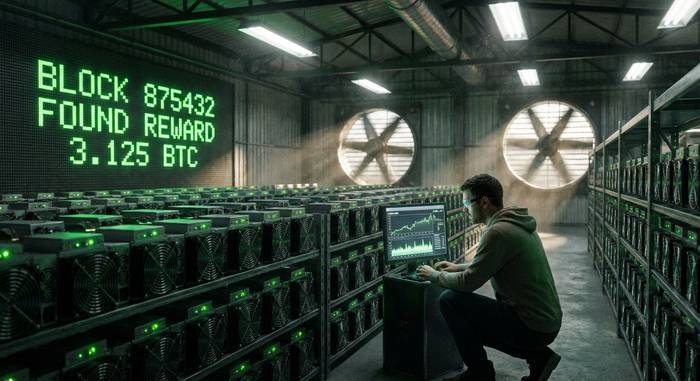
Picture this: somewhere in West Texas, a warehouse full of mining rigs has been grinding hash calculations 24 hours a day for the past week. One of those machines just spit out a valid nonce, the block got accepted by the network, and 3.125 fresh BTC appeared in the operator's wallet, coins that didn't exist five seconds ago. That deposit is what the industry calls a "block reward," and while everyone talks about it as one thing, it's actually two completely different revenue streams wrapped in one transaction.
The bigger piece, and the one people usually mean when they say "block reward," is the block subsidy: freshly created bitcoin that literally didn't exist until the miner found a valid block. Nobody minted it. Nobody transferred it. The Bitcoin protocol conjured 3.125 new BTC into existence because a miner's ASIC machine ground through trillions of hash calculations and happened to land on the right answer before anyone else on the planet. That's the only mechanism through which new bitcoin has ever entered the supply; unlike dollars, there's no printing press and no committee deciding to issue more.
The second stream is transaction fees, and this one is getting more important with every passing halving. Whenever you or I send bitcoin, we attach a fee that basically says "here's a tip for whichever miner puts my transaction in a block." During boring weeks, total fees in a block might add up to $50-100. But when the network is slammed, like during the Ordinals explosion in late 2023 when people were paying ridiculous money to inscribe JPEGs onto the Bitcoin blockchain, fees went absolutely nuts. I saw one block in December 2023 where the miner pocketed 6.7 BTC in fees alone, which was more than the 6.25 BTC subsidy that came with the block. Fees outpaid the subsidy. That's supposed to be the future of mining economics, and for one chaotic week it became the present.
If you pull up any Bitcoin block on an explorer and scroll to the very first transaction, you'll see something weird: a transaction with no sender. That's the coinbase transaction, named years before the exchange stole the word for its brand. This is the delivery mechanism for the block subsidy. The protocol generates coins from nothing and deposits them in the winning miner's wallet. Every block in Bitcoin's history starts with one of these, going back to the genesis block Satoshi mined in January 2009.
| Component | What it is | Where it comes from | Size in 2026 |
|---|---|---|---|
| Block subsidy | Newly minted BTC | Created by the protocol | 3.125 BTC per block |
| Transaction fees | User payments for inclusion | Paid by transaction senders | Variable: $0.50 to $50+ per block |
| Coinbase transaction | The delivery mechanism | First tx in every block | Contains the subsidy + fees |
The bitcoin halving: why the block reward keeps getting smaller
After exactly 210,000 blocks get added to the chain, the subsidy drops by 50%. Not 49%, not 51%. Exactly half. The network doesn't vote on this. There's no committee that reviews it. The rule was written into Bitcoin's source code before Satoshi mined the first block, and changing it would require convincing essentially every node operator on earth to install a software update that breaks the most foundational promise Bitcoin ever made. In 17 years, nobody has come anywhere close to pulling that off.
Satoshi set it up this way deliberately, and the reasoning is visible even in the earliest forum posts from 2009. Dump all 21 million coins at once and there's no reason for anyone to keep mining after day one. Print coins forever and you get inflation that erodes value the same way fiat currencies do. So instead, the protocol doles out coins on a declining curve: fat rewards in the beginning when the network needs miners most, thinner rewards over time as Bitcoin matures and (ideally) transaction fees grow enough to pick up the slack.
Four halvings have happened. A fifth is coming:
| Halving | Date | Block height | Subsidy before | Subsidy after | BTC price at halving |
|---|---|---|---|---|---|
| Genesis | Jan 3, 2009 | 0 | -- | 50 BTC | ~$0 |
| 1st | Nov 28, 2012 | 210,000 | 50 BTC | 25 BTC | ~$12 |
| 2nd | Jul 9, 2016 | 420,000 | 25 BTC | 12.5 BTC | ~$650 |
| 3rd | May 11, 2020 | 630,000 | 12.5 BTC | 6.25 BTC | ~$8,600 |
| 4th | Apr 20, 2024 | 840,000 | 6.25 BTC | 3.125 BTC | ~$63,762 |
| 5th (projected) | ~Apr 2028 | 1,050,000 | 3.125 BTC | 1.5625 BTC | ? |
Read the subsidy column from top to bottom: fifty, twenty-five, twelve and a half, six and a quarter, three point one two five. Miners earn half as many coins with each halving. Now read the price column: zero, twelve bucks, six hundred fifty, eighty-six hundred, sixty-three thousand. Here's the thing nobody talks about when they panic over "the reward is shrinking": in dollar terms, miners have been making more money each cycle, not less, because bitcoin's price appreciation has outpaced the subsidy cuts. A miner earning 50 BTC in 2011 made maybe $15 per block. A miner earning 3.125 BTC in 2026 makes $214,000. The BTC reward got 16x smaller. The dollar reward got 14,000x bigger.
That math only works if bitcoin's price keeps going up faster than the subsidy shrinks, and past performance is obviously no guarantee. But it explains why miners keep showing up after every halving even though the bitcoin payout drops 50%: they're betting on price appreciation making up the difference. So far that bet has paid off every single cycle.
The next upcoming bitcoin halving around April 2028 will cut the subsidy to 1.5625 BTC. After that, 0.78125 in ~2032. Eventually, somewhere around 2140, the subsidy rounds down to zero and no new bitcoin is created ever again.
Block time, block size, and how they shape the reward system
Two numbers define how bitcoin's reward system feels in practice: block time and block size.
Block time tells you how long you wait between blocks, and for Bitcoin the target is 10 minutes. I want to stress that "target" is the right word because actual block times are all over the place. I've personally watched blocks land 30 seconds after the previous one, and I've also sat refreshing mempool.space for 40 minutes wondering if the network broke during a gap between blocks. The protocol handles this with a difficulty adjustment every 2,016 blocks (about two weeks): if blocks have been arriving too fast, the math puzzle gets harder; if they've been slow, it gets easier. The system self-corrects to hover around that 10-minute average over time.
Why does block time matter for your understanding of block rewards? Because it controls the faucet. At 3.125 BTC per block and roughly 144 blocks landing per day, about 450 fresh bitcoin flow into existence every 24 hours. At April 2026 prices, that's roughly $31 million in new supply being added to the market daily, bought mostly by mining companies who need to sell a portion to cover their power bills and hardware leases.
Block size puts a ceiling on how much data fits in each block. The base limit is 1 MB, though SegWit transactions effectively push that up to about 4 MB in what the protocol calls "weight units." That translates to roughly 2,000-3,000 transactions per block on a normal day.
This ceiling is what makes the fee market tick. When there are more transactions waiting than can fit in the next block, users start outbidding each other on fees to get priority. Miners look at the mempool, grab the transactions paying the most per byte, and leave the cheap ones waiting. During an Ordinals mint or a memecoin frenzy, you'll see fees jump from $1 to $30 in the span of an hour. On a lazy Sunday, you can get a transaction through for less than a dollar.
Here's the arithmetic that defines every miner's existence: what they earn from one block equals the subsidy (3.125 BTC, fixed until 2028) plus whatever transaction fees happen to be in that particular block (wildly variable). Right now, the subsidy is the big piece and fees are gravy. But that ratio is being forcibly inverted by the halving schedule, one cut every four years. After enough halvings, there's no subsidy left and the entire mining industry runs on fees or it doesn't run at all.
The economics of mining after the 2024 halving
The April 2024 halving hit miners hard. One day they earned 6.25 BTC per block. The next, 3.125. Same electricity costs. Same hardware payments. Half the coins.
I talked to a small mining operation in Texas last year, three guys running 200 machines in a converted warehouse, and they told me the 2024 halving nearly put them under. Their electricity contract was fine, but the hardware payments didn't halve along with the reward. They survived by negotiating a curtailment deal with the grid operator: ERCOT pays them to shut off during peak demand, which offsets part of the lost mining revenue. That kind of creative accounting is what separates the survivors from the casualties.
The broader numbers paint a similar picture for smaller operations. Bitcoin trades near $68,500 in April 2026 and the 3.125 BTC subsidy is worth about $214,000 per block, which sounds like plenty until you look at the cost side. Hashprice is the metric miners obsess over: it tells you how much revenue you earn per petahash per second per day. In the summer of 2025, hashprice sat at a tolerable $55. By December it had crashed to $35, a 35% decline that had nothing to do with Bitcoin's price and everything to do with more machines coming online and competing for the same fixed amount of daily block rewards. For anyone running machines on residential electricity at $0.10 or $0.12 per kilowatt-hour, these numbers are a death sentence. You're literally paying more for power than the coins you mine are worth.
The operations that are still standing run latest-gen ASICs in places where electricity costs between three and six cents per kilowatt-hour. Think West Texas wind farms, Quebec hydroelectric, Paraguayan dams, Icelandic geothermal. At those rates, each machine can net $12-25 per day after power costs. Thin, but positive. The margins compress with every halving, though, and the miners know it.
What caught my attention in 2025 was how quickly the survivors pivoted their entire business model rather than just gritting their teeth through another halving. Marathon Digital signed a deal with an AI company to run training jobs on their GPUs during off-peak hours. Riot Platforms did something similar. Hut 8 merged with US Bitcoin Corp partly to get more diversified revenue streams. The pitch to shareholders changed from "we mine bitcoin" to "we run high-performance compute infrastructure that happens to mine bitcoin when it's profitable and hosts AI workloads when it's not." That's a meaningful evolution. Five years ago, mining companies were pure bitcoin plays. Now the smart ones are energy arbitrage businesses that treat block rewards as one revenue line among several. The strategy makes the halving hurt less because it derisks the core assumption that bitcoin rewards will always cover the power bill.
The supply numbers tell you where we are in Bitcoin's life cycle. Out of 21 million coins that will ever exist, about 19.68 million have already been mined. That leaves 1.32 million left to go, less than 7% of the total. At the current rate of roughly 450 new BTC per day, annual issuance sits around 164,000 coins. After 2028, that drops to 82,000. Each halving makes the remaining pool drain more slowly, stretching the timeline out to 2140 and beyond. Satoshi's laptop mined 50 BTC per block in 2009 for what amounted to pocket change. Marathon Digital's warehouse full of S21 rigs mines 3.125 per block for $214,000, and even that will feel generous by the time the 2032 halving cuts it in half again. Annual new issuance sits around 164,000 BTC. After the 2028 halving, that drops to roughly 82,000 per year. Bitcoin's inflation rate is already below 1% annually and heading toward 0.5%.
How block rewards work beyond bitcoin: PoS and altcoins
Bitcoin gets all the attention when people talk about block rewards, but the concept shows up in different forms on basically every chain that exists. How it works depends on whether the network chose to burn electricity or lock up capital to keep itself honest.
On proof-of-work chains like Bitcoin, Litecoin, and Dogecoin, the reward goes to whoever burns enough electricity to solve the cryptographic puzzle first. Bitcoin and Litecoin both use halving schedules that cut the reward over time. Dogecoin went a different direction entirely: it pays a flat 10,000 DOGE per block, forever, with no halvings and no supply cap. That makes it permanently inflationary, which is either a fatal design flaw or a feature that keeps miners incentivized depending on who you're arguing with on Reddit.
Proof-of-stake chains like Ethereum, Cardano, and Solana threw out the mining model completely. No puzzles, no electricity arms race. Instead, validators put up their own coins as collateral and the protocol picks them to propose blocks based on how much they've staked. The reward is freshly minted coins plus a cut of fees, functionally the same carrot as a block reward but delivered without the environmental footprint that made proof-of-work a political target.
Ethereum is the most interesting comparison because we got to watch it switch systems in real time. Before September 2022, Ethereum miners earned ETH block rewards the same way Bitcoin miners earn BTC: solve a puzzle, get coins. Then The Merge happened and Ethereum ripped out proof-of-work entirely. Overnight, GPU mining rigs that had been earning their owners hundreds of dollars a day became expensive space heaters. The replacement: proof-of-stake, where you lock ETH as collateral and the protocol pays you a yield for honestly validating blocks. As of 2026, about 28 million ETH sits in staking contracts earning 3.3-4.2% annually, down from 6%+ in early 2023 because the more ETH that gets staked, the thinner each validator's slice becomes. Energy consumption fell 99.95%. The core question, "are validators earning enough to bother," is still being tested, but so far the answer appears to be yes.
| Blockchain | Consensus | Current block reward | Halving? | Supply cap |
|---|---|---|---|---|
| Bitcoin | PoW | 3.125 BTC | Yes, every ~4 years | 21 million |
| Litecoin | PoW | 6.25 LTC | Yes, every ~4 years | 84 million |
| Dogecoin | PoW | 10,000 DOGE | No | No cap |
| Ethereum | PoS | ~2.5% APY staking | No halving (variable issuance) | No hard cap |
| Cardano | PoS | ~3-4% APY staking | No halving (reserve pool) | 45 billion ADA |
| Solana | PoS | ~6-7% APY staking | No halving (declining schedule) | No hard cap |
The future of block rewards: what happens when the money runs out
People who've been in Bitcoin long enough have a name for this question: the "security budget problem," and it keeps coming up at every conference, in every podcast, and in every late-night Twitter thread among miners and protocol researchers.
The block subsidy shrinks by half every cycle. By 2040 it's under 0.2 BTC per block. By 2100 it barely registers. By 2140, it hits zero and no miner on earth gets a single new satoshi for finding a block ever again. So what on earth keeps them running millions of dollars worth of equipment?
Satoshi had an answer, and it was baked into Bitcoin's code from day one: users pay transaction fees, and those fees replace the subsidy as the main incentive. If Bitcoin ends up processing enough valuable transactions that block space remains in high demand, the fee revenue per block could easily match or exceed what the subsidy pays today. We already saw it happen during the Ordinals and BRC-20 waves in 2023-2024 when fee revenue temporarily surpassed the subsidy for days at a time. Whether that level of activity becomes the norm or stays a periodic anomaly is the trillion-dollar question.
But there's a scenario that keeps researchers up at night. What if most everyday payments migrate to Layer 2 networks like Lightning, and the base chain becomes a settlement layer that only processes a few thousand high-value transactions per day? In that world, the competition for block space might not be fierce enough to generate the fee revenue miners need to justify their electricity bills. Hash rate could fall, the cost of attacking the network would drop, and Bitcoin's core value proposition — censorship-resistant, immutable money — would be weaker. This isn't FUD. It's a genuine open question that smart, well-intentioned people disagree about vigorously, and we won't know the answer until the halvings force the issue.
I keep coming back to the same conclusion every time I think about this: the 2028 and 2032 halvings are the actual stress tests that matter. The subsidy drops to 1.5625 BTC in 2028, then 0.78125 in 2032. At those levels, transaction fees have to carry real weight or miners start shutting off machines they can't afford to run. If the fee market holds through those two halvings, the glide path to 2140 is probably manageable. If it doesn't, the Bitcoin community will face some genuinely uncomfortable choices about whether the protocol needs modifications that nobody currently wants to discuss, because touching the 21 million supply cap or adding a tail emission would break the single most sacred promise Bitcoin has ever made.



