Is Solana a Good Investment in 2026? An Honest Verdict
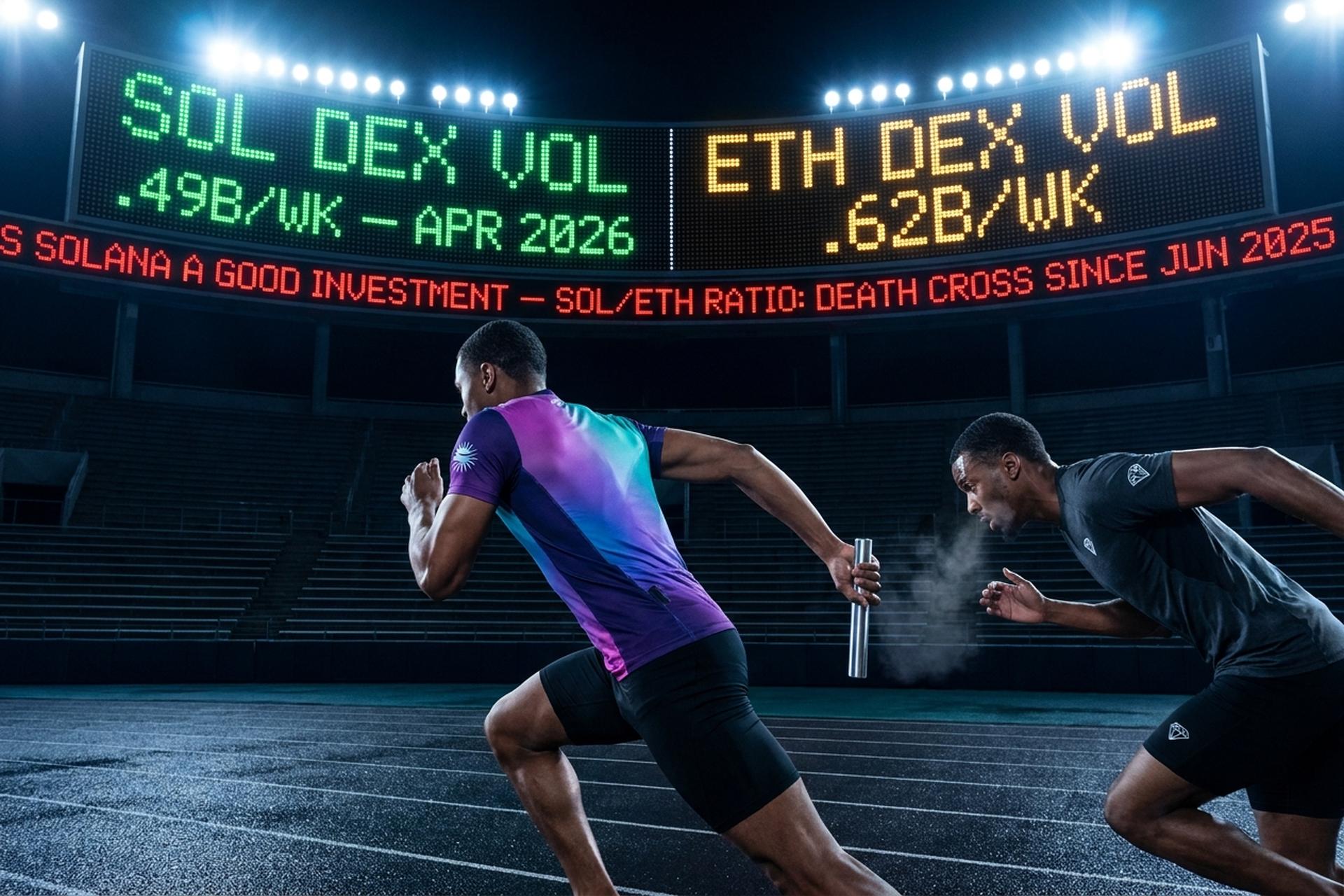
The contradiction in front of any honest investor is this: Solana flipped Ethereum on weekly decentralized-exchange volume in April 2026, $11.49 billion against $7.62 billion (KuCoin/MEXC), at the same time the SOL/ETH ratio sat in a death cross that has held since June 2025 and the validator count fell roughly 65% to under 800 (Datawallet). The fundamentals improved. The price collapsed 71% from a $293 all-time high in January 2025.
That is the real story of Solana in 2026, not a single headline. I have been writing about this market for fifteen years, and SOL is the only top-ten asset where the bull case and the bear case both got stronger over the same year. So this guide commits to an answer. The short version sits a few paragraphs down. The long version covers what investing in Solana actually means, five concrete bull arguments, five real headwinds, how SOL stacks against Bitcoin and Ethereum, and a practical path for anyone who wants to buy or sell SOL without getting drained on the next outage.
What investing in Solana actually means today
When you buy SOL, you are buying a productive layer-1 blockchain token. It pays gas on every Solana transaction, earns staking rewards when delegated to a validator, and votes on protocol parameters. Solana ranks roughly seventh among cryptocurrencies by market cap at about $48.7 billion, around 2% of total crypto dominance (CoinGecko, May 2026). Network throughput sits near 5,500 transactions per second on most days, with fees under $0.001.
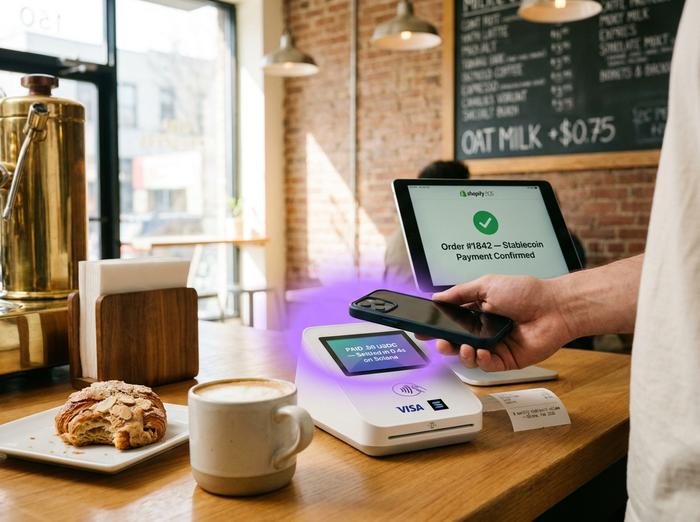
The thing most investors miss: the SOL token captures fees only weakly. Solana runs a "low-fee, low-capture" design that prioritizes cheap user transactions over token economics. That is exactly why merchants like Visa and Shopify are settling stablecoin payments on Solana, and exactly why the SOL token has not benefited proportionally from the activity flowing through the chain. If you are buying SOL, you are buying the bet that activity volume eventually drags fee revenue, and fee revenue eventually drags the token price. That chain of "eventuallies" is the entire investment thesis.
Staking yield is the partial offset. Liquid-staked jitoSOL holds $2.92 billion in TVL and pays roughly 7.5–8.5% APR including Jito's MEV tips (Jito Labs). That yield matters when you hold the token through volatility.
Is Solana a good investment? The honest verdict
Yes, Solana is a defensible position for an investor with a 3-to-7 year horizon, tolerance for an 80%-plus drawdown (the asset hit -96% in 2022, the deepest of the top ten), and a portfolio rule that crypto stays below 10% of net worth and SOL stays below 5% of crypto. No, it is not a good investment for anyone hoping to recover the $293 peak inside twelve months, or for anyone treating SOL as a substitute for an equity index. The middle ground does not exist; SOL's volatility punishes hesitant buyers.
The bull case rests on something specific and recent. Bitwise launched its spot BSOL ETF and pulled in roughly $357 million in cumulative inflows in its first months of trading — small next to Bitcoin or Ethereum ETFs, but the first structurally sticky bid Solana has ever had from regulated U.S. wrappers. Firedancer, the long-awaited second validator client built by Jump Crypto, went live on mainnet on May 16, 2026 (CoinDesk). DEX volume already flips Ethereum most weeks. Activity is real.
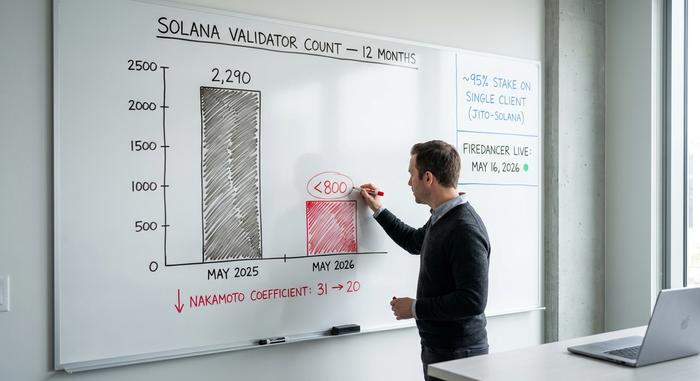
The bear case rests on something equally specific. The SIMD-228 governance proposal to reduce SOL's 5% inflation failed in March 2026 with 61.4% in favor against a 66% threshold (Helius). The Nakamoto coefficient — the minimum number of validators required to halt the chain — fell from 31 to 20 over twelve months. About 95% of stake runs on the same Jito-Solana client; Firedancer's market share is still a single-digit percentage as of mid-2026. The FTX estate unlocked 11.2 million SOL (worth roughly $1.57 billion at the time) in March 2025, and Galaxy Digital acquired 25.5 million SOL at an average $64 price as part of that distribution. That is overhang. Not a forecast, just supply.
The historical-return picture is the line that catches most casual investors out. SOL launched near $0.50 in 2020, peaked at $260 in November 2021, fell below $10 during the 2022 FTX collapse, then ran to $293 in January 2025 (Ultima Markets). A $1,000 investment at any point in 2024 would still be worth more today; the same investment in late January 2025 is down 70%. Past performance is no guarantee of future results, and SOL's chart proves it once per cycle.
My view, for what it is worth, is that SOL belongs in the 1–3% sleeve of a crypto-curious portfolio, dollar-cost averaged over six to twelve months. Treat it as the activity-and-throughput bet on top of a Bitcoin-and-Ethereum core. Anyone trying to time the January 2025 high is already late.
Bull case: five reasons to buy Solana in 2026
| # | Bull-case argument | Hard number | Source |
|---|---|---|---|
| 1 | Weekly DEX volume flip vs ETH | $11.49B SOL vs $7.62B ETH | KuCoin/MEXC, Apr 2026 |
| 2 | Bitwise BSOL spot ETF | ~$357M cumulative inflows | Bitwise, 2026 |
| 3 | Firedancer client live | Mainnet May 16, 2026 | CoinDesk |
| 4 | RWA tokenization | $1.66B (doubled in 6 weeks) | RWA.xyz |
| 5 | Staking yield (jitoSOL) | 7.5–8.5% APR / $2.92B TVL | Jito Labs |
Solana is winning on activity. Weekly DEX volume crossed Ethereum's in April 2026 and has stayed above it for most weeks since. Cumulative early-2026 DEX volume sat at $117 billion on Solana versus $52 billion on Ethereum (AMBCrypto). Daily active addresses run between 3.5 and 5 million on Solana versus roughly 500,000 on Ethereum, depending on methodology (Nansen vs Artemis). Activity does not always translate into price, but you cannot make the bull case without it.
The spot SOL ETF is the new institutional channel. Bitwise's BSOL was the first U.S. spot SOL exchange-traded fund and absorbed about $357 million in its opening months. That is well below the $13.6 billion sitting in spot ETH ETFs, but it represents the first regulated wrapper offering U.S. brokerage exposure to SOL. Grayscale and VanEck have filings in motion.
Firedancer is the catalyst. Jump Crypto's independent validator client activated on mainnet on May 16, 2026 (CoinDesk). It is the single biggest answer to the "Solana is fragile" critique, because a second client breaks the monoculture risk that caused most of the 2021–2024 outages. Adoption will take time, but the architectural fix landed.
Tokenized real-world assets are moving onto Solana fast. Tokenized RWA TVL on Solana hit $1.66 billion in early 2026, roughly doubling in six weeks, with State Street and BlackRock-linked products contributing. Stablecoin float on the chain reached $16 billion, and monthly stablecoin volume on Solana hit $650 billion in February 2026 (Artemis). Visa and Shopify settle USDC payments on Solana today, not in a roadmap. That is payments rails, not speculation.
Staking yield is a real return. JitoSOL pays 7.5–8.5% APR including MEV tip distribution, well above Ethereum's 2.83% institutional reference rate. Marinade and other liquid-staking protocols offer comparable yields. A 7% yield on a high-beta asset is a meaningful offset to drawdown risk.
Bear case: where Solana cryptocurrency is losing
The bearish reading is not a single chart. It is five separate weaknesses compounding.
Validator decentralization is going the wrong direction. The Nakamoto coefficient fell from 31 to 20 over the past year (Datawallet), meaning only 20 validators control more than one-third of stake. The total validator count dropped roughly 65% to fewer than 800. Roughly 95% of stake still runs on the Jito-Solana client, which is the monoculture Firedancer was built to fix; Firedancer's adoption share remains in single digits. Solana's decentralize-the-network story is currently weaker than it was a year ago.
The SIMD-228 inflation vote failed. Solana's protocol inflation runs at roughly 5% per year, scheduled to taper toward 1.5%. The SIMD-228 proposal in March 2026 would have accelerated that taper but only collected 61.4% support against the 66% supermajority threshold. The result: SOL continues issuing tokens at the higher rate, diluting holders.
Sandwich attacks are systemic. A May 2026 paper presented at IMC documented more than 500,000 sandwich-style MEV extractions targeting Solana traders during 2025, with measured retail losses around $7.7 million. Helius and Jito have both shipped mitigations, but the architecture that makes Solana fast (low-latency leader scheduling, parallel execution) is also what makes the sandwich attack profitable.
SOL is in a death cross against ETH. The SOL/ETH ratio entered a death cross in June 2025 and has not recovered as of mid-May 2026. Whether you trust technicals or not, the message is the same: capital has rotated from SOL into ETH for almost a year, despite Solana's stronger activity metrics. That divergence either resolves in SOL's favor or persists, and the market has voted for "persists" so far.
Token unlocks remain a supply overhang. The FTX estate distributed 11.2 million SOL (about $1.57 billion at the time) in March 2025, and Galaxy Digital acquired 25.5 million tokens at roughly $64. Additional FTX-era unlocks are scheduled through 2026 and 2027; precise monthly schedules are not publicly aggregated, but the direction is clear. Memory of the February 6, 2024 outage, the last full network halt, also remains an investor concern even if Firedancer is the structural answer.
| Metric | Solana | Ethereum | Source |
|---|---|---|---|
| Weekly DEX volume (Apr 2026) | $11.49B | $7.62B | KuCoin/MEXC |
| Spot ETF cumulative inflows | ~$357M (BSOL) | $8.6–9.3B (1-yr) | Bitwise / CoinGape |
| Nakamoto coefficient | 20 | n/a (1M+ validators) | Datawallet |
| Staking yield (institutional ref) | 7.5–8.5% (jitoSOL) | 2.83% (STYETH) | Jito / Compass |
| Drawdown record (2022) | -96% | -82% | CoinGecko |
Solana vs Bitcoin and Ethereum: where SOL fits
Most readers want the comparison, so here it is. Bitcoin is the macro hedge: 21 million fixed supply, dominance over 58% of the crypto market (TradingView Hub), trading like a digital reserve asset rather than a tech bet. Ethereum is the institutional settlement bid: $13.6 billion in spot ETF assets, the largest L2 ecosystem, the slowest growth on user metrics but the deepest credibility with traditional finance.
SOL sits in the third lane. It is the throughput and activity bet, a much higher-beta position than BTC or ETH and dependent on continued migration of DEX activity, stablecoin payments, and consumer applications onto the chain. The volatility makes it a poor choice as your only crypto, but a defensible 1–5% tactical sleeve inside a portfolio that already holds Bitcoin and Ethereum.
Compared to XRP, the alternative most retail investors weigh against SOL, the choice is risk tolerance. XRP offers a more policy-driven thesis tied to legal clarity; SOL offers a technology-and-activity thesis with much wider price swings. A $1,000 buy in mid-May 2026 gets you roughly 11.6 SOL or 714 XRP (247WallSt). Either could double; only one is likely to halve first.
How to invest in Solana and buy or sell SOL safely
Three practical paths for a U.S. investor. The Bitwise BSOL spot ETF is the easiest: standard brokerage account, full tax reporting, no key management. Direct SOL purchase on Coinbase, Kraken, or Robinhood gives you the token in self-custody if you transfer it off-exchange; expect 0.6–2% trading fees depending on platform. Liquid staking through jitoSOL or Marinade earns 7.5–8.5% APR but adds smart-contract risk on top of token risk. Dollar-cost average over six to twelve months rather than buying a single tranche. SOL has been highly volatile in every prior cycle, and 2026 has been no exception. Never invest money you cannot afford to lose, and keep a written allocation rule before you click "buy."