Body count meaning: every definition from dating slang to gaming to crypto, and why the term keeps sparking arguments
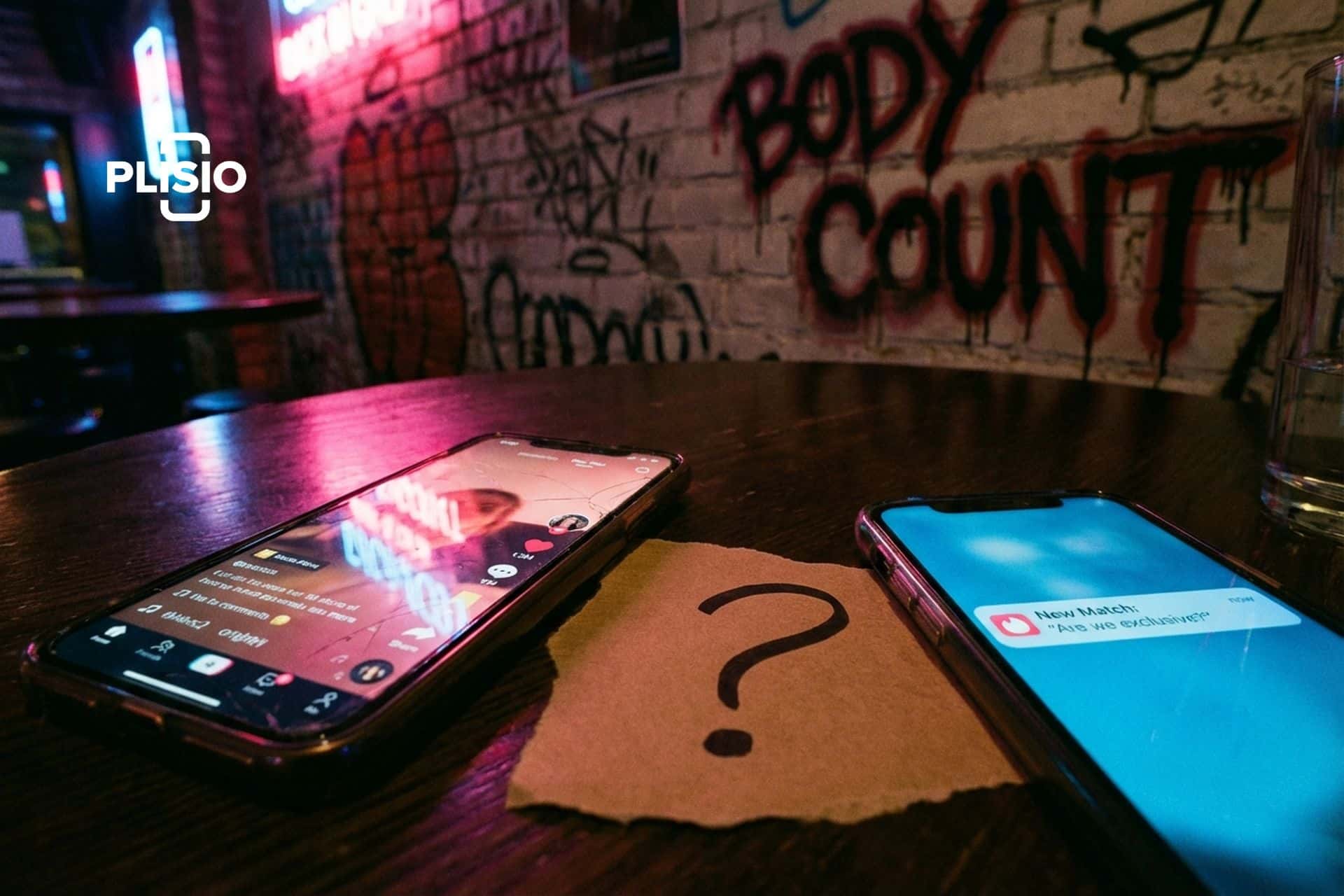
Last Thursday I was at dinner with five people and someone dropped the phrase "body count." What happened next was genuinely funny. My friend Sarah thought we were talking about her dating life and got defensive. The guy next to her, who plays Warzone religiously, assumed we were comparing kill stats. My roommate, who lost money in the FTX crash, started listing dead crypto projects. And Sarah's mom, who had joined us last minute, looked horrified because she thought we were discussing an actual crime scene.
Five people. One phrase. Five meanings. And every single person at the table was absolutely certain their version was the right one. Sarah's mom eventually asked "is someone dead?" and that pretty much ended the conversation.
That dinner is basically why I am writing this. Body count shapeshifts depending on who says it and where. I got tired of being in conversations where nobody is talking about the same thing, so I decided to write the definitive breakdown. Every meaning. Every context. Every argument.
Where "body count" actually comes from
The phrase is older than most people realize. It goes back to Vietnam.
General Westmoreland had a PR problem. The Vietnam War was going badly and Americans knew it. His solution was elegantly terrible: count dead enemy soldiers and report the numbers on the nightly news. High body count means we are winning. The media ran with it. Walter Cronkite read the numbers. America heard "body count" every evening with dinner.
The kicker? 61% of field commanders admitted later that they had been inflating their numbers. Careers depended on high body counts, so people lied. The metric meant nothing because everyone had incentives to game it. I think about this every time someone lies about their dating body count. Same dynamic, different stakes, same unreliability.
TV news still uses it straight. Earthquake body count hits 200. Shooting body count reaches 12. No slang. Just counting the dead.

The meaning everyone is actually searching for
Look, I know why you are here. Google sent you because you heard "body count" in a conversation and were not sure what it meant. Or you know what it means and want to see what the internet thinks about it. Either way: in dating slang, your body count is how many people you have slept with.
TikTok made it a whole thing. The hashtag racked up over 700 million views. People film themselves asking their partners the question on camera. Some couples laugh about it. Others visibly panic. A few relationships have probably ended over it, which made for great content and terrible Tuesday nights.
The definition sounds simple but it is not. What counts? My friend group had a 45-minute argument about this at brunch last year. Does oral count? Does a one-night stand where things did not technically finish count? What about that college situation that was technically just making out but got... complicated? Nobody agrees. Two people can both say "five" and mean completely different things.
The gender double standard is the part that makes this more than just a fun question. A guy says his body count is 20 and his friends high-five him. A woman says 20 and she gets called names I will not repeat here. I have watched this play out in real time at parties, on Twitter, and in the comments section of every TikTok about the topic. The CDC says the average American has had 7.2 sexual partners. The median is about 6 for men and 4 for women, though researchers believe those numbers are skewed because men tend to round up and women round down. A study found 41% of men and 33% of women lie about their number. So even the statistics are unreliable.
The state-level data is wild too. Louisiana averages 15.7 partners. Utah averages 2.6. Same country, different planets.
I dated someone once who asked me my body count on the second date, before we had even ordered appetizers. I gave her a number. She went quiet for a beat, then said "that is a lot." We did not have a third date. In retrospect, I do not think the number was the problem. I think the fact that she felt entitled to judge me based on it was. Or maybe the number genuinely was too high for her. Either way, the conversation killed something before it had a chance to start.
A Psychology Today study from 2024 across 5,000+ people in 11 countries found something that surprised me: when the partners happened matters more than how many there were. Someone with 12 recent partners was viewed the same as someone with 36 partners in the distant past. Respondents were three times more likely to date someone with triple the number if those experiences were years ago. The study also found no significant gender double standard in their data, which contradicts what most people assume. Though I would say the real-world experience on TikTok comment sections tells a different story.
Here is what I actually think about this after watching the debate for years: the number does not tell you anything useful about a person. It does not predict loyalty. It does not indicate character. It does not correlate with relationship success. What it does is give insecure people a reason to judge and give confident people a reason to shrug. The happiest couples I know never asked the question.
What gamers mean when they say it
Completely different vibes. In gaming, body count means kills. Period. My buddy texted me "15 body count game last night" after a Warzone session and I knew exactly what he meant. No ambiguity. No awkwardness. Just bragging about a good match.
Nobody debates whether a gaming body count is appropriate. Nobody worries about a double standard. The scoreboard is public. The number is what it is.
I play Apex sometimes and the body count flex is the simplest social interaction in gaming. You either got kills or you did not. The number is objective. It is public. And a high one is always good. Must be nice to have a version of this phrase that does not come with existential anxiety.
My 14-year-old nephew uses "body count" exclusively in the gaming sense. He had no idea about the dating meaning until his older sister's boyfriend mentioned it at Thanksgiving. The look on his face when he realized adults were using his gaming term to discuss sex was genuinely priceless. That generational confusion is a microcosm of the whole problem with this phrase. It lives in too many worlds at once.
The crypto meaning nobody writes about
This is the version of body count that I hear in crypto Twitter spaces and group chats but almost never see explained in articles.
In crypto, body count is how many projects and people got destroyed. I sat in a Twitter Space in December 2022 where someone was literally reading off the list: Terra/Luna, gone. Three Arrows Capital, bankrupt. Celsius, froze everyone's money. Voyager, bankrupt. FTX, turned out to be fraud. He kept going for three minutes. Someone in the chat typed "the body count just keeps growing" and that phrase stuck with me.
"What was the body count from that rug pull?" means how many people got scammed. "Bear market body count" means how many projects died this quarter. Over 11 million crypto projects failed in 2025 alone, if you can even call most of them projects.
Crypto people laugh about it the same way soldiers laugh about bad deployments. Gallows humor. When you watched $30,000 of your portfolio turn into $4,000 (ask me how I know), making jokes about the body count feels better than staring at your wallet in silence. The military metaphor fits crypto better than anyone is comfortable admitting.
In corporate settings, body count sometimes just means headcount. "What is the body count on this project?" means how many people are working on it. Nobody writes this in emails because it sounds terrible, but I have heard it in at least three meetings at actual companies. It is informal, borderline inappropriate, and somehow universally understood.
There is one more layer to the crypto usage that I think is worth mentioning. When a new token launches and dumps 99% within a week, people on CT (crypto Twitter) will post something like "another one for the body count." It is a running tally that the community keeps informally. During the 2022 bear market, someone actually maintained a spreadsheet of every major collapse with dates and dollar amounts lost. They called it the body count tracker. It had over 40 entries by the end of the year. That is the kind of dark comedy that develops when an entire industry watches itself implode in real time.
The film and TV world has its own version too. Movie nerds count on-screen deaths. There are entire YouTube channels dedicated to tallying the body count of action movies. John Wick's body count across four films is 439. The first Rambo has a body count of one. First Blood is technically a movie about PTSD, not a massacre, which surprises everyone who has not watched it since the 1980s. These body count compilations get millions of views because humans are morbidly fascinated by violence statistics, even fictional ones.

Why this phrase refuses to die on social media
Because TikTok turned an awkward question into a content format. Film yourself asking your boyfriend his body count. Watch his face go through five emotions in two seconds. Post it. Get 4 million views. Repeat. The format works because everyone is curious about this but most people do not ask in real life.
What keeps the conversation going is that nobody agrees across generations. My parents' generation does not discuss this. Period. Full stop. My generation (millennial) discusses it after a few drinks. Gen Z discusses it in the first five messages on Hinge. These are fundamentally different worldviews about privacy and sex, and when they collide on social media, content happens.
And underneath all of it is the real reason: body count is a lightning rod for every cultural fight about sex, gender, and what "normal" looks like. Purity culture people use it to shame. Sex-positive people use it to liberate. Everyone else is just confused about why we are still arguing about a number.
I remember when Meghan Trainor said her body count is one (her husband) on a podcast. My group chat exploded. Half the people said "good for her." The other half said she was being smug about it. Ice Spice made it a song title. Drake references it regularly. Ice-T named his entire metal band Body Count back in 1992, which was about gang violence, not dating. The phrase keeps getting recycled because it keeps generating reactions. And on the internet, reactions are the only currency that matters. As long as people get emotional about the word, creators will keep using it. We are all stuck in this loop together, and I do not see a way out of it.
How I handle the question (and how you might want to)
After that second-date disaster I mentioned earlier, I changed my approach. Now when someone asks, I say: "Why do you want to know?" Not mean about it. Genuinely curious.
The responses tell me everything. Some people laugh and say "just curious." Great, probably harmless. Some people say "because I need to know what I'm getting into." Red flag for me personally. And once, memorably, a woman said "because I want to know if you are going to be boring." That was a pretty good answer honestly.
You do not owe anyone this information. "I'd rather not put a number on it" works. So does just answering honestly if you feel safe doing it. The only approach I think is genuinely bad is lying, because a relationship built on a fake number is a relationship built on the idea that the real you is not enough.
The one thing I would genuinely push back on: do not lie. If you feel like you need to inflate or deflate the number to keep someone interested, that tells you something important about the dynamic you are building. A relationship that requires you to misrepresent your past to feel accepted is already in trouble.
And honestly? The people I know who are the happiest in their relationships spent zero time discussing body counts and all their time learning how to communicate, fight fair, and show up on bad days. But that does not make for a viral TikTok, so we are stuck having this conversation forever.