Asset tokenization: what it is, how it works, and why BlackRock thinks it will reshape finance
When Larry Fink, the CEO of BlackRock, the largest asset manager on the planet, says "the next generation for markets will be tokenization of securities," I pay attention. Not because he is always right, but because when a man managing $10 trillion in assets decides something is the future, he tends to make it the future.
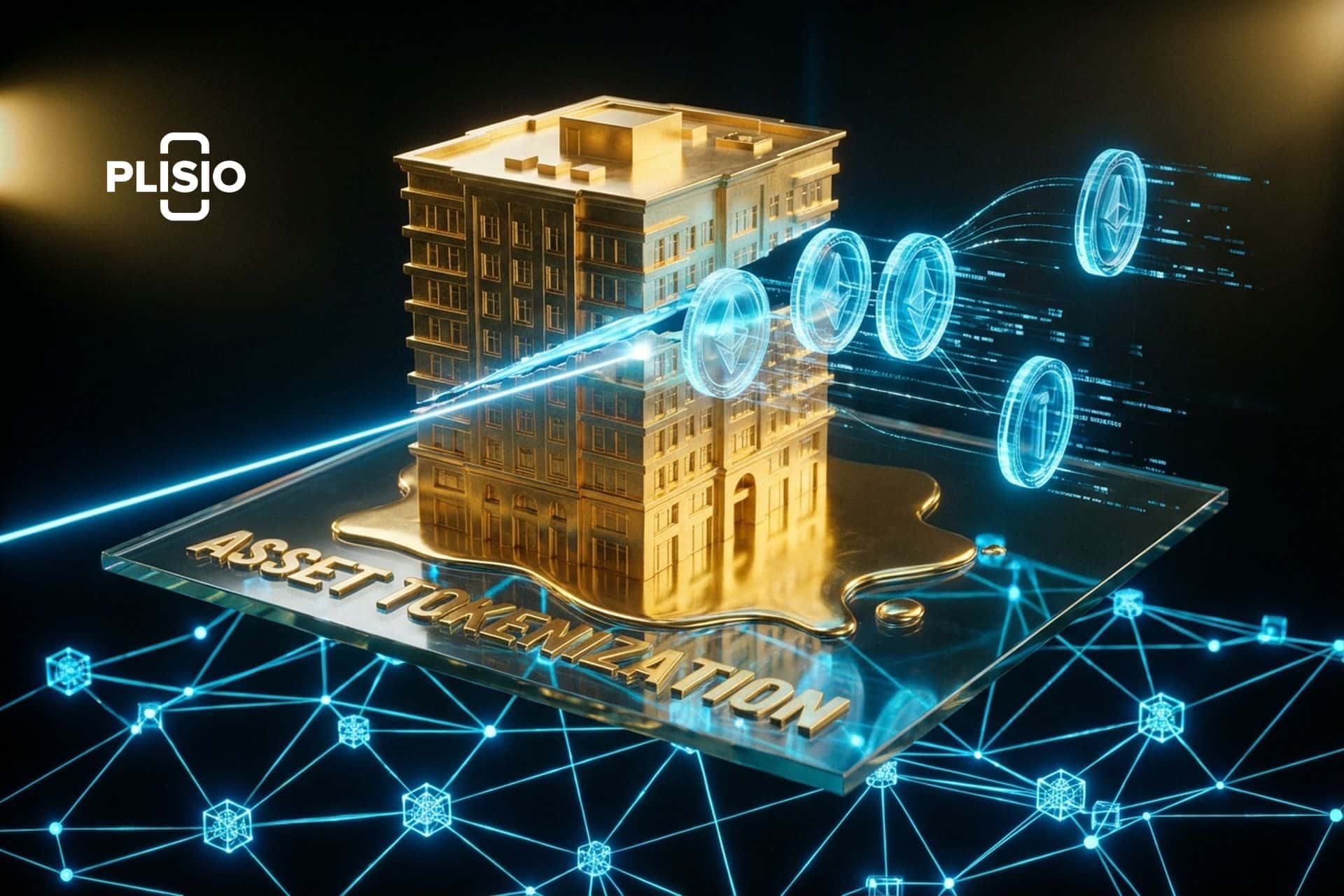
Asset tokenization is the process of converting ownership of a real-world asset into a digital token on a blockchain. A $50 million commercial building becomes 50 million tokens worth $1 each. A $100,000 treasury bond becomes 1,000 tokens worth $100 each. A painting that sits in a vault becomes a collection of tokens that trade 24/7 on a platform that anyone with an internet connection can access.
The market for tokenized real-world assets reached $1.24 trillion in market capitalization by mid-2026, up from $865.5 billion in 2024. The on-chain RWA market specifically grew 260%, from $8.6 billion to $23 billion in early 2026. McKinsey projects the broader market could reach $2 trillion by 2030. BlackRock launched its own tokenized fund called BUIDL. JPMorgan built a tokenized collateral network. Franklin Templeton put its money market fund on-chain.
This is not a crypto-native trend anymore. This is traditional finance building on blockchain infrastructure. The shift from "blockchain is a scam" to "blockchain is how we settle trades" happened quietly while everyone was arguing about Bitcoin prices.
And understanding how asset tokenization works, where the real value is, and where the hype exceeds reality matters if you are anywhere near the intersection of finance and technology. I spent the last few months digging into the actual products, the real numbers, and the honest limitations. What follows is what I found.
How asset tokenization actually works: the five-step process
I am going to walk through this in plain language because most explanations make it sound more complicated than it needs to be. The concept is simple. The execution, admittedly, is not.
Figure out the legal wrapper first. Before any code gets written, someone (usually a securities lawyer) has to decide what the token actually represents. Is it a share? A bond? A collective investment scheme? In most countries, the answer is "it is a security," which means you are immediately in regulated territory. I talked to a lawyer who works on these deals, and she said the legal structuring takes longer than the actual blockchain implementation. That tells you where the real complexity lives.
Step 2: Select the blockchain. Ethereum is the most common choice because of its mature smart contract ecosystem and token standards like ERC-3643 (the only officially accepted Ethereum standard for security tokens, with over $32 billion in assets tokenized to date). But institutions also use private chains (JPMorgan's Onyx runs on a private Ethereum fork), hybrid approaches, and newer networks like Polygon and Avalanche that offer lower transaction costs. The trade-off is always between public transparency and institutional control.
Step 3: Create and deploy smart contracts. The smart contract defines the rules: how many tokens exist, who can hold them, how dividends or interest are distributed, what happens at maturity. For a tokenized bond, the contract handles interest payments automatically. For tokenized real estate, it distributes rental income to token holders proportionally. Compliance logic is baked in: the contract can verify that buyers are accredited investors, block transfers to sanctioned addresses, and restrict trading to approved hours.
Hook it up to reality. A blockchain does not know whether a gold bar exists in a vault. It does not know what a building is worth. Oracle networks like Chainlink feed real-world data to the smart contract: proof of reserves, property valuations, rental income, commodity prices. Without oracles, a tokenized asset is just a number in a database with nothing backing it.
Keep it safe and get it to people. Custody is a two-sided problem. Fireblocks or another crypto custodian holds the tokens. State Street or another traditional custodian holds the physical assets. Both need to be secure. Then you distribute through platforms like Securitize or tZERO. The whole chain, from vault to wallet, has to work or the product falls apart.
What is actually being tokenized in 2026
Here is what I find interesting: not everything benefits equally from tokenization. The assets where it is actually working are the ones where the traditional system was broken in a specific, measurable way.
| Asset type | Market size (tokenized) | Key players | Why tokenization helps |
|---|---|---|---|
| US Treasuries | ~$3B+ | Ondo Finance, BlackRock BUIDL, Franklin Templeton | 24/7 yield, instant settlement, DeFi composability |
| Money market funds | ~$2B+ | UBS, Franklin Templeton | Tokenized fund shares, automated distributions |
| Private credit | ~$10B+ | Centrifuge, Maple Finance | Access to institutional credit markets |
| Real estate | ~$5B+ | RealT, Lofty, Propy | Fractional ownership, global investor access |
| Commodities (gold) | ~$1B+ | PAX Gold, Tether Gold | Verifiable reserves, 24/7 trading |
| Corporate bonds | Growing | JPMorgan, HSBC | Faster settlement, reduced intermediaries |
| Carbon credits | Early stage | Toucan Protocol, KlimaDAO | Transparent tracking, programmable retirement |
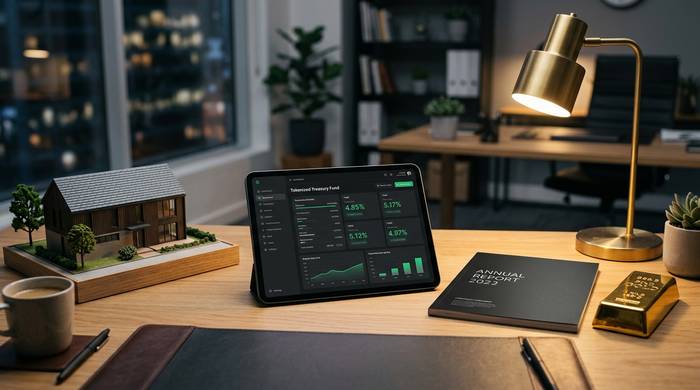
Tokenized US treasuries are the clearest success story. Ondo Finance, BlackRock's BUIDL fund, and Franklin Templeton's on-chain fund collectively represent billions in tokenized government debt. The appeal is straightforward: you get treasury yields (currently around 4-5%) in a token that settles instantly, trades 24/7, and can be used as collateral in DeFi protocols. For crypto-native investors who were parking capital in stablecoins earning nothing, this is a genuine improvement.
Real estate tokenization is the category with the most obvious retail appeal. RealT has tokenized over 970 properties, allowing investments starting at $50 with daily rental income distributions. But real estate also shows the limits of current tokenization: most projects are buy-and-hold only. There is no liquid secondary market. You can buy a token representing a fraction of a house in Detroit, but selling that token to someone else is harder than selling a stock.
The institutional push: why BlackRock, JPMorgan, and Franklin Templeton are in
Forget the crypto-native metrics for a minute. The institutional adoption story is the one that actually tells you where this is heading.
BlackRock launched BUIDL on Ethereum through Securitize. It is a tokenized fund investing in US treasuries and repos. Each token equals roughly one dollar. Why do I keep bringing this up? Because I have been in this space long enough to know that BlackRock does not build products for fun. They do not do proof-of-concepts. When Larry Fink puts the BlackRock name on a tokenized fund running on Ethereum, that is a signal to every asset manager on earth: the infrastructure works, and we are using it.
JPMorgan's Tokenized Collateral Network is already processing live transactions. Banks use it to post tokenized collateral for derivative trades, reducing settlement time from days to near-instant. This is not a pilot program. It is a production system handling real money between major financial institutions.
Franklin Templeton moved its money market fund on-chain, making it one of the first registered US funds to use a public blockchain for transaction processing and share ownership. Shares are represented as tokens on the Stellar and Polygon networks.
UBS launched a tokenized money market fund as a buy-and-hold product, choosing it specifically because money market funds are, in their words, "relatively straightforward products to test tokenization concepts." That is refreshingly honest about where the technology stands: institutions are starting simple and will expand as infrastructure matures.
The honest limitations: where the hype exceeds reality
I could write another thousand words about how great tokenization is going to be. Instead, let me tell you what is not working, because the honest limitations are what separate real analysis from marketing.
Liquidity is still an illusion for most tokenized assets. The biggest promise of tokenization is 24/7 trading with global access. In reality, most tokenized assets trade on thin markets with limited buyers. A tokenized property share might be easy to buy and very hard to sell. The liquidity that makes stock markets work (deep order books, market makers, high-frequency trading) does not exist yet for tokenized assets. Elliptic's analysis notes that "greater liquidity through 24/7 trading has largely failed to materialize."
Regulatory fragmentation is a real barrier. Securities laws are national. A token that is legal to sell in the US might be illegal in Europe. A token structured for UK compliance might not pass muster in Singapore. Cross-border trading, which should be tokenization's killer app, is actually its biggest regulatory headache. The EU's MiCA framework provides some clarity for European markets, but globally the rules remain patchy.
Secondary markets barely exist. For a tokenized asset to truly compete with traditional securities, it needs secondary market trading: the ability to sell your token to another investor at any time. Most current projects are buy-and-hold: you buy from the issuer, and you sell back to the issuer. True secondary markets require Central Securities Depository (CSD) integration, which adds complexity that undermines the "blockchain simplifies everything" narrative.
Smart contract risk is not theoretical. Every DeFi exploit reminds us that code can have bugs. When the code controls the distribution of interest payments on a $100 million bond, the stakes are higher than a yield farming contract. Audits help but do not guarantee safety. Institutions deal with this by using battle-tested contracts, multiple audits, and often by running on private or permissioned chains where they control the validator set. It adds cost but reduces risk.
Valuation and pricing are still being figured out. How do you price a token that represents 0.001% of a commercial building? Traditional appraisal methods were not designed for fractional digital assets. The lack of standardized pricing models means two platforms might value the same underlying asset differently, which creates confusion and arbitrage risk.

The market outlook: where this goes from here
The numbers tell a directional story even if the exact projections vary wildly. BCG's original estimate was $16 trillion by 2030; their updated 2025 forecast with Ripple is more conservative at $9.4 trillion by 2030, reaching $19 trillion by 2033. McKinsey says $2 trillion. Citi says $4-5 trillion. Total on-chain tokenized RWAs crossed $12 billion in March 2026 (excluding stablecoins). The range tells you that nobody knows the exact number, but everyone agrees the direction is up and the scale is large.
Here is my honest prediction, and it is boring on purpose. Treasuries and money market funds keep growing because the use case is obvious and the regulation is clear. Private credit expands because the traditional market is genuinely broken (opaque, illiquid, inaccessible). Real estate grows slowly because the legal work per property is expensive and secondary markets do not exist yet. None of this is revolutionary in the short term. All of it is transformative over a decade.
The transformative moment comes when secondary markets mature. Right now, tokenized assets are like stocks before the stock exchange existed: you can buy them, but finding a buyer when you want to sell is a challenge. When that infrastructure is built, and projects like Securitize and tZERO are working on it, tokenization stops being a novelty and starts being how finance works.
For crypto-native users, the immediate opportunity is tokenized treasuries. If you are holding USDC or USDT in a wallet earning nothing, you can move that capital into a tokenized treasury fund and earn 4-5% yield while maintaining on-chain composability. That means your yield-bearing position can still be used as collateral in DeFi protocols. This is not a theoretical use case. It is live, it is working, and it is why billions have flowed into products like Ondo's USDY and BlackRock's BUIDL.
For traditional investors, tokenization means access to asset classes that were previously gated. Private credit deals that required $1 million minimums can be accessed at $1,000 through platforms like Centrifuge. Commercial real estate that required buying an entire building can be purchased in $50 increments through RealT. The barrier to entry is dropping in a way that has not happened in finance since the invention of the mutual fund.
For institutions, the value is operational. Instant settlement replaces T+2 clearing. Smart contracts replace back-office reconciliation. Programmable compliance replaces manual KYC checks. JPMorgan is not using blockchain because it is trendy. They are using it because it saves them money on processes that currently involve armies of middle-office staff.
The technology is ready. The regulation is catching up. The institutions are building. What we are watching is not whether tokenization will happen. It is how fast the infrastructure develops to make it mainstream.