Bitcoin halving explained: what the halving process means for crypto miners and investors

On April 20, 2024, every bitcoin miner on earth took a 50% pay cut. Nobody made a phone call. Nobody signed a memo. A line of code, written by a pseudonymous developer who disappeared in 2010, fired exactly on schedule at block 840,000. The mining reward dropped from 6.25 BTC to 3.125 BTC. Bitcoin was trading at $63,762 that morning.
Five months later, the price blew past $126,000. Then the whole thing fell apart. As I write this in April 2026, a single BTC costs about $68,500, which is barely above where it was on halving day. Anyone who held through the October 2025 peak and didn't sell is staring at unrealized losses. Anyone who caught that peak made a clean double. Timing, as always, is the difference between a great story and an expensive lesson.
The halving itself didn't change. The code ran exactly as written, the same way it has three times before. What changes is how markets react, and that reaction has gotten more complicated now that hedge funds, pension allocators, and ETF issuers are at the table. I'll walk through how the mechanism actually works, what the hard data says about all four bitcoin halvings, how miners dealt with the 2024 cut, and what we know about the 2028 event.
How the bitcoin halving process works
Picture this: thousands of warehouses around the world, packed with whirring machines that do nothing but guess numbers, billions of times per second. That's bitcoin mining. The bitcoin blockchain adds a new block of transactions roughly every 10 minutes, and these machines are competing to be the one that gets to add it. The winner of each round collects a block reward in brand new bitcoin, coins that didn't exist until that exact moment. Unlike dollars, which the Treasury can issue at will, or euros, which the ECB conjures through quantitative easing, bitcoin has exactly one way to create new supply: a miner has to win the race and claim the reward.
Satoshi Nakamoto baked in a rule before disappearing forever: after every 210,000 blocks, cut the reward in half. Since blocks arrive about once per 10 minutes, 210,000 of them takes approximately four years. Why this particular schedule? Satoshi never fully explained. In early forum posts, they compared it to gold mining: the easy deposits get extracted first, and each new ounce costs more effort than the last. That analogy stuck, and it's why you still hear people call bitcoin "digital gold" over a decade later.
On January 3, 2009, the Bitcoin network produced its first block (the "genesis block"), and whoever mined it earned 50 BTC. In 2009, a bitcoin was basically worthless; the famous 10,000 BTC pizza transaction didn't happen until 2010. But here's a thought experiment that puts the halving in perspective: if you'd been mining in January 2009 and held every coin, a single day's worth of rewards (about 7,200 BTC at 50 per block, 144 blocks per day) would be worth roughly $493 million at today's price. Most of those early miners sold, lost their keys, or threw away hard drives. The ones who held became very, very wealthy.
Here's the complete history of bitcoin halving dates:
| Halving | Date | Block | Reward before | Reward after | BTC price |
|---|---|---|---|---|---|
| 1st | Nov 28, 2012 | 210,000 | 50 BTC | 25 BTC | ~$12 |
| 2nd | Jul 9, 2016 | 420,000 | 25 BTC | 12.5 BTC | ~$650 |
| 3rd | May 11, 2020 | 630,000 | 12.5 BTC | 6.25 BTC | ~$8,600 |
| 4th | Apr 20, 2024 | 840,000 | 6.25 BTC | 3.125 BTC | ~$63,762 |
The next bitcoin halving should arrive around March or April 2028 at block 1,050,000, dropping the reward to 1.5625 BTC. After that: 0.78125 in ~2032, 0.390625 in ~2036, and so on. The halving process keeps going until the total supply reaches 21 million bitcoins. About 19.8 million already exist, leaving roughly 1.2 million to mine over the next 114 years. The last bitcoin enters circulation somewhere around the year 2140. After that day, miners earn transaction fees only. Zero new coins, forever.
Scarcity by design: why halvings change the economics
Consider the contrast. Between 2000 and 2020, the US M2 money supply went from about $4.9 trillion to $15.4 trillion. During the COVID crisis alone, the Federal Reserve pumped trillions more into the economy within months. Janet Yellen, Jerome Powell, and their predecessors have the authority to expand the money supply whenever they judge it necessary. Satoshi built bitcoin to be the opposite of that system.
Changing bitcoin's 21 million cap would require near-unanimous consent from tens of thousands of independent node operators around the world. In 17 years of operation, not a single serious proposal to alter the supply limit has gained any meaningful traction. The code is the code.
Do the daily math: at 3.125 BTC per block and about 144 blocks per day, the bitcoin blockchain produces roughly 450 new coins daily. A year ago, before the halving, that number was 900. Before the 2020 halving, 1,800. Each cut makes bitcoin's supply schedule tighter. Annual supply inflation has already dropped below 1%, which, ironically, sits underneath the Federal Reserve's own 2% target. When the 2028 halving arrives, it dips under 0.5%. The World Gold Council estimates that new gold mine production adds about 1.5% to the above-ground stock each year. Bitcoin's supply is expanding more slowly than physical gold's, and the gap widens with every halving event.
That's the raw math, and it's why the "digital gold" comparison keeps sticking around. I get the appeal. But I've also watched a lot of crypto people confuse scarcity with value. I could mint a token right now with a supply capped at exactly 7 coins. It would be worthless, because nobody wants it. Scarcity is a necessary ingredient but not a sufficient one. What's changed for bitcoin, especially since the 2024 halving event, is the demand infrastructure. Spot ETFs launched in January 2024. BlackRock's IBIT accumulated over $50 billion in assets during its first year. Banks offer custody. Options and futures trade on regulated exchanges. MicroStrategy holds over 200,000 BTC on its balance sheet. Bitcoin's dominance of total crypto market cap (excluding stablecoins) reached 72.4% in mid-2025, the highest in eight years.
Shrinking supply meeting expanding institutional demand is the thesis. Whether it keeps working is the bet.
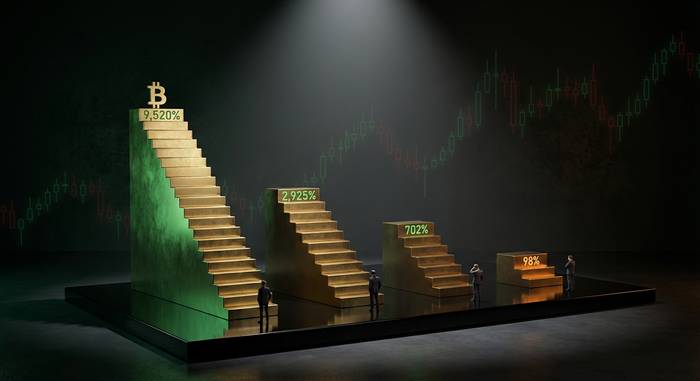
Price history after every bitcoin halving
Go on crypto Twitter any time a halving approaches and you'll see the same chart shared a thousand times: price before halving, price after, big green candle. And yeah, it's true. But people posting those charts usually crop out the column that shows returns shrinking each cycle.
| Halving | Price at halving | Cycle peak | Days to peak | Return |
|---|---|---|---|---|
| 1st (2012) | ~$12 | ~$1,163 | ~365 | +9,520% |
| 2nd (2016) | ~$650 | ~$19,666 | ~518 | +2,925% |
| 3rd (2020) | ~$8,600 | ~$69,000 | ~545 | +702% |
| 4th (2024) | ~$63,762 | ~$126,198 | ~170 | +98% |
Read that return column. 9,520 percent down to 98 percent. People who bought before the first halving in 2012 and held through the peak saw life-changing returns. People who did the same in 2024 saw a solid double. Still good, but nobody's quitting their job over 2x on a bitcoin position. The reason is mechanical: when the total market cap is $1.3 trillion, pushing it 100% higher requires $1.3 trillion of fresh capital. In 2012, the entire market was worth maybe $100 million; a few whale buys could move the price by thousands of percent.
The 2024 cycle broke another pattern too. Historically, bitcoin built up momentum slowly after the halving and peaked roughly 12-18 months later. This time, the peak came just 170 days out. Why? Spot ETFs launched in January 2024, three full months before the halving. That front-loaded billions of dollars of buying pressure that in previous cycles would have trickled in after the supply reduction. By halving day, BTC was already at $64,000, up from $40,000 in January. A big portion of the rally had already happened.
Then the October 2025 high of $126,198. Then the pullback. By April 2026, we're looking at $68,500, which is roughly where we started on halving day. Macro headwinds, including tariff escalations and risk-off sentiment in global markets, have dominated crypto price action more than any supply-side story.
Is the four-year halving cycle dead? Some smart people think so. Arthur Hayes wrote in early 2026 that "the cycle as we knew it is over" because ETF inflows now dominate price discovery. Others, like PlanB who created the stock-to-flow model, insist the cycle still works, just on a compressed timeline. My read: nobody actually knows, and certainty on this topic should make you suspicious. The sample size is four. That's not enough data to prove any pattern, let alone predict the fifth.
Here's what we can say with confidence: bitcoin is behaving more like a macro asset and less like a niche internet experiment with each passing cycle. It responds to Federal Reserve policy, trade wars, and risk appetite shifts in ways it simply didn't before the 2020 halving. That changes how the halving interacts with price, even if the mechanism itself hasn't changed at all.
What happened to bitcoin mining after the 2024 halving
The day before halving day, mining a block earned about $400,000 at market price. The day after: $200,000. Same ASIC hardware humming away. Same power bill. Same facility lease. Half the bitcoin.
Predictably, blood. The network hash rate cratered 12% in the months that followed, the steepest wipeout since Xi Jinping effectively banned mining across China in 2021, according to CryptoQuant's on-chain data. Older Antminer S19 units and similar generation machines stopped being worth the electricity overnight. Plenty of smaller mining operations in Texas and Paraguay that had been barely scraping by at 6.25 BTC flat-out couldn't survive at 3.125.
But here's what always happens after a halving shakeout: the survivors eat the dead. Well-funded operations scooped up cheap hardware and distressed facility leases at cents on the dollar. By January 2026, the total hash rate crossed 1 Zettahash per second (1,000 EH/s) for the first time. Mining difficulty peaked at 155.9 trillion in November 2025, and one single February 2026 adjustment spiked it 14.73%, the largest absolute increase ever recorded on the bitcoin blockchain.
Today's mining industry looks nothing like the garage operations of 2013 or even the warehouses of 2018. It's bigger, leaner, more corporate. Marathon Digital and Riot Platforms both disclosed AI data center hosting deals in 2025. The reasoning is practical: bitcoin mining infrastructure (cheap power, heavy cooling, fiber connectivity) is exactly what AI model training needs. When blocks aren't paying enough, rent the hardware out.
Transaction fees are becoming real money too. During the Ordinals frenzy and BRC-20 token wave of 2023-2024, there were individual blocks where miners earned more from fees than from the 6.25 BTC block reward. That's wild when you think about it. In December 2023, one miner collected over 6.7 BTC in fees on a single block, on top of the regular reward. Those spikes didn't last, but they proved something important: a busy bitcoin network can compensate miners through fees even when block rewards approach zero.
That question, whether fees can sustain network security long-term, is the single biggest open question about bitcoin's future. The halving process is designed to reduce rewards to zero by 2140. If transaction volume and fee levels don't compensate, mining becomes unprofitable, hash rate drops, and the network becomes less secure. Every halving is a step closer to that test.
What to expect from the next bitcoin halving in 2028
The upcoming bitcoin halving cuts the reward to 1.5625 BTC. At today's prices, each block goes from being worth about $214,000 to roughly $107,000. By 2028, over 20.3 of the 21 million bitcoins will have been mined. Daily new supply drops from ~450 to ~225 coins.
Structurally, a few things set up the 2028 cycle differently from previous ones. ETF assets under management should be considerably larger by then, assuming no regulatory reversal. More corporations are adding bitcoin to balance sheets (MicroStrategy held over 200,000 BTC as of late 2025). On the sovereign side, El Salvador continues buying and holding, Bhutan mines bitcoin with hydroelectric dams, and the United Arab Emirates has been visibly warming to crypto. If even one major economy formally adds BTC to its reserves before 2028, the demand picture shifts substantially.
The wildcard is regulation. If the US or EU passes restrictive crypto legislation between now and 2028, it could dampen institutional appetite regardless of what the supply schedule does. If regulation stays neutral or turns friendly, the reduced supply from the halving meets a deeper and wider demand base than any previous cycle.
For anyone considering investing in bitcoin around the halving, the 2024 cycle teaches a blunt lesson: the market moves before the event, not after it. Most of the 2024 rally happened between January and April, before the block reward actually changed. By the time the halving hit, the trade was crowded and the easy money was made.
Dollar-cost averaging over the 12-18 months before a halving has historically outperformed trying to buy bitcoin on the exact date. That won't stop crypto Twitter from hyping a specific block number, but the data backs steady accumulation over panic buying.
One more thing: the halving isn't the whole thesis for owning bitcoin. It's one piece. Network adoption trends, regulatory clarity (or lack thereof), institutional capital flows, and broader macro conditions will each shape the 2028 outcome as much as the supply schedule. If you're buying only because "number go up after halving," that's a simplistic read of a complex market. The data shows diminishing halving returns each cycle. Eventually, the halving might barely move the needle at all. The value case for bitcoin has to stand on its own, independent of any single programmatic event.