BestChange Crypto Exchanger Monitor: Find the Best Rate

Most users hit the same wall on day one with BestChange. A list of 400-plus exchangers appears, sorted by rate, and the headline number is the easy part. The hard parts sit one click deeper: reserve depth, reputation history, AML behavior, KYC posture, dispute response time. BestChange exists because that gap is real, persistent, and not solved by routing through a centralized exchange like Binance or Kraken. The service has aggregated the long tail of e-currency exchangers since 2007. The design problem it solves has only become more relevant as the number of small operators has multiplied. This guide walks through what BestChange actually is, how the aggregator works, what the mobile app changed, where the AML reality sits, and how to read the user reviews without getting fooled.
What Is BestChange and How Does the Aggregator Work
BestChange is not an exchange. It is not a wallet, a brokerage, or a custodian. It is a price-comparison engine for e-currency and crypto exchangers, a directory built to surface competitive rates across a fragmented market of dozens of small operators. Andrey and Pavel founded the service in June 2007 in Russia, and the platform now reportedly operates under Agretis Software Design LLC in Dubai. As of 2026 it lists 467 vetted exchangers, monitors 930,000 live exchange rate quotes, and refreshes those quotes every 5 to 8 seconds. Coverage spans 95+ cryptocurrencies including Bitcoin, Ethereum, Tether, and Monero. Fiat support runs to 50+ national currencies. The e-money side covers Wise, Revolut, Perfect Money, Advanced Cash, and bank transfers across dozens of jurisdictions. The full list of exchangers updates continuously as the BestChange team adds new operators and retires bad ones.
The aggregator model is what makes BestChange unusual. The service does not custody user funds. It does not execute trades. It does not take a spread on the trades it routes. The revenue model is partner referrals from listed exchangers, plus an API tier for partner sites. Every transaction happens between the user and the exchanger directly, with BestChange functioning purely as the discovery layer between them.
The service also ships a few practical tools built around the comparison engine. A standalone currency converter calculates exchange estimates without committing to a route. The AML address checker screens blockchain addresses for sanctions and high-risk exposure before sending funds. A double-exchange function chains two routes when no direct currency pair exists. Email and Telegram rate alerts notify users when a target rate clears. Aggregate exchanger reserves self-reported across the network total $73.6B, and cumulative user reviews have crossed 2.69M. The UI is available in eight languages. The whole stack, desktop, monitoring bestchange via the public site at bestchange.com, plus newer mobile apps, is free for end users.
Using BestChange to Find the Best Exchange Rate
The mechanic is straightforward, and the trap is also straightforward. Pick the source currency, pick the destination currency, type the amount you want to exchange, and BestChange ranks every exchanger that can fulfill the trade. The headline column is the exchange rate. The columns that actually matter for a real trade are reserve depth and review history.
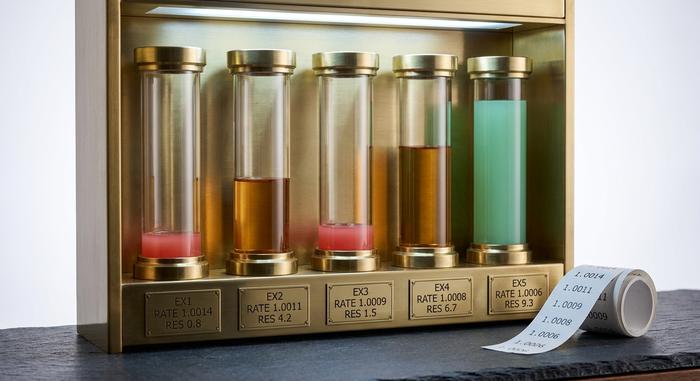
Reserve depth is the routing primitive that almost nobody talks about. Whether you want to buy and sell crypto, sell crypto for fiat, or move between e-currencies, the same logic applies. The reserve number an exchanger displays is its available liquidity in the destination currency at that moment. Exchangers with the best rates are not always the ones with deep enough reserves to fill your order. A rate of 1.001 versus 1.0008 looks like a clear winner on the rate column, but it means very little if the exchanger has 0.5 BTC in reserve and you need to swap into 0.8 BTC. The trade either gets refused, gets partially filled, or gets queued. Users who optimize purely on headline rate without checking reserve frequently end up trading with the second or third option anyway, with the time spent on the first one wasted.
The double-exchange feature exists for cases where no direct pair is listed. If you want to move from a rare e-currency to a specific stablecoin and no single exchanger handles both legs, BestChange suggests a chained route, exchanger A for the first leg, exchanger B for the second. Slippage and fees compound, but the option exists. The rate-alert subscriptions through email and Telegram are useful for patient users who know their target rate and can wait. The API integration lets partner sites embed the BestChange comparison data directly, which is how several smaller crypto blogs run their off-ramp calculators.
Listed Exchangers, Verification, and Trust Signals
The exchanger-vetting process is BestChange's actual product. Anyone can build a price comparison; what BestChange built over 18 years is a quality filter, a screening process, a review backlog, and a dispute mediation function that gives the comparison its meaning. Before any exchanger appears on the listed exchangers list, the BestChange moderation team manually verifies the operator: domain history, registered jurisdiction, declared payment systems, claimed reserves. Continuous moderation removes bad actors. Cumulative user reviews now sit at 2.69M, and the dispute system lets users post complaints that BestChange then mediates with the exchanger.
The "trusted exchanger" tag is the network's strongest internal verification signal. It is awarded to operators with long history, low complaint concentration, and clean dispute resolution patterns. It is also the right filter for most retail users, limiting the comparison to trusted exchangers cuts the network noise dramatically.
The counterweight is honest. Even with vetting, some listed exchangers have failed users over the years. Trustpilot reviews of BestChange itself are polarized. High marks on arbitration response sit next to serious complaints on held funds. The most recent serious complaint landed on May 4, 2026. ScamAdviser flags the domain with a low trust score. That is a noisy signal: those scoring systems often weight registrar opacity heavily. Worth noting, not worth over-weighting. The honest takeaway is that BestChange's verification reduces the failure rate; it does not eliminate it.
BestChange Mobile App: Crypto Exchanger Monitor on iOS and Android
The mobile app is the most consequential product change BestChange has shipped in a decade. Users can download the BestChange app from either App Store, and the cryptocurrency exchange rates surface inside a far cleaner UX than the desktop. The desktop site dates to 2007 and looks it. The bestchange app, by contrast, is a 2024-2025 product, currently at iOS version 1.9.12 released in April 2026, with an Android version on Google Play covering the same surface. The iOS build requires iOS 14.0 or newer, occupies 45.1 MB, supports seven languages, and is rated 5.0 out of 5 on early App Store reviews (the sample is small).
Feature parity with the desktop is mostly there. The mobile app shows real-time rates across 400-plus exchangers, applies currency-pair filters, displays verified customer feedback, surfaces dispute resolution support from BestChange specialists, and includes a built-in FAQ that covers AML analysis, KYC and KYT procedures, and basic exchange strategy for beginners. Live data refreshes every few seconds, mirroring the desktop cadence. What the app does not yet do is expose the full API surface or the deeper analytics views available on the website.
For users who run regular exchanges across multiple exchangers, the mobile app changes the workflow. Rate alerts that previously required email checking now arrive as push notifications. Currency-pair searches that previously took two-handed desktop navigation now fit in a thumb-friendly filter. The bestchange app is not the only way to use the service, but it is increasingly the default way.
AML, KYC, and the Reality of E-Currency Exchangers
This is the section users skip and regret. BestChange itself is a directory, and the listed e-currency exchangers each run their own KYC posture, sanctions screening, and AML practice. The aggregator is neutral. The routing decisions are not. A user who picks an exchanger purely on headline rate may end up trading with an operator whose KYC requirements they cannot meet, whose jurisdiction blocks them, or whose AML response will freeze their funds mid-trade.
The AML Analyzer that BestChange ships is a separate tool from exchanger-level KYC. It screens blockchain addresses for sanctions and high-risk exposure before you send funds out, useful for catching obvious red flags, not a substitute for the exchanger's own compliance posture. Listed exchangers vary widely. Some are fully KYC-free for small amounts; many require government ID above certain thresholds; a few require ID for any trade.
Recent regulatory events have reshaped the listed-exchanger landscape more than the headline numbers suggest. The OFAC re-designation of Garantex in August 2025 (and the Grinex successor that followed), the EU sanctions package in March 2025, the revocation of QIWI's license in February 2024, each removed or restricted a meaningful chunk of the CIS exchanger network. That network was simultaneously BestChange's moat and its biggest tail-risk concentration.
For merchants, anyone accepting crypto through a payment gateway like Plisio who later needs to off-ramp to local fiat, BestChange is a price-discovery layer. It is not a substitute for compliance diligence on the chosen exchanger. The right workflow is pick an exchanger by reserve depth, reputation, and jurisdiction compatibility, then check rate.

BestChange Reviews: User Reviews and Reputation Signals
The 2.69M user reviews on BestChange are the most-cited reason users trust the platform and also the most-cited reason critics distrust it. The signal is noisy. Reading reviews correctly matters more than the volume of reviews available.
The honest pattern: reviews skew positive on successful trades and sharply negative on stuck transactions. That is true for every review system that aggregates emotional outcomes. Trustpilot scores for BestChange itself are polarized, strong arbitration praise paired with serious held-funds complaints, with the most recent serious complaint landing May 4, 2026. ScamAdviser flags the domain with low trust, a signal worth noting but not worth over-weighting; those automated scoring systems frequently penalize legitimate companies with multilingual operations.
The actionable rule for the user reviews on a specific exchanger you are about to use: weight reviews on that operator, not on BestChange as a whole. Look for thousand-review exchangers with low recent negative concentration. Skip operators with fewer than a hundred reviews unless you are willing to absorb the unknown risk. Read the negative reviews before the positives, because the failure modes are far more informative than the success patterns.
BestChange Advantages, Disadvantages, and Best Exchange Rates
The honest list. Advantages: an 18-year operating history, free use for end users, neutral comparison across competing exchangers, broad currency coverage including most major e-money systems, built-in AML tooling, a working mobile app on iOS and Android, dispute mediation that meaningfully helps users in conflict with listed operators, and reserve transparency that competitors rarely match. The platform handles currency pairs across crypto, fiat, and e-currency in a way that no single CEX can match.
For users trying to choose an exchanger from those listed on BestChange, the underlying exchange service is identical across operators. The differences sit in the crypto exchange rates each one shows, the smallest exchange unit each accepts, and whether the operator counts as one of the trusted e-money exchange services with long-standing reputation. Disadvantages are structural rather than fixable. BestChange is an aggregator only, no custody, no execution, no direct recourse against listed exchangers when something fails. The listed-exchanger network is CIS-concentrated, which is both the moat and the tail-risk. The desktop UI is dated relative to instant-swap competitors like ChangeNOW, SimpleSwap, and FixedFloat, which execute trades in-aggregator with one click. Some listed exchangers, even after vetting, still cause user losses. The free service has to monetize partner referrals, which means listing decisions are not purely user-driven.
The best exchange rates question depends on what you are optimizing. BestChange wins when you have time to compare and patience to read reserves and reviews. Instant-swap aggregators win when you want one-click execution and will accept a slightly worse rate for the convenience. The two products are often complementary rather than substitutes. If you are trying to find the best crypto exchange path more broadly, BestChange surfaces exchange conditions across operators, but the final exchange offer you accept depends on each exchanger's website, not on BestChange itself.
Why BestChange Still Matters in 2026
BestChange is a useful asymmetric tool. It is most powerful when the user does the work of reading reserves, reviews, and jurisdiction carefully, and most disappointing when the user just clicks the top rate. The 2025-2026 regulatory turbulence around its CIS-heavy network has narrowed the safe-default exchanger list more than the headline numbers suggest. The platform is still the cleanest single view of the long tail of e-currency exchangers, but the discipline of using it well now matters more than ever.