CoinSpot Review: Buy, Sell Bitcoin & Cryptocurrency in AU

If you live in Australia and you have ever bought even a single satoshi, odds are CoinSpot is the first name that ever popped up in your Google search. It has been kicking around since 2013, which in crypto years is basically prehistoric, and somehow it still hovers near the top of every "best Australian exchange" list anyone bothers to write in 2026. That does not, of course, automatically make it the right pick for you. CoinSpot is genuinely strong in a couple of areas and genuinely annoying in others. And honestly, the fee story alone has sent more than a few people running straight to a cheaper competitor.
So this CoinSpot review is not a sales pitch. Not even close. It is a real walk-through of how the exchange actually works in 2026, where it earns its reputation, where it overcharges you, and what really happened in that November 2023 hot-wallet hack people still ask about on Reddit every couple of weeks. By the time you finish reading, you will know exactly whether CoinSpot deserves a spot in your buy-and-sell-bitcoin workflow as an Australian, or whether you should just go look at Swyftx or Independent Reserve instead.
What Is CoinSpot? Inside the Australian Exchange
Right, so the basics. CoinSpot is a local cryptocurrency exchange, purpose-built for Australians and nobody else. Founded back in 2013, in Melbourne, by a guy named Russell Wilson. He came from a cybersecurity background and clocked the same problem every other early Aussie crypto user was bumping into at that point: there was simply no clean way to swap AUD for bitcoin without jumping through a bunch of overseas hoops. So he just built one. Fast-forward thirteen years and the company now claims north of 3 million users (Finder's 2026 number), which, when you remember Australia only has about 27 million people in total, is a wild penetration rate. Roughly one in nine Aussies.
The company is still privately held and still fully Australian-owned, with HQ in Melbourne. Two big regulatory anchors keep it legit in 2026, and they are worth knowing. First one: CoinSpot has been a registered Digital Currency Exchange with AUSTRAC, which is Australia's financial intelligence agency, ever since May 8, 2018. That registration is a legal requirement for running any crypto exchange on Australian soil. Second one: back in February 2020, CoinSpot became the first Australian crypto exchange to earn ISO 27001 certification for information security management. That audit was done by SCI Qual International, and the cert has since been renewed under the newer ISO 27001:2022 standard. CoinSpot is also a paid-up member of Blockchain Australia, the local industry body.
Honestly, the easiest mental model is this. If MetaMask is a DeFi power tool and Binance is a global speed-boat with a mile-long wake, then CoinSpot is the local bank branch on your high street. Easy to walk into, kind to beginners, AUD-first to its bones, and engineered to please Australian regulators a long time before it tries to please crypto-native power users.
CoinSpot Supported Coins and Cryptocurrencies
CoinSpot supports somewhere between 500 and 530 cryptocurrencies depending on which source you check and when you check it. The trading platform advertises "500+" on the mobile app store listing, and Finder's 2026 review pegs the live count north of 500 across the usual suspects and a long tail of altcoins. The available currency mix on the platform covers pretty much any digital assets you would expect from a serious exchange. Buying and selling any cryptocurrency available on CoinSpot works the same way across the entire catalog: the listed coins on CoinSpot are presented through an interactive list of coins, and following the all listed coins feed lets you spot new tickers the moment they go live. Every cryptocurrency available on CoinSpot shows up in this same unified list, so there is no hunting through side menus.
The headline coins everyone wants are all there: Bitcoin, Ethereum, XRP, Solana, Cardano, Dogecoin, Shiba Inu, Chainlink, Avalanche, Polygon, Polkadot, Cosmos, Litecoin, and Bitcoin Cash. Pretty much any major top-100 token by market cap is listed. Stablecoins like USDT and USDC are supported, too, though most Australian users stick to AUD pairs instead of stable-to-stable trades. Selling any cryptocurrency available on the platform follows the same flow as buying, which helps ease of use and usability for anyone new to cryptocurrency trading.
What CoinSpot does not list is just as important as what it does. You will not find obscure privacy coins here, and you will not find tokens that have been flagged for scams or regulatory problems. The listing process is conservative by design, which is either a feature or a bug depending on what you came for. If you came for mainstream exposure, it is fine. If you came for degen microcaps, go somewhere else.
How to Buy and Sell Bitcoin on CoinSpot
Buying bitcoin on CoinSpot is the kind of thing you can realistically walk a parent through. Sign up, verify your identity (Australian photo ID, proof of address), fund the account with AUD through one of the deposit methods, and then pick how you want to trade.
CoinSpot gives you two main ways to buy and sell bitcoin or any other cryptocurrency:
- Instant Buy/Sell: the simple flow. You see a price, you tap a button, the trade executes at that price. Fee is 1% flat, which is high. The convenience is the point.
- CoinSpot Markets: the order-book flow. You place limit or market orders just like you would on Binance or Coinbase Advanced. Fee drops to 0.1% per side. Better for anyone trading more than a small amount.
If you are buying a few hundred dollars for the first time, Instant Buy is fine. You will pay the 1% and it will feel painless. But if you are moving anything over a thousand AUD at a time, switch to Markets and save yourself the fee. The difference compounds fast. On a $5,000 trade, Instant costs you $50 and Markets costs you $5. Same bitcoin, same platform, different door.
For truly big trades, CoinSpot runs an OTC (over-the-counter) desk with a 0.1% fee and a $20,000 AUD minimum order size. That is aimed at high-net-worth individuals and companies who do not want to move the order book.
CoinSpot Fees for Bitcoin and Crypto Trades
The CoinSpot fee structure is where most complaints cluster, so let's put the whole thing in one table and be honest about it.
| Service | Fee | Notes |
|---|---|---|
| Instant Buy/Sell/Swap | 1.00% | Fixed-price, simple flow |
| CoinSpot Markets (order book) | 0.10% | Maker/taker, much cheaper |
| OTC Desk | 0.10% | Min order: $20,000 AUD |
| NFT marketplace trades | 0.90% | On the built-in NFT marketplace |
| PayID / Bank transfer deposit | Free | Fastest free option |
| Direct AUD bank deposit | Free | 1-2 business days |
| BPAY deposit | 0.90% | Traditional Aussie bill-pay rail |
| Card / Apple Pay deposit | 1.22% | Convenient, pricier |
| Blueshyft cash deposit | 2.50% | In-person at newsagents |
| AUD withdrawal to bank | Free | No withdrawal fee |
| Crypto withdrawal | Network fee only | Varies by blockchain |
Sources: CoinSpot fee schedule, Finder 2026 review, Datawallet 2025 review.
Two takeaways. First, AUD deposits and withdrawals are essentially free if you use the right rails (PayID or direct bank), which is rare and genuinely good. Second, the 1% Instant Buy fee is high compared to global alternatives like Binance or Kraken. If you only ever use Instant Buy, you are paying ten times what an order-book user pays. The only reason to do that is if the simplicity is worth the cost to you, which for many first-time buyers, it actually is.

Is CoinSpot Safe for Your Cryptocurrency Holdings?
Short version: yes, with the usual hot-exchange caveats baked in. Longer version: CoinSpot's security track record is actually better than most exchanges in its weight class, but it is far from spotless, and November 2023 proved that part loudly.
Here is the positive case. CoinSpot holds the ISO27001 certification for information security management, currently under the updated 27001:2022 standard. What that really means in practice is that an outside auditor, SCI Qual International, has gone in and validated that the exchange actually follows the kind of stringent best practice security protocols including multi-stage verification of user accounts, encryption, incident response and access controls that big enterprise IT shops are expected to follow. CoinSpot was the very first Australian based exchange to hold both an ISO27001 certification and a Blockchain Australia certification, and that combination of security management and a blockchain Australia certification has been its main pitch ever since 2020. Quick brand note: people sometimes type the name as "coin spot" but it is officially one word. The majority of user crypto sits in cold storage (the exact percentage has never been publicly disclosed, so take "majority" literally), and the rest stays in hot wallets so daily operations can actually run.
On the user-facing side, you get two-factor authentication, biometric login on mobile, withdrawal whitelisting, anti-phishing codes on every email CoinSpot sends, optional geo-locking that restricts logins to Australian IP addresses, and session expiration. Switch all of those on and your CoinSpot account is always secured behind several layers at once. There is also a HackerOne bug bounty quietly running in the background, paying outside researchers for finding vulnerabilities before someone with worse intent does. The support team runs 24/7 on live chat and email, and CoinSpot often calls them "the best and brightest support team to help with anything." In practice, the brightest support team to help you actually recover an account, or trace a stuck transaction at 2am, is what you will care about when something breaks.
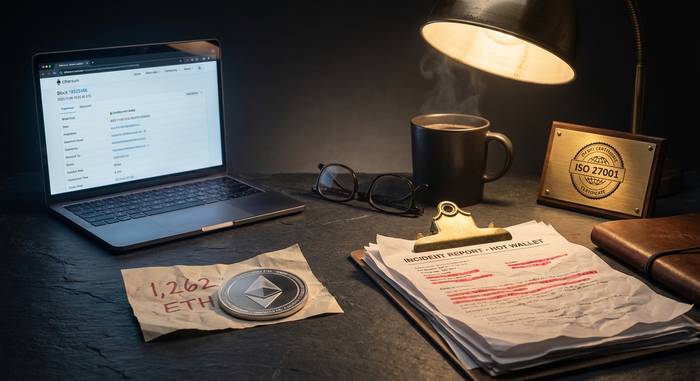
Now, the November 2023 incident, because it really does still matter and it really is the thing people keep asking about. On November 8, 2023, on-chain sleuth ZachXBT flagged some suspicious outflows from two CoinSpot hot wallets. The final tally landed at roughly 1,262 ETH, worth about $2.4 million AUD on the day. The attacker compromised a hot-wallet private key, then laundered the proceeds through THORChain, Wan Bridge, Uniswap and a handful of Bitcoin wallets. Independent analysis followed from CertiK and ZachXBT. A few media outlets later attributed the attack to North Korea's Lazarus Group, but that attribution was never actually confirmed in any public reporting I have read. Treat the Lazarus angle as speculation, not as a fact you can repeat with a straight face. What is confirmed and worth tattooing on your forehead: no customer funds were lost. CoinSpot absorbed the entire $2.4 million hit from its own reserves. AUSTRAC opened an investigation afterwards, as it is required to do for any theft above the $10,000 threshold.
The lesson for users is exactly the same lesson every centralized exchange teaches you eventually. Not your keys, not your coins. Use CoinSpot for buying and selling, sure. But move any meaningful long-term holdings into a hardware wallet that you actually control. That rule does not change just because there is an ISO 27001 plaque on the company website.
Using the CoinSpot App for Bitcoin Trading
The CoinSpot app is the primary way most users interact with the platform, and it is probably the single best thing about the whole product. The clean and simple CoinSpot app user interface is not marketing talk. The simple CoinSpot app user interface genuinely holds up in daily use, and CoinSpot is now made even easier to navigate than it was five years ago. Usability is the whole pitch. On the Apple App Store it holds a 4.8 out of 5 rating from more than 45,554 reviews as of April 2026, which is unusually high for a financial app. Android sits around 4.15 on Google Play from roughly 18,000 ratings.
What you get inside the app, practically speaking:
- A single dashboard showing your portfolio across every coin you hold, with wallet values in one simple view
- CoinSpot with an interactive list of 500+ cryptocurrencies you can tap to see charts, recent activity, and deeper details
- Price charts with daily, weekly, monthly and yearly timescales
- One-tap Instant Buy/Sell flow for the quick path, with Markets flow for the cheaper one
- Recurring buy orders for dollar-cost averaging (DCA)
- Bundles, which are pre-set baskets of coins you can buy in one click
- Using your CoinSpot wallets within the app you can easily send and receive crypto without bouncing to a browser
- Inside the app you can easily track your holdings and wallet values in real time, with track your holdings and wallet values side by side
- View your recent send and receive activity, full order history, and deposit and withdrawal records
- Apple Pay, card deposits, PayPal and widgets on the home screen (all added in 2024-2025 updates)
- Biometric unlock via Face ID or fingerprint
The interface holds up for both brand-new users and more experienced traders who want to check prices on the go. The criticism that shows up most in reviews is not about the design but about logging in: the app sometimes asks for your password more often than people like, and a few users complain that deposits get verified faster than withdrawals. Those are frustrations, not dealbreakers.
AUD Deposits and Australian Account Verification
The AUD deposit and withdrawal setup is where CoinSpot quietly outclasses a lot of international exchanges for Australian users. You can fund the account with PayID, direct bank transfer, BPAY, Blueshyft cash at a newsagent, debit card, Apple Pay, PayPal, or a few other rails. PayID and bank transfer are free and usually near-instant. BPAY costs 0.9%, card costs 1.22%, and Blueshyft cash costs 2.5% but lets you literally walk into a corner store with physical money, which is occasionally useful. AUD withdrawals to a verified bank account are free and typically land the same day or next morning. Withdrawal AUD speed is one of the things CoinSpot users consistently flag as better than expected. CoinSpot account facilities for fiat movement have been one of the platform's quiet advantages from day one.
Account verification itself follows standard AML/CTF rules under AUSTRAC regulation. You upload an Australian photo ID (driver's licence or passport), confirm your address, and usually get approved within a few minutes on the basic tier. Higher deposit limits require more detailed verification, but the process never leaves the app and stays fast by exchange standards. Until you are fully verified, deposit and withdrawal limits apply, so do the full KYC upfront if you plan to move real money.
CoinSpot for Advanced Cryptocurrency Traders
Here is the honest truth for anyone who has been trading crypto for more than a year: CoinSpot is not really built for you. The platform has a few features that power users appreciate (Markets order book, OTC desk, advanced order types like limit, stop-loss and take-profit on 1% Instant trades), but there is no futures trading, no margin, no perpetuals, and no leverage of any kind. That is partly regulatory (Australian compliance is strict) and partly by design. CoinSpot wants to serve the first-time buyer, not the day trader.
If you care about deep liquidity on less mainstream tokens, pairs-to-pairs routing, API trading bots, or anything resembling derivatives, you are better off on Binance, Kraken, or Bybit with the understanding that none of those are headquartered in Australia and each has its own compliance friction. CoinSpot does offer an API for read-access and basic order placement, which covers hobbyist bot operators, but it is not in the same league as a global exchange's API infrastructure.
NFTs, OTC and Other CoinSpot Bitcoin Features
CoinSpot built Australia's first integrated NFT marketplace inside a centralized exchange, and yes, as of 2026 it is still very much alive. You can browse somewhere around 100 collections, the usual high-profile names like Bored Ape Yacht Club, Doodles, Azuki and VeeFriends among them, and trade everything in AUD without ever leaving the app. The fee runs 0.9% per NFT trade. Will it replace OpenSea for serious NFT collectors? No, not even slightly. But for an Australian who wants to dip a toe in without first learning how to bridge ETH across chains, it is a remarkably clean on-ramp. Beats sending a stranger your seed phrase, anyway.
Then there is the OTC desk, which is the other genuine standout. Any trade above $20,000 AUD can route through OTC at a flat 0.1% fee, and you get a dedicated support agent walking you through it. Compared to churning a big buy through the order book and watching the price slip on you, that is meaningfully cheaper. CoinSpot also runs a prepaid Mastercard-branded CoinSpot Card which lets you spend your crypto balance in AUD at any merchant that takes a Mastercard. The card's take rate sits in the usual convert-and-spend territory, so do not expect free money, but it works.
One important thing to know before you get excited about any older guides you might read. The CoinSpot Earn staking program got suspended back in September 2023 and, as of April 2026, it has still not been reinstated. So if you stumble across a 2022 article still listing big CoinSpot staking APYs, that information is just stale. If staking rewards are the only reason you are looking at this exchange, you are going to have to stake those coins somewhere else right now.
CoinSpot Pros and Cons for Australian Investors
Let's break down the CoinSpot pros and cons for real Australian cryptocurrency investors without the marketing gloss.
| Pros | Cons |
|---|---|
| First Australian exchange with ISO 27001 certification | 1% Instant Buy/Sell fee is high globally |
| AUSTRAC-registered DCE since May 2018 | Staking program suspended since Sep 2023 |
| 500+ supported cryptocurrencies | No futures, margin, or leverage trading |
| Free AUD deposits and withdrawals via PayID/bank | Australia-only, no international users |
| Beautiful, beginner-friendly app (4.8/5 on iOS) | Customer support slow on edge cases |
| CoinSpot Markets order book at 0.1% | Account verification friction for withdrawals |
| OTC desk for trades over $20,000 AUD | The 2023 hot-wallet hack (no customer loss) |
| Built-in NFT marketplace with 100+ collections | Closed ecosystem; limited API power |
| 24/7 live chat and email support | Some users report session timeouts too aggressive |
| No customer funds lost in 10+ year history | Not ideal for advanced or international traders |
Who should use CoinSpot: Australian beginners and everyday holders who want a compliant, AUD-native platform they can walk a parent through. Who should skip: high-volume traders, DeFi natives, anyone outside Australia, and people who need derivatives or staking right now.
CoinSpot vs Other Cryptocurrencies Exchanges
CoinSpot does not operate in a vacuum. Among Australian crypto exchanges, it competes with Swyftx, Independent Reserve, Kraken Australia, Binance Australia (which shut down its derivatives product in April 2023 but still runs spot), and a handful of smaller crypto exchanges like BTC Markets and Cointree. Each one tilts a little differently.
| Exchange | Best at | Weak at | Instant buy fee |
|---|---|---|---|
| CoinSpot | Beginner UX, ISO 27001, 500+ coins, NFT marketplace | 1% Instant Buy, no staking, AU-only | 1.00% |
| Swyftx | Lower fees, demo mode, competitive spreads | Smaller coin range, newer brand | 0.60% |
| Independent Reserve | OTC, high limits, institutional | Plain UI, fewer coins | 0.50% |
| Binance Australia | Massive liquidity, deep coin range | Compliance friction, support quality | 0.10% |
| Kraken AU | Global liquidity, advanced tools | Fewer local payment rails | 0.16% maker |
If you are price-sensitive and trade frequently, CoinSpot is not the cheapest option in any single column. What it wins on is the combination: local support, regulatory coverage, payment rails that actually work in Australia, and a learning curve gentle enough for someone buying their first $500 of bitcoin.
Should You Use CoinSpot for Bitcoin in 2026?
If you are an Australian who wants to buy and sell bitcoin (or any cryptocurrency) without fighting an international exchange's KYC flow, CoinSpot in 2026 is still one of the best easy answers. Thirteen years of track record, ISO 27001 on the wall, 3 million users, a genuinely great mobile app, and no customer losses even in the worst moment (the November 2023 hot-wallet hack). You pay for that convenience in the 1% Instant Buy fee, and you pay for the friendly app in the fact that you will not find futures or margin or any of the toys a serious trader wants.
My honest recommendation: if this is your first exchange and you are buying bitcoin or ETH with AUD, open a CoinSpot account, verify, fund with PayID, and use Markets rather than Instant Buy to dodge the 1% fee. Once you know what you are doing, move the long-term bag to a hardware wallet. If you are already a semi-pro trader, CoinSpot is probably not going to replace Kraken or Binance in your workflow, and that is fine too. Different tools, different jobs.