Best Crypto Exchanges in Australia for 2026: Fees, AUD Deposits, and How to Start

One in three Australians holds crypto. That is higher than Canada, higher than the UK, and close to the US adoption rate. AUSTRAC has registered hundreds of digital currency exchanges. ASIC is building a licensing framework that could reshape the market by 2027. The infrastructure exists. The regulation is getting tighter.
What most people still get wrong is the exchange choice. CoinSpot charges 0.1% per spot trade. Swyftx charges 0.6%. That difference, on $10,000 in monthly trades, is $50 per month or $600 per year. Fees matter. So do PayID deposits, AUD trading pairs, security records, and whether the platform will actually answer when something goes wrong.
This guide ranks the best crypto exchanges in Australia for 2026, compares fees in a table, covers the tax situation, and explains the regulatory landscape. If you want to buy crypto with Australian dollars and keep it simple, start here.
Best crypto exchanges in Australia: comparison table
| Exchange | Trading fee | Coins | AUD deposit | Best for |
|---|---|---|---|---|
| CoinSpot | 0.1% (spot) | 510+ | Free (PayID) | Biggest selection, beginners |
| Swyftx | 0.6% | 420+ | Free (PayID/Osko) | SMSF accounts, auto invest |
| Independent Reserve | 0.02-0.5% | 20+ | Free (PayID) | High net worth, OTC |
| CoinJar | 0-0.1% (spot) | 60+ | Free (PayID) | Lowest spot fees |
| Kraken | 0-0.4% | 490+ | Free (OSKO) | Advanced traders |
| Coinbase Australia | Varies (0.6%+) | 200+ | Card fees apply | Learn and Earn, coin selection |
| BTC Markets | 0.1-0.85% | 30+ | Free (PayID) | Institutional, SMSF |
| Crypto.com | 0.08-0.5% | 400+ | Card fees apply | Visa card cashback |
| Digital Surge | 0.1-0.5% | 300+ | Free (PayID) | Simple recurring buys |
| eToro Australia | 1% | 100+ | Free (bank transfer) | Social trading, stocks + crypto |
These are base trading fees for standard accounts. Express and instant buy features carry higher spreads on most platforms. Binance restored AUD bank transfers in January 2026 after a 2.5-year outage, but then got hit with a $10 million fine in March 2026 for misclassifying retail clients as wholesale investors. The trust damage is real. OKX entered the Australian market in 2024 as a relatively new trading platform competing for local users.
How to choose the best crypto exchange in Australia
Trading fees are not the only cost. CoinJar advertises 0.1% spot trading fees. Sounds cheap. But the "Instant Buy" feature on CoinJar charges 1-2%, and that is what most beginners actually use. Same story with Swyftx: the 0.6% headline fee is built into the spread, meaning you never see a separate line item. Always check what you pay on the screen you actually use, not the screen the marketing team designed.
AUD deposits via PayID are free on most Australian crypto exchanges. CoinSpot, Swyftx, Independent Reserve, CoinJar, BTC Markets, and Digital Surge all accept PayID with zero deposit fees and near-instant settlement. Coinbase and Crypto.com push you toward cards, which can cost 2-4% in fees. If you are funding with Australian dollars, PayID support should be non-negotiable.
SMSF compatibility matters if you are investing through your super. Swyftx and BTC Markets both offer SMSF account structures. Setting one up through Swyftx reportedly takes about 4 hours. Not every exchange supports this, and getting it wrong has tax consequences.
Security is not just a buzzword. CoinSpot holds ISO 27001 certification. Independent Reserve conducts annual external audits of both fiat and crypto balances. Kraken runs proof of reserves and has operated since 2011 without a major breach. Look for these specifics, not just "bank-grade security" language on a homepage.
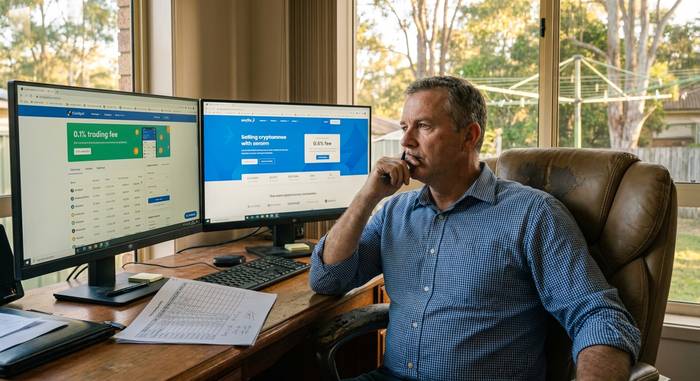
CoinSpot: best overall for Australians
Melbourne-based. Founded 2013. Over 3 million customers. 510+ cryptocurrencies. ISO 27001 certified. These numbers add up to the most popular Australian crypto exchange by a wide margin.
CoinSpot's spot market charges 0.1%, which matches or beats most competitors. The instant buy feature costs more (around 1%), but that convenience premium is standard across the industry. Deposits via PayID are free and settle in minutes. 24/7 Australian customer support with an average reply time under 30 seconds.
The platform does not offer margin trading, derivatives, or futures. If you want leverage, look elsewhere. But for buying bitcoin, ethereum, and hundreds of altcoins in AUD with low fees and local support, CoinSpot is the default choice.
Swyftx: best for SMSF and automated investing
Brisbane-based. AUSTRAC-registered. 420+ cryptocurrencies. 1.5 million users across Australia and New Zealand. 4.6 out of 5 on Trustpilot.
Swyftx stands out for two features: SMSF support (you can set up a compliant self-managed super fund crypto account in about 4 hours) and Auto Invest (recurring automated buys across multiple assets). If you want to invest in crypto every payday without thinking about it, Swyftx handles the scheduling.
The 0.6% spread-based fee is higher than CoinSpot's spot rate, and there is no separate "pro" tier with lower fees. Demo mode lets new users practice with fake money before committing. The OTC desk handles large trades for high net worth and institutional clients.
Independent Reserve: best for high net worth and OTC
Sydney-based. Founded 2013. Registered with AUSTRAC. ISO 27001 certified. Annual external audits verify all fiat and crypto balances.
Independent Reserve is not the flashiest exchange. The coin selection is small (around 20 assets), and the interface is functional rather than beautiful. What it offers is trust. Segregated customer funds kept separate from operational funds. Institutional-grade security. And an OTC desk that handles large buy orders without the slippage you get on a retail order book.
Trading fees range from 0.02% to 0.5% depending on your 30-day volume. For serious investors moving significant amounts of AUD into crypto, Independent Reserve is the grown-up option.
Kraken: best for advanced traders
San Francisco-based, but fully operational in Australia with AUD deposits via OSKO. Kraken has run since 2011 without a significant hack. Proof of reserves audits. 95% cold storage. 490+ cryptocurrencies.
Maker fees start at 0% for high-volume traders. Taker fees top out at 0.4%. The Kraken Pro interface offers advanced charting, multiple order types, and margin trading (where permitted). For Australians who want professional-grade tools and a deep order book, Kraken delivers.
The downside: limited AUD trading pairs compared to local exchanges like CoinSpot or Swyftx. You may need to trade through USD pairs for less popular altcoins, which adds a currency conversion layer.
CoinJar: lowest spot trading fees
Melbourne-based. Operating since 2013. 60+ cryptocurrencies. CoinJar's spot market fees start at 0% for makers and top out at 0.1% for takers. Those are the lowest published spot rates among Australian exchanges.
The catch: CoinJar's simple buy interface charges 1-2% in spread, which is what most casual users see. The low fees only kick in on the CoinJar Exchange (the order book), which requires more knowledge to navigate. Multi-level encryption. Full balance coverage.
CoinJar also offers a Mastercard-linked crypto spending card. The coin selection at 60+ is smaller than CoinSpot's 510+, but it covers all major assets.
Coinbase Australia: best for education and coin variety
Coinbase entered Australia with AUSTRAC registration and a familiar pitch: 200+ cryptocurrencies, the Learn and Earn program, and a clean interface that beginners can navigate without a tutorial. The educational content is genuinely good. You watch short videos about crypto projects and earn small amounts of that token. It is a free way to build a diversified portfolio while actually learning what you are buying.
The problems are Australian-specific. AUD deposit options are limited compared to local exchanges. Card purchases carry fees that can reach 3-4%. Customer support runs from the US, which means timezone mismatches for Australian users. And the fee structure on simple buys is not transparent. You might pay 0.6% on Advanced Trade or significantly more on the default buy screen.
Coinbase makes sense for Australians who value education and want access to 200+ coins. It does not make sense as your primary exchange if low fees and local support matter.
Digital Surge: best for simple recurring buys
Brisbane-based. AUSTRAC-registered. 300+ cryptocurrencies. Digital Surge built its reputation on simplicity. The recurring buy feature lets you set up automatic purchases on a schedule, similar to dollar cost averaging into an ETF. PayID deposits are free.
Trading fees sit between 0.1% and 0.5% depending on your method. The interface strips away complexity that advanced traders want but beginners find overwhelming. For someone who wants to buy $100 of bitcoin every fortnight and not think about it, Digital Surge does exactly that without the noise.
Exchanges that had issues in Australia
Australia has not banned any major exchanges outright, but several global platforms have had rough patches:
| Exchange | What happened | Year |
|---|---|---|
| Binance | AUD bank transfers halted after payment provider cut ties | 2023 |
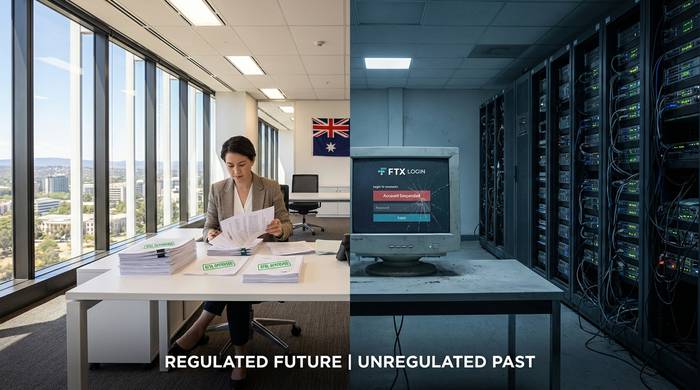
| FTX | Collapsed globally, Australian arm entered administration | 2022 |
| ByBit | Regulatory concerns, limited Australian support | Ongoing |
The Binance situation is worth understanding. Binance did not get banned. Its third-party payment provider, Cuscal, stopped processing AUD transactions. Without a banking partner, Binance could not offer direct AUD deposits or withdrawals. The exchange still operates in Australia but with limited fiat functionality.
FTX Australia went into administration alongside the global collapse. ASIC took enforcement action. Customer recovery is still ongoing in 2026 through the bankruptcy process. The FTX collapse was a reminder that even heavily-marketed platforms with celebrity endorsements can implode. It accelerated ASIC's push for stricter licensing.
ByBit operates in a grey area. It serves Australian users but has not fully committed to the AUSTRAC framework the way local exchanges have. For Australians who want regulatory certainty, sticking with homegrown platforms like CoinSpot, Swyftx, or Independent Reserve is the lower-risk play.
Crypto.com and eToro: global platforms in Australia
Two more global exchanges serve Australians with different strengths. Crypto.com offers 400+ coins, a Visa debit card with crypto cashback rewards, and trading fees between 0.08% and 0.5%. The card rewards program is the main draw. AUD deposits via card carry fees, but the ecosystem is broad.
eToro Australia blends stocks and crypto on one platform. You can buy BHP, Apple, and bitcoin in the same session. The 1% crypto trading fee is steep, but for investors who want traditional and digital assets under one roof, the convenience has value. Social trading features let you copy other users' portfolios automatically.
Crypto taxes in Australia: what the ATO expects
The Australian Taxation Office treats crypto as property, not currency. Every disposal is a taxable event. Here is what that means in practice:
Sell crypto for AUD? Capital gain. Swap one coin for another? Capital gain. Spend crypto on goods or services? Capital gain. There is no way around it. Every transaction where you move from one asset to another triggers a tax obligation.
The ATO offers a 50% CGT discount if you hold an asset for more than 12 months before selling. Buy BTC in January 2025, sell in March 2026? You pay tax on half the gain. Buy and sell within the same year? Full gain taxed at your marginal rate, which tops out at 45% plus the 2% Medicare levy for incomes above $190,000.
Staking rewards and airdrops are treated as ordinary income at the time you receive them. Mining income is taxed the same way if it looks like a business activity.
The ATO runs a data matching program with Australian exchanges. They get your transaction data directly. Under-reporting is not a strategy. Software like Koinly, CoinLedger, and CryptoTaxCalculator integrates with most Australian platforms to generate ATO-ready reports.
How Australian crypto regulation works in 2026
AUSTRAC is the main regulator. Every crypto exchange operating in Australia must register as a Digital Currency Exchange (DCE) and comply with Anti-Money Laundering and Counter-Terrorism Financing (AML/CTF) obligations. KYC is mandatory.
ASIC (Australian Securities and Investments Commission) has a broader role. It oversees financial products, which includes some crypto tokens classified as financial products. ASIC has been pushing for a formal licensing regime for crypto platforms, with Treasury consultations ongoing through 2025 and 2026.
And then, on April 1, 2026, Parliament passed the Corporations Amendment (Digital Assets Framework) Bill 2025. This is the big one. Crypto exchanges and custody providers must now obtain an Australian Financial Services License (AFSL) from ASIC. Two new categories: Digital Asset Platforms and Tokenized Custody Platforms. The same rules that apply to stock brokers and fund managers now apply to crypto trading platforms. Safeguard client assets, provide standardized disclosures, maintain dispute resolution. The "No-Action" letter era ends June 30, 2026. After that, every platform needs an AFSL or needs to be applying for one. Policymakers estimate the regulated digital asset sector could be worth A$24 billion annually.
For now, the practical situation is: register with AUSTRAC, follow AML/CTF rules, and hope that ASIC does not decide your token is a financial product. The regulation is functional but patchwork. The exchanges on this list are all AUSTRAC-registered, which is the current legal baseline for operating in Australia.
About 33% of Australians now own some form of cryptocurrency according to the 2026 IRCI survey, an all-time high. Among 25-34 year olds, that figure hits 53%. Australia outpaces the US in per capita crypto ownership. One complication: 30% of Australian crypto holders report their bank blocking or restricting crypto-related transactions. The safest approach for Australian investors is to stick with AUSTRAC-registered exchanges, verify the platform's security certifications, and plan for the licensing regime that is coming.
PayID, OSKO, and BPAY: how Australians fund crypto accounts
Most Australians use PayID to deposit AUD into their exchange accounts. PayID links your phone number or email to your bank account, so transfers settle within seconds and cost nothing. Nearly every Australian crypto exchange supports it.
OSKO is the real-time payment infrastructure that PayID runs on. When a platform says it accepts OSKO or PayID, they mean the same thing in practice. Funds arrive almost instantly, which matters when you want to buy during a price dip.
BPAY is the older payment rail. Some exchanges still accept it, but settlement can take 1-2 business days. Unless PayID is unavailable for some reason, BPAY is the slower and worse option.
POLi payments (a direct bank transfer service) appear on a few platforms but are becoming less common as PayID takes over.
For Australians, the funding experience is better than in most countries. Free instant deposits via PayID beat Canadian Interac, beat US bank wires, and beat European SEPA transfers for speed. If an exchange does not support PayID, that is a red flag about how well they understand the Australian market.