
Solana Wallet (SOL): Store, Stake, Swap Your Crypto
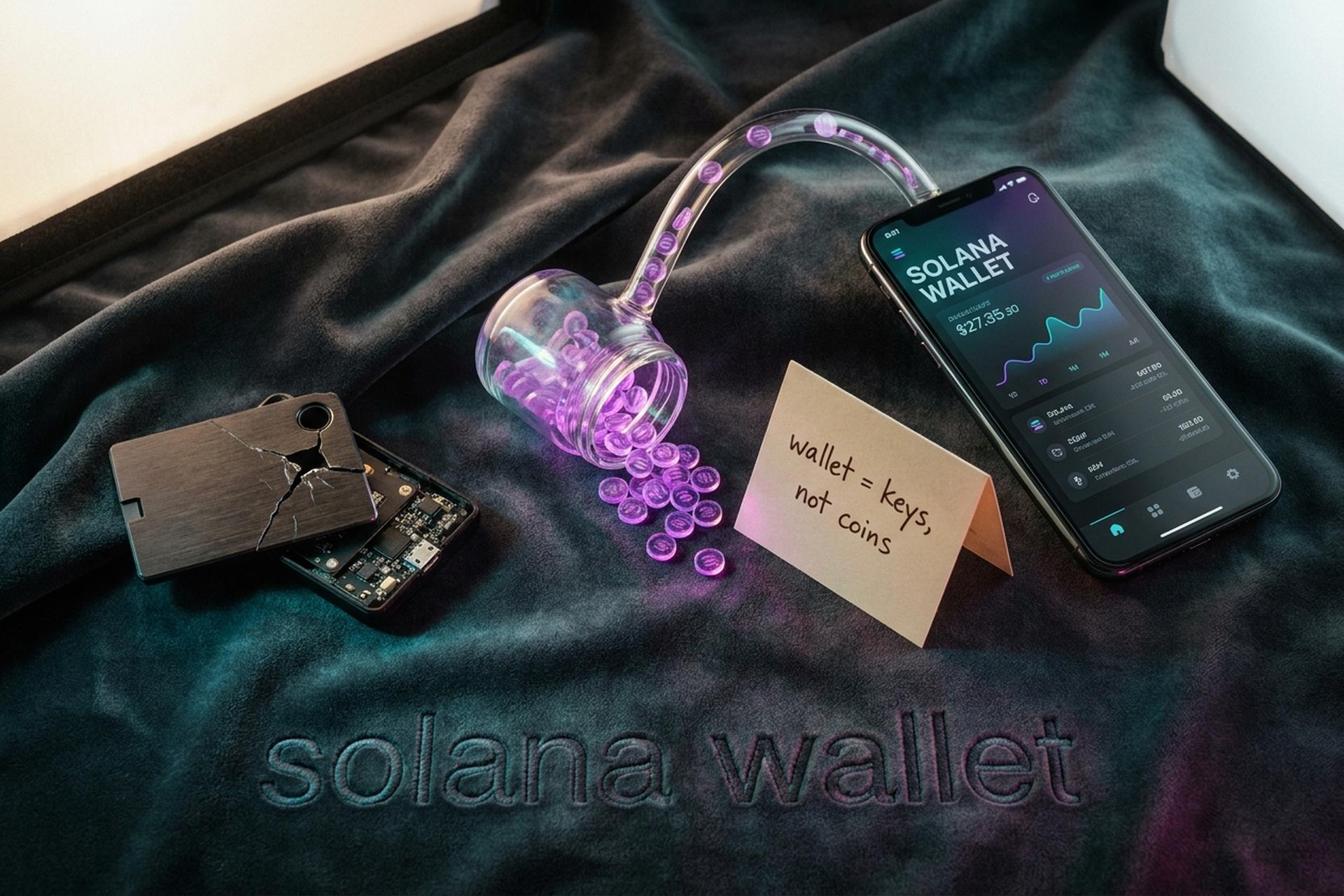
A Solana wallet is the door to one of the busiest blockchains in crypto. In Q1 2026 alone, Solana settled 25.3 billion transactions and saw roughly 87 million per day, more than any other chain. SOL trades around $78 in late April 2026, the network has over 9 million holders, and stablecoin supply on Solana has crossed $15 billion. None of that matters if you cannot pick the right place to keep your coins.
This guide covers what a Solana wallet actually is, how to choose one, and how the main options stack up in 2026, from Phantom and Solflare to Backpack, Ledger, Exodus and the Plisio dashboard wallet. You will also see how to send SOL, swap it for other tokens, stake it for yield and avoid the drainers that took $270 million from a single Solana protocol this April.
What is a Solana wallet: web3 keys and assets
Think of a Solana wallet as a small key ring, not a vault. The software (or hardware device) holds the cryptographic key that controls your SOL, your SPL tokens like USDC, and your NFTs on Solana. Coins do not live inside the wallet. They live onchain. The wallet just keeps the private key that says "I can move this," and uses that key to sign transactions and receive funds.
Three concepts matter:
- Public address. A long string of letters and numbers, like `7xKXt...AvQF`. Share it freely. Anyone can send funds to it.
- Private key. The signature your wallet uses to approve outgoing transactions. Never share, screenshot or paste it anywhere.
- Seed phrase. A list of 12 or 24 words that can rebuild the wallet on any device. Whoever holds the seed holds the money. That part is not a metaphor.
Most Solana wallets are non-custodial. You hold the seed, and only you. Custodial wallets work the other way around: the Solana balance inside a Coinbase or Binance account is held by the platform, and you log in with an email and password. Easier to use, riskier in a different way.
Solana had roughly 3.9 million daily active addresses in early 2026, per The Block. The wallet you pick decides how you tap into that activity, whether that is DeFi, staking, NFTs or stablecoin payments.
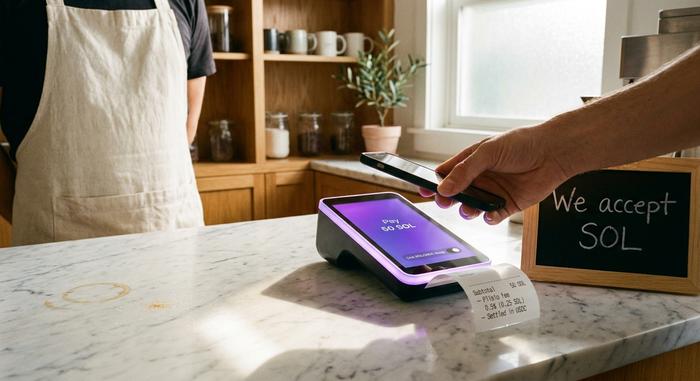
How to choose a Solana web3 wallet: key features
Pick a Solana wallet the way you would pick a bank. Look at the security model, the fees, where it runs and what it actually lets you do.
What to compare:
- Custody. Non-custodial means you own the seed and the responsibility. Custodial trades that for a familiar login and a counterparty.
- Platforms. Mobile app, browser extension (Chrome, Brave, Firefox), desktop client, hardware support. Most active users end up with two of these, not one.
- Built-in swap. Can you trade SOL for USDC, ETH or BTC inside the wallet? Routing quality matters. Bad routing means worse prices, every single time.
- Staking. Native SOL staking pays roughly 6 to 7 percent a year. Some wallets make it a one-tap action. Others bury it under three menus.
- NFT support. Solana hosts one of the largest NFT markets in crypto. A good wallet shows your collection cleanly, lets you list pieces and warns you about obvious fakes.
- Hardware integration. Even your software wallet should be able to pair with a Ledger or Keystone the moment your balance gets serious.
- Transaction fees. The wallet itself is free to download. Real costs come from the swap spread and the network fee. The low fees on Solana stay below a fraction of a cent per transaction.
- User-friendly interface. If you cannot use the wallet safely, it is not safe. Look for a clean dashboard, fingerprint or biometric unlock, quick access to your portfolio and a support team that answers when you ping them.
If you take just one rule away: never keep more SOL in a hot wallet than you would carry around in cash.
Hot, cold and custodial: types of SOL wallets
Solana wallets land in three big buckets. Different jobs, different trade-offs. Most serious users run two at a time, not one.
| Type | How it works | Pros | Cons | Best for |
|---|---|---|---|---|
| Hot wallet (software) | Always online; key stored on phone, browser or desktop | Fast, free, supports DeFi, NFTs, swaps | Exposed to phishing, malware, fake apps | Daily trading, small balances |
| Cold wallet (hardware) | Offline device signing transactions over USB or Bluetooth | Keys never touch the internet, immune to most malware | Costs $80 to $250, slower for active use | Long-term storage, large balances |
| Custodial wallet | A platform (exchange or service) holds the keys for you | No seed phrase to lose, password reset works | You do not own the keys; counterparty risk | Beginners, fiat on-ramp, payments |
A Solana wallet does not have to be only one thing. Plenty of people use Phantom on their phone for daily DeFi and keep a Ledger Flex at home for the long-term stack. Plisio, which we get to below, sits in a slightly different fourth category: a non-custodial dashboard wallet built around merchant payments, with a swap layer baked in.
Best Solana wallet apps in 2026, side by side
Here is how the main Solana wallets compare in April 2026. Market share data is from CoinLaw and SolanaFloor; feature data is from each wallet's official documentation.
| Wallet | Type | Solana market share | Built-in swap | Staking | Hardware support | Best feature |
|---|---|---|---|---|---|---|
| Phantom | Hot, multi-chain | 39.4% | Yes (via Jupiter) | Yes | Ledger | Cleanest interface, deep ecosystem |
| Solflare | Hot, Solana-native | Top 5 by volume | Yes | Yes (best UX for staking) | Ledger, Keystone, own Seeker device | Solana-first, validator picker |
| Backpack | Hot, multi-chain | Growing | 0% swap fees | Yes | Ledger | 14+ chains, no swap fee |
| Exodus | Hot, multi-chain | Niche on Solana | Yes (in-app) | Limited | Trezor | Desktop polish, 200+ assets |
| Ledger (Nano X / Flex / Gen5) | Cold, hardware | n/a (always paired) | Via Ledger Live + Phantom | Yes (via paired wallet) | n/a | Offline keys, Solana-branded edition |
| Keystone | Cold, hardware | n/a | Via paired wallet | Yes | n/a | Air-gapped QR signing |
| Plisio | Non-custodial dashboard | Merchant niche | Yes (15+ coins) | No | n/a | Built-in swap + mass payouts |
The top three wallets (Phantom, embedded wallets like Privy, and Magic Eden) hold roughly 84% of the Solana wallet market. The rest serve specific use cases: hardware for safety, Plisio for receiving and paying out crypto across chains, Backpack for fee-conscious traders.
Phantom, Solflare, Exodus: desktop browser extensions
Phantom is the default answer most newcomers hear, and the data backs it up. The wallet hit roughly 17 million monthly active users at its 2025 peak and runs around 3 million MAU as a 2026 baseline, with 39.4% of Solana wallet market share. It works as a Chrome extension, a mobile app and recently expanded into Bitcoin, Ethereum, Sui and Base, so a single seed phrase can manage assets across chains. The built-in swap routes through Jupiter, which itself handles 93.6% of Solana aggregator volume.
Solflare is the choice for users who care about staking. It is Solana-native, integrates with Ledger and Keystone, and has its own Seeker hardware device. The validator picker shows commission rates and historical performance, which is rare in a wallet UI. If you plan to stake more than a token amount of SOL, Solflare is hard to beat.
Backpack went the opposite direction: zero percent swap fees, support for 14 chains including Ethereum, Sui, Monad, Aptos and BNB, and a strong NFT viewer. The wallet is open-source, and Backpack also runs the xNFT standard, which lets developers build small apps that live inside the wallet.
Exodus is a desktop-and-mobile multi-asset wallet. It supports more than 200 assets, has a clean swap UI and pairs with Trezor hardware. Solana support is solid, although it does not have the same DeFi depth as a Solana-native option.
For developers and power users, Solana also has a deeper bench: OKX Wallet, Trust, Brave's built-in wallet, MetaMask (Solana support arrived in late 2025), Cake Wallet for privacy and a long list of embedded wallet SDKs like Privy, Dynamic, Web3Auth and Para that power roughly 32.7% of new Solana sign-ups inside dApps.

Plisio: Solana wallet with built-in swap and payouts
Plisio is a crypto payment gateway with a non-custodial dashboard wallet, and Solana is one of the chains it supports natively. It matters here for two reasons. First, the dashboard gives every user a Solana wallet without a separate download. Second, the same dashboard handles the swap part of the workflow, which most pure software wallets only do via a third-party widget.
What Plisio actually offers, based on its own documentation:
- Native SOL plus Solana stablecoins. The dashboard wallet supports SOL natively and also USDC and USDT on Solana, alongside Bitcoin, Ethereum, Tron, TON and over 15 other coins. That covers most of what a small business or a freelancer would receive.
- Swap inside the dashboard. You can convert SOL into BTC, ETH, USDT or any supported coin without leaving the page. No external DEX, no MetaMask hop. Useful when a customer pays in SOL and you want to settle in stablecoin.
- Mass payouts. Plisio bundles outbound transfers and saves roughly 80 percent on network fees compared to one-by-one sends. On Solana the savings are smaller (fees are tiny anyway), but on Bitcoin or Ethereum withdrawals it is significant.
- Flat 0.5% fee. No setup fee, no monthly fee. White-label is 1.5%.
- Fiat display in 160+ currencies. Useful when you sell to customers in different regions and want to quote prices in any major currency, USD or EUR, while still receiving funds in SOL.
- Security. Roughly 90 percent of funds in cold storage, two-factor authentication, multi-signature and SSL. No mandatory KYC for basic merchant accounts.
- Integrations. WooCommerce, Magento, PrestaShop, OpenCart, plus donation plugins for Twitch, YouTube, TikTok and Instagram.
Plisio is not a head-on Phantom replacement, and it does not try to be. It serves a different job: people who need a Solana wallet that doubles as a checkout and a payouts engine. With Meta's USDC creator payouts going live on Solana and Polygon through Stripe at the end of April 2026, that use case is about to grow fast.
How to send and receive SOL: transfer it safely
Sending SOL is fast. Sending it carelessly is how money disappears. The blockchain has no undo button, and your Solana wallet will not catch the mistake for you.
To receive: open the wallet, copy your address, share it. A QR code beats copy-paste every time, because clipboard-hijacking malware will quietly swap an address for the attacker's. Solana addresses are case-sensitive and use base-58 encoding. I always check the first four and last four characters before hitting send. Boring habit. Saves money.
To send: paste the address, type the amount, review the network fee (often something like 0.000005 SOL, well under a tenth of a cent), and sign. On mobile, the wallet usually asks for biometrics. With a hardware wallet, the address shows on the device screen itself, which is the one place during the transaction that nothing on your computer can fake.
Rules that have saved me money over the years:
- Test new addresses with a tiny amount first. Always.
- Never sign a transaction you do not understand. If a dApp asks for a signature you cannot read, close the tab and walk away.
- Run one fresh wallet for sketchy dApps, one main wallet for storage. Drainers spread when a single seed touches every site you ever visited.
- A handful of centralized exchanges still need memo fields on Solana deposits. Forget the memo and the funds can sit locked for weeks.
Swap SOL for tokens and crypto: DEX, CEX, in-wallet
You can move between SOL and other coins in three different ways, and each has trade-offs.
| Option | How it works | Speed | Fees | KYC | Custody |
|---|---|---|---|---|---|
| In-wallet swap (Phantom, Backpack, Plisio) | Wallet routes the trade through a DEX aggregator | Seconds | 0% to 0.85% spread | None | Yours |
| DEX (Jupiter, Raydium, Orca) | Trade directly with a smart contract | Seconds | 0.05% to 0.30% pool fee | None | Yours |
| CEX (Binance, Coinbase, Kraken) | Trade against the exchange order book | Seconds inside, slow to withdraw | 0.10% to 0.60% maker/taker | Required | Exchange |
On Solana, almost every in-wallet swap eventually hits Jupiter. The aggregator handles 93.6% of Solana aggregator volume, with daily volume between $2 billion and $4 billion in 2026, and it routes across Raydium, Orca and a long tail of pools to find the best price. That is why a Phantom swap to swap tokens usually executes at the same rate as a direct Jupiter trade. It is the same engine. The path between cryptocurrencies works seamlessly inside the wallet, with no DEX hop and no extra signature.
DEX trades are best when the asset is illiquid on centralized exchanges or when you want to avoid an account altogether and trade straight from your Solana wallet. CEX trades are best for converting fiat to SOL in the first place, or for trades larger than a few thousand dollars where slippage on a DEX would eat the spread. In-wallet swaps win on convenience, especially when you are paying someone in a different coin than they want.
Stake SOL and grow your digital assets
Solana runs on proof of stake. So if you hold SOL, you can lock it up to help validators do their job, and the network pays you in more SOL. The yield in 2026 sits around 6 to 7 percent a year. Rewards land in your wallet roughly every two days. Not life-changing money, but it beats a savings account.
Two flavors:
- Native staking. Pick a validator inside Phantom or Solflare. Stake. Done. The catch: when you want out, you wait one full epoch, which is two to three days, before you can move anything.
- Liquid staking. Drop your SOL into Marinade for mSOL, Jito for jitoSOL, or Sanctum, and you get a token back. That token represents your staked SOL, and you can use it across DeFi while it earns rewards in the background. Liquid staking TVL on Solana sat around $7.1 billion in early 2026, more than triple where it was in 2023.
Liquid staking is the flexible option. Want to exit? Swap the receipt token. The trade-off is that you now carry the smart-contract risk of whichever protocol minted it, on top of the validator risk you already had. Native staking has fewer moving pieces. Yields end up close, once fees come out of the wash.
Solana wallet security: key management and phishing
Solana saw the largest single-day drain in its history this April. On April 2, 2026, an attacker drained $270 million from Drift Protocol by abusing durable nonces, a feature meant for usability that quietly let signed transactions fire later. Investigators tied the operation to North Korea's Lazarus group. Drift was not a smart-contract bug. It was a feature, used as a weapon.
That fits a wider pattern. Phishing took at least $90 million from Solana wallets in the first half of 2025. The Bonk.Fun launchpad got hit by a front-end hijack that injected a wallet drainer into the page. In December 2024, an npm supply-chain attack backdoored the @solana/web3.js library and exfiltrated private keys from any app that updated to the bad version. Recorded Future has tracked the Rublevka Team drainer kit, which targets more than 90 different Solana wallet types.
Habits that actually work in 2026:
- Use a hardware wallet to safeguard your assets. Ledger and Keystone are the most common; both support Solana fully. Ledger even shipped a Solana-branded Flex.
- Keep two seed phrases, never store either online. Paper, metal, fireproof safe. No screenshots, no cloud notes.
- Read every signature. Modern drainers ask you to sign something that looks like a token approval but actually changes account ownership. Phantom and Backpack now show transaction simulation, but simulators can be tricked. Slow down.
- Verify URLs. Phishing sites use lookalike domains. Bookmark the real ones. Never click wallet links from Telegram or Discord direct messages.
- Run a clean wallet for risky dApps. Move only what you intend to spend, then disconnect.
Solana's combination of low fees, fast finality and high throughput makes it a magnet for activity. That same activity makes it a magnet for drainers and every kind of hack. The wallet you pick is one half of the equation. How you use it, and the security practices you actually keep up, is the other. The goal is to securely manage your crypto assets, not to maximise convenience until something breaks.
Fees and transaction costs on Solana
Solana fees are why so many traders moved to it in the first place. The average network fee in 2026 is around $0.00025 per transaction, and even at peak congestion it stays below $0.001. That is roughly 10,000 times cheaper than the Ethereum L1 average of $2.93 reported by NullStack.
Two cost layers to know about:
- Base fee. A flat 5,000 lamports per signature, paid in SOL. At $78 SOL that works out to about $0.0004 per signature.
- Priority fee. Optional. During mempool congestion (token launches, NFT mints) you can attach a tip to push your transaction ahead of the queue. Wallets usually set this automatically.
Validators powered by Jito also accept tips that get bundled and reordered, but for a normal user the only experience is "transactions go through faster when the network is busy." There are no gas-limit settings to fiddle with the way Ethereum has, which is part of why Solana wallets feel simpler to use.



