What Is WazirX? Inside India’s Biggest Crypto Exchange Hack
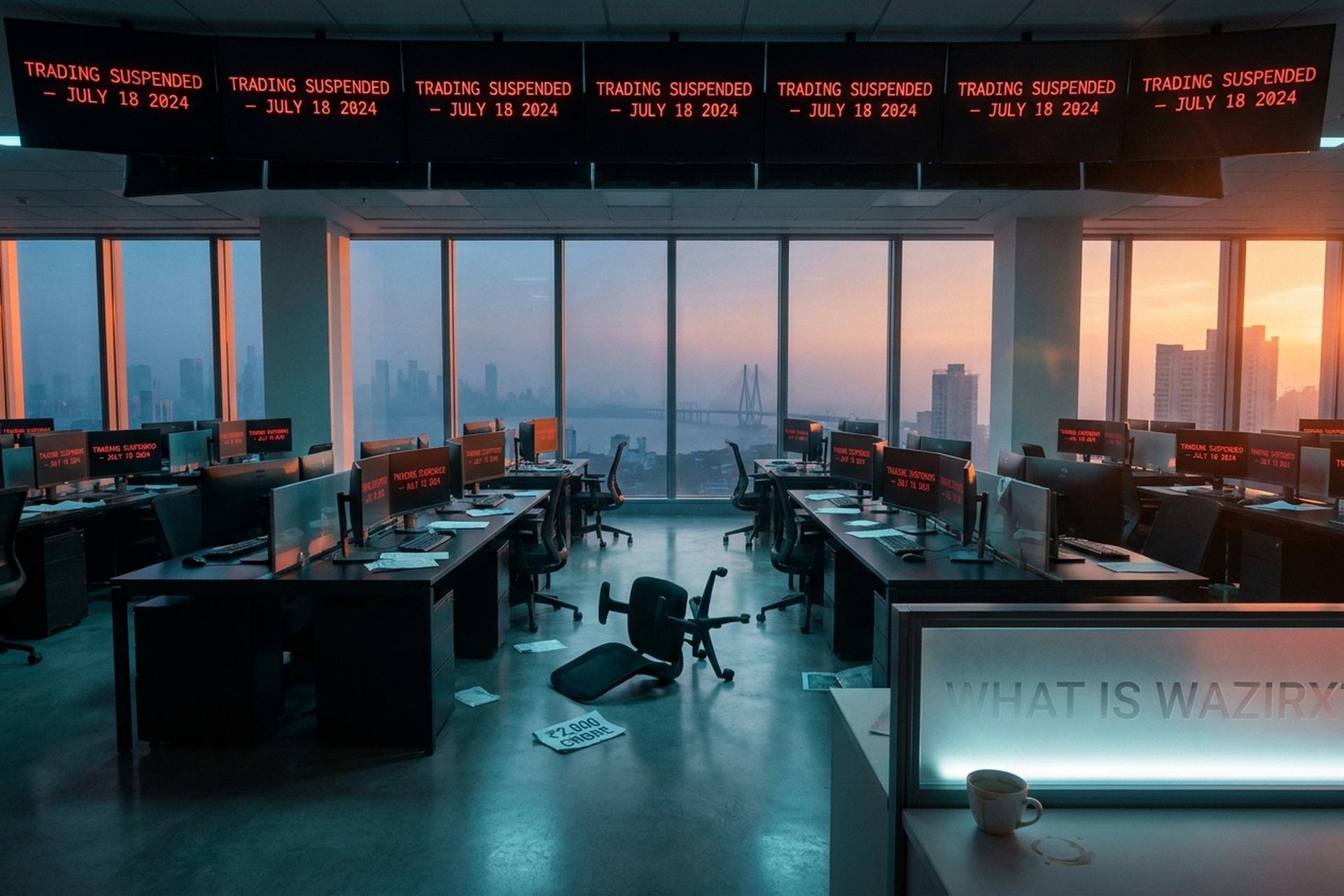
For most of its first six years, WazirX was the answer when an Indian retail trader asked "where do I buy bitcoin in INR?" Founded in 2017, the exchange grew through the 2020-2021 bull market into the country's biggest crypto trading platform and largest crypto exchange by INR volume, claiming a peak market share above 11% and millions of registered users. Then on July 18, 2024, a single transaction signed by the wrong fingers wiped roughly $235 million off its books in minutes.
The hack was the largest theft of an Indian crypto exchange in history. North Korea's Lazarus Group walked away with the funds. WazirX's parent company in Singapore froze trading, scrapped its first repayment plan after a user revolt, and went into court-supervised restructuring under Section 210 of the Singapore Companies Act. Trading came back on October 24, 2025, more than 15 months after the breach, with new custody, zero fees, and a complicated split between cash recovery and so-called Recovery Tokens.
This guide explains what WazirX actually is, how it works, what really happened on July 18, 2024, what the restructuring scheme means for users, and whether it makes sense to start trading on WazirX again in 2026. There is also a tour of the WRX token, the on-and-off relationship with Binance, the regulatory backdrop in India, and how WazirX stacks up against the rest of the cryptocurrencies in India ecosystem after CoinDCX took its own hit in 2025.
What Is WazirX and Why It Matters in India
In one sentence, WazirX is an Indian cryptocurrency exchange that lets you trade a wide range of cryptocurrencies in INR, buy bitcoin and altcoins included. The longer answer is more interesting. The platform supports spot markets, P2P trading, KYC accounts, INR deposits and withdrawals, and a WazirX app for iOS and Android. It carries over 250 trading pairs covering BTC, ETH, USDT, Solana, XRP, Dogecoin, and a sprinkling of NFTs. Behind it sit two legal entities: Zanmai Labs Pvt Ltd in India, which handles INR services, and Zettai Pte Ltd in Singapore, which holds the global crypto-to-crypto stack. Marketing-wise the brand has positioned itself as a fintech bridge between Indian banking and global crypto, with INR-pair quotes that try to stay competitive on best prices.
Why does any of this matter for retail? Because for half a decade, WazirX was simply where Indians bought their first bitcoin. CoinGecko ran a study in 2023 that pegged its pre-hack share at about 11.1% of the country's exchange market, with CoinDCX at 6.6% and ZebPay at 3.1%. The 2024 hack rearranged those numbers fast, but the brand still ranks. When a first-time buyer Googles a trusted crypto exchange or asks about the best digital assets to buy, WazirX is still in the top three. Across the broader crypto market and the cryptocurrencies in India universe, the name is just sticky.
There is a second reason the platform matters. WazirX was the test case for whether an Indian-born exchange could operate at Binance or Coinbase scale while sitting inside India's flat 30% tax regime, repeated Enforcement Directorate raids, and a banking system that has been hostile to crypto since 2018. The honest answer in 2026 is "barely". The hack and the restructuring stripped away every cushion, and they also exposed how little leverage an exchange has when its custody is outsourced and retail trust is the only moat.
WazirX Founders, Funding and the Binance Saga
Three names sit on the founder line: Nischal Shetty, Siddharth Menon, and Sameer Mhatre. They started building in 2017 and shipped the product out of Mumbai in March 2018. Shetty is co-founder and CEO Nischal Shetty in every press write-up. He was a coder before he became the public face of the brand and turned the "#IndiaWantsCrypto" hashtag into a near-thousand-day Twitter campaign. Menon and Mhatre handled the unglamorous half: engineering, trading rails, plus the blockchain infrastructure and blockchain technology choices that still shape how WazirX runs today. Quick aside since this trips people up: none of them is Sumit Gupta. He co-founded CoinDCX, a different exchange.
Then there is the Binance chapter, which is genuinely confusing. November 2019: Binance announces an acquisition. CZ writes a blog post. Outlets report it as done. Years pass. Then in August 2022, with India's Enforcement Directorate now actively investigating WazirX, CZ suddenly clarifies in public that Binance had "never completed" the acquisition, and was only providing wallet services anyway. WazirX leadership pushed back hard. They argued Binance held the WazirX domain, the AWS root access, the crypto assets, and the profits, so what exactly had not been completed? The dispute never landed in a courtroom. Binance terminated wallet services in February 2023. WRX was eventually delisted from Binance on December 25, 2024.
So what really happened? WazirX has been India-operated through Zanmai Labs and Singapore-parented through Zettai Pte Ltd from day one. The Binance "acquisition" worked more like a marketing-and-tech partnership than a clean buyout. The minute regulatory heat showed up, both sides quietly stepped back.
How WazirX Works: Trading, P2P, INR Onramp
The WazirX platform in India runs three connected services on one account. The first is a standard spot exchange platform with order books, trading pairs against USDT, BTC, and INR, and a roster of native tokens. The second is a P2P platform that auto-matches INR buyers with INR sellers off the order book. The third is the INR onramp itself, which has historically been the most fragile leg. The combined experience is built to be beginner-friendly and easy-to-use, with simple onboarding for first-time investors investing in cryptocurrencies.
The P2P system was originally a workaround. In April 2018, the Reserve Bank of India banned banks from servicing crypto businesses, cutting off direct INR rails. WazirX responded later that same year by launching its auto-match P2P platform, where one user sells USDT for INR via direct bank transfer to another user, with WazirX acting as escrow on the crypto leg. The Indian Supreme Court struck down the RBI's banking ban as unconstitutional in March 2020, but the P2P platform stayed because banking access for Indian crypto firms has never been fully restored.
INR deposits and withdrawals on WazirX have been on-and-off ever since. In April 2022, NPCI ambiguity about whether UPI could be used for crypto transactions forced WazirX to disable UPI deposits, alongside CoinSwitch. Bank transfers also went down for stretches. In August 2022, the Enforcement Directorate froze roughly ₹646.70 million (about $8.16 million) of WazirX assets under PMLA, alleging the exchange helped 16 fintech lending companies launder funds. Accounts were unfrozen in September 2022 after WazirX cooperated. CEO Nischal Shetty and co-founder Siddharth Menon shifted their base to Dubai earlier that same April 2022.
The trading fee structure has been straightforward. WazirX charged a 0.2% maker and taker spot fee, with WRX-paid fees taking discounts on trading fees of up to 50%. After the relaunch in October 2025, all spot fees were cut to zero under the "WazirX Zero" model. Whether the zero-fee model is permanent or a re-engagement promotion is, at the time of writing, undisclosed.
WRX: WazirX's Native Utility Token Explained
WRX, short for WazirX Token, is the platform's native utility token. The launch story: February 2020, Binance Launchpad, $0.02 IEO price. Total supply, capped at 1 billion. Of that, 10%, so 100 million WRX, went out in the IEO. It raised about $2 million. WRX started out as a BEP-2 token on Binance Chain and later moved over to BEP-20 on BNB Smart Chain. Migration was straightforward, and it brought the token onto a much busier network with proper DEX support.
What was the token actually for? A standard utility-token bundle. Hold WRX, get launchpad participation, discounts on trading fees, staking rewards, governance signals. In 2020 the various benefits sounded reasonable. The pitch aged badly after April 5, 2021. WRX hit $5.81 that day, peaked, and never recovered. By late 2024, it was down somewhere around 98% from the high.
Then December 18, 2024 happened. Binance posted a delisting notice: WRX would be removed on December 25, 2024. Within the same hour the announcement went out, the price dropped about 60%. It coincided with the still-unresolved ownership dispute between Binance and WazirX, and the practical effect was that WRX lost the deepest liquidity venue it had ever traded on.
| WRX milestone | Date | Detail |
|---|---|---|
| Binance Launchpad IEO | February 2020 | $0.02 launch, $2M raised, 100M WRX sold |
| All-time high | April 5, 2021 | $5.81 (≈290x from IEO) |
| Chain migration | 2022 | BEP-2 to BEP-20 (BNB Smart Chain) |
| Binance delisting | December 25, 2024 | Price fell ~60% within an hour |
For new users in 2026, WRX is best read as a legacy utility token whose primary support function is on the WazirX exchange itself. It is not a treasury asset. It is not a hedge. It is not a popular investment outside of the exchange. It is a fee-discount and access token tied to one platform, and its volatility tracks platform sentiment more than broader crypto cycles. For wazirx crypto users, the WRX use case is mostly to lower trading fees and unlock access perks.
WazirX Fees, Deposits and Withdrawals
The Wazir X fee model and INR cash flow are where most retail confusion sits, especially after the relaunch.
Pre-hack, the platform charged 0.2% maker and 0.2% taker on spot, with 50% discounts on transaction fees when paid in WRX. INR deposits via UPI and net banking were free, but bank charges sometimes applied. INR withdrawals were charged ₹5.90 per request and were processed on banking business days.
Post-relaunch (October 24, 2025 onward), spot trading fees moved to zero across all markets under the "WazirX Zero" model. This applied to crypto-to-crypto pairs and INR pairs alike. INR withdrawals were partially active at restart, with reported lock-out issues for some users. Crypto withdrawals were still gated as of late 2025, awaiting full settlement of the restructuring scheme. Users with claims were processed in phases, with around 25% of token markets enabled per day during the staged restart.
There is also a tax layer specific to India that applies regardless of which exchange you use. A flat 30% tax applies to gains on crypto under Section 115BBH of the Income Tax Act, plus a 1% TDS (tax deducted at source) on transfers above ₹10,000 since 2022. From July 7, 2025, GST applies to exchange platform service fees on top. Mandatory VDA (Virtual Digital Asset) reporting in the ITR begins from the FY 2025-2026 cycle. The crore-scale revenue numbers Indian crypto firms reported in 2021 partly reflect transactions before this regime tightened.

The 2024 WazirX Hack: Lazarus, Liminal, $235M
If WazirX has a single defining date, it is July 18, 2024. That day, roughly $234.9 million in crypto walked out the door of a Liminal-custody multi-sig wallet. In rupee terms it was about ₹2,000 crore. Elliptic's on-chain breakdown made the composition uncomfortably specific: SHIB took the biggest hit at $96.7 million, then Ether at $52.6 million, MATIC at $11 million, PEPE at $7.6 million, USDT at $5.79 million, plus a long tail of more than 200 other tokens. The thieves immediately swapped most of it into ETH through decentralized exchanges. That swap-to-ETH-via-DEX move is the laundering signature North Korea's Lazarus Group has stamped on nearly every major exchange theft since 2022.
How did the attack actually work? Textbook social engineering, executed against multi-sig. The wallet had six signers in total: five inside WazirX, one at Liminal. Authorizing a transaction needed three WazirX signatures plus the Liminal signature. The hackers showed WazirX signers a spoofed version of Liminal's signing UI. The screen rendered an innocent-looking transaction. The bytes that actually got hashed and signed called a malicious smart-contract function that handed wallet control to attacker-owned addresses. Once the threshold was met, the attackers swapped out the smart contract governing the cold wallet and emptied what was left.
Attribution rolled in over the following six months. Elliptic linked the funds to North Korea by July 19. The on-chain investigator ZachXBT confirmed the trail independently. On January 14, 2025, the United States, Japan, and South Korea released a joint statement formally attributing the WazirX breach to DPRK's Lazarus Group, alongside another $659 million in crypto theft tied to the same group. Chainalysis later reported that DPRK actors stole $1.34 billion across 47 incidents in 2024 alone, accounting for 61% of all crypto theft that year and a 103% jump over 2023. By the end of 2025 the figure had climbed to roughly $2.02 billion, a record.
Who is on the hook for what? Still unresolved. Liminal commissioned an independent audit from Grant Thornton, which found no security flaws inside Liminal's systems and pointed the finger outward. The Delhi Police IFSO unit, on the other hand, alleged that Liminal had withheld critical logs and technical data from investigators. No court has issued a final ruling on liability as of mid-2026, and given the cross-border nature of the case, that may take years.
Restructuring in Singapore and the Recovery Plan
WazirX's first repayment plan, announced in late 2024, would have locked 45% of every user's wallet and resumed trading on the remaining 55%. The "socialized loss" framing did not survive contact with the user base. After weeks of backlash, the plan was scrapped.
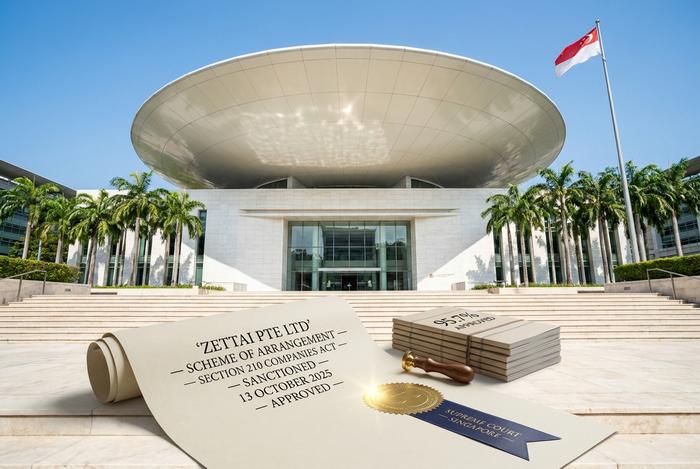
The replacement was a formal Scheme of Arrangement under Section 210 of the Singapore Companies Act, filed by Zettai Pte Ltd. Kroll Pte Ltd was retained as financial adviser, Rajah & Tann Singapore LLP as legal counsel. An initial vote in April 2025 saw 93.1% creditor approval by count and 94.6% by value. After amendments, a revote in August 2025 produced a 95.7% creditor approval by count, with about 149,000 creditors representing $206.9 million in claims, of which $195.7 million voted yes. The Singapore High Court sanctioned the scheme on October 13, 2025. The court order was lodged with ACRA on October 15, 2025, making the scheme effective.
The economics of the scheme are roughly:
- Roughly 55% of each creditor's claim is returned in direct asset distributions during the scheme implementation period.
- The remaining 45% is issued as Recovery Tokens (RTs), redeemable pro-rata from future platform profits, recovered illiquid assets, and any future legal recovery from third parties.
- Total recovery is targeted at 75-85% of pre-hack balances over a two-to-three-year window.
The exchange resumed trading on October 24, 2025, in a phased rollout. Around 25% of token markets were re-enabled per day, starting with crypto-to-crypto and USDT/INR pairs. Custody migrated from Liminal to BitGo, the US institutional custodian, which provides cold-storage multi-sig and up to $250 million in insurance coverage. INR withdrawals went partially live at restart, with periodic lock-out issues reported by users. Crypto withdrawals were still gated as of late 2025.
| Restructuring milestone | Date |
|---|---|
| Initial creditor vote (93.1% by count) | April 2025 |
| Revote on amended scheme (95.7% by count) | August 2025 |
| Singapore High Court sanction | October 13, 2025 |
| Effective date (ACRA filing) | October 15, 2025 |
| Phased trading restart (zero fees) | October 24, 2025 |
| WazirX Zero model formal launch | November 2025 |
Is WazirX Safe in 2026? Custody, KYC, BitGo
Is WazirX safe? It is the first question every Indian retail user asks in 2026, and the answer is conditional. The platform that lost $235 million in 2024 is not the same operational stack running today. It is, however, run by the same leadership and the same legal entity, and the recovery process is still in motion.
Here is what genuinely changed for the better:
- Custody moved from Liminal to BitGo, a regulated US institutional custodian. BitGo offers cold-storage multi-sig wallets and reportedly up to $250 million in insurance coverage, which is the highest tier among crypto custodians.
- The "WazirX Zero" trading model removed maker and taker fees at restart, reducing the friction for users testing the platform with smaller balances.
- KYC processes were tightened post-restart, with renewed identity checks required for previously dormant accounts.
- The Scheme of Arrangement gave creditors a court-supervised recovery path rather than relying on management promises.
What has not changed:
- Recovery is partial. Direct asset returns cover roughly 55% of claims, with the remainder issued as Recovery Tokens whose redemption depends on future profits and illiquid asset sales.
- Crypto withdrawals were still gated at late-2025 restart and were rolling out in phases.
- The Binance ownership dispute and the open question of liability for the 2024 hack remain unresolved.
- WazirX's market position has shifted; CoinDCX, ZebPay, and Mudrex have absorbed share since the breach.
For a new Indian user in 2026, the practical answer is: the rebuilt infrastructure is plausibly safer than what was running in July 2024, but trust in WazirX is still being earned back, and any user who lost funds in the hack is in the middle of a multi-year recovery process. Treat balances on the platform as working balances rather than long-term holdings.
WazirX vs Other Crypto Exchanges in India
The Indian crypto market is sitting at about $2.0 billion in 2025 and IMARC has it forecast to reach $16.8 billion by 2034. Inside that market, WazirX is no longer the obvious default. Pre-hack, CoinGecko clocked WazirX at 11.1% of the cryptocurrencies in India market share. Post-hack, that share moved across the table, and the competitors caught their own punches in the process.
Take CoinDCX, founded by Sumit Gupta in 2018. By 2025 estimates it has 16 to 20 million users, depending on the source. Then on July 19, 2025, exactly one year and a day after the WazirX breach, CoinDCX got hit for $44.2 million from an operational Solana wallet. The difference: CoinDCX absorbed the loss out of its own treasury, kept user balances untouched, and posted a $1 million bounty for the funds. The user-facing reputation came out of it largely intact because the firm ate the loss instead of passing it on.
ZebPay is the older operator. Roughly 6 million historical users. About $22 billion in lifetime trading volume. Clean security record. Bitbns has been in litigation over an alleged cover-up of a 2022 hack and frozen user funds. Mudrex sits in a different lane as a quant-style portfolio platform. KoinX is a tax tool, not a full exchange. CoinSwitch is the closest neutral comparable to WazirX as a multi-asset retail platform.
| Exchange | Founders / launch | Users (2025) | Hack history |
|---|---|---|---|
| WazirX | Shetty, Menon, Mhatre / 2018 | 16M+ self-reported, 4.4M directly affected by 2024 hack | $234.9M, July 2024 (Lazarus) |
| CoinDCX | Sumit Gupta / 2018 | 16-20M | $44.2M operational wallet, July 2025 (covered) |
| ZebPay | Mahin Gupta et al / 2014 | ~6M historical | None notable |
| Bitbns | Gaurav Dahake / 2018 | ~3M | Litigation over alleged 2022 incident |
For a user picking an Indian exchange in 2026, the choice depends on whether the priority is recovery (WazirX returning users), clean operational record (ZebPay, CoinDCX post-bounty), or breadth of supported assets (CoinSwitch, CoinDCX). None of the available options is the same easy default that WazirX was in 2021.