DTF Meaning Guide: Slang Explained for 2026
DTF is one of the most-used three-letter acronyms on dating apps, group chats, and TikTok comments. It is direct, casual, and easy to misread if you do not already speak the dialect. Most people see DTF for the first time in a Tinder bio or a friend's text and have to ask what it means. This guide answers the question in plain English and walks through where DTF came from, where it lives today, who uses it, and where it does not belong.
If you are short on time, the DTF meaning is "Down to F*" (a frank way to say down to fuck), used to signal openness to casual sex with no relationship strings attached. The longer version, with all the history and the modern Gen Z twist, is below.
What does DTF mean? The slang meaning of DTF
DTF is an initialism. Three letters, said one by one, never blended. The slang meaning of DTF is "Down to F*." Translation: a person saying they are open to a casual sexual encounter, no commitment expected. It sits inside hookup-culture vocabulary with NSA, FWB, ONS, and DDF, all of which we cover further down.
Common places you spot DTF:
- A Tinder, Grindr, or Feeld bio, setting expectations up front.
- A friend in a group chat reacting to someone else's story.
- A TikTok comment, often ironic these days.
- A teen text, sometimes thrown around without fully understanding what it implies.
DTF picks up other readings in tight subcultures. Down to Fight inside a gaming lobby. Drug Task Force in police news. Direct to Film in apparel printing. None of those matter in a social or dating context. If you saw DTF in a dating bio or a flirty text, take it as the slang. Nine times out of ten, you will be right.
DTF as slang: Down to F* explained
The DTF meaning here is direct. The slang version says one thing clearly: a willingness to engage in sex without expecting a relationship. It is transactional in the lightest sense, an expectation-setter rather than a flirt. People use it when they want to skip the dance and tell a match (or a stranger online) what they are looking for.
The "F" is almost always censored in writing, partly because of platform moderation rules and partly because users prefer the shorthand. In speech, "DTF" is said as three letters, never blended. In a sentence:
- "Are you DTF tonight?"
- "She said she is DTF, no questions asked."
- "DTF or not, just be honest about it."
What DTF really means is a level-set, not a tease. What DTF is not: a sign of long-term interest, a coded romantic gesture, or any kind of commitment. Treating it as one is the most common rookie mistake new dating-app users make. If your match opens with DTF, they are stating their level. They are not hiding a more romantic intent behind it.
Where DTF came from: history and pop culture
The DTF meaning has a fairly clean timeline. Worth knowing because each era left its own fingerprint on how the term lands today. To compare versions of the slang across decades, the table below is the easiest way in.
| Year | Event |
|---|---|
| 1950s | "Down" used as American English slang for "willing" |
| 1998 | Big Pun's "Still Not a Player" uses the phrase "down to fuck" |
| 2001 | Crazy Town's "Revolving Door" reinforces the phrase in pop |
| 2002 | First Urban Dictionary entry for the acronym DTF |
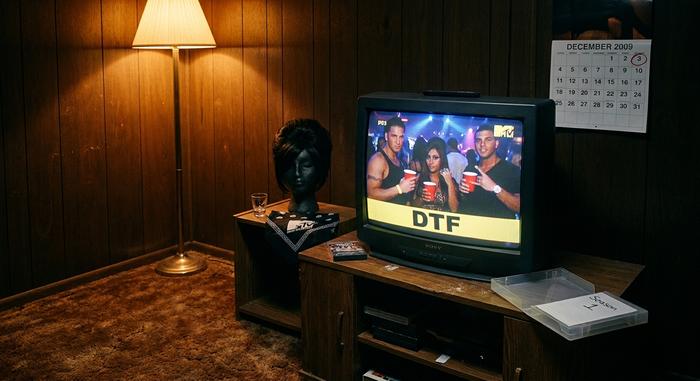
| Dec 3, 2009 | MTV's Jersey Shore season 1 premieres |
| 2010 | DTF parodied across late-night TV; mainstream saturation |
| 2018 | Tinder ad campaign reframes DTF as "Define That Feeling" |
| 2024-2025 | TikTok creators sanitize DTF into "Down to Feast" and "Down to Fun" |
The biggest single moment for DTF was Jersey Shore season 1. Before December 3, 2009, the acronym lived in the corners of Urban Dictionary and a few message boards. Pauly D, The Situation, and Snooki started saying it on MTV every week, and within a year it was a household term. By 2010, Time and The New York Times were writing explainer pieces for parents.
The other big moment was Tinder in 2018. They ran a campaign reading the acronym as "Define That Feeling," "Down to Forever," "Down to Fall in love." It was the first time a major brand decided DTF was mainstream enough to repurpose. Some people loved the campaign, others were furious about it. Either way, it locked the term into the language.
DTF on Tinder, Bumble, Hinge and Grindr
The DTF meaning on dating apps depends entirely on the platform. DTF appears on most major dating apps but at very different intensities, and the split tracks the audience.
| App | DTF prevalence | Notes |
|---|---|---|
| Tinder | High | Default casual-encounter platform; DTF in bios is common |
| Grindr | Very high | Hookup-focused, DDF and DTF together in many profiles |
| Feeld | High | Open and ENM-friendly, DTF reads as part of the etiquette |
| Bumble | Low to medium | Skews toward dating, moderation flags explicit phrasing |
| Hinge | Low | Marketed as "designed to be deleted," fewer DTF bios |
| Match / eharmony | Very low | Older audience, DTF rarely appears |
Most apps' community guidelines flag the spelled-out form, "down to fuck," but the three-letter acronym usually slips past automated filters. That is a big reason DTF stayed durable as the rest of dating-app vocabulary cycled. It says everything without triggering anything.
If you see DTF in a Tinder bio, the meaning is almost always literal. If you see it on Hinge, it is more likely an outlier or an ironic statement. If you see it on a dating profile attached to a user with otherwise relationship-leaning prompts, ask before assuming.
DTF in TikTok, Instagram and Gen Z chat
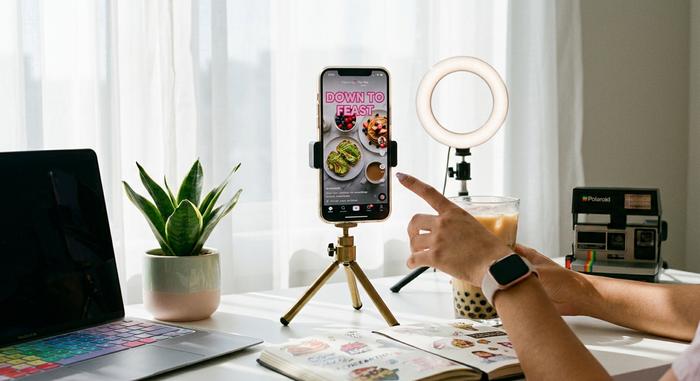
The Gen Z take on DTF is the piece that shifted most since 2020. The hookup meaning is still there, but on TikTok and Instagram it shows up way more often as a joke, a meme setup, or a sanitized version. Creators ran with the format because it is so versatile, you can swap "F" for almost anything and get a reaction. The popularity of those sanitized variants is part of why the DTF meaning now splits across audiences in 2026. Older users hear the original. Younger users sometimes hear a food joke first.
The TikTok variants are the cleanest signal of how the trend has evolved.
- Down to Feast, used by food-content creators when they post a meal.
- Down to Fun, generic enthusiasm, similar to LFG.
- Down to Friendship, platonic spin used by friend-content creators.
- Down to Fish, niche fishing-content joke.
These rebrandings let creators play with the format without tripping platform moderation that targets sexual phrasing. They also signal that for a meaningful slice of Gen Z users, DTF is not a sincere statement of intent so much as a pop-culture reference.
In Instagram DMs and Snapchat exchanges, the meaning leans literal again. Private chat is more honest than public posting. A DM that ends with "DTF?" between two people who already match is asking the literal question. A TikTok caption ending in "DTF" is more often a wink at the format.
DTF in texts and conversations: how it lands
Texts are where most people first run into DTF. Three patterns cover almost every example.
- As a question. "DTF tonight?" is the blunt version. Skips small talk. Asks for yes or no.
- As a self-description. "I'm DTF, are you?" Or, "Honestly, DTF lately." Signals availability without dressing it up.
- As a third-party label. "He's DTF if you want to ping him." Group-chat gossip register.
The reply matters more than the original message. A blunt "DTF?" deserves a blunt answer back. Yes, no, or "let's actually talk first." Vague replies just make it worse, because the sender already asked plainly. If the answer is no, just say no. Cleaner for both sides.
For minors and younger teens, the term often shows up in school texts before the kid fully understands what it means. Parents who notice DTF in a chat history have a conversation to start, not a punishment to issue. Refinery29, Cosmopolitan, and child-safety platforms like Bark have been giving the same advice for a decade. Open the chat. Ask questions. Curiosity is not a crime.
Adjacent dating slang: NSA, FWB, GGG, DDF
DTF does not run alone. A whole layer of dating-app shorthand does the same job: set expectations, signal preferences, filter matches without spelling anything out.
| Acronym | Meaning | Notes |
|---|---|---|
| NSA | No Strings Attached | Sex without ongoing obligations |
| FWB | Friends With Benefits | Ongoing sex inside a friendship |
| ONS | One Night Stand | One time, no follow-up |
| DDF | Drug- and Disease-Free | Health declaration; common on Grindr |
| GGG | Good, Giving, and Game | Coined by Dan Savage in 2010; sex-positive |
| LTR | Long-Term Relationship | The opposite of DTF |
| ENM | Ethically Non-Monogamous | Open relationship structures |
| LDR | Long-Distance Relationship | Geography, not sex |
| 420 / 420-friendly | Cannabis-friendly | Lifestyle marker, often paired with DTF |
Once you learn this set, most bios on Tinder or Grindr read on sight. A profile listing "ENM, GGG, DDF" is signalling a completely different setup from one that says "LTR, no hookups." DTF sits at the casual end of all of it.
DTF in gaming and crypto Twitter
Outside dating, DTF picks up a couple of smaller meanings worth knowing.
In gaming chat, especially in PvP and fighting games, the read is "Down to Fight." Call of Duty lobbies, Fortnite Discord servers, Tekken communities, all of them use it that way. The closely related "Down to Farm" started in MMORPGs like World of Warcraft and RuneScape, where players grind monsters, gold, or XP for hours. It later moved into MOBAs like League and Dota for farming creeps.
Crypto Twitter sometimes reuses DTF as "Down to Farm," winking at yield farming or memecoin farming. Anyone telling you DTF is core crypto vocabulary is overstating it. The crypto version is just a joke that plays on both the sexual and financial readings. It is nothing like HODL or WAGMI in how settled it is.
There is also one real industry meaning floating around: Direct-to-Film printing, used by t-shirt makers and merch creators. That only matters in apparel-business contexts, not social ones. It explains why Etsy custom-merch listings sometimes throw shoppers who came in expecting the slang.
DTF acronym: empowerment or objectification?
The cultural fight over DTF has been going on for almost a decade. Both sides have a point.
One camp calls it empowerment. Cosmopolitan, Refinery29, Bustle, that whole bench of dating columnists, has argued for years that DTF lets people (often women) say what they want without dressing it up. Three letters. No ambiguity. Sexual agency stated plainly, no apology attached. For an adult on a dating app, that is the strongest case for the slang.
The other camp calls it objectification. Sex educators, child-safety researchers, and a steady stream of parenting articles have been making this argument since 2010. Reduce a person to one attribute. Normalize hookups for kids too young to handle them. Pressure teens to perform availability they do not actually feel. That argument is loudest about Snapchat and TikTok use among younger users.
Both readings can be true at the same time. DTF on a 28-year-old's Tinder profile reads as agency. DTF in a 14-year-old's group chat reads as pressure. Same three letters, completely different stakes. Anyone weighing in has to keep that distinction front and center.
When to use DTF, and when to skip it
The right call comes down to one thing: who is reading. Match it to your audience or do not send it.
Green light:
- A Tinder, Grindr, or Feeld app, and the slang really fits what you want.
- A friend you have already texted dozens of times in the same shorthand.
- A meme thread, where the joke does the work.
- A reply where the other person already led with DTF.
Red light:
- Work Slack, LinkedIn, business email. Every time.
- An older recipient, or someone outside your culture, where the term will land wrong.
- A customer, a recruiter, anyone whose response you actually need.
- An audience with minors, where the slang is inappropriate and the fallout is real.
One quick rule. Spelled-out vulgarity reads as crass. The acronym reads as casual. That gap matters way more than the literal meaning. Readers who fully get DTF will still judge a sender on whether the moment fit the term. So pick your moments and skip the rest.
DTF guide: a quick reference table
A compact field guide for reading the DTF meaning on sight, in order of how often each version appears.
| Where you saw it | Most likely meaning |
|---|---|
| Tinder, Grindr, Feeld profile | Down to F* (literal) |
| Hinge, Bumble bio | Either DTF as a joke or someone testing limits |
| Snapchat or Instagram DM | Down to F* (literal in private chat) |
| TikTok comment or caption | Likely a sanitized variant ("Down to Feast", "Down to Fun") |
| Group chat between friends | Casual shorthand or running joke |
| Call of Duty / Fortnite voice chat | Down to Fight |
| WoW / League of Legends Discord | Down to Farm |
| Crypto Twitter (rare, ironic) | Down to Farm (yield/memecoin joke) |
| Local news headline | Drug Task Force (police usage) |
| T-shirt vendor's site | Direct-to-Film (printing technology) |
If you cannot tell from context which DTF is in front of you, the social-context default is the slang meaning. The other readings live inside specific subcultures and rarely cross over.