NiceHash Mining Platform: The Hashpower Marketplace
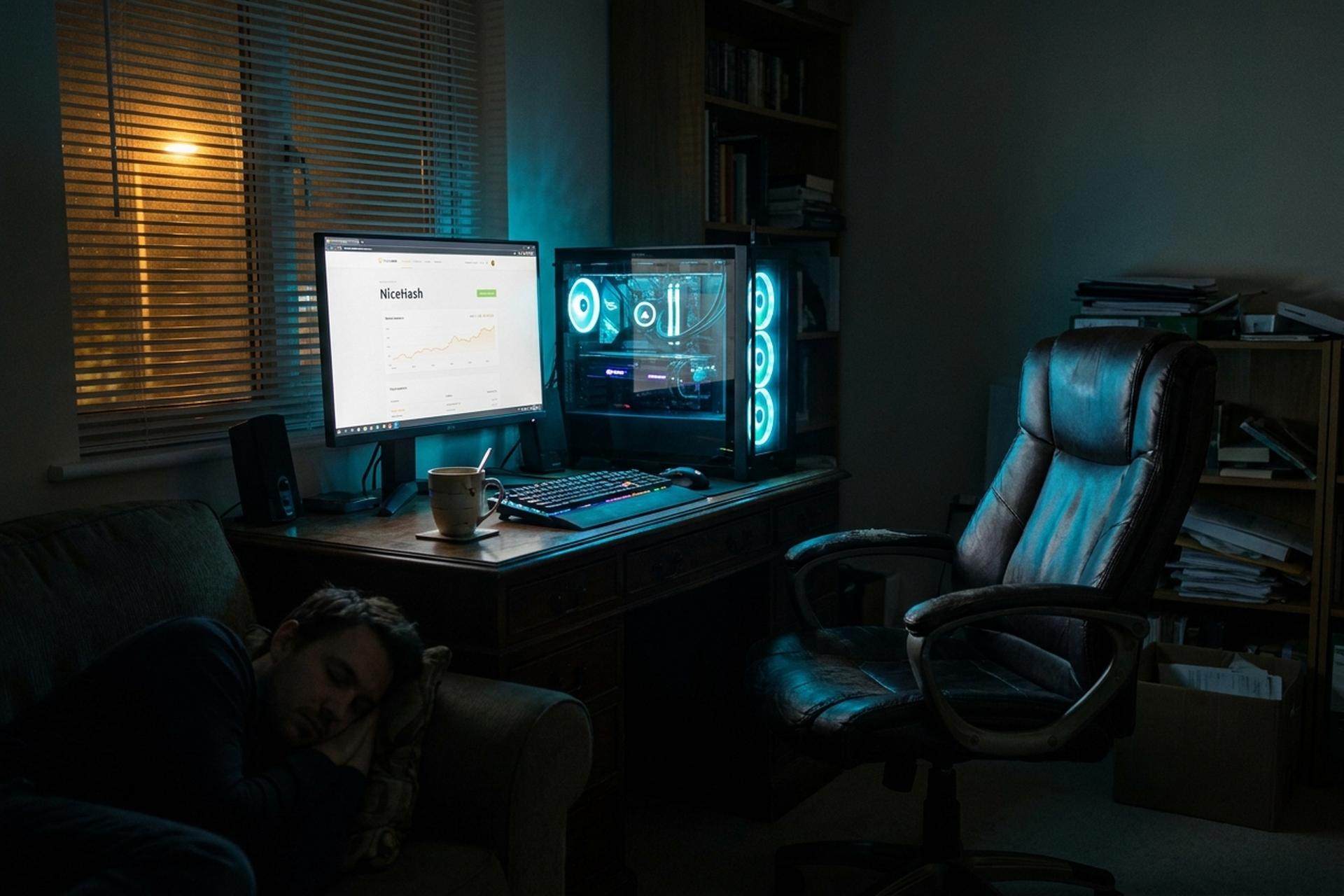
Here is a strange idea that turns out to be real: you can point your gaming PC at NiceHash before bed, leave it running overnight, and wake up with a little Bitcoin in your account. You never bought a Bitcoin miner. You never picked a coin. You never joined a mining pool. The machine just rented out its spare graphics power while you slept. That is the whole pitch of NiceHash, and it is genuinely clever — it makes cryptocurrency mining accessible without the usual research overhead. It is also where the catch hides, because easy and profitable are not the same thing. This guide explains what NiceHash actually is, how to mine with it step by step, what it costs, whether you will make money, and whether you can trust a platform that once lost $64 million to hackers.
What NiceHash is and how it works
Start with what NiceHash is not. It is not a mining pool, and it is not a place that sells you cloud-mining contracts. It is a marketplace, a two-sided one, where mining power is the commodity being bought and sold.
On one side sit the sellers: people with mining hardware, anything from a single gaming GPU to a warehouse of ASICs, who point their machines at NiceHash and rent out their hashing power (also called hashpower on the platform). On the other side sit the buyers, who pay to rent that power and aim it at whatever coin they want to mine. NiceHash stands in the middle, matching orders and taking a cut.
The defining twist is the payout. No matter what coin actually gets mined, the seller is paid in Bitcoin. You can run software that mines Kaspa or Monero tonight, and the reward lands in your wallet as BTC. For a lot of people that is the entire appeal: steady Bitcoin without having to care about the alphabet soup of smaller coins. Compare it to the old way of doing this. Buy a miner, research coins, join a pool, collect payouts in some volatile altcoin, and hope you picked right. NiceHash collapses all of that into a single switch.
NiceHash has been doing this since 2014. Two Slovenians, Matjaz Skorjanc and Marko Kobal, started it in Maribor, and it has grown into one of the largest hashpower marketplaces in the world, with around 2.5 million registered users across more than 190 countries. Vladimir Hozjan took over as CEO in 2024.
How to mine with NiceHash: a practical guide
The setup is honestly easy. Create a NiceHash account, download the software, sign in, let it benchmark your hardware, hit start. Fifteen minutes, give or take. The part nobody puts on the landing page is that your electricity bill, not the software, decides whether you earn or lose. Get that wrong and you are paying your power company to make someone else's Bitcoin.
NiceHash Miner vs QuickMiner
NiceHash gives you two mining apps, and the difference matters. NiceHash Miner is the older, fuller option. It pulls in third-party plugins to support more algorithms and squeeze out a bit more performance, but some of those plugins come from authors NiceHash itself describes as unknown, which is a polite way of saying you are trusting code you cannot fully see. QuickMiner is the newer, simpler one. It runs only NiceHash's own Excavator engine for GPUs and the open-source XMRig for CPUs, so there are fewer moving parts and far less malware risk. My read: start with QuickMiner. If you outgrow it and want every last percent, graduate to Miner and accept the trade-off.
GPU mining vs ASIC mining
What you mine depends on what you own. A graphics card, the kind in a gaming rig, does GPU mining, and NiceHash automatically switches it between coins like Kaspa, Monero or Ravencoin depending on which one pays best at that moment. That auto-switching is the clever bit. An ASIC, a purpose-built machine that does exactly one job, is aimed at SHA-256, which is Bitcoin's algorithm, and it will outearn any GPU by a wide margin while drawing a frightening amount of power. CPUs can mine too, but the returns are usually too small to bother with. If all you have is a gaming PC, GPU mining through NiceHash is where you start.
Getting paid in Bitcoin
Payouts run on a pay-per-share model and they only ever come in Bitcoin. NiceHash sweeps your balance on a schedule once you clear a threshold. Keep the funds in your NiceHash wallet and the bar is low, around 0.001 BTC. Send to an outside wallet and you wait for a bigger balance, roughly 0.1 BTC for a daily payout or 0.001 BTC weekly. Withdraw over the Bitcoin Lightning Network and the transfer fee is zero, which on small mining balances is the difference between keeping your earnings and watching fees eat them.
NiceHash fees and how payouts work
The fees are not hidden, but they stack, and you should add them up before deciding NiceHash is free money.
If you are buying hashpower, you pay 3 percent of what you spend, plus a tiny fixed fee of 0.00001 BTC on every new order. If you are selling, the side most readers are on, NiceHash takes 2 percent of your payouts. The built-in exchange charges around 0.5 percent per trade, dropping toward 0.01 percent at the highest volumes. And there is one fee that catches people off guard: an inactivity fee that starts nibbling at your balance if you leave an account dormant for more than six months. Lightning withdrawals are the one place you genuinely pay nothing.
| Action | Fee |
|---|---|
| Buying hashpower | 3% of spend + 0.00001 BTC per order |
| Selling hashpower (payout) | 2% |
| Exchange trade | ~0.5%, down to ~0.01% at top volume |
| Lightning Network withdrawal | Free |
| Inactivity (dormant 6+ months) | Periodic balance deduction |
Is NiceHash profitable? The economics
Now the question everyone actually wants answered. Can you make money? Sometimes. The honest version is that NiceHash makes mining easy, not profitable, and the gap between those two has widened a lot.
Two events reset the math. In September 2022, Ethereum switched off mining entirely with its move to proof-of-stake, and overnight the most profitable home for GPUs vanished. Then in April 2024, Bitcoin's halving cut the block reward from 6.25 to 3.125 BTC, squeezing every miner's revenue in half. The competition only grew. Bitcoin's network hashrate touched an all-time high near 1,441 EH/s in September 2025, the first time it ever crossed a zettahash, before easing back toward 1,013 EH/s.
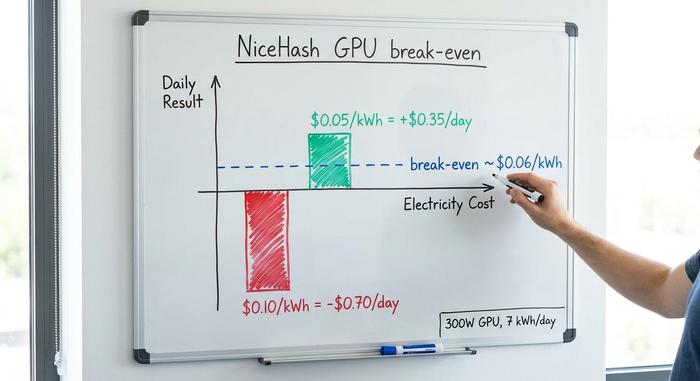
What does that mean for your power bill? For the big public miners, the average cash cost to produce a single Bitcoin sat near $80,000 in late 2025, according to CoinShares. You do not have their scale, so your number is worse. The one variable that decides everything is your electricity rate. Below roughly $0.06 per kilowatt-hour, GPU mining through NiceHash can clear a small profit. Above it, you are usually subsidizing the network with your power bill. Run the profitability calculator with your real rate before you get excited.
A concrete example helps. A modern gaming GPU pulling about 300 watts, running all day, burns roughly 7 kilowatt-hours in 24 hours. At $0.10 per kilowatt-hour that is around $0.70 in electricity, and a single card rarely mines much more than that through NiceHash right now. Drop the rate to $0.05 and the power cost halves to $0.35, and the same card quietly moves into profit. Nothing about the hardware changed; only the price of electricity did. That is how thin the margins have become, and why miners chase cheap power the way restaurants chase cheap rent.
Is NiceHash safe? The 2017 hack and after
You cannot write about NiceHash honestly without the hack. On December 6, 2017, attackers drained roughly 4,736 BTC from the platform, worth about $64 million at the time, though the CEO later put the figure nearer $78 million. It was a spear-phishing breach, and in 2021 US prosecutors tied it to North Korea's Lazarus group. For a young company, it should have been fatal.
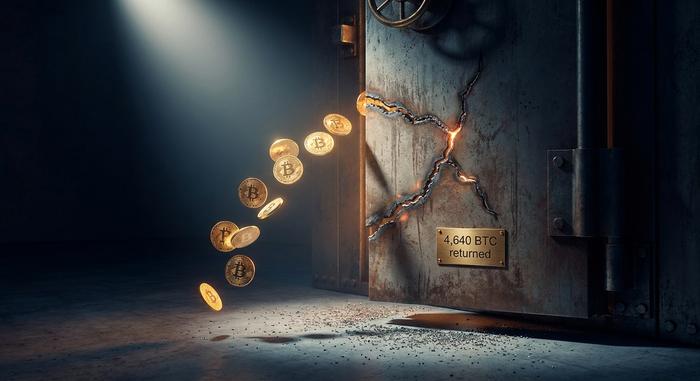
Here is the part that makes NiceHash unusual. It paid everyone back. By December 2020 the company had completed a repayment program, returning about 4,640 BTC to affected users and funding it out of platform fees rather than walking away. Almost no hacked crypto platform does this. The small gap between the amount stolen and the amount repaid is worth noting, but the principle held: users were made whole. For contrast, Mt. Gox collapsed in 2014 and its creditors are still waiting more than a decade later. NiceHash clearing its debt inside three years is the exception, not the rule.
Security today looks like what you would expect. Funds sit in BitGo wallets, two-factor authentication is mandatory, and most reserves are kept in cold storage. You will also have to pass KYC identity checks to rent hashpower, which some miners dislike but regulators now expect. None of this guarantees another breach cannot happen. It does mean the company has, at least once, behaved better after a disaster than most of its peers.
NiceHash mobile app and other tools
NiceHash is more than mining software now. The mobile app lets you watch your rigs, check earnings and get push alerts when something stops, but read the fine print: it manages mining, it does not mine on your phone. There is also a built-in exchange covering 50-plus coins, an EasyMining feature that sells short hashrate packages for people who want to try mining a specific coin without owning hardware, a profitability calculator, and private endpoints aimed at large farms for a few hundred euros a month. Most casual users will only ever touch the miner and the wallet.
NiceHash vs pool mining and cloud mining
It helps to place NiceHash against the two things people confuse it with. Traditional pool mining means you pick one coin, join a pool, and get paid in that coin. You keep full control of which cryptocurrencies you mine, but you carry the price risk of whatever you chose. NiceHash flips that. You sell raw hashpower, the algorithm auto-switches to whatever pays best, and you are paid in Bitcoin. Less control, more convenience.
Cloud mining is the other comparison, and it is where caution matters. Most cloud-mining contracts, the kind that promise fixed daily returns forever, are at best bad deals and at worst outright scams. NiceHash's buy-side is not that. When you buy hashpower there, you are renting real, time-bound capacity at a transparent market price, not signing a vague contract. If a service ever guarantees you fixed profits for a year, treat that as your cue to walk away, whatever logo it wears. The table below lines the three approaches up.
| Approach | You get paid in | Control | Main risk |
|---|---|---|---|
| NiceHash | Bitcoin | Low (auto-switched) | Thin margins, fees |
| Pool mining | The coin you chose | High | Price risk of that coin |
| Cloud mining | Varies by contract | None | Frequent scams |
Is NiceHash worth it for crypto mining
So who is NiceHash for? If you own a gaming PC, want near-effortless passive Bitcoin, and your electricity is cheap, it is one of the easiest ways to put idle hardware to work. If you are learning how mining functions without buying an ASIC, it is a fine sandbox. If your power is expensive, or you are picturing a path to getting rich, the numbers will disappoint you, and no amount of clever software changes that.
The bigger question hanging over all of it is whether GPU mining survives the next few years at all, now that its anchor coin is gone. NiceHash has outlived a near-fatal hack and a brutal market. Whether the hobby it depends on outlives the economics is the part nobody can promise you.