Profitable crypto to mine in 2026: the real economics behind GPU and ASIC mining after the Bitcoin halving
My first mining rig was a single RTX 3080 sitting on top of a milk crate in my closet. June 2021. Ethereum was printing money. The card made about $8 a day. I could hear the fans through two walls. My electricity bill went up $45 a month. I did not care because I was making $240 a month in ETH and feeling like a genius.
Then September 2022 happened. Ethereum moved to proof of stake. My $8 a day became $0 a day. The 3080 was suddenly a space heater that I had paid $1,100 for. I sold it for $550 on eBay, took my loss, and learned a lesson that cost me about $600 total: mining profitability is not a constant. It is a variable that can go to zero overnight.
I still mine. Smaller scale, different approach. And I have spent more time than I should admit tracking the economics of which coins are actually worth mining in 2026. What I found is that the math has gotten harder after the Bitcoin halving, GPU mining is hanging on by a thread, and the people who make real money at this treat it like a business, not a hobby.
Why most small miners lose money and will not admit it
I need to say this before anything else because the YouTube mining community has a honesty problem. The guy showing you $50 a day in revenue? He is not showing you the $15 in electricity. He is not depreciating the $5,000 in hardware over its useful life. He is not accounting for the fact that mining difficulty goes up every time someone plugs in a new machine.
The real math is ugly. I ran numbers on my buddy's setup last month. He has four RTX 4070s mining Ethereum Classic. Gross revenue: about $3.50 a day across all four cards. His electricity in Texas is $0.09 per kWh, which costs him about $2.80 a day for those cards. Net profit: $0.70 a day. Seventy cents. For four GPUs that cost him $2,400 total. At that rate, his ROI is 3,400 days. That is over nine years. The cards will be e-waste in three.
He knows this. He does it anyway because he is betting that Ethereum Classic's price will go up. He is not mining for profit today. He is mining to accumulate a coin he thinks will be worth more later. That is not mining as income. That is mining as speculation. There is nothing wrong with it, but calling it "profitable" is a stretch.
Bitcoin mining after the halving: an industrial game you cannot play at home
The April 2024 halving cut Bitcoin's block reward from 6.25 BTC to 3.125 BTC. Every miner woke up making half as much per hash. I watched mining company stocks drop 15-20% in a week. Older ASICs that were barely profitable went negative overnight.
The hashrate? 962 exahashes per second. It briefly crossed 1 zettahash in March 2026. I remember seeing that number and feeling a mix of awe and despair. A zettahash. A single Antminer S21 XP, which costs $5,000-$7,000 and is one of the best machines you can buy, makes about $3.37 a day at $0.07 electricity. At $0.10 per kWh, the base S21 model loses money. Your wall socket is more expensive than the bitcoin coming out the other end.
The hashprice, which is the revenue per petahash per day, dropped to $30.67 in April 2026. That is near the all-time low. It means that even with the latest hardware, the margins are thinner than they have ever been.
Who makes money mining Bitcoin right now? Marathon Digital, Riot Platforms, CleanSpark. Publicly traded companies with warehouses of machines, power purchase agreements at $0.03-0.05 per kWh, and access to capital markets for buying hardware in bulk. If you are thinking about mining Bitcoin with one ASIC in your garage, I would genuinely suggest buying $5,000 of BTC instead. You will almost certainly come out ahead.
What GPU miners are actually mining in 2026
After Ethereum kicked out GPU miners, roughly $6-8 billion worth of graphics cards needed somewhere to go. Three years later, here is where they ended up.
Ethereum Classic absorbed the most hashrate. It is the biggest GPU-mineable coin by market cap and the closest thing to what Ethereum mining used to be. My 4070 makes about $0.80-1.00 per day on ETC before electricity. Not exciting. Not terrible if your power is cheap.
Ravencoin keeps a devoted community. The KawPow algorithm is ASIC-resistant by design, which means GPUs stay competitive. But the coin price has been flat, and daily revenue per GPU hovers around $0.30-0.80. I mined it for three months in 2024 and accumulated about $120 worth. My electricity cost was $95. Profit: $25 for three months of running my PC hot.
Ergo has interesting tech but low liquidity. The Autolykos algorithm is memory-intensive, which favors GPUs with more VRAM. Revenue varies wildly with the price. Some weeks are decent. Most weeks are not.
Monero is the outlier because it actually works better on CPUs than GPUs. The RandomX algorithm was specifically designed to resist ASICs and give regular computer processors an advantage. You will not get rich mining Monero on a laptop. But at about $0.74 per day on a high-end CPU, it is the most accessible entry point for someone who wants to mine without buying hardware.
The brutal truth about GPU mining in 2026: the era of making real money with graphics cards ended in September 2022. What remains is a combination of marginal profitability, speculative accumulation, and stubborn optimism.
The Kaspa story: what happens when ASICs arrive
I want to tell you about Kaspa because it perfectly illustrates how mining economics shift.
In 2023 and early 2024, Kaspa was the golden child of GPU mining. The KHeavyHash algorithm ran great on GPUs. The price was climbing. GPU miners who had been mourning Ethereum found hope. I had friends making $3-5 per day per GPU on Kaspa. It felt like 2021 again, smaller scale but real.
Then IceRiver and Bitmain shipped KHeavyHash ASICs. These machines hash the same algorithm at 50-100x the efficiency per watt compared to a GPU. The network hashrate exploded. Difficulty adjusted. GPU miners could not compete. By mid-2024, GPU mining Kaspa was dead.
This cycle repeats every single time. GPU-friendly algorithm launches. GPUs flock to it. ASICs get built. GPUs get pushed out. Litecoin, Dash, Sia, Kaspa. Same story, different year. If you are a GPU miner betting on the next hot coin, know that you are racing a clock. The ASIC manufacturers are always watching, and they are always faster than you hope.
Electricity: the variable that kills mining operations
I have a spreadsheet where I track breakeven electricity rates for every major mineable coin. Here is the uncomfortable summary.
At $0.03-0.05 per kWh (industrial rate, hydro, or stranded gas): almost everything is profitable. Bitcoin on modern ASICs, Kaspa ASICs, ETC on GPUs, Monero on CPUs. This is where the professional miners operate. Iceland. Parts of Texas. Kazakhstan. Near hydroelectric dams. Flare gas operations at oil fields.
At $0.06-0.10 per kWh: only latest-generation ASICs are profitable for Bitcoin. GPU mining on altcoins is marginal. One bad month of coin prices and you are underwater.
At $0.10-0.15 per kWh: almost nothing works. The Antminer S21 base model goes negative at $0.10. GPU mining is not even close. This is typical US residential electricity pricing.
Above $0.15 per kWh: forget it. You will lose money on every coin with every hardware configuration. Buy the crypto directly.
I pay $0.11 per kWh in my apartment. That means my GPU mining is a money-losing hobby I keep running because I like watching hashrate go up on a screen. I am self-aware enough to call it what it is. A lot of home miners are not.
Mining pools: because solo mining is how you go broke slowly
I tried solo mining Bitcoin for exactly one day in 2021 before realizing what a terrible idea it was. One GPU against the entire Bitcoin network. The expected time to find a block: roughly never.
Mining pools exist so that regular people can earn small, consistent payouts instead of lottery-ticket-sized nothing-or-jackpot. You contribute your hashrate to a group. The group finds blocks. The rewards get split based on what you contributed. The pool takes 1-2% for running the infrastructure.
For Bitcoin I have used Foundry USA and F2Pool. For Ethereum Classic, 2Miners has been reliable. For Monero, P2Pool is interesting because it is decentralized with zero fees, though the setup is more involved than joining a regular pool.
One lesson I learned from experience: pay attention to the payout method. PPS (Pay Per Share) pays you for every share you submit regardless of whether the pool finds a block. Steady income, higher fees. PPLNS (Pay Per Last N Shares) pays you only when a block is found, proportional to recent work. More variance, slightly better returns over time. When I was mining full-time, I preferred PPS because the predictability helped me budget my electricity costs. Now that it is a side project, PPLNS makes more sense because I do not need steady daily income from it.
The environmental angle that affects your bottom line
New York banned new fossil-fuel mining operations. The EU requires energy reporting under MiCA. China pushed miners out years ago. If you think energy regulation does not affect profitability, you are not paying attention.
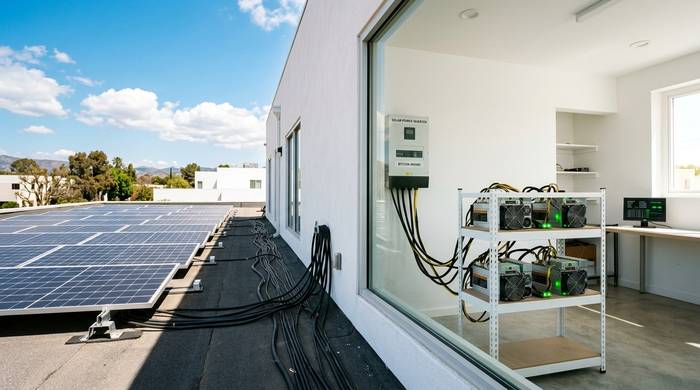
The miners making real money in 2026 are the ones running on renewable energy. Solar in Texas and the Middle East. Hydro in Norway and Canada. Flare gas at oil fields where the alternative is literally burning the gas into the atmosphere anyway. These operations run at $0.02-0.04 per kWh and they are immune to the political risk of being shut down for using too much fossil fuel power.
About 52% of Bitcoin's energy now comes from sustainable sources. That number matters because it is what mining companies use to attract ESG-conscious investors. Marathon, Riot, and CleanSpark all lead with their renewable energy percentages when they present to Wall Street. If you are starting a mining operation in 2026, your energy source is not just a cost line. It is a regulatory risk calculation.
My honest framework for deciding whether to mine
Instead of telling you what to mine, let me share the five questions I ask before plugging anything in.
What does WhatToMine say? I type in my hardware model and electricity rate. If the estimated daily profit is under $1 per GPU or under $5 per ASIC, I do not bother. The margin is too thin to survive a 20% price drop.
What is the total cost? Not just the hardware sticker price. Hardware plus twelve months of electricity plus any cooling setup plus the noise mitigation (my wife made me buy acoustic foam for the closet). That is the real number.
How long to break even? If the answer is more than 18 months, I pass. Mining hardware depreciates fast. A machine that takes two years to pay off will be outcompeted by new hardware before it reaches profitability.
What if the coin drops 50%? I run every projection at half the current price. If I am still profitable at half price, the bet is reasonable. If I go deep negative, I am gambling, not mining.
Would I make more just buying the coin? This is the question that kills most mining proposals. My Kaspa GPU rig in 2023: I spent $3,000 on cards. If I had bought $3,000 of KAS at the same time and sold at the peak, I would have made 4x. The rig made less than 1x before ASICs killed GPU mining on that network. The best mining strategy is sometimes not mining at all.