Jack Mallers: The Strike CEO Behind Twenty One Capital
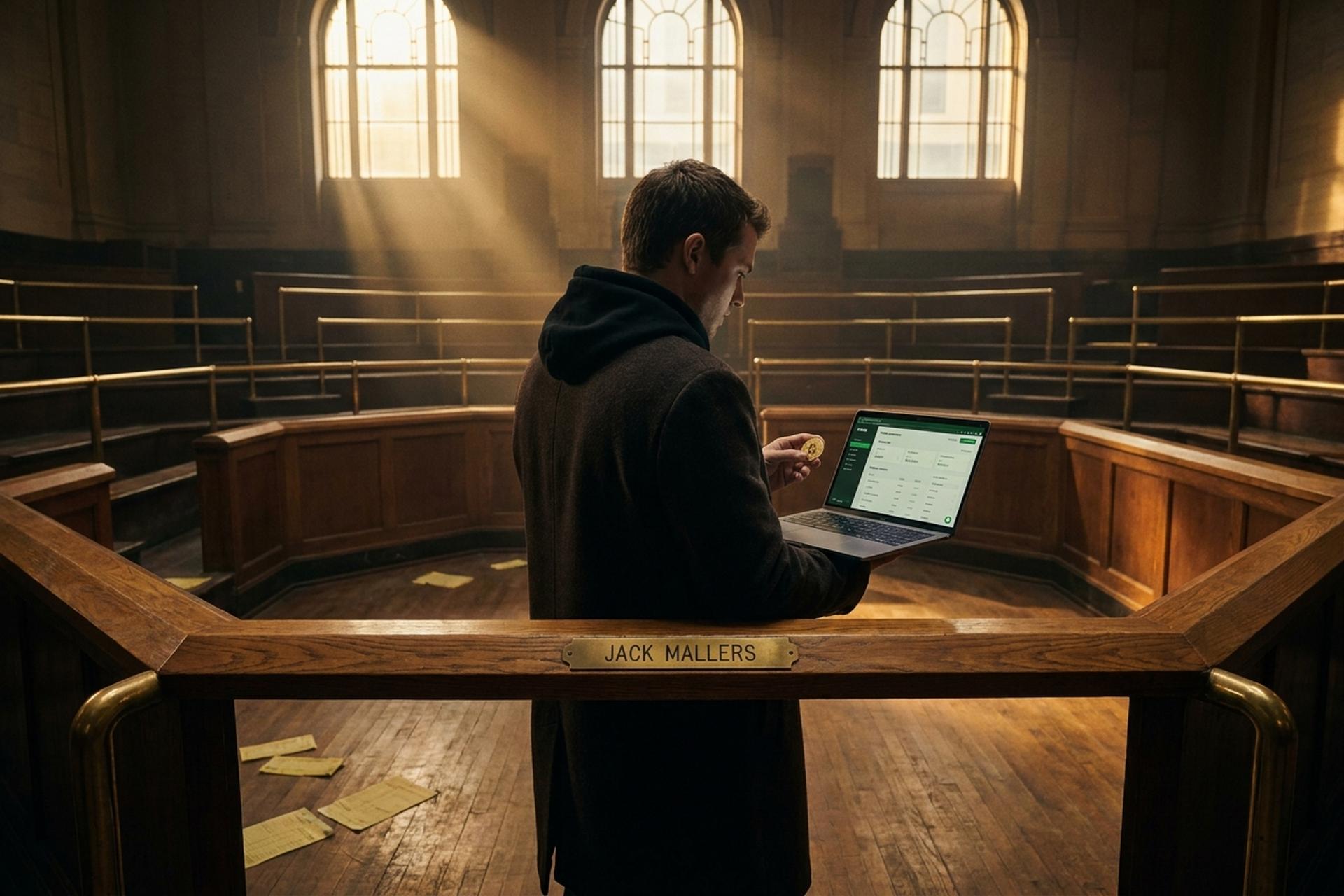
Jack Mallers is hard to write about, because he keeps changing roles inside the same story. He runs Strike, the Lightning Network payments app that helped engineer El Salvador's legal-tender adoption. He is also chief executive of Twenty One Capital, the NYSE-listed Bitcoin treasury vehicle that has quietly become the third-largest public corporate holder of bitcoin. And he is still 31 years old. Most coverage of Jack Mallers stops at the 2021 El Salvador moment, which I think misses the more interesting story: what he has built since, and what the people behind him think the whole stack is worth.
Jack Mallers' Chicago Trading Dynasty Roots
Mallers was born in Chicago on April 9, 1994 and grew up in Evanston. The family had been on Chicago's trading floors for two generations before him. His grandfather, William J. Mallers Sr., became chairman of the Chicago Board of Trade in 1969 at the age of 39, the youngest person ever to hold the seat. He later helped fund the founding of the Chicago Board Options Exchange. The Futures Industry Association inducted him into its Hall of Fame in 2024, eighteen years after he died. His father, William Mallers Jr., co-founded First American Discount Corporation in 1984, one of the earliest discount retail futures brokerages in the United States. Both were career CME members. In a 2017 post on X, Mallers wrote: "My grandfather and dad were long time CME members. My grandfather signed the funding check for CBOE on behalf of the CBOT."
The pedigree explains the comfort with markets. It does not explain the conviction. Mallers attended St. John's University in New York for less than a year before dropping out, then enrolled at Starter School, a full-stack coding bootcamp in Chicago. He had been nationally ranked in chess as a child, which is the kind of biographical detail that tends to follow Bitcoin-native founders for reasons people overinterpret. His father introduced him to bitcoin in 2013, at age 18, when the protocol was four years old and trading in the low hundreds of dollars. He has said in interviews that he was sceptical at first and only bought after his father pressed him on the math. The conviction came later, and then it never left. It is the only investment thesis he has publicly defended ever since, and the only one his subsequent companies have been built on.
From Zap to Strike: Building the Lightning Network App
In 2017 Mallers launched Zap, a non-custodial Lightning Network wallet built initially for cannabis dispensaries. These were businesses that traditional financial services providers, including banks, refused to serve. The product was respected inside the small Lightning community but limited to users who already understood self-custody. In 2019 he added Olympus, a feature that let users buy bitcoin directly with a bank account or debit card. The on-ramp worked, but every transaction created a taxable event and exposed the user to bitcoin's price swings.
The breakthrough was Strike, which Mallers launched in 2020. Strike rebuilt the experience around the Lightning Network as plumbing rather than product: users hold dollars, send and receive dollars, and Strike performs the bitcoin conversion in the background to move value at near-zero cost and near-instant finality. The user, in most cases, never has to know bitcoin is involved. That positioning distinguishes Strike from Cash App, Venmo, and Block's other consumer payments products, which either rely on legacy ACH rails for the actual transfer or sell users the speculative coin itself.
Adoption followed quickly. On September 23, 2021, Strike powered the launch of bitcoin tipping inside Twitter (now X) through Strike's first external API deal. At the Bitcoin 2022 conference in Miami, Strike announced integrations with NCR, operator of one in six point-of-sale terminals worldwide, along with Shopify and Blackhawk Network. In September 2022 Strike raised an $80 million Series B led by venture firm Ten31, with the endowments of Washington University in St. Louis and the University of Wyoming participating. Multiple aggregators have placed the post-money valuation at roughly $300 million, though Strike did not confirm that figure publicly.
In December 2022 Strike rolled out Send Globally, a fee-free cross-border transfer corridor from the United States to Nigeria, Ghana, and Kenya. In May 2023 Strike launched a global money app available in more than 65 countries, reaching an addressable population of roughly three billion people, and moved its global headquarters to El Salvador, a relocation that doubled as a political statement. Asked why the company was pivoting outside the United States, Mallers told Fortune: "We think there are billions of people that want a money app with those characteristics and capabilities contrasted to a clouded world of crypto exchanges." In February 2024 Strike opened buy, sell, and on-and-off-ramp services for bitcoin and USDT across seven African markets, including Gabon, Ivory Coast, Malawi, Nigeria, South Africa, Uganda, and Zambia.
El Salvador and the Legal-Tender Bet
Mallers' best-known act remains his role in El Salvador's adoption of bitcoin as legal tender. He had spent time in El Zonte, the small Pacific village known among bitcoiners as Bitcoin Beach, where a local circular economy ran on Lightning-denominated bitcoin payments. He used what he learned there to brief President Nayib Bukele on a remittance-and-payments thesis specific to El Salvador, a country where remittances make up more than 20 percent of GDP and where incumbent services charge over 10 percent in fees.
The announcement came in a surprise video played at the Bitcoin 2021 conference in Miami on June 5, 2021. Four days later, on June 9, the Salvadoran Legislative Assembly passed the Bitcoin Law 62 votes to 22. Bitcoin became legal tender on September 7, 2021, a first for any sovereign nation. Execution has been a different story. The government-issued Chivo wallet ran into operational problems that are well documented, including outage windows and KYC bugs that locked some users out of their balances for weeks. In January 2024, under pressure from the International Monetary Fund, El Salvador amended the law to remove mandatory merchant acceptance. None of that has dimmed Mallers' personal commitment to the country; Strike's global headquarters has sat in El Salvador since May 2023, and Mallers himself spends much of the year there.
Twenty One Capital: The $2.7B NYSE Vehicle
The single most consequential development of Mallers' career was announced on April 23, 2025. The structure was a business combination between Cantor Equity Partners, a SPAC led by Brandon Lutnick, and a new Bitcoin-native operating company. The backers were Tether and Bitfinex as majority owner, with Tether chief Paolo Ardoino on the board. SoftBank Group came in as a significant minority investor, and Cantor Fitzgerald rounded out the cap table. Mallers, the founder and CEO of Strike, was named chief executive of the new vehicle.
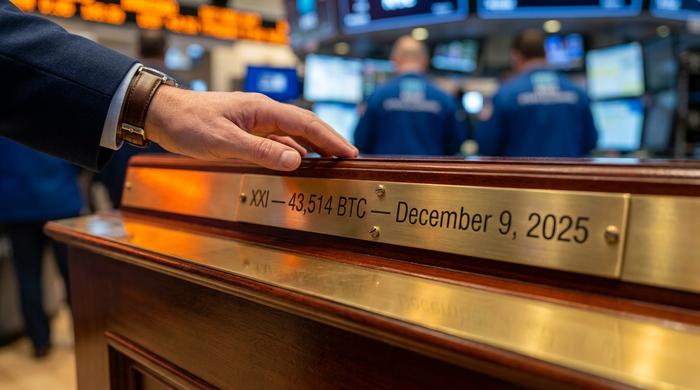
The initial balance sheet was unusual. More than 42,000 bitcoin were contributed at closing by Tether, Bitfinex, and SoftBank in lieu of cash. That alone made Twenty One Capital one of the largest bitcoin-denominated entities in the world before it had even rung the opening bell. There was a reason for the structure. A typical cash-funded SPAC would have had to buy the coins on the open market after merger close, moving the price against itself in the process. Contributing the coins directly let the backers lock in their cost basis and skip the slippage entirely. It also signalled, before the first day of trading, what kind of company this was meant to be. The vehicle began trading on the New York Stock Exchange under the ticker XXI on December 9, 2025, with more than 43,500 bitcoin already on its balance sheet. As of May 25, 2026, the bitcointreasuries.net registry counts Twenty One Capital at 43,514 BTC, a bitcoin net asset value of roughly $3.4 billion, a market capitalisation of about $2.7 billion, and an enterprise value near $3.1 billion. That puts it third among public companies by bitcoin holdings, behind Strategy (formerly MicroStrategy) and MARA Holdings.
| Twenty One Capital — snapshot (May 2026) | Value |
|---|---|
| NYSE ticker | XXI |
| Bitcoin holdings | 43,514 BTC |
| BTC net asset value | ~$3.4 billion |
| Market capitalisation | ~$2.7 billion |
| Enterprise value | ~$3.1 billion |
| Public-company ranking by BTC | 3rd (after Strategy and MARA) |
| Majority owner | Tether / Bitfinex |
| Founding backers | Cantor Fitzgerald, Tether, SoftBank Group |
| Chief executive | Jack Mallers |
What strikes me about this stack is how vertical it is. On April 29-30, 2026, Tether (the majority holder) proposed a three-way merger of Twenty One Capital, Strike, and Elektron Energy, a large private bitcoin miner. The combined entity would integrate balance-sheet bitcoin, payments rails, and mining capacity inside a single NYSE-listed shell. XXI rose roughly 8 percent after-hours on the news. By mid-May, SoftBank had exited its XXI board seat under the original shareholder agreement, leaving Tether as the unambiguous majority owner of the holding company Mallers runs.
Jack Mallers' Net Worth and Bitcoin Holdings
Most published estimates of Jack Mallers' personal net worth cluster between $50 million and $100 million, drawn primarily from DataWallet (2024), Wikitia (2024), and CoinCodex (2026). All three are media aggregator figures, not primary disclosures. Mallers has never published the size of his personal bitcoin holdings. He bought his first bitcoin in 2013 at prices reported around $250 a coin, but the quantity has never been disclosed. His equity stake in Strike, a private company, is undisclosed. His position in Twenty One Capital is partially visible through XXI's SEC filings, which list insider holdings, but his personal share is not separately broken out from the founders' aggregate.
| Source | Year | Estimate | Notes |
|---|---|---|---|
| DataWallet | 2024 | $50M–$100M | Aggregator estimate, no primary methodology disclosed |
| Wikitia | 2024 | $50M–$100M | Aggregator estimate, no primary methodology disclosed |
| CoinCodex | 2026 | $50M–$100M | Aggregator estimate, no primary methodology disclosed |
He was named to the Forbes 30 Under 30 list in finance in 2021. He has said publicly that he holds all of his wealth in bitcoin. At Bitcoin Amsterdam in 2024, he was asked how he stored value during Strike's early years. He answered: "What I used as money was Bitcoin because I exchanged the work I'm doing for those around me for Bitcoin and later exchange it for the things I want."

The Bitcoin Maximalist Worldview
Mallers is, by his own framing, a Bitcoin maximalist. He is not interested in stablecoins as a long-term financial instrument, not interested in altcoins, not interested in the ETF wrappers. His framing of bitcoin is closer to a moral one than a financial one. In a 2024 conference interview he put it this way: "Bitcoin before its computer code, before it's an asset, before it's an ETF, to me, it's moral code. Bitcoin is, you shall not censor, you shall not inflate, you shall not confiscate, you shall not counterfeit and you shall not steal."
The reason this lands differently than most maximalist rhetoric is that he refuses to pretend the timeline is short. In a 2025 post on X he wrote: "The future is hyperbitcoinization, but that's not where we are today. Today, Bitcoin is too small to compete with sovereign debt, and that's ok." That is roughly the thesis behind Twenty One Capital. His public posture toward stablecoins, altcoins, and exchange-traded products is consistently dismissive; he has framed bitcoin and the broader category of "crypto" as two different things that should not be conflated. The fact that Twenty One Capital's majority owner is Tether, the largest stablecoin issuer in the world, is the kind of contradiction that interviewers raise and that Mallers tends to brush off by pointing at the balance sheet. The point of the NYSE-listed vehicle is not to wait for hyperbitcoinization. It is to build the institutional plumbing — accumulation, treasury management, payments, eventually mining — that a much larger bitcoin economy will eventually require. Critics note that some of Strike's 2022 announcements, including a planned grocery-retailer integration, never shipped at the scale promised; that gap between rhetoric and delivery is a legitimate read on the record. The maximalism is sincere, though, and operationally consistent. Whether the Twenty One Capital, Strike, and Elektron Energy merger goes through this year is the open question. If it does, the institutional shape of his thesis becomes clearer than that of any other figure in the Bitcoin economy.