Cipher Stock (CIFR): Cipher Mining Becomes Cipher Digital Inc
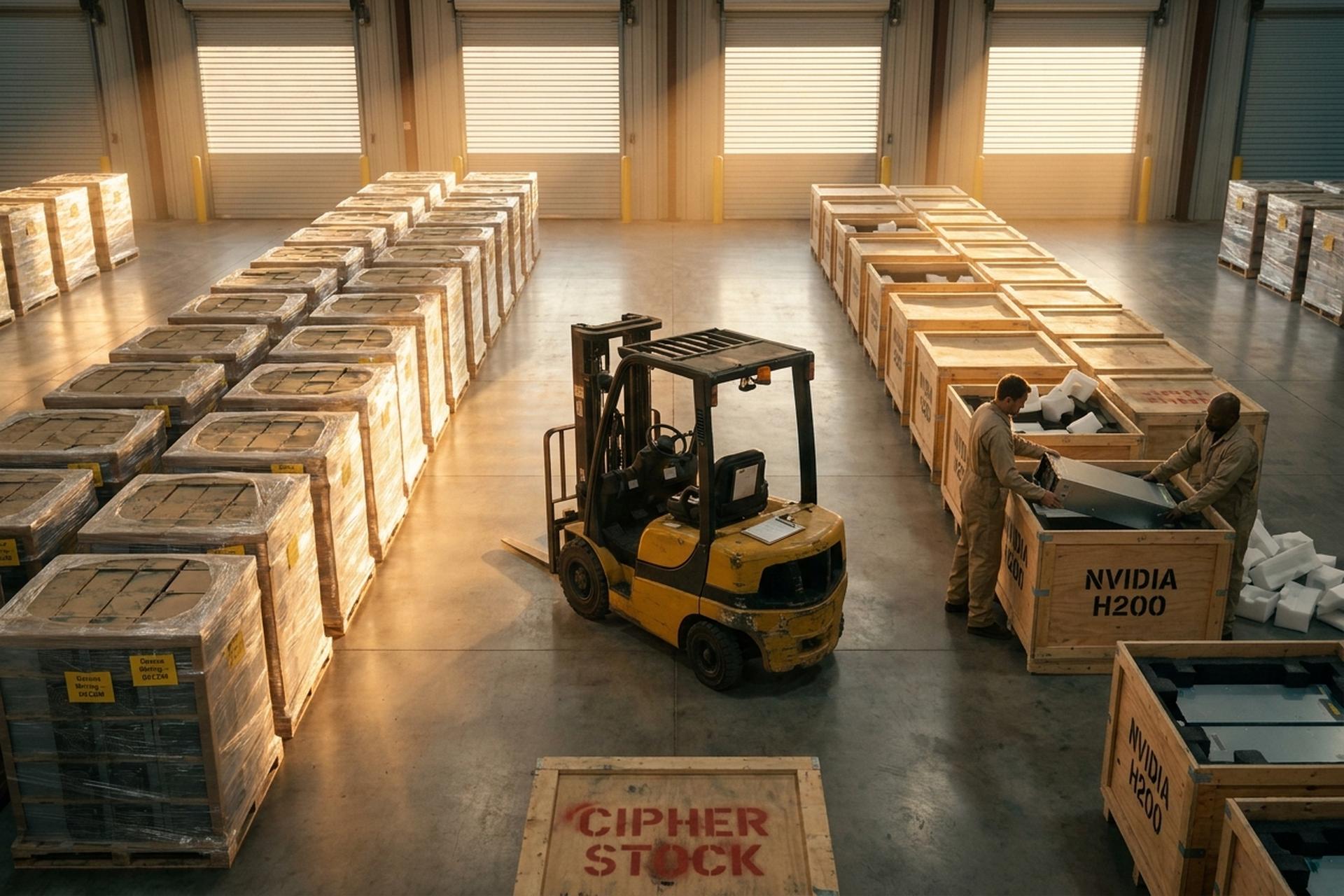
In February 2026, the company that most American retail investors knew as Cipher Mining quietly filed paperwork to call itself something else. The new name, Cipher Digital Inc., kept the same Nasdaq ticker (CIFR), the same Texas data centers, and the same chief executive. What changed was the pitch to Wall Street, and what changed for anyone watching the cipher stock chart was the framing of the entire investment case. A bitcoin miner, born out of a 2021 SPAC merger and built around cheap West Texas power, is asking the market to value it as something closer to a real-estate landlord for hyperscale artificial intelligence. The stock chart suggests the market has already accepted that framing. Whether the cash flows follow is the open question, and the rest of this guide is an attempt to lay out the case in plain language for a beginner.
From Cipher Mining to Cipher Digital: a 2026 rebrand
Cipher Digital Inc. develops and operates industrial-scale data centers in the United States, and the rebrand is the spine of the CIFR story, so it is worth taking seriously rather than treating it as marketing. Cipher was founded in 2020 and went public in early 2021 through a special-purpose acquisition company merger with Good Works Acquisition Corp., at an enterprise value of roughly $2 billion. The chief executive, Tyler Page, came from Bitfury, the early bitcoin mining infrastructure firm, and earlier had spent time at NYDIG, Stone Ridge, Guggenheim, Goldman Sachs and Lehman Brothers. The original investment thesis was straightforward. Texas, and in particular the area around Odessa, sat on top of cheap stranded power. A well-funded operator could turn that power into bitcoin at a cash cost of around $8,600 per coin, well below the spot price.
Then came the April 2024 halving, which cut the block reward from 6.25 to 3.125 bitcoin per block. JPMorgan estimated industry gross profits would compress by 30 to 40 percent. Cipher's full-year 2024 adjusted loss widened to $106.6 million, against $46 million the year before. Even one of the lowest-cost producers in the public-miner cohort could not, on the basis of mining alone, justify a market capitalization in the billions.
What I keep coming back to is that the rebrand from Cipher Mining to Cipher Digital reads like a quiet admission. Mining is still part of the company — but it can no longer carry the equity story by itself. So in late 2025 Cipher divested 49 percent of its mining operations to its hardware supplier Canaan, and through 2026 it has been signing long-dated leases with hyperscale tenants. That is the practical meaning of the new name. The ticker, CIFR, remains; the legal entity is still incorporated in Delaware; the team page on the corporate site still lists the same officers. Investors who searched "cipher stock" in May 2026 land on a quote for Cipher Digital Inc. that traces a 600 percent rise from a year earlier, almost entirely on the strength of contracts the company has not yet started to fulfill.
Where CIFR stock price trades: key statistics
CIFR closed at $21.71 on 6 May 2026, near the upper end of a 52-week range that ran from $2.32 to $25.52, with the all-time high set on 5 November 2025. Market capitalization stood at roughly $11 billion. The company pays no dividend, runs a negative trailing earnings-per-share, and carries a beta around 3.2, meaning the price tends to move about three times as far as the broader market on a typical day. The table below pulls together the key statistics a beginner usually wants on one page.
| Metric (as of 6 May 2026) | Value |
|---|---|
| Stock price (CIFR) | $21.71 |
| Market capitalization | ~$11 billion |
| 52-week range | $2.32 – $25.52 |
| 1-year return | ~620 percent |
| Beta (5-year) | ~3.2 |
| Trailing EPS | -$2.23 |
| Dividend yield | 0.00 percent |
| Q1 2026 revenue | $34.8 million |
| Q1 2026 net loss | -$114.3 million |
| BTC held on balance sheet | ~1,500 BTC ($122.4M) |
| Total long-term debt | $5.21 billion |
The numbers tell a coherent story. Revenue is small relative to market cap, the company loses money each quarter, and yet the equity has compounded faster than almost any other listed bitcoin miner. The market is, in effect, valuing future contracted revenue rather than current operating results. That gap is the central tension in any decision to buy CIFR.
Mining and HPC: a Cipher Digital business overview
To understand where the future revenue is supposed to come from, it helps to separate the two engines.
The first engine is the legacy bitcoin mining business, now concentrated at the Odessa site in West Texas. In the first quarter of 2026, Odessa operated at roughly 11.6 exahashes per second at a rated efficiency of 17.2 joules per terahash, mined approximately 346 bitcoin, and was the source of almost all of the $34.8 million of reported revenue the mining business generated. Mining revenue dropped from $59.7 million in the previous quarter, and that drop is what the rebrand is responding to. Industrial-scale bitcoin mining remains a thin-margin industrial commodity business after the halving, and even with low Texas power costs the company has not been able to grow it fast enough to support the equity valuation.
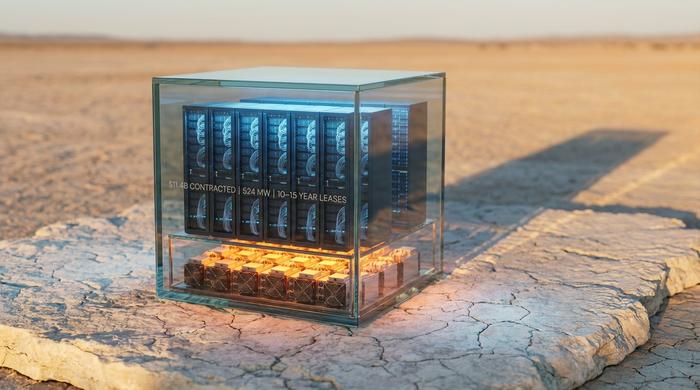
The second engine, and the one carrying almost the entire share-price story, is high-performance computing — HPC for short — hosting for AI data center workloads, also called HPC workloads in the trade. Cipher disclosed in its Q1 2026 update that it has booked about $11.4 billion of contracted revenue across 10- to 15-year terms, the kind of pipeline that typically takes a hyperscale developer half a decade to assemble. The two anchor leases are the practical backbone of that figure. The first is a 15-year, 300-megawatt lease with Amazon Web Services at the Black Pearl campus in West Texas, valued at roughly $5.5 billion, with commercial operation scheduled for October 2026. The second is a 10-year, 224-megawatt agreement at the Barber Lake site with Fluidstack, a GPU-cloud provider, worth roughly $3 billion. As part of that deal Google guaranteed $1.4 billion of Fluidstack's obligations and received approximately a 5.4 percent equity stake in Cipher, an arrangement that turned a credit-risky tenant into something close to investment-grade — at least in the eyes of the convertible-debt market that funded the project.
In plain English, the company that operates industrial-scale data centers at Odessa is becoming a data center development landlord whose largest tenants are the cloud divisions of two of the world's largest technology companies. Nasdaq still classifies CIFR under information technology services, a sector tag the rebrand is steadily growing into as the company keeps developing new sites under long-dated leases. The bitcoin mining ecosystem still has its place at Odessa, but inside the financial model it is increasingly the smaller line item, and the demand growth is on the AI compute side.
CIFR stock vs MARA, RIOT, CleanSpark: a peer trading view
Most beginner guides to crypto-mining equities lump CIFR in with Marathon Digital (MARA), Riot Platforms (RIOT) and CleanSpark (CLSK). That comparison made sense in 2024. By mid-2026 it is misleading, because Cipher's pivot has pushed it closer to the cohort of miners that have credibly leased capacity to AI tenants, namely Iris Energy and Core Scientific, than to the bitcoin-pure operators.
The table summarizes how the four largest U.S. mining-listed names line up at the time of writing.
| Company | Hashrate (EH/s) | BTC held | Market cap | Notable angle |
|---|---|---|---|---|
| Marathon Digital (MARA) | 53.2 | 44,893 | Largest of the group | Vertically integrated, sits on a treasury of bitcoin |
| Riot Platforms (RIOT) | 35.5 | 17,722 | Mid-cap | Electricity cost ~$49,196 per BTC; ERCOT credits |
| CleanSpark (CLSK) | ~50 | n/a | Mid-cap | FY2025 revenue $766 million, up 102 percent year over year |
| Cipher Digital (CIFR) | ~11.6 (Odessa only) | ~1,500 | ~$11 billion | Lowest power cost, largest HPC backlog |
The comparison highlights why CIFR trades at a premium despite running roughly a fifth of MARA's hashrate. The market is valuing the $11.4 billion HPC backlog, not the bitcoin output.
Analyst ratings and price targets for CIFR
Wall Street coverage of CIFR is unusually one-sided. According to consensus aggregators, 13 of the 13 to 15 analysts who cover the stock rate it a buy, none rate it a hold, and none rate it a sell. The median 12-month price target sits at $26.50, with a range from $18 at the bear end to $53 at the bull end. Morgan Stanley moved its target to $40.50, an Overweight rating, in late April 2026. JPMorgan, the bear of the group, holds a $18 price target while still upgrading the stock relative to bitcoin-pure peers. HC Wainwright raised its target from $25 to $30 earlier in the year on the strength of the Black Pearl lease.
A Strong Buy consensus on a stock that has already risen more than 600 percent in a year is unusual. It usually means the analyst community is modeling future contracted revenue as if the leases will execute on schedule. Investors should treat it as a useful insight into where Wall Street consensus sits, not a recommendation in itself.

How to invest in CIFR stock: a beginner's path
Investing in CIFR is mechanically the same as buying any other Nasdaq-listed equity, with a few caveats specific to volatile small- and mid-cap names.
The first step is opening a brokerage account at a regulated broker that supports U.S. stock trading, such as Fidelity, Charles Schwab, Robinhood or eToro. Most U.S. brokers offer commission-free trades on listed equities. After identity verification and funding the account, pull up a real-time CIFR stock quote and place an order for the common stock. Beginners are usually better served by limit orders rather than market orders on volatile names, because a wide bid-ask spread can move the fill price by several cents on heavy volume days. The decision to buy or sell is yours, but make sure your broker's stocks and ETFs platform displays the live price, not a delayed quote.
For investors outside the United States, a broker that supports U.S. equities and tax-treaty paperwork (Saxo, Interactive Brokers, eToro) will be required. CIFR is also held through several thematic exchange-traded funds, including the Valkyrie Bitcoin Miners ETF (WGMI), where it carries a roughly 18 percent weight.
A practical note on portfolio sizing. CIFR's 5-year beta is around 3.2, which is high even for a crypto-adjacent equity. A position that would be standard for a blue-chip dividend stock will deliver three times the volatility here. Most retail guides suggest treating mining and HPC equities as satellite, not core, holdings.
Risks for CIFR investors: halving, dilution, and security
The bull case for CIFR rests on three or four contracts executing as planned over the next decade. The bear case is a list of things that could go wrong before then.
The first risk is bitcoin price exposure. Cipher held roughly 1,500 bitcoin (about $122 million) on its balance sheet at the start of May 2026, plus an ongoing mining operation. A sustained decline in the spot price would compress what remains of the mining margin and put downward pressure on the treasury asset.
The second risk is execution. Both the Black Pearl AWS lease and the Barber Lake Fluidstack lease are scheduled to begin commercial operation in October 2026. Construction delay, commissioning delay, or any change in the tenants' capacity needs would push contracted revenue out of the model and force analysts to rebuild their valuation work. Hyperscale leases are generally negotiated with strong protections, but a 15-year lease is only as good as the tenant's willingness — and ability — to honor it.
The third risk is dilution. Cipher has financed the HPC site development partly with $1.1 billion of zero-coupon convertible senior notes due 2031, upsized from an initial $800 million offering, and through secondary share issuances. Sell-side models assume an additional 15 to 20 percent share dilution before the HPC sites reach run-rate revenue in 2027. Convertible debt is cheap when the share price rises, expensive when it falls, and either way it sits above common equity in any restructuring.
The fourth risk is operational and regulatory: ERCOT grid exposure in Texas, possible federal taxation of mining electricity, environmental scrutiny of large data-center water and power use, and the customer concentration that comes from leaning on AWS and Google-backstopped Fluidstack for the bulk of contracted revenue. None of these are immediate, but each is the kind of issue that can compress a multiple quickly.
Latest CIFR news and 2026/2027 catalysts to watch
For anyone scanning the latest Cipher Digital Inc. news flow, three events deserve the closest attention from anyone holding the stock or considering an entry. The first is the October 2026 commercial operation date for the Black Pearl AWS site, which will turn the contracted revenue figure into reported revenue. The second is the Q1 2027 EPS print, which sell-side currently models at roughly $0.36 against the still-loss-making Q1 2026 result. The third, further out, is the next bitcoin halving expected in 2028, which will again force the legacy mining margin to be re-priced. Until then, the fairer way to read CIFR is as a hyperscale data-center developer with a small, declining bitcoin mining sleeve attached, not as a bitcoin proxy.