RIOT Stock 2026: Riot Platforms After Halving and AI Pivot
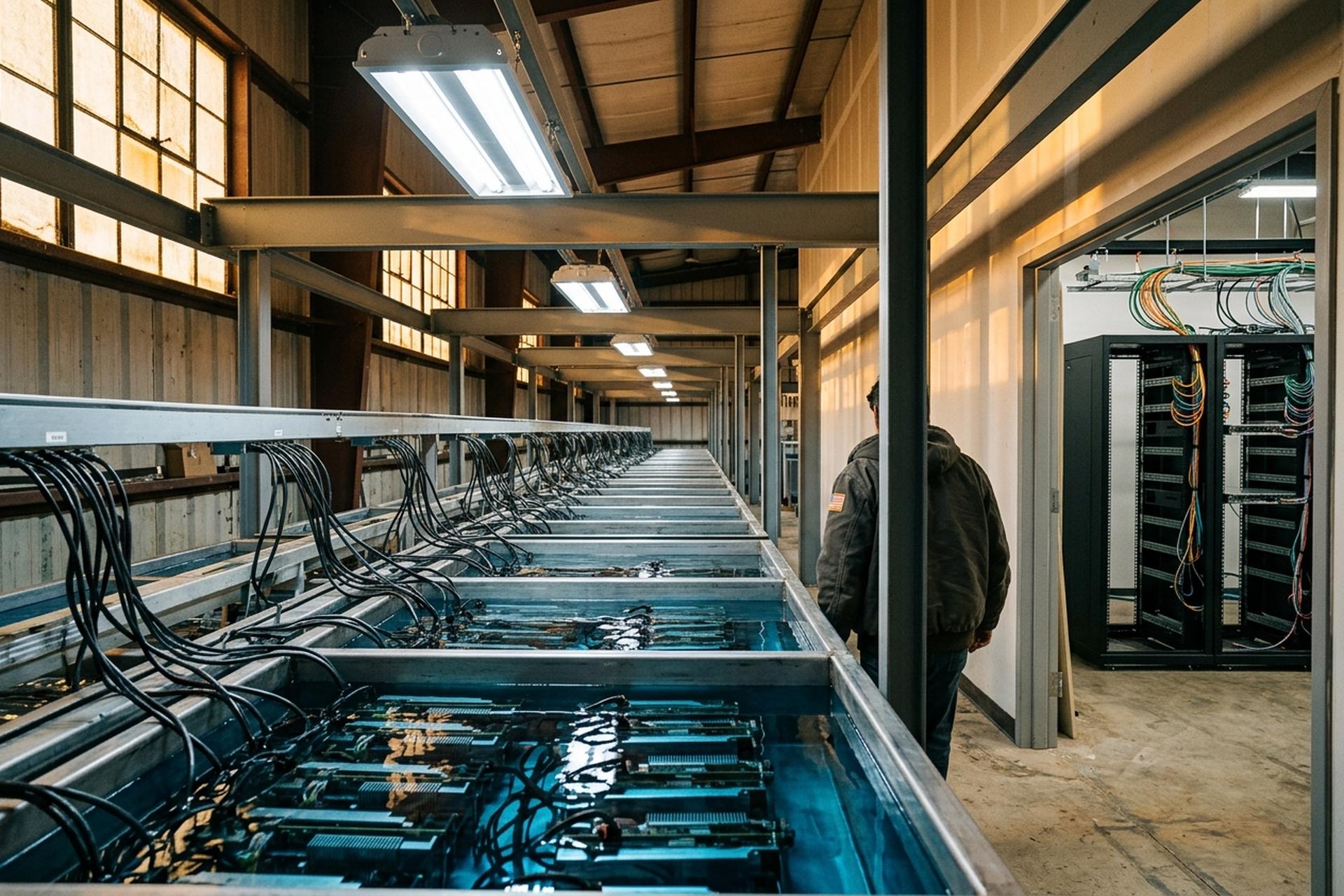
RIOT stock trades at $26.94, sits at roughly $10.18 billion in market cap, and has run 215% in the past twelve months on a beta of 3.74 to Bitcoin. Those three numbers define what kind of bet RIOT is — a leveraged proxy on Bitcoin with a side bet on artificial intelligence infrastructure. The interesting question is whether the side bet is now the main bet, and what either possibility implies for anyone deciding whether to own the stock today.
RIOT Stock Thesis 2026: Why Survival Was Step One
The headline numbers around RIOT in 2026 are loud and slightly misleading. A 215% twelve-month return is the kind of move that draws attention; a 3.74 beta is the kind of structural reality that should determine whether the attention turns into a position. Both are true; both matter.
The thesis behind RIOT today splits cleanly in two. First, did the company survive the April 2024 Bitcoin halving in a serviceable shape? Yes, decisively, and the section below covers how. Second, is the pivot from pure Bitcoin mining toward AI and high-performance computing infrastructure real, or is it a press-release line dressed up for the AI cycle? Real, but early. Both stories are now baked into the price. Neither one alone justifies the multiple.
Fiscal-year 2025 revenue came in at $647.4 million, up 72% year over year from $376.7 million, and the company posted a $663.2 million net loss for the same period. Q1 2026 was the first quarter RIOT reported as an active, revenue-generating data center operator, with $33.2 million of the $167.2 million quarterly top line attributed to the data center segment. That is roughly twenty cents on the dollar coming from something other than Bitcoin mining for the first time in the company's history.
Two pieces of context frame the rest of the analysis. The short interest is 16.3% of float, or about 61.6 million shares, which means any move in either direction tends to get amplified by short-cover or short-add dynamics. Institutional ownership sits at 79.18%, which is high for a stock that retail traders also follow heavily; the public float is concentrated. So the volatility on top of the volatility is structural, not just sentimental.
How Riot Platforms Survived the April 2024 Halving
The April 20, 2024 halving cut the Bitcoin block reward from 6.25 BTC to 3.125 BTC overnight. By design, every miner in the world saw revenue per produced block fall by half on a single date. Several leveraged or under-capitalized operators had already gone under before the cut even arrived. Core Scientific filed for Chapter 11 on December 21, 2022 when Bitcoin was near $16,000; Compute North filed in September 2022. The halving simply finished off some of the survivors.
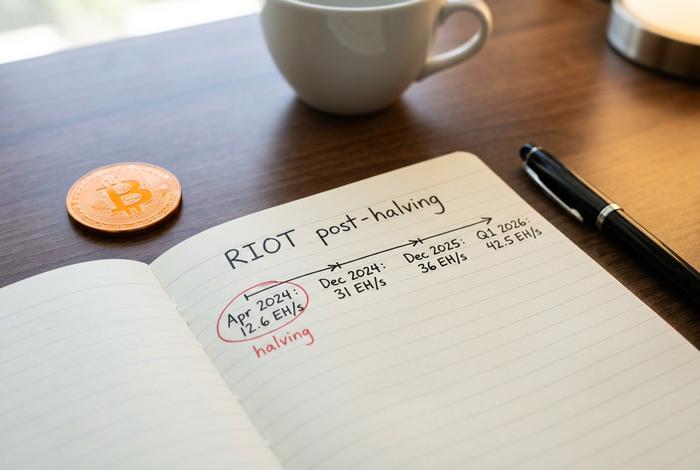
RIOT's survival strategy was capacity racing. Corsicana Phase 1, a 400 MW immersion-cooled facility in Texas, was energized the same week as the halving. Deployed hashrate grew from 12.6 EH/s in April 2024 to a year-end target of 31 EH/s, then to 42.5 EH/s by Q1 2026 — a 237% expansion in less than two years. Fleet efficiency moved from 21.2 J/TH in May 2025 to 20.5 J/TH by September, a 24% year-over-year improvement that allowed the per-coin economics to absorb the reward cut without the company having to liquidate the BTC stack to stay alive.
The cost-per-BTC numbers tell the rest of the story. All-in cost (excluding depreciation) ran $32,216 per coin in FY2024, rose to $49,645 in FY2025 as the halving worked through the income statement, and settled at $44,629 in Q1 2026. Including depreciation, the Q1 2026 figure was $96,283 — high but workable against current Bitcoin prices, and well inside what the network's hardest-hit private miners can sustain.
| Date | Event | RIOT operating hashrate | BTC mined |
|---|---|---|---|
| Apr 2024 (pre-halving) | Block reward 6.25 BTC | 12.6 EH/s | — |
| Apr 20, 2024 | Halving event | — | — |
| Apr 2024 (post) | First post-halving production | — | 375 BTC (−41% YoY) |
| Dec 2024 | Year-end | 31 EH/s | 4,828 (FY) |
| Dec 2025 | Year-end | ~36 EH/s | 5,686 (FY) |
| Q1 2026 | Latest reported | 36.4 EH/s | 1,473 (Q) |
Network conditions in the same window got harder, not easier. Network difficulty crossed 86.4 trillion just before the halving and reached 138 trillion by May 2026 — a 58% rise — while total network hashrate crossed 1 ZH/s for the first time in January 2026. RIOT's 3.67% share of global hashrate, held against that backdrop, is the operational story under the equity story.
The Corsicana Pivot: RIOT's Move Into AI Data Centers
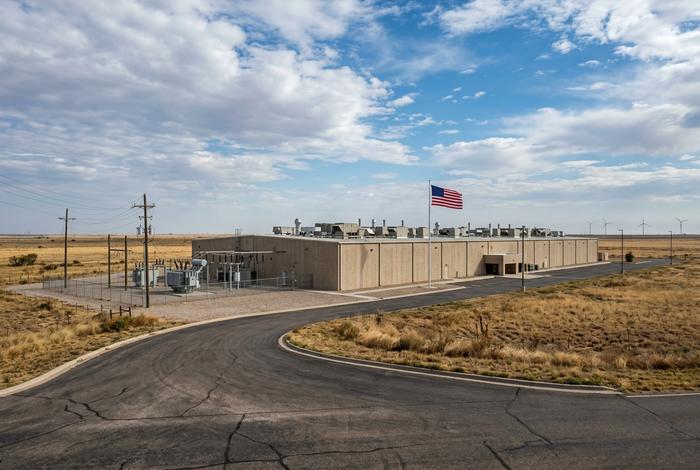
Corsicana, Texas is now the more interesting half of the RIOT story. Total ERCOT-approved capacity at the site is 1 GW — already a large industrial footprint by any measure. Phase 1, the 400 MW immersion-cooled Bitcoin mining build that came online with the halving, is the part of the site doing the company's traditional business. The other 600 MW was reserved for AI and high-performance computing tenants, and it is the part now starting to monetize.
The AMD lease is the proof point. RIOT signed an initial 25 MW, 10-year deal at the Rockdale, Texas campus in January 2026, then AMD exercised its 25 MW option during the first quarter, bringing the contracted capacity to 50 MW. The estimated base value of the lease is $311 million, with up to $1 billion if all remaining options are exercised over the life of the deal. Construction on 112 MW of Core and Shell infrastructure began in Q1 2026 as the company built ahead of additional bookings.
That work showed up in the income statement immediately. Q1 2026 data center revenue was $33.2 million — roughly 20% of total quarterly revenue and the first time RIOT counted itself as an active, revenue-generating data center operator. The number is small relative to the company's eventual capacity but large for a first quarter on a brand-new business line.
Starboard Value, the activist investor that pushed RIOT to accelerate the HPC build, has publicly estimated that the full Corsicana HPC footprint could generate $1.6 billion in annual EBITDA at maturity, implying $16 to $21 billion in equity value at 10× to 13× multiples. That estimate is more than the company's entire current market cap. It is also unproven, since only 50 MW of the 600 MW reserved capacity is under contract today. The interpretation depends on the reader's prior conviction: a bull sees the stock as still under-pricing the optionality, a bear sees the headline number as activist marketing.
For context on what the destination looks like, TeraWulf (WULF) became the first US public miner to report HPC revenue above Bitcoin mining revenue, posting $21 million HPC versus $13 million mining in Q1 2026 with 60 MW of critical IT capacity energized and $12.8 billion in contracted HPC revenue across its book. RIOT is two or three quarters behind that line.
RIOT vs MARA vs CLSK: Public Miner Stock Comparison
Six public miners are worth knowing in 2026. The market-cap leaderboard is closer than headlines suggest: TeraWulf (WULF) and Hut 8 (HUT) both at roughly $13 billion, Cipher (CIFR) at $10.3 billion, RIOT at $10.2 billion, Core Scientific (CORZ) at $8.6 billion after its 2024 emergence from bankruptcy, and Marathon Digital (MARA) at $5.5 billion. Market cap by itself does not separate the names; AI exposure does. Morgan Stanley initiated coverage in February 2026 with Buy ratings on Cipher and TeraWulf and a Sell rating on Marathon, on the explicit thesis that pivoting capacity to HPC unlocks a multiple that pure mining no longer earns.
| Miner | Mkt cap | Notable position |
|---|---|---|
| WULF | $13.25B | HPC revenue > BTC mining in Q1 2026 |
| HUT | $13.24B | Mining + HPC diversified |
| CIFR | $10.29B | Morgan Stanley Buy, AI exposure |
| RIOT | $10.18B | 50 MW AMD deal, 600 MW HPC reserve |
| CORZ | $8.64B | Post-bankruptcy CoreWeave pivot |
| MARA | $5.46B | Pure mining, Morgan Stanley Sell |
Source: companiesmarketcap.com / Morgan Stanley initiation, May 2026.
Reading RIOT's Financial Statement: BTC, Debt, Cash
RIOT's balance sheet is best read as three things stacked on top of each other: a working Bitcoin mining business, a Bitcoin treasury, and a $594.4 million convertible note. The reported financials only make sense if you separate them.
The BTC treasury holds 15,680 coins as of May 27, 2026, worth roughly $1.2 billion at current prices, with about 5,802 of those held as collateral or otherwise restricted. The convertible senior notes due 2030 carry a 0.75% coupon — issued cheap during the cycle's low-rate window — bringing total debt to $877 million against a working cash position that comes out to roughly negative $671 million on a net basis.
Income-statement readers tend to overreact to the headline losses. FY2025 net loss was $663.2 million on $647.4 million of revenue; Q1 2026 net loss was $500 million on $167.2 million revenue. The Q1 number includes $326.7 million of mark-to-market BTC charges, which are accounting recognition of unrealized price moves on the treasury rather than operating losses. Strip out the mark-to-markets and the operating picture is rougher than the bulls suggest and considerably better than the headline losses imply.
Analyst Ratings and Price Targets for RIOT in 2026
The sell-side has lined up unusually split. Roth/MKM's price target sits at $38, implying roughly 41% upside; Jefferies at $37; Needham at $28.50 with a Buy rating, raised as the share price approached its 52-week high near $26.30. Consensus across all covering desks lands at $25.15 — actually a few percent below the current quote.
The spread of $28.50 to $38 against a $25 consensus is the sell-side version of the same thesis question the rest of this article keeps returning to. The RIOT stock price history — from $7.93 to $27.39 over the past fifty-two weeks — captures that disagreement in a single range. The lower targets are valuing RIOT as a Bitcoin miner with a small adjacent data center business. The upper targets are valuing it as a hyperscale HPC landlord with a Bitcoin mining business attached. Both can be supported by current disclosures; only one can be the right call at the current multiple. The 52-week range itself ($7.93 to $27.39) gives a sense of how wide that disagreement has been in practice.
RIOT vs IBIT: Leveraged BTC Mining Investment?
For an investor whose only goal is exposure to Bitcoin, RIOT is the wrong instrument. A beta of 3.74 makes the stock roughly a 3.7x leveraged proxy on BTC, which produces the +215% twelve-month return when Bitcoin trends up and brutal drawdowns when it does not. BlackRock's IBIT spot Bitcoin ETF peaked above $100 billion in assets in October 2025 and drew $25 billion of net inflows in 2025 alone, tracks Bitcoin roughly one-to-one with low expense, and removes the operational, debt, and dilution risks that RIOT inevitably carries.
RIOT stock only makes sense for an investor who specifically wants both the leveraged BTC exposure and a call option on the AI/HPC pivot. Owning both RIOT and IBIT is double-counting the same BTC conviction. For pure Bitcoin exposure in a portfolio, the simpler trade wins; for AI infrastructure exposure with Bitcoin as a kicker, RIOT becomes a more honest fit than either alone.
Major Market Catalysts and Risks for RIOT in 2026
Three things to watch. The next halving lands in April 2028, roughly twenty-two months away, and will cut the block reward below 3 BTC; the operational improvements that worked in 2024 will need to repeat. ERCOT's Texas grid pricing and any regulatory shift around large industrial power consumers directly affects margin. And the AI/HPC competitive set — CoreWeave, Nebius, Vast, dedicated colocation providers — will eventually pressure the rates Corsicana can charge new tenants. A 30% Bitcoin drawdown would also reset the entire mining peer group's earnings; one of the bear cases here is simply price-of-BTC times beta.
How to Buy or Trade RIOT Stock Today
RIOT trades as NASDAQ:RIOT and is available on every US retail brokerage. The options chain is liquid through several expirations, and the stock is held in mining-focused ETFs (WGMI among them) for indirect exposure. A 5% position in RIOT stock carries roughly the same BTC delta as an 18% position in spot Bitcoin, given the 3.74 beta — which means position sizing matters more here than in most equities. The 16.3% short interest creates squeeze risk in either direction, so traders should size for the volatility, not against it.