"KYS" Meaning: How to Decode This Teen Slang Abbreviation
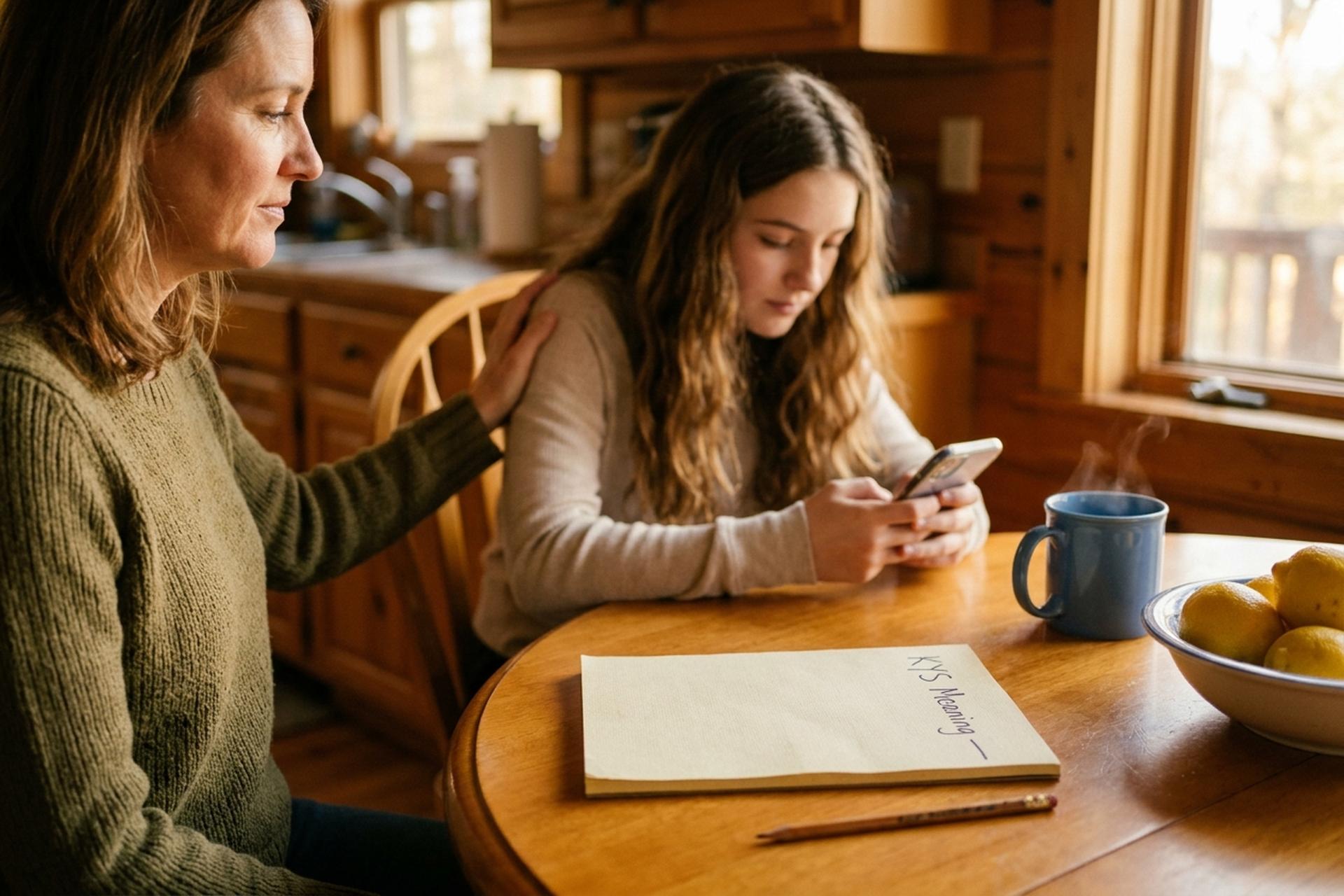
Your daughter forwards you a screenshot. Three letters sit in a Discord DM, with no context behind them and no follow-up after. KYS. Autocomplete suggests "keys". It is not keys. Across teen chat in 2026, KYS is shorthand for "kill yourself" — slang that bled out of early-2000s gaming forums and now lives on every platform young people use. Sometimes a kid types it after losing a round of Fortnite. Sometimes the sender means exactly what the letters spell.
So this guide is for the adults in the room. We will go through what the term actually means, where it shows up, why "it's just a joke" does not quite hold, what platforms and schools are doing about it, what you can do as a parent, and — most importantly — the crisis numbers worth saving into your phone today, before they are needed.
What does "kys" mean in teen slang?
KYS stands for "kill yourself." That is the meaning a teenager has in mind when the letters appear in chat, in a comment, or under a meme. The slang grew up in the harsher corners of early-2000s gaming and forum culture. Counter-Strike lobbies. Halo voice chat. Something Awful. The early days of 4chan. Insulting strangers was practically a sport, and the shorthand survived. From there KYS moved into Discord, Snapchat, TikTok, Instagram, and Roblox, where most of it lives today.
A few less harmful reframes do exist. Online-safety groups sometimes use "Keep Yourself Safe" as a deliberate counter-slang. In US K-12 education circles, "Know Your Students" is a teacher-training framework. Supply-chain people use "Know Your Supplier." None of those readings come close to the dominant one in teen chat. If a thirteen-year-old types KYS into a Snapchat reply, the safe adult assumption is the literal one — and that is the assumption to respond from.
The cyberbullying numbers help frame the scale. Pew Research surveyed US teens aged 13 to 17 in 2022 and found 46% had experienced at least one of six cyberbullying behaviours. A year later, the Cyberbullying Research Center surveyed 5,005 American middle- and high-school students and put lifetime cyberbullying at 55%. KYS does not sit outside that picture. It is one small, sharp piece of it.
How teenagers use "kys" — joke, mock, harassment
The use of KYS falls into three rough patterns, and they are not equally innocent.
The first is self-deprecating humour. A teenager fumbles a question in front of a class crush, screenshots their own embarrassment, and captions the story "kys lol". The user is the target. The intent, on the surface, is to laugh at oneself. The problem is that it normalises the language of suicide as a punchline. A peer reading that story who is genuinely struggling does not automatically read the irony; they read three letters that say "kill yourself" in their friend's voice. Repetition of that pattern across hundreds of accounts and thousands of posts shifts what feels ordinary.
The second is mocking among friends, often played as humorous or playful banter. After a teammate misses an easy shot in Valorant, somebody types kys in the Discord voice channel. After a friend posts a slightly cringe selfie, somebody comments kys under it on Instagram. This is the largest category by volume. It is also the category that adults most often write off as harmless because the speaker and the target know each other. The 2024 Cyberbullying Research Center report found that 30.4% of students had received "mean or hurtful comments" online in the previous thirty days; a meaningful share of that traffic uses kys-style shorthand.
The third is direct harassment. Anonymous DMs in TikTok comments. Group-chat pile-ons aimed at one person. Repeated kys messages from accounts the target has blocked, the sender simply registering a new account. This is the version that police reports and school disciplinary committees see most often. It is also the version the Pew survey captured under "physical threats" (10% of US teens 13-17), although in chat conventions a kys directed at a specific person can hit a victim harder than a less personal threat from a stranger.
Worth noting: automated filters on most platforms catch the plain spelling. Coded variants — k!s, k.y.s, kys yourself spelled out with spaces, or the word swapped for an emoji sequence — slip through. Search "kys" inside a child's chat history and you may see nothing; search the coded forms and the picture changes.
Why KYS is more than just words: cyberbullying context
One message? Brush it off. A drumbeat of them on a bad day? Different story. The CDC's 2023 Youth Risk Behavior Survey flagged "concerning increases" in school violence between 2021 and 2023. Suicidal thoughts and self-harm ran sharply higher among girls and LGBTQ+ teens. The data is not subtle.
October 2021 was the turning point most parents missed. The American Academy of Pediatrics, the American Academy of Child and Adolescent Psychiatry, and the Children's Hospital Association did something they almost never do together. They co-signed a joint declaration calling youth mental health a national emergency. Four-plus years later, they have not retracted it.
That is the room KYS lives in. Even when nobody really means it, the slang teaches a whole generation of kids that suicide-language is normal filler. So when a real friend is genuinely in crisis, the warning sign reads as the background. The structural cost of the word is separate from any single use.
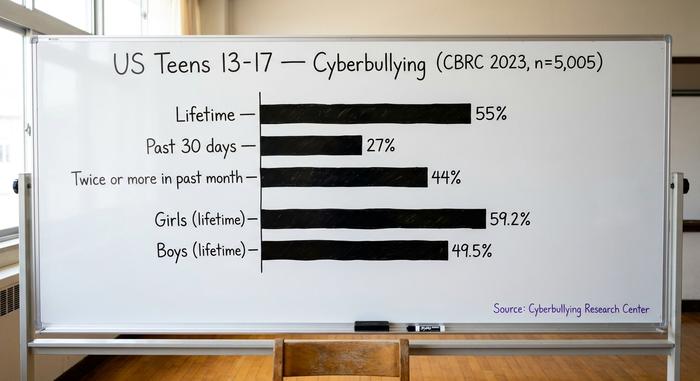
A few extra numbers, from the Cyberbullying Research Center's 2023 survey of 5,005 American students 13-17. Lifetime cyberbullying: 55%. Past 30 days: 27%. Of those past-30-days victims, almost half — 44% — got hit twice or more in that single month. Girls reported 59.2% lifetime. Boys 49.5%.
Notice what is missing from every line above? Nobody isolates "kys" on its own. No major survey does. The term folds into broader buckets — "mean or hurtful comments", "online humiliation", "rumours". And that folding is the problem in miniature. The word has become so common that researchers stopped bothering to count it separately.
Where KYS appears most — a platform table
| Platform | Where it shows up | Platform policy | What parents see |
|---|---|---|---|
| TikTok | Comments, reaction-video captions | Banned under self-harm community guidelines | In-app report; comment-filter settings |
| Snapchat | Private chats, Stories | Self-harm policy; ephemeral content hides evidence | Snapchat Family Center; in-app reporting |
| Discord | Servers, DMs, voice chat | Server-level + global AutoMod | Discord Family Center; server moderator escalation |
| Roblox | In-game chat, group chat | Text filters, age-based chat restrictions | Roblox parental controls; reportable in-game |
| Comments, DMs | Hidden Words filter, Teen Accounts protections | Family Center; Restrict / Block features |
What parents can do — parental control basics
"Just have a conversation with your child" is fine advice as far as it goes. It does not go very far. A handful of specific actions work better.
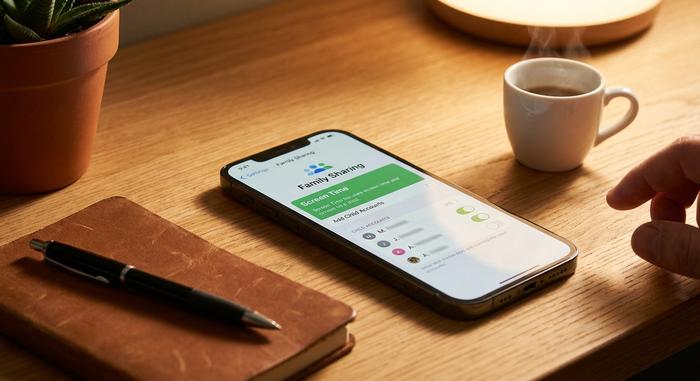
Start with the family controls inside the apps the kid actually uses. Apple Family Sharing on iPhone. Google Family Link on Android. Discord Family Center. Snapchat Family Center. TikTok Family Pairing. Instagram's Family Center, buried inside the app. None of those surveil message contents by default; they surface time-of-use patterns, friend lists, and high-risk-content toggles. Parents should be aware: set them up before you need them, not after.
Talk before you discipline. When KYS shows up on the kid's device, the worst first move is to grab the phone. The teen who shares one screenshot and gets punished for it will never share another. Ask quietly what the chat was about, who was in it, whether the kys was a joke or aimed at them, and whether they feel safe with the sender. Listen hardest for what they leave out.
Report through the app before going elsewhere. Every major platform has an in-app button for bullying or self-harm content. Reports route to platform moderators and trigger automated checks. Screenshot the conversation with usernames visible — do that before you report — because the sender may delete it the moment they realise.
Escalate only when the pattern hardens. One kys after a bad round of a game is not a police call. A repeated campaign from identifiable accounts, especially when personal threats start showing up, is. Most US states have anti-cyberbullying statutes on the books, school administrators are required to look into reports, and in genuinely threatening cases, local police can subpoena platform records.
Save the crisis numbers now. The next section lists them. Drop 988 (or your country's equivalent) into your phone today, while it is not yet an emergency.
One rule sits under all five: the goal is not to catch the kid in a hidden corner of the internet and punish them. The goal is for the kid to come to you when something feels wrong, rather than carrying it alone. Every action above serves that, and only that.
What educators and platforms do for online safety
The picture in schools and platforms has shifted since 2022. Almost every US state now pushes cyberbullying into the school code of conduct by law. StopBullying.gov keeps a running state-by-state map. Most schools have an anti-bullying coordinator. Most schools have a reporting form on the website. Some of those systems work. Others get ignored until a parent escalates. Still, they exist, and that is a real change.
Platforms moved too. Take Discord. Family Center launched in 2023, and it lets a parent see who their teen chats with, without dragging the actual message bodies into the open. Roblox took a different route. Through 2024 and 2025 it tightened age-based chat restrictions, then layered parental controls onto the under-13 accounts, which are most of its user base anyway. Instagram added Teen Accounts in late 2024 — users under 16 go into private settings by default, with DMs locked down. And the 988 Suicide & Crisis Lifeline went live on 16 July 2022 in the US, routing calls and texts to a trained crisis counsellor. Free, 24 hours, every day.
Schools built a parallel layer. A lot of districts now slot a digital-citizenship module into sixth- or seventh-grade health curricula, covering the language of self-harm online head-on rather than dancing around it. Counsellors and school psychologists used to wait for a kid to walk in. Now they often run proactive check-ins after any reported bullying incident. Catches everything? No. But it shifts the default from "the adult finds out last" to "somebody is asking the question early".
None of this is finished. Coded slang stays a step ahead of every filter. Parental controls only do their job once they are switched on. Any kid determined to hide a chat will find a way. The honest summary: the response infrastructure for KYS and the harassment that surrounds it is real, recognisably better than five years ago, and (mostly) free.
Crisis resources — call these numbers
If you or somebody you know is in immediate danger, call your local emergency number first.
United States
- 988 Suicide & Crisis Lifeline — call or text 988 (free, 24/7, English and Spanish)
- Crisis Text Line — text HOME to 741741 (free, 24/7)
- The Trevor Project (LGBTQ+ youth under 25) — call 1-866-488-7386, text START to 678-678, or chat at thetrevorproject.org
Canada
- 9-8-8: Suicide Crisis Helpline — call or text 988
- Kids Help Phone — call 1-800-668-6868 or text CONNECT to 686868
United Kingdom and Republic of Ireland
- Samaritans — call 116 123 (free, 24/7)
- Shout — text SHOUT to 85258
Australia
- Lifeline — call 13 11 14 or text 0477 13 11 14
- Kids Helpline (ages 5-25) — 1800 55 1800
Other countries
- findahelpline.com lists vetted local services across roughly 130 countries.