
SuperVerse Crypto: Web3 Gaming Token, NFT Marketplace & SUPER Outlook
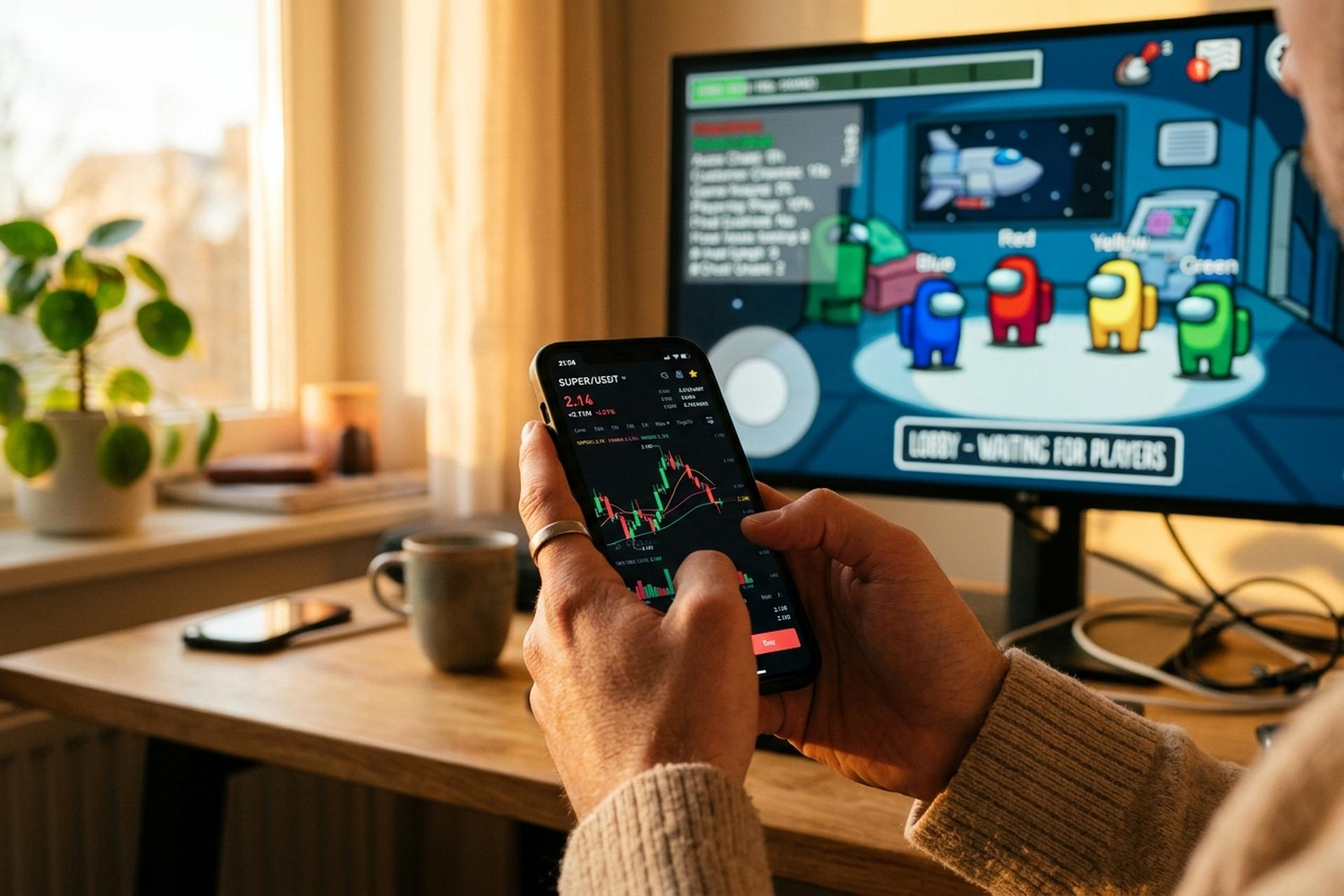
SuperVerse crypto trades roughly 97.5% below its 2021 all-time high, and still occupies a spot among the top 350 crypto assets by market capitalization. That gap — between collapsed price and persistent presence — is the most interesting thing about the project. SUPER is neither a hot meme nor a dead protocol. It is the working token of a rebranded GameFi ecosystem that built actual products, attracted real partners, and now has to prove its second act in a sector that has not recovered.
What SuperVerse Is — And Why The Rebrand Matters
Anyone looking at SuperVerse for the first time should know it isn't a fresh launch. The project started life in early 2021 as SuperFarm, a DeFi-meets-NFT platform run by founder Elliot Wainman, and it caught a real wave during the 2021 NFT boom — SUPER hit $4.74 on March 31 that year before the market rolled over. The rename to SuperVerse came in November 2022, with the new identity properly operational through 2023.
That rebrand was a real strategic shift, not a paint job. SuperFarm had pitched itself around yield farming with NFT mechanics; SuperVerse pitched gaming, with Impostors as the flagship, GigaMart as the marketplace, and the DAO holding ecosystem decisions together. The mechanical bits did not move. SUPER kept its ticker. The ERC-20 contract on Ethereum (0xe53ec727dbdeb9e2d5456c3be40cff031ab40a55) stayed the same address it had always been. Max supply held at 1 billion. The story shifted; the chassis did not.
This history matters for two practical reasons. The project carries operating history that the price chart does not show. And anyone who bought SUPER at the 2021 peak was, in effect, buying a different product — the underlying token is the same Ethereum-based ERC-20, but the use case, the audience, and the value proposition have all moved on.
The Three-Part Ecosystem: GigaMart, Impostors, Battle Bears
Most coverage describes SuperVerse as three products of equal weight. They are not equal. Each has a distinct role in how SUPER actually circulates.
Impostors is the flagship live game. It launched as a social-deduction title in the style of the Among Us genre and added a 100-player mode in January 2026 — an expansion aimed at the streaming and tournament audience rather than the casual mobile crowd. Impostors carries the public face of the ecosystem: when SuperVerse runs partner events or marketing, Impostors is the product on screen.
Battle Bears is a different bet. It is a trading card game built around the Battle Bears intellectual property that SuperVerse acquired. The TCG format gives the project a second revenue surface — card sales, tournaments, and NFT integrations — without forcing every player into the Impostors lobby. Battle Bears does not have public player numbers, but it widens the gaming experience the ecosystem can claim.
GigaMart is the NFT marketplace, and from a tokenomics perspective it is the most important of the three. GigaMart is where SUPER touches actual on-chain volume. It includes analytics tools and social features intended to compete with the broader NFT marketplace landscape, and it gives the SuperVerse ecosystem a way to capture marketplace fees rather than relying purely on in-game spend. The user experience on GigaMart is built to lower friction for first-time buyers — search, filtering, and wallet connection follow patterns gamers already recognise from mainstream digital storefronts.
The ecosystem reaches across Ethereum, Polygon, and BNB Smart Chain through bridged token contracts. The multichain footprint matters because it lowers the cost barrier for new gamers — paying for an NFT or in-game item on Polygon is far cheaper than on Ethereum L1, which historically priced casual users out of the marketplace.
How The SUPER Token Actually Works
SUPER is an ERC-20 token, and beyond the boilerplate it does four practical things inside the ecosystem.
It settles payments — fees on GigaMart, in-game purchases inside Impostors and Battle Bears. It carries governance weight inside the SuperVerseDAO, where staked balances translate to votes on platform proposals. It unlocks tier-based access to events and partner-game perks through staking, instead of paying a fixed yield. And it acts as collateral in specific staking pools that gate exclusive drops and beta access for the most active holders.
What SUPER does not have, as of mid-2026, is a buyback or burn mechanism. Transaction fees do not feed a deflationary loop. Demand for the token depends on actual usage of the three products, not on a programmatic supply sink.
Tokenomics, Supply, And The Dilution Overhang
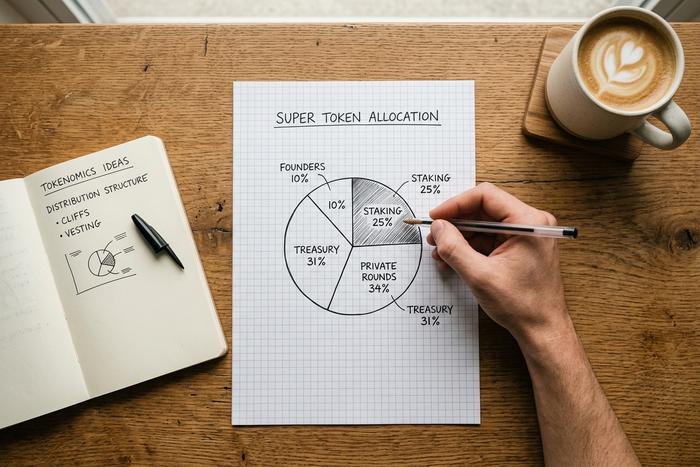
This is the section most price-tracker pages skip. SUPER has a maximum supply of 1 billion tokens. Of that, roughly 640 million are in circulation as of May 2026 — about 64% of the cap. The remaining 360 million tokens sit outside circulation in team, treasury, and ecosystem wallets.
Vesting schedules from the original SuperFarm distribution ended in 2024. That sounds reassuring, but it is not the full picture: vesting ending only means tokens are unlocked, not that they have been sold or moved. The team and treasury still hold the bulk of the unreleased portion, and any decision to release more of it into circulation lands as sell pressure on a thin market.
| Allocation bucket | Share of max supply |
|---|---|
| Staking & ecosystem rewards | 25% |
| Private rounds (combined) | 34% |
| Founders / team | 10% |
| Treasury & remaining | 31% |
The dilution overhang is the real holder risk. Even without a cliff, a 36% gap between circulating and max supply is a structural headwind that any responsible analysis has to flag. Token holders should track on-chain treasury movements, not just spot price, because that is where the next supply shock would originate. None of this is unique to SUPER — most 2021-era launches share the pattern — but it is a load-bearing fact for anyone sizing a position, and it shapes the security features the DAO ought to prioritise next.
SuperVerse Crypto Price Today And Price History
The SuperVerse price today stands at roughly $0.1206 — a figure that only makes sense against the full price history. The all-time high of $4.74 was set on March 31, 2021, during the SuperFarm peak. The all-time low of $0.0704 followed on October 19, 2023, near the depths of the broader crypto bear market.
| Metric | Value |
|---|---|
| Current price (USD) | $0.1206 |
| Market cap (crypto market cap) | $77.02 million |
| Circulating supply | 640.16 million SUPER |
| Max supply | 1 billion |
| All-time high (ATH) | $4.74 (Mar 31, 2021) |
| All-time low (ATL) | $0.0704 (Oct 19, 2023) |
| Drawdown from ATH | -97.5% |
Past 24 hours the token moved within a normal sub-5% range, with price changes broadly tracking the wider altcoin tape. Trading sites visualise the SuperVerse price history in standard candlestick form alongside basic technical analysis tools, but no chart pattern alone explains the gap to ATH — the dominant driver is sector positioning, not token-specific events. SUPER's price today reflects what happens to a 2021 GameFi launch four years into a sector reset: it recovered off the 2023 floor, but it has not returned to the live superverse zone of multi-dollar quotes that early holders remember.
Where SUPER Trades: Exchanges And Liquidity
SUPER is listed on roughly 65 exchanges across about 84 markets. The headline number reads as liquid; the venue concentration says otherwise.
Binance carries the bulk of daily SUPER volume. The SUPER/USDT pair on Binance handles around $1.86 million in daily trading volume — far ahead of any other venue. Coinbase and Kraken provide regulated on-ramps for US and EU users; smaller exchanges round out the long tail. For anyone planning to buy superverse, the practical implication is straightforward: the deepest liquidity sits on one venue, which means delisting risk and venue policy changes are concentrated.
Staking, DAO Governance, And Earning Rewards
Quick note on staking: this isn't a Compound-style yield product. SUPER staked through SuperVerseDAO buys access. Gaming rewards inside Impostors. Perk tiers across partner titles. Invites to private drops, tournament slots closed to walk-up players. The 8–15% APY numbers floating around third-party explainers don't appear in any document the team has actually shipped, so read them as community guesses, not promises.
The structure underneath is at least verifiable. SuperVerseDAO is a decentralized autonomous organization where voting weight tracks staked balance, and proposals can touch treasury, partnership deals, protocol parameters. Lock-up windows and slashing logic live in the DAO contract — not a marketing page — so a curious holder can read them on-chain before staking anything.
What the design rewards is engagement, not yield. A staker who logs in for events and votes on proposals gets more out of the model than one who locks SUPER and disappears. If you want an interest rate, this isn't it. If you want a foothold in a small gaming economy, the access layer is the actual product.
SUPER vs Sandbox, Decentraland, Immutable: Sector Snapshot
SUPER does not exist in isolation. The metaverse-and-GameFi tokens launched in the 2020–2021 cycle move broadly together, and looking at SUPER in that peer group puts the price picture in context.
| Token | Market cap (May 2026) | Drawdown from 2021 ATH | Sector |
|---|---|---|---|
| The Sandbox (SAND) | ~$193 million | ~98% | Open-world metaverse |
| Decentraland (MANA) | ~$170 million | ~99% | Open-world metaverse |
| Immutable (IMX) | ~$145 million | ~97% | Gaming L2 + tokens |
| SuperVerse (SUPER) | ~$77 million | ~97.5% | Gaming + NFT marketplace |
SUPER is the smallest of the four by market cap. All four sit 97–99% below their cycle highs, which removes any narrative that SUPER alone is broken — the sector is in deep drawdown, and individual tokenomics tweaks have not pulled any of these names back to relevance. The bullish case is identical across the group: a Web3 gaming revival lifts everyone. The bearish case is identical too: the sector stays out of favour, and these tokens grind sideways. SUPER's smaller cap means higher beta in both directions, which is the unique value — and the risk — of holding a peripheral name in a peripheral sector.
Web3 Gaming As The Bet Behind SuperVerse
Owning SUPER is, in plain terms, a leveraged wager on Web3 gaming breaking through. The pitch behind blockchain for gaming — on-chain item ownership, identity that follows the player across titles, economies the players themselves help run — hasn't gone anywhere, and it hasn't really landed either. Mainstream studios still file Web3 under "watch list." Immutable keeps shipping. Sandbox keeps shipping. Mainstream gamers, for the most part, keep not showing up.
That puts SuperVerse in an awkward but interesting spot. A platform specifically designed for gaming reads cleaner than a generic L1 chasing the same use case, and stitching gaming and nft into one ecosystem under one token gives SUPER something pure marketplaces lack. The recovery path, though, stays narrow. Impostors has to grow. GigaMart has to drive volume. Partner games have to plug in and stay plugged in.
Risks: What Could Go Wrong For SUPER Holders
A direct readout, not buried.
Start with liquidity. One venue, Binance, handles the dominant share of SUPER daily volume. A delisting or pair adjustment there would compress liquidity sharply, and the long tail of smaller venues would not absorb the flow gracefully.
Then the dilution overhang. Roughly 360 million tokens sit outside circulation. Vesting ended in 2024, but the team and treasury still hold the bulk of the unreleased portion, and any release lands on a thin order book.
Development opacity is another quiet risk. GitHub commit cadence and social activity from the core team are not regularly summarised in the dashboards a typical holder checks. Anyone who cares about ongoing build progress has to track it directly.
The sector backdrop is harsh. Every peer name — SAND, MANA, IMX — is deep in drawdown, and SUPER will not recover without broader GameFi tailwinds.
Regulation adds its own uncertainty. No MiCA-specific filings have been publicly disclosed for the SuperVerse ecosystem, and the regulatory treatment of utility-plus-governance tokens remains unsettled across major jurisdictions. Cryptocurrencies in this segment can move sharply on a single headline.
Last, tokenomics. There is no buyback, no burn, no mechanism reducing supply. Demand depends entirely on product usage — staking, marketplace fees, in-game purchases.
This is not investment advice — anyone investing in superverse should conduct thorough research, account for the inherent risks above, and size positions to the volatility of a small-cap GameFi asset.
Use Cases For Players And Holders
A quick reference for each user type.
- Players use SUPER to pay for in-game items, marketplace purchases on GigaMart, and tournament entries. The nft and nfts they acquire sit in their own wallets as a digital asset, portable across the ecosystem.
- Holders stake SUPER to gain governance voting weight, event access, and partner-game perks. Staking is utility-first; user engagement matters more than chasing a yield headline.
- Traders treat SUPER as spot exposure to the Web3 gaming sector with higher beta than SAND or MANA — a smaller cap means a larger increase in the value of any position if the sector revives, and a sharper drawdown if it does not.
The Road Ahead — Roadmap And Future Plans
Public future plans for 2026 centre on three things: continued Impostors expansion off the new 100-player mode, GigaMart growth in volume and listed collections, and partner-game integration to extend SUPER's staking perks. No token-economic changes — no new emissions, no burn, no supply cap shift — have been announced. That continuity is itself a signal: the team is doubling down on the current model rather than re-engineering tokenomics under price pressure.
Bottom Line For SUPER Crypto In 2026
SUPER is a small-cap, sector-correlated GameFi token with operating products, real exchange liquidity, an active DAO, and a dilution overhang any holder needs to price in. None of that is investment advice. It is a frame: SuperVerse crypto is neither a moonshot nor a corpse — it is a working erc20 token whose future tracks Web3 gaming adoption more than its own roadmap.



