FOMO Insights: Navigating the Fear of Missing Out in Crypto
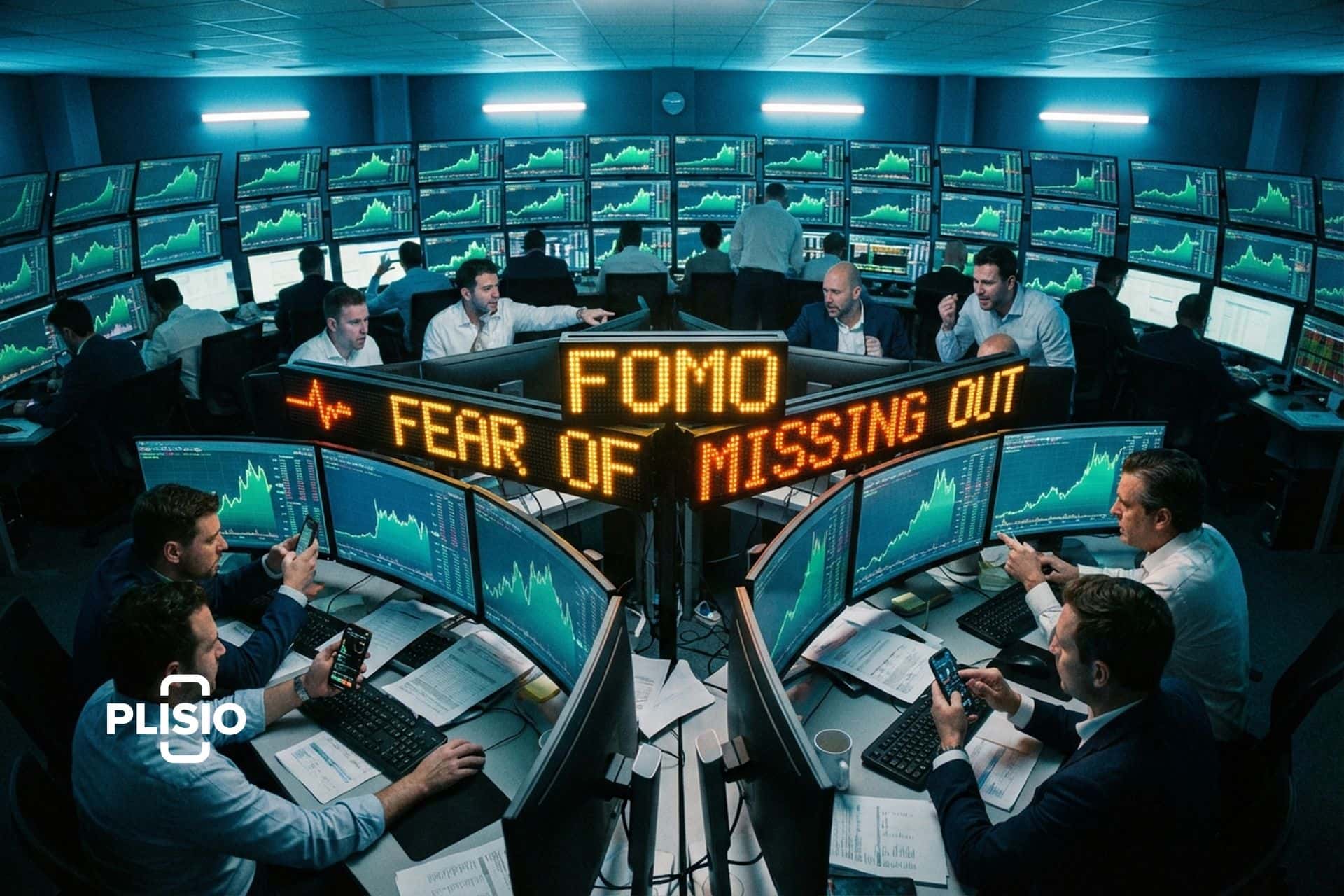
November 2021. Some guy on X posts a Solana chart with an arrow and the word "inevitable." I buy at $230. Two months later it's at $80. By the bottom, $8. I didn't buy SOL because I understood the technology or liked the ecosystem. I bought it because I saw green candles and other people posting wins and my brain did what brains do: screamed at me that I was about to miss the boat.
That feeling has a name. FOMO. Fear of missing out. And I'm convinced it's cost retail investors more money than any hack, rug pull, or exchange collapse ever did.
The thing is, FOMO doesn't only show up in crypto. You've felt it scrolling Instagram at 1 AM looking at someone's beach vacation. You've felt it when a coworker casually mentions they closed on a house. When a friend posts about quitting their job to backpack through Asia while you're staring at a spreadsheet. What used to be occasional jealousy that you'd shake off by lunch has become a constant, low grade anxiety piped directly into your pocket.
I want to break down what FOMO really is, why it hits people who trade crypto harder than almost anyone else, and what I've found that actually helps when you feel it creeping in.
What FOMO actually means
A marketing researcher named Dan Herman coined the term FOMO sometime around the year 2000, though nobody paid much attention until social media made the concept impossible to ignore. In 2013 Andrew Przybylski published a formal definition in an academic paper: "a pervasive apprehension that others might be having rewarding experiences from which one is absent." Which is a very polished way of saying you're sitting on your couch convinced everyone else is living a better life. FOMO stems from something deeply human: the fear that you may be missing out on something that everyone else is enjoying.
The emotion itself is ancient. Your ancestors probably felt something like it when the tribe across the river seemed to eat better. What changed is the delivery mechanism. Social networking sites like Instagram, X, and TikTok push the curated highlight reel of billions of people directly into your palm, around the clock. You see someone post on social media a portfolio screenshot showing 400% returns. What you don't see is the three accounts they torched before that one worked out. You see a friend's Bali sunset photo and feel a pang. You don't see the credit card balance that funded the trip. The feelings of FOMO that hit you when you check social media aren't random. They're the predictable result of a social network designed to show you what you're missing.
In 2021 a team publishing in the Journal of Social and Clinical Psychology put numbers on something most of us already felt in our bones: more time on social media meant higher FOMO scores and lower life satisfaction across the board. The 18 to 35 age bracket got hammered hardest. And the feedback loop is nasty in a way that's hard to escape once you're in it. FOMO makes you open the app. Opening the app feeds more FOMO. Instagram and TikTok and X are all built to keep that wheel spinning because engagement is how they sell ad space. I don't say that as some kind of conspiracy claim. It's literally how the revenue model works.
FOMO and your brain
Something that helped me forgive myself for my own bad trades is learning what's actually going on in my skull when FOMO hits. It's not weakness. It's not stupidity. It's your amygdala doing what it was built to do: react to threats.
Your amygdala is the part of the brain that processes danger signals. When you scroll past a screenshot of someone making 500% on a coin you almost bought last week, your brain reads that as a threat to your survival. Not literally, but the chemical cascade is the same. Cortisol spikes. Heart rate ticks up. The prefrontal cortex, the part that's supposed to help you think clearly, basically checks out for a few minutes. What's running the show at that point is the same panic driven wiring that helped early humans outrun things with teeth.
So when smart people make spectacularly dumb FOMO trades it's not because they forgot how to think. It's because the thinking hardware was temporarily offline. The decision is being made by the same system that tells you to jump out of the road when a car honks. Except in this case the car is a rocket emoji posted by an anonymous account in a Telegram group you joined three days ago.
Loneliness cranks the volume up on all of this. And I don't mean that in a hand wavy inspirational poster kind of way. Studies on social anxiety have found that people who feel isolated or cut off from real social interaction score significantly higher on FOMO scales. People with lower self esteem are even more likely to experience FOMO because social exclusion hits them harder. The phone becomes the only tether to other people. Every notification is a tiny hit of belonging. Every scroll is a reminder of the stuff happening without you, the missing opportunities to bond with friends and feel part of something. Problematic social media use and compulsive smartphone checking reinforce each other until it becomes genuinely hard to put the thing down for ten minutes. Psychology Today ran a piece calling it "the anxiety of the connected age" and honestly that nailed it.
What the research actually says
Przybylski's 2013 paper opened the floodgates. Since then, everybody from marketing firms to clinical psychologists has been poking at FOMO, and the picture that's coming together is honestly worse than I expected.
Eventbrite ran a survey back in 2014 and found 69% of millennials deal with experiencing FOMO on a regular basis. Not once in a while. Regularly. Younger people are most likely to experience FOMO, especially those who spend hours on social media usage daily. A Credit Karma and Qualtrics study from 2019 put a dollar sign on it: 60% of teens reported buying things they couldn't afford because they saw someone else's purchase online. Some researchers have also linked this behavior to a fear of better options, where people feel paralyzed or impulsive because there might always be a better deal around the corner. Now imagine that same reflex pointed at a coin that just 5x'd on a random Tuesday.
The Dalbar Quantitative Analysis of Investor Behavior report, which they update every year, keeps hammering the same point. Retail investors who chase hot returns lag behind simple buy and hold strategies by roughly 30% per year. That's not a typo. Thirty percent, year after year. Compound that over a decade and you're looking at the difference between a comfortable retirement and a second job at 65.
| What the data says | Who found it | When |
|---|---|---|
| 69% of millennials experience FOMO regularly | Eventbrite | 2014 |
| FOMO correlates with lower life satisfaction | Przybylski et al. | 2013 |
| 60% of teens bought things they couldn't afford due to FOMO | Credit Karma / Qualtrics | 2019 |
| Performance chasers lag buy-and-hold by ~30%/year | Dalbar QAIB | 2023 |
| 1 hour less phone time per day measurably lowers FOMO anxiety | University of Toledo | 2022 |
That last line in the table grabbed me when I first read the study. One hour. Not some dramatic thirty day phone detox or moving to a cabin in the woods. Just sixty fewer minutes of scrolling per day and the researchers could measure a real drop in FOMO related anxiety. I tried it for two weeks last fall and the difference was noticeable by day three.
FOMO in crypto: where it gets expensive
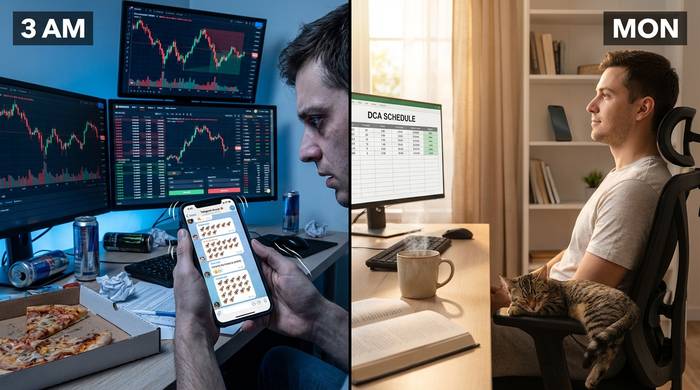
If you wanted to design the perfect environment for breeding FOMO, you'd end up with something that looks a lot like the crypto market. It never closes. A coin can move 40% on a Tuesday at 3 AM because someone posted a meme. Anonymous accounts flex 10,000% gains without showing the five wallets they blew up first. Elon Musk tweets a dog emoji and billions of dollars shift. The stock market has guardrails and trading hours. Crypto has neither.
The 2020-2021 bull run turned FOMO into a mass event. Bitcoin ran from around $10K to $69K. Ethereum went from $200 to $4,800 in roughly the same stretch. Dogecoin, a coin that started as a joke, hit $0.73. NFTs were changing hands for millions. Everybody on Twitter had a story about how they turned $500 into a house deposit. Your coworker who couldn't explain what a blockchain is was recommending SafeMoon in the break room.
I know people personally who took out second mortgages during that stretch. One guy at my gym liquidated his kid's college fund into a basket of altcoins he found on a TikTok watchlist. He couldn't have described what any of them did if you gave him an hour and a whiteboard. He didn't buy because he understood the technology. He bought because the thought of being the only person in his circle who missed this thing was more than he could handle.
One story sticks with me. In May 2021 Dogecoin was surging because Elon Musk was about to appear on Saturday Night Live. The anticipation alone drove the price up for days before the episode. Millions of people piled in during that run up. Then Musk went on air, called DOGE "a hustle," and the price dumped 30% inside 24 hours. The people who bought the week before, riding on pure FOMO? Most of them were underwater by Monday morning. The ones they were trying to copy had gotten in months earlier at a fraction of the price.
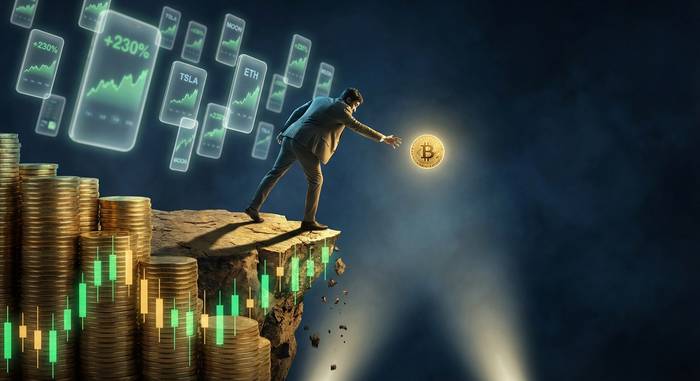
That's the part about FOMO that nobody warns you about early enough. By the time the feeling reaches you and your finger is on the buy button, the profitable part of the trade already happened days or weeks ago. You're not catching the wave. You're catching the whitewater.
FOMO vs FUD: the emotional seesaw
FOMO has a dance partner and her name is FUD. Fear, uncertainty, and doubt. Where FOMO yells "buy now before you miss it," FUD yells "sell now before you lose everything." They tag team you and they're very good at it.
FUD moves through the same channels. Someone posts that China banned Bitcoin again. A random anon claims a protocol got exploited. A blurry screenshot of a "leaked insider message" makes the rounds on Telegram. Doesn't matter if it's true, half true, or completely fabricated. Your amygdala reacts the same way: get out, get out, get out.
Here's the cycle that eats retail alive. Hype builds, FOMO kicks in, you buy near the top. Bad news drops, FUD kicks in, you sell near the bottom. Repeat. I watched a friend do this three times between January and April of 2022, each time convinced he was being rational. Some large holders know exactly how this works. They push negative narratives until the price dips enough to buy. Then they flip to hype mode, retail piles in on the FOMO wave, and they sell into that wave. The playbook is documented. It works because we keep falling for it.
| Emotion | Trigger | Action it causes | Result |
|---|---|---|---|
| FOMO | Seeing others profit | Panic buying near tops | Buy high |
| FUD | Negative rumors/news | Panic selling near bottoms | Sell low |
| Combined cycle | Alternating hype and fear | Buying tops, selling bottoms | Losing money |
How to deal with FOMO (actual strategies, not platitudes)
I'm not going to tell you to meditate or journal your emotions. When it's 2 AM and your thumb is hovering over the buy button, that stuff doesn't work. What follows is what actually helped me and a few people I trust.
The cold plan. When the market is quiet and your head is clear, open a notes app and write down exactly what you'd be willing to buy, at what price, with how much money, and what would make you sell. Be specific. Then next time some coin goes vertical and the group chats start buzzing, open that note first. If the coin isn't on your list, you close the app. I started doing this in late 2022 and it's genuinely saved me more money than any chart pattern or indicator ever did.
DCA and forget. Dollar cost averaging is boring by design. Set up $50 or $100 a week going into BTC, ETH, or whatever you've actually spent time researching. The buy happens automatically whether the market is up, down, or sideways. You stop making decisions in the heat of the moment. People who DCA'd into Bitcoin starting in 2020 don't need me to tell them it works. Their portfolio already did.
Clean your feed. I went through my X following list one evening and unfollowed every single account that posts gain screenshots. Every one. Those people are showing you their wins because they need you to buy what they already hold. If your timeline makes you anxious, the timeline is the problem, not your psychology.
Zoom out to the monthly chart. FOMO lives on the 5 minute candle. Pull up the monthly view of whatever coin has you excited. That 50% spike everyone is losing their minds about? Often a tiny blip on the bigger trend. The coin might still be down 80% from its all time high. Hard to panic buy when you can see the full picture.
Put the phone in another room. Not airplane mode, not silent. Another room. Delete exchange apps from your home screen. Kill the price alerts. The University of Toledo study I mentioned earlier found that just one fewer hour of phone time a day made a measurable dent in FOMO related anxiety. Sixty minutes. That's a walk around the block and a cup of coffee.
The idiot test. Say what you're about to do out loud to someone who doesn't trade. "I'm putting five grand into a dog themed coin because a guy on Telegram said it's going to 100x." If the sentence makes you cringe when you hear it leave your mouth, you have your answer.
FOMO vs JOMO: the other side
Somewhere in the last couple of years a counter idea started making the rounds: JOMO. Joy of missing out. It sounds like a self help cliché but hear me out because the more I leaned into it the better my results got.
JOMO is the deliberate decision to watch a pump from the sidelines and feel okay about it. Even good about it. Because for every coin that 10x'd and you missed, there were twenty that rugged or bled out slowly while the holders convinced themselves it would come back. When you start keeping score honestly, missing moves doesn't sting as much.
I've practiced JOMO a lot more in 2026 than I did back in 2021 and my portfolio reflects it. Fewer trades, smaller losses, and I actually sleep through the night now instead of waking up to check Binance at 4 AM. Not every pump was meant for me. That used to feel like defeat. Now it mostly feels like common sense.
The tricky part is that nobody celebrates JOMO publicly. You'll never see a viral tweet saying "I sat on my hands today and it felt amazing." There's no Telegram alpha group for people who chose not to ape in. Social media only rewards action and risk and visible wins. Doing nothing looks like failure from the outside, even when it's the smartest play you've made all month.