What Does Delulu Mean in English? Gen Z Slang Explained
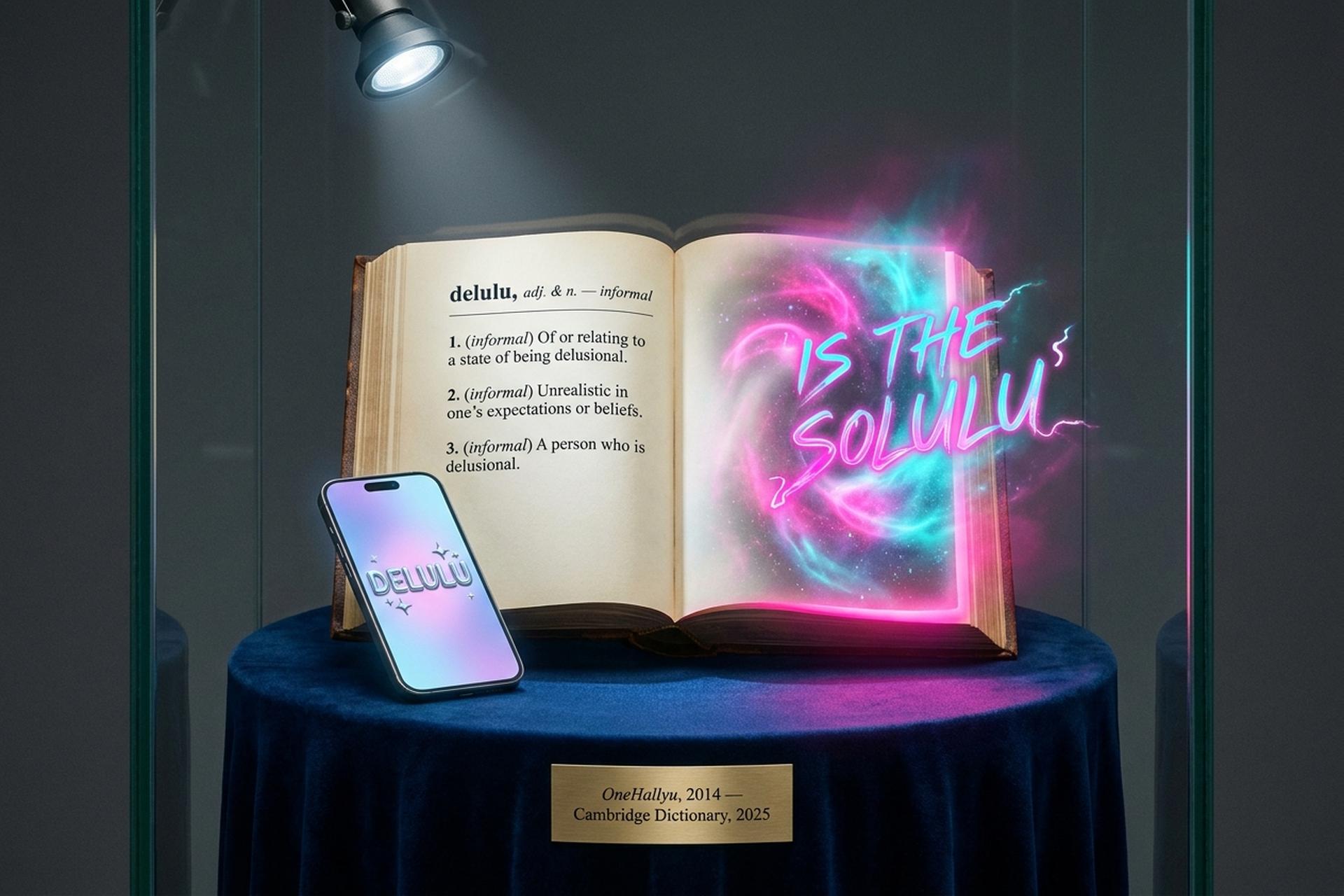
March 26, 2025. The Australian Prime Minister stood in the House of Representatives and called the opposition's economic plan "delulu with no solulu." Anthony Albanese had been dared to say it on a podcast the night before — Happy Hour with Lucy and Nikki — and he followed through on national television. The Guardian wrote it up. Five months later, on August 18, 2025, Cambridge Dictionary added the word to its official lexicon. The BBC and CNN explained what it meant for readers who had not opened TikTok in two years.
That is roughly the moment a private K-pop fandom joke from 2014 finished its journey into mainstream English. The word had spent a decade as a fan-forum insult. Two more years as a Gen Z self-affirmation. By the time a head of government used it in Parliament, the original meaning had almost completely flipped.
Delulu Meaning: The One-Sentence Definition
Delulu is internet slang derived from the word delusional. That is the literal answer.
The fuller answer is that the word now carries two opposite tones depending on who is using it. The original sense was negative: it describes someone with unrealistic beliefs about reality, usually about romantic relationships or a famous celebrity. A fan convinced their favorite K-pop idol is secretly her boyfriend is delulu. So is the friend who believes a single matched dating app message means she has met her future partner.
In its current Gen Z sense, delulu is something you call yourself, on purpose, with affection. Cambridge Dictionary defines it as "behaving like you live in your fantasy world rather than the real one." Merriam-Webster's slang entry, last updated April 1, 2026, calls it "an internet slang term for delusional" but adds that it can describe "someone with an unapologetic, bold, and often joyously self-confident belief in the likelihood of realizing one's ambitions." Dictionary.com added the slang word on September 14, 2023, with the same dual framing.
Grammatically, delulu functions mainly as an adjective ("you're being a little delulu") and occasionally as a noun ("she's a delulu"). The tone is almost always self-aware. People rarely accuse strangers of being delulu in a serious tone. They tag themselves.
The Origin of Delulu in K-Pop Fandom
The word did not come from Filipino slang, despite a popular online claim. Every primary source — Wikipedia, Know Your Meme, Dictionary.com, Merriam-Webster — traces it to English-speaking K-pop fan forums in 2014.
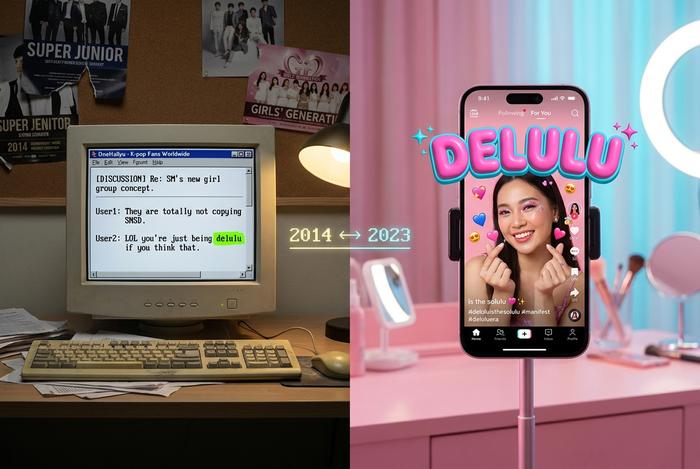
The earliest documented use is dated April 6, 2014. The forum was OneHallyu. A user posting as "tinkeobel" called fans who shipped two specific idols "delulu" because the evidence was a single backstage glance. Two months later, on June 19, 2014, "eyeofink" submitted the first Urban Dictionary entry. From there the word bounced around K-pop Twitter and Tumblr through the late 2010s, almost always as a put-down.
Fandom context matters. K-pop has an elaborate vocabulary for fans who get too involved. Bias is your favorite member. Bias wrecker is the member sneakily competing with your bias. Saseng is a stalker fan. Shipper is someone who imagines two members are dating. Delulu fit between shipper and saseng on the disapproval scale. It was the word fans used about other fans to mark a line they were careful not to cross themselves. Stan culture is heavily self-policed, and delulu was one of its most common sanctions.
For nearly nine years almost nothing happened outside of K-pop forums. The word stayed niche. Google Trends barely registered it. Search the phrase before 2022 and you mostly find K-pop subreddits arguing over whether one boy band member's compliment to another in a backstage video was, or was not, a delulu shipper-bait moment.
There is one linguistic note worth pulling out. Delulu is a textbook example of expressive reduplication: take an English word, chop it short, repeat the final syllable. Hubby from husband. Veggies from vegetables. Delulu from delusional. The pattern shows up everywhere in baby talk and pet names. That is part of why the word later proved so easy for TikTok to soften.
How Social Media Made Delulu a Slang Term
Late 2022. Something flipped.
On TikTok, mostly among young women, delulu started meaning something else. The disapproving tone got dropped. The fantasy half stayed. People began calling themselves delulu before going after a dream they did not really expect to achieve. "I'm being so delulu thinking I can run a half marathon next month, but watch me." That exact register, in millions of captions. Influencer accounts spread the new framing fast. Within a few months, the word was being used by users who had never spent five minutes in a K-pop forum.
Numbers caught up. Fortune covered delulu on July 18, 2023, citing more than 1.6 billion #delulu hashtag views and calling it a Gen Z career hack. By December 2023, Wikipedia put #delulu past 5 billion views. TikTok's own 2024 What's Next Trend Report named "delusional comfort" one of the defining moods of the year.
The catalyst was "delulu is the solulu." Five syllables. Roughly: delusion is the solution. It rode on top of looping audio clips, almost always a young woman walking through a romantic or career setback and announcing she would simply choose to believe things would work out. Merriam-Webster's editors explicitly call out this 2023 reframe in their slang entry, crediting it with shifting the term toward something like "audaciously self-confident."
Therapists picked it up almost immediately. Alison McKleroy, a psychotherapist quoted by TODAY.com, called being delulu "almost like a self-efficacy tool." A way of granting yourself permission to act before you fully believed the outcome. The framing tracked onto older self-help lineage: manifestation, fake it till you make it, positive thinking. Tone is what changed. Self-help books from 2005 sounded earnest. Delulu winks.
Some of this is just how TikTok works. The platform rewards posts where the speaker breaks the fourth wall, takes a self-aware position on her own behavior, and invites the audience to laugh with her instead of at her. That is the exact register delulu sits in. A user who calls herself delulu is not claiming to be deluded. She is flagging that she knows the bet is unrealistic and is making it anyway. The word stuck because it gave users a single tag for a posture the algorithm already favored.
Delulu Is the Solulu: The Catchphrase Decoded
"Delulu is the solulu" is the line that did most of the cultural work. It is also the line most likely to confuse anyone hearing it for the first time.
Solulu is delulu's invented twin. It is not a real word in any other context. Someone took the same playful suffix and stuck it on "solution" so the rhyme would land. Trululu, meaning "truth," followed the same recipe, though it is much less common. Delusionship, an unrelated coinage, refers to a one-sided imagined relationship that exists mostly in the head of one party.
The full catchphrase, "delulu is the solulu," compresses an entire self-help argument into five syllables: when you do not know whether you can do something, the only useful posture is to act as though you can. Albanese's variation, "delulu with no solulu," reverses the moral and means roughly "fantasy without a backup plan." That is what the Australian Prime Minister was accusing the opposition of: drifting through policy on hope alone.
Once you understand the suffix is doing all the work, the joke becomes structural rather than lexical. You can extend it indefinitely. Cuteness with rules.
Examples: How People Use Delulu in a Post or Text
Delulu rarely appears in formal writing outside of explainer articles like this one. It lives in captions, replies, and chat threads, almost always with a tone the surrounding context makes clear.
Concrete example sentences, sorted by where they tend to appear online:
| Context | Example sentence | What it implies |
|---|---|---|
| Dating | "He liked my Instagram post from 2019, I'm being so delulu but I think he's into me" | The speaker knows the evidence is thin; she is having fun anyway |
| Career | "Submitted my application for the role two levels above mine — full delulu mode activated" | Self-aware ambition; permission-granting |
| Fandom | "She really thinks Jungkook follows her account because of one liked photo, classic delulu" | Old pejorative use; mocking another fan |
| Friend banter | "Stop being delulu, he's not going to text you back" | Affectionate intervention |
| Self-talk caption | "Manifesting a beach house by 30 with no income strategy. Delulu is the solulu." | Comic self-knowledge plus aspirational pose |
Two patterns are worth noticing. First, the first-person uses ("I'm being delulu," "I'm full delulu") have a different texture from the third-person uses ("she is delulu"); the former is permission-granting, the latter is corrective. Second, the intensity dial varies. "A little delulu" is a soft self-tag. "Full delulu" or "delulu mode" leans into the joke. "Properly delulu" carries a hint of friendly concern.
The grammar is settled enough that Cambridge could codify it, which is part of what made the 2025 inclusion possible.
Delulu Becomes a Dictionary Term: The Timeline
The dictionary recognition timeline is short and busy.
| Date | Event |
|---|---|
| April 6, 2014 | First documented use, OneHallyu K-pop forum |
| June 19, 2014 | First Urban Dictionary entry submitted |
| Late 2022 | TikTok positive-reframe wave begins |
| July 18, 2023 | Fortune covers delulu as a Gen Z career trend |
| September 14, 2023 | Dictionary.com adds delulu to its slang dictionary |
| Late 2024 | Merriam-Webster adds delulu to its slang section |
| March 26, 2025 | Anthony Albanese uses "delulu with no solulu" in Parliament |
| August 18, 2025 | Cambridge Dictionary adds delulu in a 6,212-word batch with skibidi and tradwife |
| April 1, 2026 | Merriam-Webster's slang entry is updated, formalizing the dual definition |
Cambridge's August 2025 announcement specifically cited the way the word had crossed into political and journalistic use. It came alongside skibidi (a chaotic-energy adjective from a viral YouTube series) and tradwife (a content genre about traditional homemaking). Cambridge framed all three as evidence of how online culture is shaping mainstream English faster than print ever did, with new words crossing from niche communities into general dictionaries in three years rather than thirty.
A dictionary entry is usually where slang goes to die. Once a word is official, the cool kids tend to drop it. Delulu has so far defied that pattern, possibly because the dictionary inclusion itself became part of the joke; users posted screenshots of the Cambridge entry captioned "delulu is now academic, we won."
Delulu Culture: Manifestation, Main Character, Lucky Girl
Delulu does not stand alone. It is one term in a tightly clustered Gen Z vocabulary about choosing to believe things into existence.
Lucky girl syndrome, which trended on TikTok in early 2023, was the idea that simply repeating "everything works out for me" produces statistically improbable wins. Main character energy, slightly older, frames daily life as a film in which you are the protagonist and minor inconveniences are scenes you walk through. Soft launch life is the practice of low-key showcasing a relationship or job before committing publicly. Fake it till you make it, the older self-help formula, sits underneath all of these, and Euronews's November 2023 culture coverage of the trend put delulu directly in that lineage.
The user base is consistent across the cluster. Predominantly women aged roughly 16 to 30. Dating and career are the two contexts where the language is densest. Fortune's 2023 piece on workplace delulu profiled twenty-something workers who applied to roles they were unqualified for and credited the mindset for the interviews they got.
The cultural argument these terms make together is that pessimism about your own prospects is its own self-fulfilling prophecy, and that an exaggerated, knowingly silly optimism is a useful corrective. Delulu is the version of that argument with the most charm because it includes the word "delusional" in the slogan; the speaker is signaling she is not actually fooled.
Is Being Delulu Healthy? The Backlash, Briefly
Mental health professionals have started pushing back, gently.
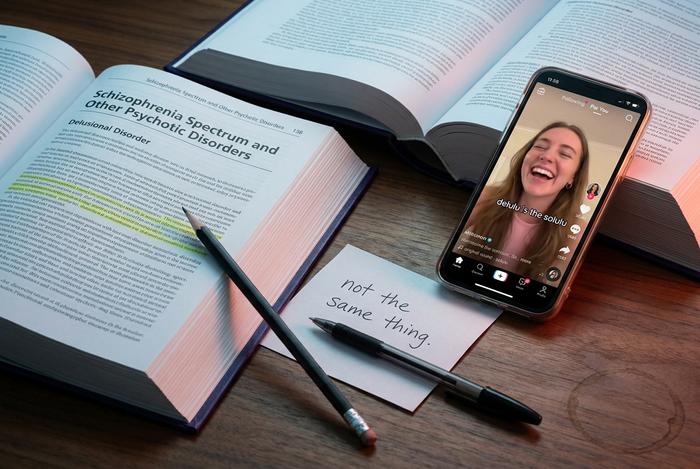
In Psychology Today on October 30, 2024, the licensed mental health counselor Anthony D. Smith argued that "delulu" trivializes clinical delusion in the same way casual use of "OCD" and "bipolar" has done over the last decade. Clinical delusion is a fixed, false belief that resists evidence and impairs functioning; choosing to feel optimistic about a job interview is something else. A February 2025 Psychology Today article paired delulu with defensive pessimism as twin examples of "harmful strategies," arguing both can mask avoidance.
Trauma-informed therapists raise a separate concern. For users with histories of dissociation or magical thinking, the line between productive delulu and self-gaslighting can be hard to see. Telling yourself "I am dating someone amazing" before any evidence supports the claim is delulu in TikTok's playful sense. Doing it after a partner has been consistently dismissive starts to look like denial.
Academic interest has followed. Researchers at Nanyang Technological University in Singapore published a study titled "'Delulu': A Study on Generation Z's Non-Clinical Delusion," and a January 2024 ResearchGate working paper called "Delulu Is Solulu: The Thin Line Between Manifesting and Being Delusional" makes essentially the same case. The polite consensus from clinicians is that delulu is fine as long as the speaker actually has access to reality testing — and worrying when she doesn't.
Delulu Meaning in 2026: Where the Word Goes Next
Most internet slang has a shelf life of about eighteen months. Delulu has run for more than three years in its mainstream form, has survived dictionary inclusion, and has been used by a head of government in a sitting parliament. None of those normally happen to a TikTok word.
The honest forecast is that delulu has already crossed from slang into general English, the way "selfie" did a decade earlier. It will keep being used by Gen Z for a while, then will become a slightly dated word that everyone still understands. The successor terms — solulu, trululu, delusionship — are likely to fade faster than the original. What stays is the underlying posture: knowingly performed optimism, with a wink. That posture, more than the word, is what 2023 to 2025 actually exported.