
Ethereum Classic (ETC): Origin, 2026 State, and the Tech

June 17, 2016. Someone exploited a reentrancy bug in The DAO's `splitDAO` function. They walked off with roughly 3.6 million ETH. About $50-70 million at the prices that morning. Thirty-three days later Ethereum hard-forked at block 1,920,000 to reverse the theft. A minority refused. The chain those holdouts kept mining became Ethereum Classic.
Almost a decade later, that minority chain is still here. The etc price in May 2026 hovers near $9.39. Market cap around $1.47 billion. Hashrate sits in the 180-210 TH/s band, ranked roughly #50. Like Bitcoin and other open-source cryptocurrencies, ETC is still a proof of work blockchain. Unlike BTC though, it is also a smart contract platform that lets developers build and deploy decentralized applications. The chain held onto that role even after Ethereum's 2022 Merge to proof-of-stake. The "code is law" principle that drove the original split still defines it.
This is a tour of how ETC came to be, how it works in 2026, the 51% attacks, what The Merge did to its hashrate, and the honest investment lens.
The DAO hack and the fork that created Ethereum Classic
The DAO launched April 30, 2016. A leaderless investment vehicle written as an Ethereum smart contract. A decentralized autonomous organization in the literal sense. The crowdsale ran through May 28. It raised about 12.7 million ETH (around $150 million). One of the largest crowdfunds in history at that moment.
The attacker found the bug three weeks later. The function let a caller withdraw their stake recursively before the contract updated its balance. A single deposit could be drained dozens of times. Around 3.6 million ETH — about 5% of all ether in existence — flowed into a child DAO under the attacker's control. Frozen for 28 days by the contract's own withdrawal delay. So the community had a month to argue.
A soft fork was tried and dropped. Researchers spotted a denial-of-service vector. Plan B was rougher. A hard fork that would rewrite the chain's history to refund DAO investors. To gauge sentiment, the community ran a "carbon vote" on-chain. About 5.5% of all ether voted. Of that, 87% (roughly 3,964,516 ETH) backed the fork. On July 20, 2016, at block 1,920,000, the hard fork went live and redirected the stolen funds to a recovery contract.
A vocal minority objected on philosophical grounds. The whole point of a smart-contract platform, they argued, is that the rules of the contract are the rules of the system, bugs and all. Rolling them back broke the immutability promise that justified the whole design in the first place. To this group, refunding DAO investors meant the protocol was no longer a protocol — it was a gentleman's agreement that could be edited. Some of those people kept mining the unaltered chain. Within weeks exchanges had listed it as a separate asset, and the original Ethereum blockchain became known as Ethereum Classic. The forked majority chain, larger and backed by the Ethereum Foundation and Vitalik Buterin, kept the "Ethereum" name. Two separate blockchains, common origin, opposite answers to the same question.
How Ethereum Classic works in 2026
Under the hood ETC is what Ethereum used to be. An EVM-compatible smart contract platform that runs smart contracts the way the original Ethereum platform did. Blocks under proof-of-work on a 13-second target. Same codebase as the original Ethereum network from July 2015. The Ethereum Classic blockchain was created in 2016 as a continuation of that chain. The split with the chain that kept the Ethereum name comes down to two things only: monetary policy and consensus mechanism. ETC's native token (Ethereum Classic's native asset) is the network's unit of account for transaction fees. Ether is created as a reward to network nodes for a process known as proof-of-work mining. Nothing exotic.
The mining algorithm is Etchash. It arrived in the Thanos hard fork. Block 11,700,000. November 28, 2020. Etchash forks Ethash with a longer epoch length. The directed acyclic graph stays compact, around 2.74 GB rather than Ethash's 4 GB. The point: older 3-4 GB GPUs could keep mining. Politics, not just engineering. ETC did not want to lose its GPU base. Chasing peak efficiency would have pushed those rigs off the chain.
Block rewards in May 2026: 2.048 ETC. The schedule sits in ECIP-1017. The 5M20 rule. Every 5,000,000 blocks (about two and a half years) the reward drops 20%. Reading down the history: 5 ETC at launch. 4 from December 2017. 3.2 from March 2020. 2.56 from August 2022. And 2.048 since May 31, 2024 (block 20,000,001). The next cut to 1.6384 lands at block 25,000,000, expected late 2026. The whole structure caps supply at roughly 210.7 million ETC.
Ethereum's monetary policy is the inverse story. Validators issue ether with no hard cap. The EIP-1559 base-fee burn from August 2021 even makes supply mildly deflationary when chain usage runs hot. ETC kept what was already there. The cap. Proof-of-work. The tokenomics described in the original Ethereum yellow paper.
The Spiral hard fork landed January 31, 2024, at block 19,250,000. Shanghai EVM compatibility. So Ethereum dApps port across with only minor edits, and ETC still allows developers to build and deploy decentralized apps using the same toolchain. The development community is small. The decentralized computing platform that ETC offers tracks Ethereum's EVM features within one upgrade cycle, even if it does not host the largest smart contract ecosystem.
The 51% attacks and the MESS defense
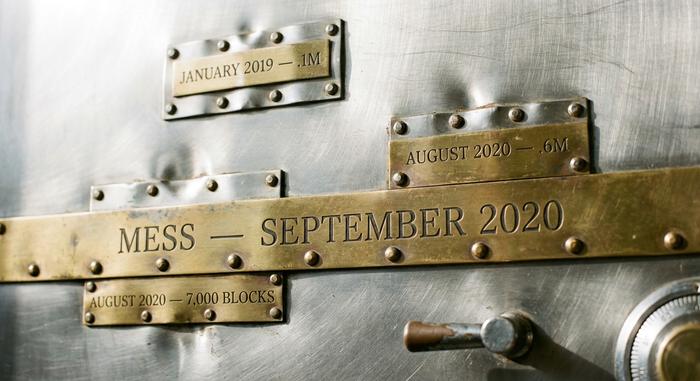
Ethereum Classic's hashrate has, at several historical points, been low enough to attack. From January 5 to 7, 2019, a deep chain reorg double-spent about 219,500 ETC (~$1.1 million) across 23 events. Coinbase paused on-chain ETC deposits and withdrew its perspective in a public post-mortem. The attacker rented hashpower, mined a longer parallel chain in private, then released it.
August 2020 was worse. Three separate 51% attacks hit ETC in a single month: $5.6 million double-spent on August 1, $1.68 million on August 6, and a structural reorg of 7,000+ blocks reported on August 29. The attacks bottomed the network's reputation and triggered a coordinated response from the ETC Cooperative.
That response was MESS, or Modified Exponential Subjective Scoring, deployed via ECIP-1100 in September 2020. MESS is a chain-finality heuristic, originally proposed by Vitalik Buterin and adapted for ETC by Isaac Ardis at IOHK. It makes deep reorgs exponentially expensive: rewriting recent history is cheap, but the cost of overwriting older blocks scales much faster than the cost of producing them honestly. Two months later the Thanos hard fork shipped Etchash and shrank the DAG so independent third-party miners with smaller GPUs could keep adding hashrate to the network rather than abandoning it.
Since MESS landed, no successful 51% attack has been reported on the ETC blockchain. That is not the same as saying one is impossible. Hashpower remains rentable on NiceHash-style markets. But the structural cost has gone up, and the practical track record is now five years clean.
After The Merge: ETC as the proof-of-work survivor
September 15, 2022. The Merge. Ethereum stopped being a proof-of-work chain overnight. The biggest GPU-mining market in crypto lost its main customer. Some miners shrugged and switched off. Many of them looked for a new home.
The next 24 hours on Ethereum Classic were dramatic. ETC's hashrate had been chugging along at maybe 60-70 TH/s for years. It jumped to about 265 TH/s in a single day. By the end of the week it touched 311 TH/s. Ravencoin saw a similar bump. So did Ergo. So did Kaspa and Alephium, eventually. In May 2026 the dust has settled and ETC has cooled to roughly 180-210 TH/s. The hardware that could not pay its electricity bill went quiet.
The cultural pitch shifted at the same time. Once Ethereum stopped mining, ETC became the only big EVM chain still running on hash power. Believers say this is a return to what Ethereum was supposed to be. Skeptics say it is a clever way to keep an aging GPU rig warm. Both reads are partly right. I lean toward the second.
| Dimension | Ethereum Classic (ETC) | Ethereum (ETH) |
|---|---|---|
| Consensus | Proof-of-work (Etchash) | Proof-of-stake (since Sept 2022) |
| Supply policy | Capped ~210.7M; 5M20 reductions | No hard cap; net deflation under high use |
| Block reward | 2.048 ETC (Era 5) | ~0 to miners; validators earn ~3-4% APR |
| EVM standard | Up to Shanghai (Spiral fork) | Latest (Dencun, Pectra and onward) |
| Smart-contract ecosystem | Minimal DeFi, few dApps | Dominant L1 for DeFi, NFTs, L2s |
| Market cap (May 2026) | ~$1.47B | several hundred billion USD |
| Energy footprint | High (PoW) | ~99.9% lower than pre-Merge |
Ethereum and Ethereum Classic share a common code base for their virtual machine and a common origin for their early history; they diverge on almost everything that matters now. The transition to proof-of-stake on the new chain split the two communities further. Ethereum Classic miners stayed on PoW; the broader Ethereum community moved to validators. Two separate blockchains, one virtual currency each.
Ethereum Classic market state in May 2026
In May 2026 the price of Ethereum Classic sits near $9.39 and the market cap is around $1.47 billion. The Ethereum Classic to USD ratio is the price today on most live charts. Daily ETC trading volume runs about $80 million. You can buy Ethereum Classic on Coinbase, Kraken, Binance, Bitstamp, Bybit, OKX — basically every major venue, so liquidity is not the constraint. Ethereum Classic markets are deep enough for retail and small institutional flow.
The all-time high was $176.16 on May 6, 2021, set during that wild 2021 altcoin run. Today's USD price is about 94% below that peak. Circulating supply is 156.6 million ETC out of a hard 210.7 million cap on this cryptocurrency. Roughly three quarters of the eventual maximum is already in float, and the remaining quarter drips out across decades on the 5M20 schedule. Ethereum Classic statistics aggregators publish the supply curve in real time.
Mining margins have been tight since the May 2024 fifthening. The network competes with Kaspa, Alephium, and Ergo for the same pool of idle hash. The etc price to USD ratio is the binding constraint on margin. CoinMarketCap, CoinGecko, and TradingView publish live charts and live price feeds; that is where you read the market value of this blockchain-based distributed asset in real time. To buy ETC, pick any listed exchange. Wallets such as MetaMask support the network out of the box. To stay updated with the latest, dashboards and the Ethereum Classic community on X and Reddit are the freshest sources. Some merchants accept ETC as worth of ether — they treat the chain as a layer 1 settlement option.
Hard fork timeline since the 2016 split
| Upgrade | Date | Block | Brings |
|---|---|---|---|
| Atlantis | Sept 2019 | 8,772,000 | EVM compatibility (Spurious Dragon) |
| Agharta | Jan 2020 | – | Constantinople features |
| Phoenix | Jun 2020 | – | Istanbul EVM |
| Thanos | Nov 28, 2020 | 11,700,000 | Etchash mining algorithm |
| Magneto | Jul 23, 2021 | 13,189,133 | Berlin EVM |
| Mystique | Feb 12, 2022 | 14,525,000 | London-style EVM (no EIP-1559 burn) |
| Spiral | Feb 4, 2024 | 19,250,000 | Shanghai EVM features |
The cadence has been roughly one fork every 12-18 months since 2019, and each upgrade has tried to track Ethereum's EVM features without copying its monetary policy or its consensus pivot. The pattern is intentional: Ethereum Classic stays compatible enough that developers can deploy familiar code, but doesn't import the EIP-1559 base-fee burn or the proof-of-stake transition that would compromise the philosophical core of the project.

Risks, criticism, and the honest ETC bet
The 51% history is real even with MESS holding for five years. Renting hashpower from NiceHash-style markets is still theoretically possible. ETC's network hashrate is small enough that a determined attacker with deep pockets and short access to large compute could still try, particularly if the price ever falls far enough that defending hashrate stops paying for itself.
The dev surface is small. ETC Cooperative coordinates upgrades and the Core-Geth implementation, but there is no DeFi flywheel here. No rollup ecosystem. No production L2s. Ethereum Classic is just not where stablecoins or AMMs live. And no spot ETF has been approved for ETC, in contrast to Ethereum's spot ETF approval in July 2024. The decentralize-the-original-Ethereum angle is what motivates holders, not transaction-fee revenue or DeFi yield.
Treat the asset honestly. ETC is an ideological position dressed up as a smart contract platform: a proof-of-work blockchain that maintains the original Ethereum ledger and validates computations performed on Ethereum's virtual machine, against a much larger sibling chain that long since moved on. Plisio's payment gateway lists ETC alongside major assets, giving the chain real-world checkout utility for merchants who want to accept it. That small but tangible role is part of what keeps the network economically alive.
The bottom line on Ethereum Classic in 2026
If you came looking for a smart-contract competitor to Ethereum, you will not find it on ETC. If you came looking for a proof-of-work blockchain that runs Ethereum-style smart contracts and treats its monetary policy and chain history as constitutional, that is exactly what Ethereum Classic is. The same trade-off that produced the chain in 2016 is still the trade-off that defines it in 2026.
So the question worth asking is not whether ETC will catch ETH on ecosystem metrics; it won't. The real question is whether the existence of an immutable, capped, EVM-compatible proof-of-work survivor is worth something to you. For a portion of the crypto world, the answer is yes, and that answer is what the network's $1.47 billion market value still prices in.



