Base Chain: Coinbase’s Ethereum L2 for a Global Blockchain Economy
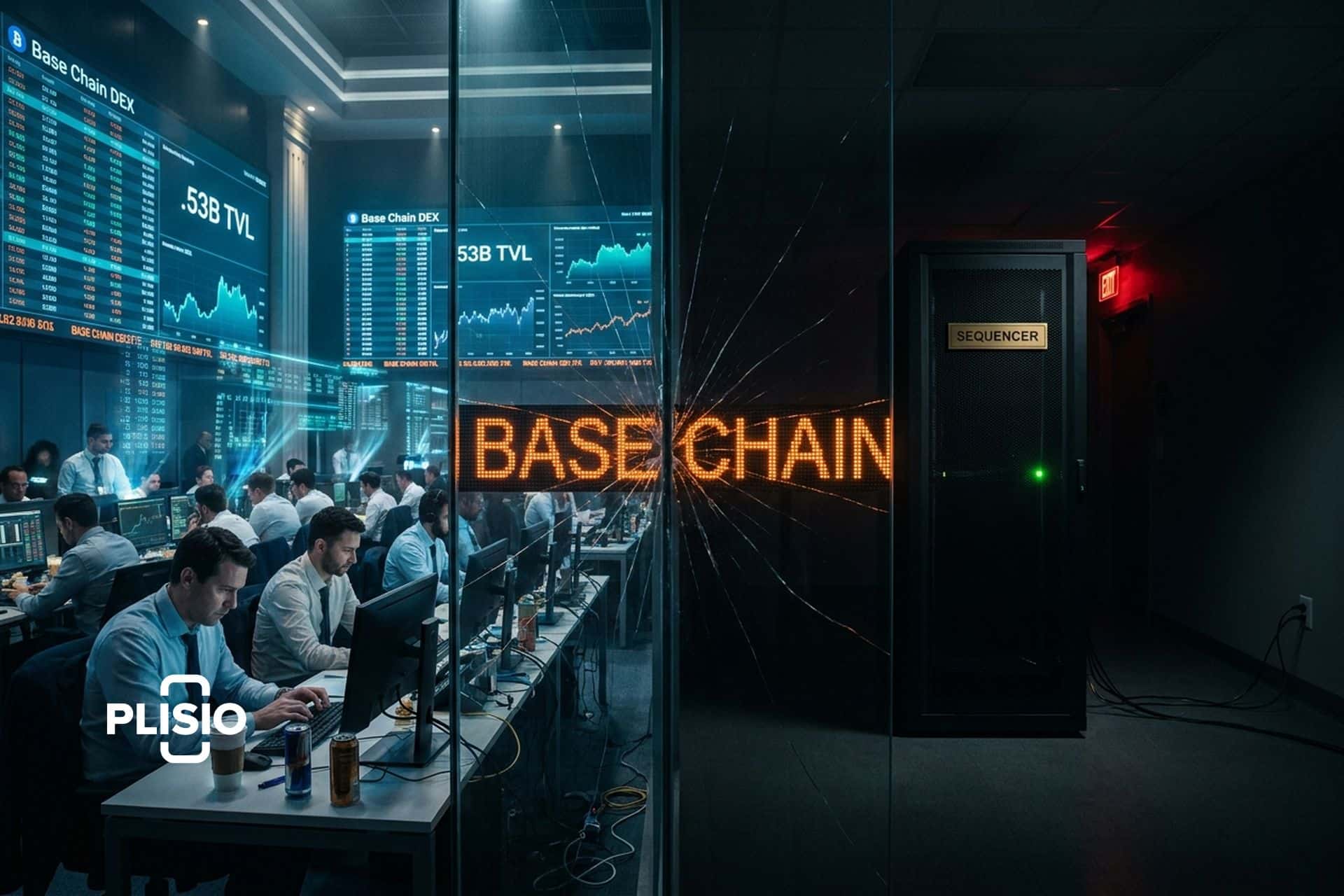
Six billion transactions. $4.53 billion locked in DeFi protocols. 46% of the entire Layer 2 market by TVL, according to DeFiLlama. Those are Base Chain's numbers as of April 2026, less than three years after Coinbase flipped the switch on its Ethereum L2.
Here is what happened. Coinbase took the OP Stack, bolted it to its 110-million-user exchange, and created an L2 that is cheaper and faster than anything else in the space right now. In 2025 alone, Base generated $75.4 million in revenue (62% of all L2 revenue, per RootData). No native token. No airdrop bait. Just usage.
But cheap gas and a big name do not make a chain safe. Base runs on a single Coinbase-controlled sequencer, upgrades happen with zero time delay, and the crypto community has very real questions about whether this setup can serve as infrastructure for a global blockchain economy. Below is everything you need to explore before deciding whether Base Chain deserves your attention, your capital, or your code.
How Base Processes Transactions on the OP Stack
Base Chain is an Ethereum Layer 2 network, which means it does not run its own independent consensus. Instead, it borrows security from Ethereum's mainnet while handling the heavy lifting of transaction processing off-chain. The Base network is secured by Ethereum, and Coinbase introduced Base in early 2023 and launched it on mainnet that August.
The technical backbone is Optimism's OP Stack, a modular framework that enables anyone to build rollup chains. Base uses optimistic rollups, a system where transactions are bundled together off-chain and submitted to Ethereum L1 as compressed data. The key word here is "optimistic" because the system assumes all transactions are valid unless someone proves otherwise through a fraud proof.
Here is how a transaction actually moves through Base:
1. A user submits a transaction (a swap, a transfer, a contract call)
2. The sequencer, operated by Coinbase, orders and executes the transaction
3. Transactions are batched together and compressed using zlib
4. The compressed batch is posted to Ethereum L1 using blob data
5. A 3.5-day challenge window opens for anyone to submit a fraud proof
6. If no challenge comes, the batch is finalized
The sequencer is the most controversial piece. Right now, the Base Chain network operates a single centralized sequencer. That means Coinbase is the only entity deciding which transactions get included and in what order. The practical result: 2-second block times and real-time TPS around 112 transactions per second, with a recorded maximum of 1,988 TPS. The Nakamoto coefficient is 1, meaning one entity controls the network's liveness.
For data availability, Base posts transaction data to Ethereum L1 using blobs (introduced by EIP-4844) and fallback calldata. The network pushes roughly 1.54 GiB of data daily to Ethereum, at an annual operating cost of about $1.11 million.
| Metric | Base |
|---|---|
| Block time | 2 seconds |
| Real-time TPS | ~112 |
| Max recorded TPS | 1,988 |
| Max theoretical TPS | 3,571 |
| Average fee | $0.013 |
| Data posted daily | 1.54 GiB |
| Annual operating cost | $1.11M |
| Finality time | ~13 minutes |
In March 2026, Base Chain announced a shift away from the Optimism Superchain toward an independent upgrade governance model. The new plan targets six hard forks per year (double the previous pace) and consolidates all code into a single `base/base` repository. The goal: one developer should be able to understand the entire protocol spec.
Base App and the Coinbase Exchange Ecosystem
What separates Base Chain from most L2s is its direct connection to Coinbase, the largest US-based crypto exchange with over 110 million verified users. This is not just branding. It is infrastructure, developed by Coinbase from the ground up through a partnership with Optimism.
The Base app (formerly Coinbase Wallet) has over 10 million downloads on Google Play alone, with a 4.1-star rating across 133,000 reviews. Through the wallet, users can trade tokens, send USDC globally at zero cost, earn up to 3.35% APY on USDC holdings, and access dApps directly. The app supports encrypted messaging, group chats, and even AI agent interactions.
For anyone with a Coinbase account, onboarding to Base is almost frictionless. Easy fiat onramps enable you to buy ETH or USDC on Coinbase and bridge it to the Base network in a few clicks. No separate wallet setup required, no seed phrase anxiety for new users. This is Coinbase's "everything app" vision: a secure, seamless interface for trading, storing, earning, and spending crypto.
The exchange integration matters for liquidity. When Coinbase lists a token, the Base Chain ecosystem benefits from the traffic. When Base dApps gain users, Coinbase benefits from the fees. The two feed each other, and that loop is one reason Base's on-chain activity has grown so fast.
Base does not have its own native network token. It will not issue a new network token. The network uses ETH for gas fees, which keeps things simple but also means there is no governance token for decentralized decision-making. Coinbase has stated this explicitly and repeatedly.
DeFi, NFTs, and How to Earn on Base
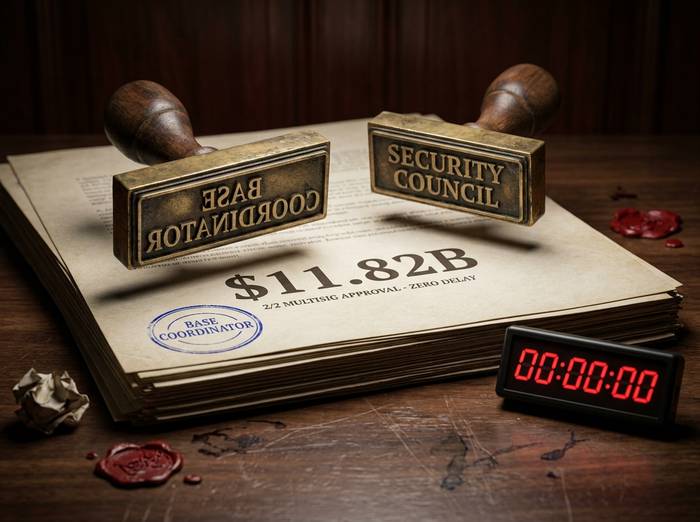
The DeFi ecosystem on Base Chain has matured rapidly. According to DeFiLlama data from April 2026, Base holds $4.53 billion in DeFi TVL, making it the number one Layer 2 by far. That is 2.3 times larger than Arbitrum at $1.97 billion. L2Beat's broader "total value secured" metric puts the figure even higher at $11.82 billion.
The biggest protocol on Base is not a DEX. It is Morpho V1, a lending optimizer with $2.52 billion in TVL. Morpho's growth on Base is hard to overstate: up 1,906% in 2025, from $48.2 million to $966.4 million. Roughly 90% of Morpho loans flow through Coinbase, according to RootData. Aave V3 sits second in lending with $755.8 million.
For trading, Aerodrome dominates. This ve(3,3) liquidity protocol commands 59.5% of all decentralized trading volume on Base. PancakeSwap V3 and Uniswap V3 split most of the remaining volume.
| Protocol | Category | TVL on Base |
|---|---|---|
| Morpho V1 | Lending | $2,522.8M |
| Aave V3 | Lending | $755.8M |
| Aerodrome (combined) | DEX | $347.0M |
| Uniswap V3 | DEX | $266.7M |
| Moonwell Lending | Lending | $44.5M |
Total ecosystem app revenue across Base protocols reached $369.9 million in 2025. Aerodrome alone contributed $160.5 million, roughly 43% of the total.
Beyond DeFi, Base supports NFT marketplaces (OpenSea reduced minting costs by moving to Base), prediction markets (Limitless Exchange surpassed $550 million in trading volume), AI agent platforms (Virtuals Protocol generated $43.2 million in revenue), and onchain social apps like Farcaster and Zora Coins, which paid out $6.1 million to creators. Blackbird, a restaurant loyalty platform, also runs on Base.
The low fee environment is the common thread. At an average transaction cost of $0.013, Base makes micro-transactions viable in a way that Ethereum mainnet cannot. A token swap on Base costs roughly $0.001 compared to $5.48 on Ethereum L1, a difference of about 5,480 times, according to PayRam and CoinLaw data. Part of the reason: Coinbase subsidizes blob posting costs, running the sequencer at approximately $200,000 per month loss that is not passed to users.
Earning opportunities on Base go beyond trading. Users can provide liquidity on Aerodrome and earn reward emissions. USDC holders earn yield just by holding through Coinbase. Staking and farming strategies that would be eaten alive by gas fees on L1 actually generate returns on Base.
What Developers Are Building on Base Chain
If you can write Solidity, you can ship on Base Chain. Full EVM compatibility, no code changes needed. Developers leverage Hardhat, Foundry, Remix, Wagmi, Web3.js. The doc pages on base.org walk through contract deployment, bridging asset transfers, and testnet setup. Nothing exotic.
891 developers are actively contributing across 70 repositories, per Chainspect. They have pushed 14,007 commits total, and the `base/base` repository has nearly 78,000 stars on GitHub. Coinbase adds to this with developer grants, the Coinbase Wallet SDK, and Commerce APIs for merchants who want to accept crypto.
What is actually getting built? The latest projects on Base Chain span DeFi (AMMs, lending, perpetual DEXs), onchain social (Farcaster, Zora), AI agents (Virtuals, aixbt), and prediction markets (Limitless). The composability of the EVM means each new protocol can plug into existing ones. That compounds fast.
The move to an independent tech stack in 2026 makes Base Chain even more attractive for developers who want faster iteration. Six hard forks per year means protocol improvements ship in weeks. Not months. Coinbase is betting that speed of deployment is a tool for winning the developer race against Arbitrum and Optimism.
Base vs Other L2s: Scalability and Fees Compared
Base Chain does not exist in a vacuum. It competes directly with Arbitrum, Optimism, zkSync, and several other L2 solutions for users, developers, and capital.
| Metric | Base | Arbitrum | Optimism | zkSync Era |
|---|---|---|---|---|
| Technology | Optimistic Rollup (OP Stack) | Optimistic Rollup (Nitro) | Optimistic Rollup (OP Stack) | ZK Rollup |
| TVL (DeFi) | $4.53B | $1.97B | ~$0.7B | ~$0.1B |
| Total value secured | $11.82B | $13.7B | $7.1B | $0.6B |
| Real-time TPS | ~112 | ~26 | ~8 | ~15 |
| Avg swap fee | ~$0.001 | ~$0.008 | ~$0.012 | N/A |
| 24h transactions | 8.66M | 4.17M | ~1M | ~0.5M |
| Native token | No (uses ETH) | ARB | OP | ZK |
| Sequencer | Centralized (Coinbase) | Centralized (Offchain Labs) | Centralized (OP Foundation) | Centralized (Matter Labs) |
| Stage (L2Beat) | Stage 1 | Stage 1 | Stage 1 | Stage 0 |
| Backed by | Coinbase (110M+ users) | Offchain Labs | Optimism Foundation | Matter Labs |
| Launch date | Aug 2023 | Aug 2022 | Mar 2022 | Mar 2023 |
A few things stand out. Base leads in raw throughput (112 TPS vs Arbitrum's 26), processes more than double Arbitrum's daily transactions (8.66 million vs 4.17 million), and charges the lowest fees of any major L2. It also has no native token, which means no airdrop-driven TVL inflation. The liquidity on Base is there because people actually use it, not because they are farming a token.
The Coinbase backing cuts both ways. 110 million potential users is an advantage no other L2 has. But the centralization concerns are louder for Base precisely because a single publicly traded company controls the sequencer, proposes upgrades with zero delay, and profits from the chain's activity.
Arbitrum has a broader DeFi ecosystem with more established protocols. Optimism shares the same OP Stack technology as Base but has a governance token and a more decentralized approach. zkSync offers the theoretical security advantage of zero-knowledge proofs but has struggled with adoption.
Base's strongest argument is practical: it is the cheapest L2 to use and the easiest to onboard for users who already have a Coinbase account. For a user in Lagos or Jakarta who wants to send $20 in USDC, Base is currently the most frictionless option.
Security, Decentralization, and Known Risks
Base Chain is classified as a Stage 1 rollup by L2Beat, which means it passes the "walkaway test." If the operators disappeared, users could still securely withdraw their funds. That is the minimum bar for a serious L2, and Base clears it.
But serious risks remain.
The biggest vulnerability is the upgrade mechanism. Base uses a 2-of-2 multisig (Base Coordinator + Security Council) to approve contract upgrades with zero time delay. That means if both signers agree, they can change the smart contracts that hold billions of dollars instantly. No waiting period. No community review window. L2Beat flags this explicitly: "Funds can be stolen if a contract receives a malicious code upgrade."
The centralized sequencer creates a second risk vector. Coinbase operates the only sequencer, which means it can theoretically extract MEV (maximal extractable value) by frontrunning or reordering transactions. Users can force transactions through Ethereum L1 if the sequencer censors them, but only with a 12-hour delay.
There have been operational incidents. On August 5, 2025, Base experienced a 33-minute block production halt. The network recovered without fund losses, but the incident highlighted the single-point-of-failure problem with a centralized sequencer. A second outage occurred within the same year. In April 2025, the KiloEx oracle attack drained roughly $7 million across multiple chains including Base, though this was an application-level exploit rather than a flaw in Base itself.
The privacy angle is worth noting. Because Base operates securely within Coinbase's infrastructure, some users worry about transaction monitoring and potential address linking to Coinbase KYC data. Coinbase has not confirmed or denied whether it cross-references Base activity with exchange accounts.
On the regulatory front, the SEC dismissed its case against Coinbase with prejudice in February 2025, meaning it cannot be refiled. This gives Coinbase a regulatory clarity advantage that no other major L2 operator enjoys. Coinbase also serves as custodian for nearly all US-based spot crypto ETFs, further cementing its institutional standing.
Base has committed to progressively decentralize. It achieved Stage 1 rollup status in April 2025 with a security council of 10 independent global entities. The 2026 roadmap includes adding an independent signer to the Security Council, implementing multi-proof systems for faster withdrawals, and advancing toward Stage 2 classification. Fraud proofs use an interactive bisection mechanism with 73 depth levels and a cumulative stake requirement of 691.43 ETH, making spurious challenges expensive.
Latest On-Chain Activity and Growth Metrics
Go check BaseScan yourself. You will find 8.66 million operations on a typical day. On the wildest day so far, February 5, 2026, the network processed 19.6 million transactions. Total since launch? Over 6.11 billion. Somewhere between 378,000 and 663,000 wallets show up daily. Quieter weeks skew toward the bottom. Meme coin season pushes the top.
Now follow the money. This part is wild. In December 2023 Base pulled in $2.5 million. That was 5% of what all L2s combined made that month. One year later, December 2024: $14.7 million and a 63% market share. For the full 2025 calendar year, RootData puts the total at $75.4 million, which is 62% of all L2 revenue on the planet. Coinbase buries this in its SEC filings as "other transaction revenue." The Q4 2025 gross from the sequencer alone was around $19 million.
What about real people using it? DEX volume on Base Chain lands near $840 million every 24 hours. USDC adoption tells you more: 83,400 daily USDC users as of November 2025. That is a 233% increase from the same month in 2024, per RootData. The Base app itself has 148,400 sign-ups but only 10,500 monthly actives. Room to grow there, obviously.
So Base Chain is number one among L2s for TVL, transactions, and revenue. Will it stay there? That comes down to Coinbase converting even a fraction of its 110 million verified users into actual onchain participants. And to the market cooperating. Neither is certain.
How Base Supports a Global Onchain Economy
Coinbase's stated vision for Base is ambitious: bring a billion users onchain and build the infrastructure for a global economy that runs on open, permissionless rails.
This is not just marketing. The practical building blocks are already in place. Zero-cost USDC transfers on Base mean a freelancer in Nairobi can receive payment from a client in New York without touching a bank, a wire service, or a 3-5% remittance fee. The Coinbase Wallet's easy fiat onramps connect Base to local payment methods across dozens of countries.
The interoperable chains model means Base is not trying to be the only chain anyone ever uses. Through bridging and cross-chain messaging, assets and data can move between Base and other networks. The Superchain vision (which Base was part of before its March 2026 departure) aimed at creating a network of interoperable L2s sharing the same security model.
Base is also designed to be open to anyone. There is no token to buy for governance access. There is no exclusive developer program. Smart contract deployment is permissionless and costs fractions of a cent. This low-cost, user-friendly, modular design is what Coinbase means by "big features and small fees."
There is also the token question. In September 2025, Jesse Pollak (Base lead) confirmed that the team is exploring a network token. JPMorgan estimated a potential Base token at $12 to $34 billion in valuation. If it happens, it would be the largest token launch ever tied to a publicly traded US company. No confirmed tokenomics, distribution method, or launch date exist yet.
The question that hangs over all of this is decentralization. Can Base Chain, operated by a single company with a centralized sequencer and zero-delay upgrades, genuinely serve as infrastructure for a global economy? In practice, Coinbase continues to operate and commit to decentralization milestones. The crypto community remains skeptical but keeps building on Base Chain anyway, because the fees are low, the users are real, and the tooling works.