Hotpot AI Review: Inside Hotpot.ai’s Art Generation Tools
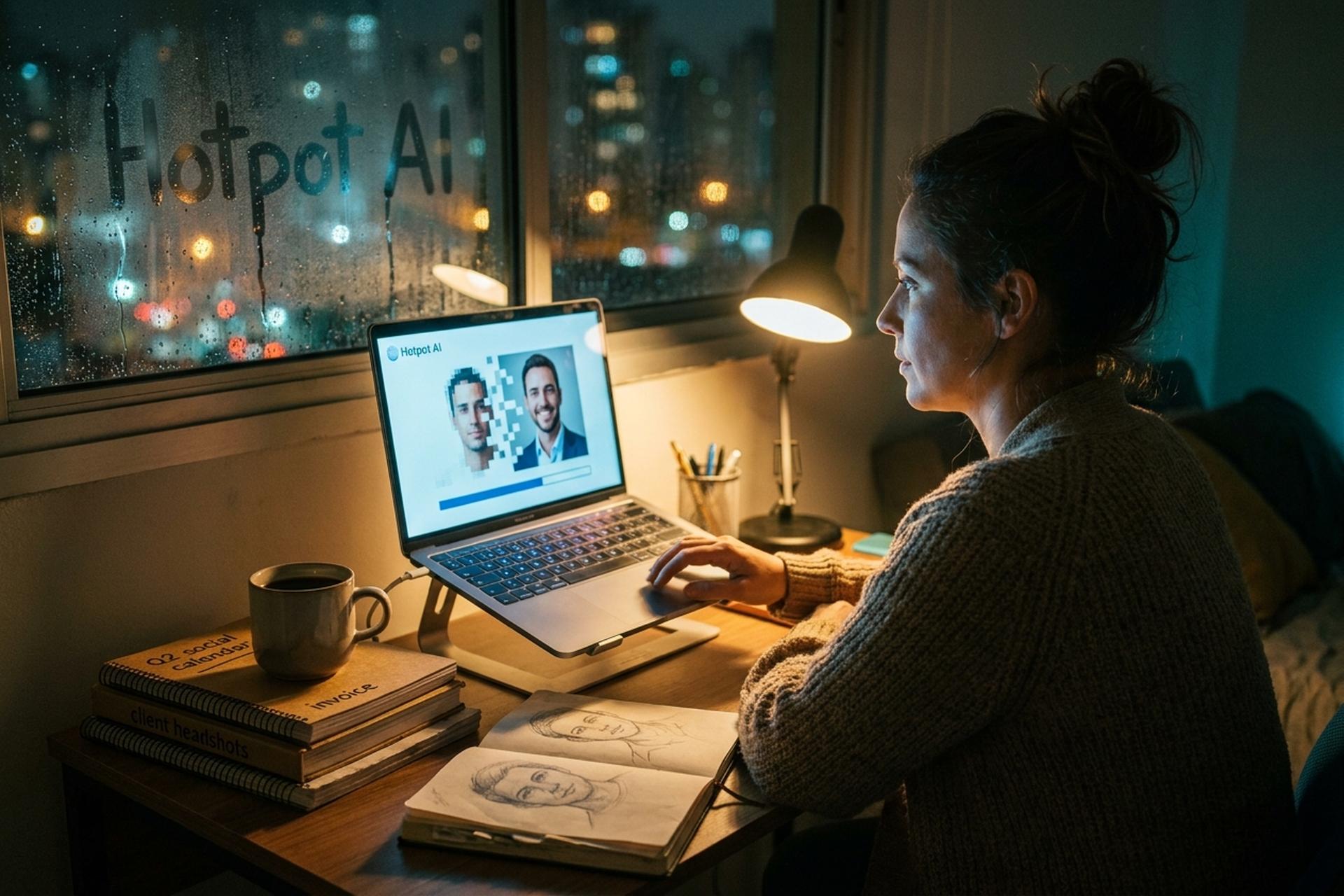
A small graphic design studio in São Paulo I spoke with last March used to spend three afternoons every month producing Instagram covers, ad headers, and headshots for a real-estate client. Their bill: about $900 in studio time. This year they spend roughly forty minutes a week. The work moves through a few open browser tabs, one of which is Hotpot AI. The output is rougher than what a senior designer would deliver. The client does not seem to mind. That trade is the entire story of why platforms like Hotpot exist, and why anyone trying to keep a creative budget under control should know what they actually do.
This review walks through every major piece of Hotpot AI. What each tool is good for. Where it falls short. What the credit-based pricing really costs. And how it stacks up against Midjourney, Canva, DALL-E, and Stable Diffusion in 2026. The platform sells the kind of creativity and productivity boost that used to require a small design team. The AI technology behind it is positioned to spark creativity, not replace human judgment. We will also look at the parts most other reviews skip: the regulatory deadline coming on 2 August 2026, the consumer-trust data that should worry anyone publishing AI imagery, and the user-traffic curve that says something important about Hotpot's place in the market.
What Is Hotpot AI? Exploring Hotpot's Origins
Hotpot AI, branded as Hotpot.ai, is a web-based platform that bundles dozens of small artificial intelligence utilities into one credit-based subscription. The pitch is simple. Text-to-image art generation. AI headshots. Image editing. Photo upscaling, background removal, image colorization, photo restoration. Social-media templates, app icons, plus a long list of smaller AI-powered tools, all inside a single account. Hotpot AI offers most of these as separate URLs that share one credit balance, closer to a portal than a single product. It was founded by Clarence Hu under parent company Panabee, LLC, with Crunchbase listing 2019 as the founding year. Hu previously launched Panabee as a domain-name suggestion tool, which is why the brand naming reads more "indie product" than "venture-funded AI lab."
Most reviews online repeat a story that names a different founder. That is wrong. Mickey Friedman runs Flair AI, a separate product. Hotpot is Hu and Panabee.
The platform sits in the middle of the AI-tool market. It is not the model lab that Midjourney is. It is not the design suite that Canva is. It is closer to a Swiss Army knife: a collection of small, focused features sold as one product. That positioning matters because it explains both the appeal and the fragility. SMB users like the breadth. The risk is that every feature on offer also exists in three other products, often free or cheaper.
The category around it is moving fast. The global AI image-generator market is projected to grow from USD 484 million in 2026 to USD 1.75 billion by 2034, a compound annual growth rate of 17.4%, according to Fortune Business Insights. Broader generative-AI estimates run higher: Grand View Research pegs the total generative-AI market at USD 22.21 billion in 2025 with a forecast CAGR of 40.8% through 2033. North America accounted for 40.34% of the AI image-generator market in 2025. Hotpot is one of hundreds of small players inside that figure.
Traffic data tells the next part of the story. Similarweb shows Hotpot.ai at roughly 305,000 monthly visits in March 2026, down 9% month over month. Semrush had it at 523,000 visits in October 2025, down nearly 12% from September. The trend is gentle but real. The market is consolidating around a handful of very large platforms, and mid-tier toolkits are losing share to bundled offerings inside Canva, Adobe, and ChatGPT.
Inside the Hotpot AI Image Generator and Models
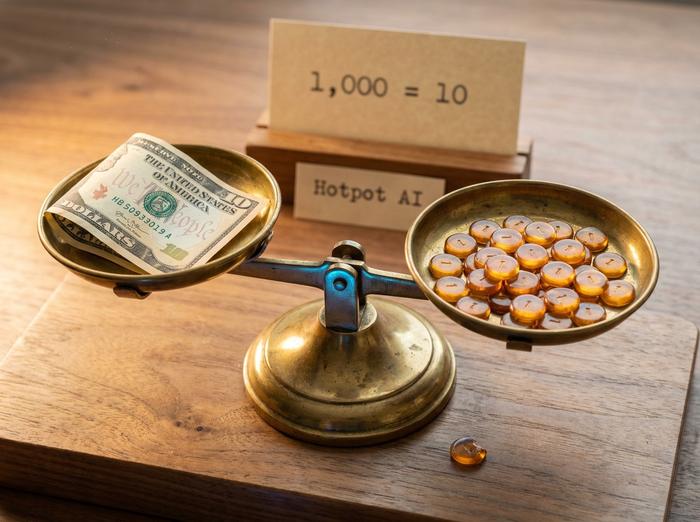
The Hotpot AI image generator is the front-door product. Type a prompt, pick a style preset (anime, oil painting, comic book, photo-real, watercolor), wait a few seconds, get an image. There is also a "Stock Photo" mode tuned for marketing images and a separate AI art generator tuned for stylized, illustration-grade output. The art generator overlaps with the NFT and NFTs digital-collectible workflows that pushed AI-generated art into the mainstream around 2022, when generative models first became reliable enough to produce shippable creative output.
Under the hood, Hotpot routes requests through Stable Diffusion derivatives: the same open-source machine learning family that powers most of the consumer AI-art market. Industry compilations estimate that around 80% of all AI-generated images globally come from Stable Diffusion or its forks, with 45 million downloads on Hugging Face and 214 million model downloads on Civitai. That is why outputs across many "different" tools often look similar: the underlying engine is the same. Differentiation comes from UX, presets, AI features, and post-processing.
Hotpot's strengths inside this category are speed and simplicity. The interface is essentially three fields and a button. There is no Discord onboarding flow, no prompt-engineering rabbit hole, no community gallery to navigate. For a marketer who needs three header images by the end of the day, that frictionlessness is worth real money.
The weaknesses are also predictable. Output quality on complex prompts is uneven. Style adherence drifts. Hands and text inside images still misfire. Multiple competitor reviews have called the default outputs "plain" or "bland," which matches what I saw running test prompts in April 2026. Where Midjourney's defaults push toward cinematic and Adobe Firefly's lean toward editorial, Hotpot's lean toward generic stock-photo. That is fine for a quick blog header, less fine for a brand campaign.
A common follow-up question: does Hotpot use the same models as ChatGPT or Midjourney? No. ChatGPT's image generator runs on OpenAI's proprietary GPT-Image-1 model. Midjourney runs its own closed model. Hotpot leans on Stable Diffusion variants. This matters for output style, prompt syntax, and licensing. Not for whether the platform is "good," but for what kind of look you can expect.
Hotpot AI Image Generator vs Midjourney and DALL-E
Comparing the AI image generator inside Hotpot against the major specialist tools is the single most useful exercise for a buyer. The verdict depends entirely on what you are paying for.
| Tool | Underlying model | Entry pricing (2026) | Strengths | Output style |
|---|---|---|---|---|
| Hotpot AI | Stable Diffusion variants | Free tier; ~$10/month subscription; $12 / 1,000 credits one-time | Breadth of tools, simple UI, cheap | Generic stock-photo, marketing-safe |
| Midjourney | Proprietary (V7) | $10/month basic, $30/month standard | Cinematic detail, art direction | Stylized, editorial |
| DALL-E (via ChatGPT or API) | GPT-Image-1 | $20/month ChatGPT Plus; $0.04-0.12 per API image | Prompt obedience, integrated chat workflow | Polished, photorealistic |
| Stable Diffusion (self-hosted) | Stable Diffusion XL / 3 | Free (compute costs only) | Maximum control, custom models | Whatever you train it for |
| Canva AI (Magic Media) | Mix of SD + partners | Bundled with Canva Pro $14.99/month | Tight design integration, brand kits | Clean, editorial |
Two patterns jump out. First, raw image quality on hard prompts goes to Midjourney, with DALL-E close behind. Second, value-per-dollar for a non-specialist user often goes to Hotpot or Canva, because the tooling around the image (templates, removers, upscalers) saves more time than a marginally better generator does.
Midjourney is the size-leader of the pure-play generators. It reached roughly 21 million registered users by mid-2025 and pulled in USD 500 million in 2025 revenue, a 66.7% jump from USD 300 million the year before, per DemandSage and Statista. Its 26.8% share of the AI image-generator market makes it the closest thing to a category brand. Hotpot competes against this name recognition with a fraction of the marketing budget.
DALL-E and the related GPT-Image API now reach hundreds of millions of users through ChatGPT. Pricing through the API ranges from USD 0.04 to USD 0.12 per image depending on quality and resolution. ChatGPT Plus subscribers get the image generator bundled into the USD 20/month subscription. That bundling is the structural threat to standalone tools. If a general-purpose chatbot also makes images, why open another tab?
For the small business that mostly needs serviceable output and dozens of small utilities, the answer is still: because Hotpot does the dozen other things ChatGPT does not. That is the thin moat the product sits on.
AI Headshots, Photo Editing, and Restoration
This is where Hotpot quietly punches above its weight. The headshot generator is broader than most competitors, with named variants for corporate, real estate, medical, holiday, cosplay, anime, and standard avatar styles. AI-generated headshots grew into a USD 350-500 million segment in 2025. Sessions cost USD 29-59, versus several hundred for a traditional studio shoot, per HeadshotPhoto.io and PetaPixel in October 2025. The vertical is growing roughly 150% year over year.
The image editing tools roster sits next to it. The lineup of editing features:
- Background remover, which masks subjects in seconds for product cutouts and headshot work.
- Object remover, a paint-over interface that wipes out people, signs, or stray cars.
- Photo upscaler / image upscaler, enlarging low-resolution images up to about 8x with AI-driven neural-network sharpening for advanced image enhancement.
- Picture restorer, repairing scratches, tears, fade, and noise on scanned old photographs.
- Photo colorizer, adding plausible color to black-and-white images, with manual override on hue.
- Face enhancer, restoring blurry or compressed faces in old portraits.
These image editing capabilities are what shift Hotpot from "another image generator" into a real toolbox.
These are not unique features. Most of them ship inside Adobe Photoshop, Canva, Pixlr, and a dozen smaller tools. What Hotpot offers is having all of them under one credit balance, in one tab, without Adobe-level pricing or a five-step onboarding wizard. For a real-estate agent fixing one bad listing photo a week, that arrangement is straightforwardly useful.
The colorization tool is the weakest of the bunch. Outputs lean cool and muted compared to dedicated colorizers like Palette.fm. The restorer handles light damage well and struggles with anything heavier than scratches and fade. Professional restoration cases still need a human retoucher.
Social Media Posts, App Icons, and Templates
Hotpot's template library covers the social-content layer that small marketers actually publish day to day: engaging social media posts on Instagram, Facebook ads, YouTube thumbnails, Pinterest pins, TikTok covers, LinkedIn banners. Each layout sits in a library of easy-to-edit templates editable in the browser with type, color, and layout adjustments, closer to a stripped-down Canva than a full design tools suite. Visual content for the feed gets done in minutes, not afternoons.
The app-icons generator is one of the more specific features. It accepts a description, produces icon-sized rasters in iOS and Google Play sizes, and exports transparent PNGs. The same tool is repurposed for game launcher icons and YouTube channel branding. Indie developers and indie game studios use it as a fast way to ship something acceptable without paying a freelance illustrator.
The use-case picture is broader than the platform itself implies. A 2025 Salesforce-cited industry report found 51% of marketers already use generative AI and another 22% plan to soon. Roughly three out of four are actively integrating AI tooling into media workflows. Adoption is even more pronounced inside small businesses: 91% of SMBs using AI report a revenue lift, and 58% spend less than USD 1,000 per month on AI content production. Hotpot's price band fits squarely inside that USD 1,000 ceiling.
AI-generated social imagery has crossed the chasm in plain numbers. By 2025, an estimated 71% of images shared on social platforms were AI-generated or AI-edited, with the share even higher in APAC at around 77%. The economics are simple: a small business cannot afford to staff a full design team, AI-generated assets are good enough for the feed, and the algorithms reward consistency more than originality.
Hotpot Creation Tools for App Store Marketing
A use case that does not get enough attention in other reviews: app store marketing. Anyone who has tried to publish an iOS or Android app knows that screenshots, icons, feature graphics, and store-listing visuals are surprisingly time-consuming. Hotpot's creation tools target this niche directly.
The device mockup generator wraps app screenshots inside iPhone, iPad, MacBook, or Android frames in seconds. It is a tiny feature with a wildly outsized return. A solo developer who would otherwise spend an evening in Figma can ship a polished store listing in minutes. Combined with the headshot generator (for the founder bio), the icon generator, and the social-media templates (for launch posts), the whole platform basically becomes a discount marketing department for a one-person app studio.
The output quality on these utilitarian tasks is more reliable than on free-form art prompts. Mockups, icons, and templates are bounded problems with clear right answers. AI-art is unbounded; the model invents a scene from nothing, and that is where Hotpot's results get patchy.
For solo SaaS founders, indie game developers, and small mobile teams shipping without a budget for designers, this is the strongest part of the platform. A near game-changer for one-person studios that used to ship rough placeholders. The innovative AI under the hood is less novel than the workflow it enables. App store marketing is also one of the few corners where the watermark-laden free tier is actually unworkable: store listings need clean exports, and the free plan does not deliver them at high resolution.
AI Tools Beyond Images: Game Assets and Writing
Hotpot's reach extends beyond imagery into game assets and AI writing through a sub-product called Sparkwriter. The game assets section includes generators for character portraits, monsters, dungeon maps, item icons, and 2D sprites suitable for indie titles and 2D games. None of this content creation rivals dedicated game-art platforms like Scenario or Leonardo's Game Asset Generator, but the text generation and asset workflow works for hobbyist projects, tabletop role-playing supplements, and prototype art.
Sparkwriter is the writing wing — a long list of small generators for product descriptions, blog headlines, ad copy, song lyrics, and social-media captions. The category competition here is brutal. ChatGPT does all of this for free or USD 20 a month, with better outputs on most tasks. Specialized tools like Jasper, Copy.ai, and Scalenut have deeper marketing-content workflows. Reviews from Originality.ai and Netus.ai both flagged the writing outputs as detectable by AI-content classifiers and "often plain and boring without human editing." That tracks with my own tests.
The honest read is that Hotpot's writing tools exist mostly to round out the toolbox pitch. They are usable for first drafts and brainstorming. They are not the reason to buy a subscription. The image-side features and the headshot generator do the actual work.
For developers, Hotpot offers an API across most of its tools — image generation, background removal, upscaling, colorization, headshots — with usage billed against the same credit balance. Documentation is reasonable. Latency is acceptable. The API is practical for building automation around small-volume creative tasks but not, in my experience, stable enough for high-volume production pipelines, which still belong on Replicate, Stability, or self-hosted Stable Diffusion.
Using Hotpot AI: Free Plan and Credits Pricing
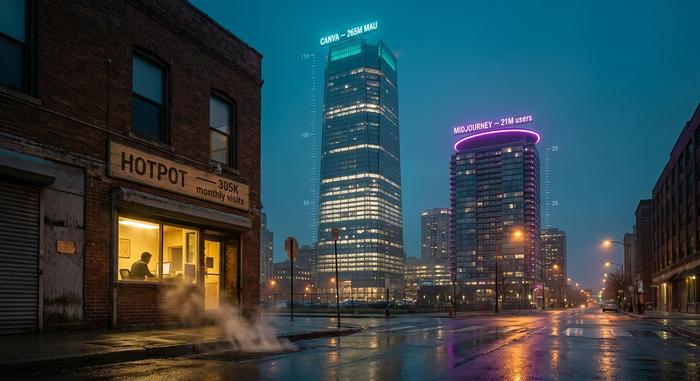
Pricing is where most reviews oversimplify. Hotpot's pricing structures do not include a clean "Pro tier" with fixed features and pricing. Everything runs on credits. The free plan exists, but it watermarks outputs, caps daily generations at roughly 75 images, and downscales exports.
Paid pricing comes in three formats: pay-once credit packs, monthly subscriptions (which give a roughly 20% discount over one-time purchases), and yearly subscription plans (which discount about 43%). Each tier maps to a fixed monthly credit allotment that controls generation capabilities and access to advanced features.
| Plan format | 1,000 credits | 2,500 credits | 5,000 credits | 10,000 credits | 20,000 credits |
|---|---|---|---|---|---|
| One-time pack | $12 | $30 | $60 | $120 | $240 |
| Monthly subscription | $10/mo | $25/mo | $50/mo | $100/mo | $200/mo |
| Yearly plan | $100/yr | $250/yr | $500/yr | $1,000/yr | $2,000/yr |
A credit roughly maps to one image generation, one upscale, or one background removal, with headshots and high-resolution outputs costing more. Spend USD 30 or above and Hotpot tosses in free AI headshots as a perk. For a casual user, the USD 10/month tier provides enough headroom for ten or fifteen images a day. For a small team running social-media content at volume, the USD 50/month pack is the more realistic floor.
The practical question is: how does this compare to alternatives on the same workload? A USD 20/month ChatGPT Plus subscription includes DALL-E generation but no upscaler, restorer, headshot generator, or templates. A USD 14.99/month Canva Pro subscription includes Magic Media generation plus templates but limits AI generations through credits. A Midjourney basic plan at USD 10/month delivers excellent images and nothing else. The right answer depends on what mix of tasks you actually run, which is exactly the point of a generalist toolbox.
For commercial work, paid plans grant full commercial rights. Free-tier outputs do not. That distinction matters more than most reviews acknowledge. Using a watermarked Hotpot image in a paid client deliverable is technically against the platform's terms.
Hotpot.ai vs Canva, Midjourney, and Generative Apps
The bigger market context matters because choosing Hotpot.ai over a generative AI alternative is rarely a quality decision and almost always a workflow decision. The leaders are very large.
Canva crossed 265 million monthly active users and USD 4 billion in ARR by year-end 2025. That makes it the third-most-used generative-AI web product by monthly active users globally, behind Google Gemini and ahead of DeepSeek. Midjourney pulled USD 500 million in 2025 revenue with about 21 million registered users. ChatGPT, including its image generation, reaches hundreds of millions weekly. Adobe Firefly is bundled into Creative Cloud, with native Photoshop integration. Stable Diffusion sits underneath all of them in some form.
Where does that leave Hotpot? Honestly: as a niche Swiss Army knife. The competitive pitch is breadth and price. The competitive risk is that any one of the five giants can absorb a Hotpot feature into their existing product without the user changing tools. Canva already has a background remover, an upscaler, AI headshots, magic write, and a template library. Once that bundling is complete and polished, the case for opening a separate Hotpot tab gets thinner.
The smaller competitor field is also crowded. Pictory, Speechify, Fritz.AI, Originality.ai, BypassEngine, Netus.ai, Vadoo.tv, Media.io, Spotsaas, AITools.aiting, NeNaWow: every one of them has published a review of Hotpot in the past two years. That density is itself a signal: Hotpot is searchable, talked about, and accessible enough to evaluate, but not so dominant that comparison content has dried up.
A pragmatic decision matrix:
| If you mostly need... | Best fit |
|---|---|
| One generator with state-of-art image quality | Midjourney |
| AI inside an existing design workflow | Canva |
| Prompt-driven images via chat | ChatGPT (DALL-E) |
| Total control over models and outputs | Stable Diffusion (self-hosted) |
| Photo restoration, AI headshots, mockups, templates, plus a generator under one bill | Hotpot AI |
| Marketing copy and content writing | Jasper, Copy.ai, ChatGPT |
Hotpot AI Pros, Cons, and the EU AI Act in 2026
The honest scorecard, with a regulatory layer most reviews skip.
The plus side is broad. Over 40 utilities sit under one account. The price floor is friendly: paid plans start at USD 10 a month, the free tier exists, and there is no annual lock-in. The headshot library is unusually wide, covering corporate, medical, real estate, holiday, and anime. Everything runs in a browser, with no install or Discord onboarding. The API spans most tools for developers building lightweight automation. Commercial rights and commercial usage are unambiguous on paid plans. There are also light collaboration tools for shared accounts inside small teams.
On the minus side: image quality is mid-tier compared to specialist generators. Writing tools are a weak point, with outputs detectable by Originality.ai and Netus.ai classifiers. The free tier is heavily watermarked and capped. Customer support is consistently flagged as the slowest piece of the experience across reviews. Traffic and usage trends are sliding by roughly 9 to 12% month over month in recent Similarweb and Semrush readings. Output style drifts toward stock-photo generic on default settings.
The piece nobody else is talking about is regulation. From 2 August 2026 onward, providers covered by the EU AI Act will be required to mark generative-AI outputs in a machine-readable format under Article 50. The European Commission's draft Code of Practice (second draft published 3 March 2026, final version expected June 2026) is getting prescriptive about C2PA-style provenance metadata and imperceptible watermarks. Any consumer-facing image tool serving EU users will need to comply. Hotpot has not publicly disclosed its compliance roadmap as of April 2026.
Consumer trust is also fragile. A Gartner survey released September 2025 found 53% of consumers distrust AI-powered search results. The Checkr "Great Untrust" report from the same year found 95% of Americans say they have encountered at least one form of suspicious or likely AI-generated content online, and 85% want labelling laws. The Getty Images v. Stability AI ruling from the UK High Court on 4 November 2025 rejected most of Getty's copyright claims, with limited trademark wins only. A defeat for rights-holders, but a UK ruling on UK facts, not a settled global precedent.
For anyone using Hotpot in commercial work, the practical implication is clear: keep records of what was AI-generated, label outputs where appropriate, and watch the EU compliance clock. The regulatory exposure for the user is small for now. The exposure for the platform itself, as a generative-AI provider serving European customers, is real and arrives this summer.