Cryptocurrency and Blockchain Technologies: Bitcoin Concepts

Visa and Mastercard pushed about $25 trillion through their networks last year. Stablecoins pushed $33 trillion. That number, from Bloomberg's January 2026 reporting, gets quoted a lot, and it should, because it reframes what cryptocurrency now is. Not a trader's pastime. Not a buzzword on a consultancy slide. The plumbing under remittances, on-chain savings, identity proofs, and Sony Music's royalty processing. Most people still mash the words together, though, and treat "crypto" and "blockchain" as the same thing.
Why Cryptocurrency and Blockchain Matter in 2026
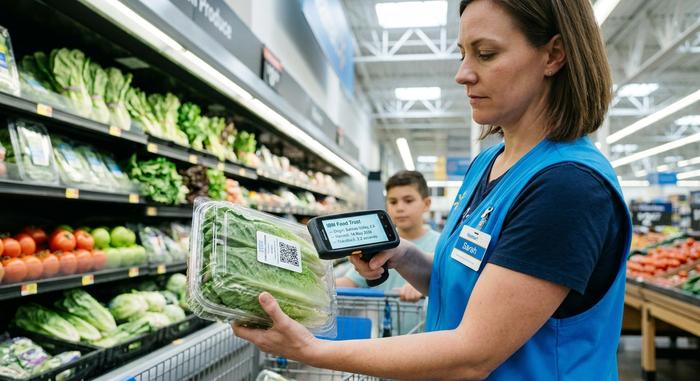
Linked but not identical. That is the first thing to fix in your head about cryptocurrencies and blockchain, because even seasoned financial institutions still trip on the gap. A cryptocurrency is a digital asset that uses cryptography to record ownership, with no central authority needed. A blockchain is the underlying ledger storing those records across many independent computers. Walmart runs a blockchain to track lettuce; no coin involved. Meanwhile an exchange will hold your Bitcoin for you with no blockchain software on your phone.
The numbers tell you why the topic matters now. CoinGecko tracks about $2.68 trillion in total crypto market capitalization across more than 16,000 coins as of May 2026. Bitcoin alone holds 58.22% of that. Triple-A's 2026 ownership data puts the count at roughly 560 million owners worldwide, give or take, which works out to about one in ten internet users. BlackRock's spot Bitcoin ETF pulled in $25 billion of net inflows during 2025 and ended the year near $67 billion in assets under management. The firm now lists it among its top revenue products.
Then there is the regulator side, which moved fast in 2025. The EU's Markets in Crypto-Assets framework, better known as MiCA, sets a final stablecoin authorization deadline of 1 July 2026. The US GENIUS Act, signed by President Trump in mid-July 2025, is the first federal rulebook for payment stablecoins. Both rules together kill the wild-west period, and that means a beginner who reads about crypto really should understand the plumbing. This guide does that: the building blocks, the main concepts, and the working use cases that make those blockchain technologies more than a curiosity.

How Bitcoin and Blockchain Work, Block by Block
Picture Alice paying Bob 0.05 BTC. Her wallet broadcasts a signed message to the bitcoin network. Ten minutes or so later, some miner picks her message up, bundles it with a few thousand other bitcoin transactions into a new block, and adds that block to the chain. From there, the payment becomes part of the public record of transactions stored on a blockchain — copied across tens of thousands of nodes, effectively impossible to reverse. Ethereum's blockchain runs on the same shape, but produces a new block every twelve seconds instead.
That single trip introduces the five building blocks, and the features of blockchain technology, that define any blockchain network.
The first is the ledger — a shared, append-only database. Each node in the blockchain holds a full copy, which is what people mean when they call it a distributed ledger.
The second is the block, a batch of validated transactions, time-stamped and bundled together. Bitcoin's blocks are about 1 MB and aim for one every ten minutes. Ethereum's are smaller and produced every twelve seconds.
The third is the hash — a cryptographic fingerprint, produced by SHA-256 in Bitcoin's case, that locks each new block to the one before it. Change a single character anywhere in the history and every later hash breaks. That property is what gives the ledger its immutable record of transactions.
The fourth is the key pair. A public key acts as your address on the blockchain, similar to an account number. The matching private key authorizes spending, similar to a signature. Lose the private key and the funds are gone, because there is no central authority to reset it.
The fifth is consensus, the protocol that decides whose new block becomes the next link. Bitcoin uses proof of work. Ethereum switched to proof of stake in September 2022, which cut the network's energy use by about 99.95%.
| Building block | What it does | A real example |
|---|---|---|
| Ledger | Stores the record of transactions | Walmart's IBM Food Trust tracks leafy greens on a shared ledger |
| Block | Bundles transactions in order | A Bitcoin block holds ~3,000 bitcoin transactions |
| Hash | Locks history with a cryptographic fingerprint | SHA-256 secures every Bitcoin block header |
| Key pair | Proves ownership without a password | A MetaMask address is a public key |
| Consensus | Agrees on the next block | Ethereum's 2.27M validators stake ~36M ETH (beaconcha.in, 2026) |
Smart contracts sit on top of these five layers and tie cryptocurrency and blockchain together at the application layer. They are programs stored on the blockchain that execute automatically when conditions are met, removing the need for an intermediary in many financial services. A loan from Aave or a swap on Uniswap is a smart contract running on Ethereum's blockchain protocol.
Types of Blockchain Networks at a Glance
There are four common types of blockchain networks. Beginners mostly meet the first kind because Bitcoin and Ethereum are public, but enterprise pilots usually run on the other three.
| Type | Access | Consensus | Real example |
|---|---|---|---|
| Public blockchain | Anyone can read and write | Proof of work or proof of stake | Bitcoin, Ethereum |
| Private blockchain network | Permissioned, single operator | Authority nodes | Oracle Blockchain Table |
| Consortium | Permissioned, shared by a group | Voting among members | Hyperledger Fabric used by IBM Food Trust |
| Hybrid | Mixes public and private layers | Variable | XinFin, Dragonchain |
Main Cryptocurrency Types Beyond Bitcoin
Bitcoin came first, back in 2009, released as open-source software by someone (or some group) writing under the pseudonym Satoshi Nakamoto. It still leads on market value, but it is only one bucket on the shelf. The other 42% of the market splits into categories worth knowing.
Take altcoins. The term started as a catch-all for non-Bitcoin coins running their own blockchains, which today means Ethereum, Solana, Cardano, and a long tail. Then there are stablecoins, pegged to a fiat currency (almost always the US dollar), which have quietly become the workhorse of the whole space. USDT and USDC alone hold roughly $267 billion of the $321 billion total stablecoin supply, per CoinDesk Research in April 2026. After those, you run into platform and utility tokens, which buy access to a particular service — BNB on BNB Chain, UNI on Uniswap, plenty of others in that mould. Governance tokens are a related but distinct category, with Aave's AAVE letting holders vote on protocol parameters. Non-fungible tokens (NFTs) are the odd ones out, recording one-of-a-kind digital items: collectibles, music rights, game pieces. DappRadar counted 18.1 million NFT sales in Q3 2025 alone, a quarterly record. And meme coins like Dogecoin and Shiba Inu round out the picture, trading mostly on attention and community rather than on utility. Each box behaves differently when the market moves.
| Cryptocurrency type | Pegged or floating | Typical use case |
|---|---|---|
| Bitcoin | Floating | Store of value, settlement |
| Stablecoin (USDT, USDC) | Fiat-pegged | Payments, remittances, on-chain savings |
| Altcoin (ETH, SOL) | Floating | Native fuel for smart contract platforms |
| Utility token (BNB, UNI) | Floating | Discounts and access on a specific platform |
| Governance token (AAVE) | Floating | Voting on protocol decisions |
| NFT | Unique | Collectibles, music royalties, in-game items |
Cryptocurrency Wallets, Exchanges, and Custody
A wallet does not actually store your coins. It stores the private keys that prove you control the address those coins sit at on the blockchain. The distinction matters because the most common beginner loss in this space comes from confusing custody.
Two axes to group wallets along. Hot ones stay online, trading convenience for exposure — MetaMask in your browser, the Coinbase app on your phone. Cold ones stay offline. For anything above a thousand dollars, a hardware device from Ledger or Trezor is the standard pick. Custody is a separate question entirely. A custodial setup means an exchange holds the keys for you, like a bank holds cash. A non-custodial setup puts the keys in your own hands, with full responsibility for backups.
Exchanges split into two camps as well. Centralized ones such as Coinbase and Kraken work like brokerages and now hold MiCA licenses across the EU. Decentralized exchanges like Uniswap skip the middleman entirely, letting you swap tokens straight from your wallet through smart contracts. The Bybit hack in February 2025 cost users $1.5 billion, the largest crypto heist on record. The lesson it left behind is blunt: funds on an exchange and funds you self-custody are not the same thing.
Mining vs Staking: The Blockchain Protocol Behind Bitcoin
One question, two answers. How does a leaderless, public network actually agree on which new block is the right one?
Bitcoin solves it with proof of work. Computers race to guess a number that pushes the next block's hash below a moving target. Whoever finds the answer first claims the reward, today 3.125 BTC after the April 2024 halving. According to Hashrate Index, Bitcoin's network hashrate was averaging around 894 EH/s in early 2026, and the network draws something like 128 terawatt-hours per year — roughly Sweden's annual electricity use.
Ethereum stopped doing that in September 2022. Its answer now is proof of stake. Instead of burning electricity, you put up collateral. Lock 32 ETH into the protocol and the network picks you, at random, to propose blocks. Cheat and a portion of that stake is taken from you through a process called "slashing." Ethereum's beacon chain currently coordinates about 2.27 million such validators, securing roughly 30% of the ETH supply, while using somewhere near 0.05% of the energy that proof of work demanded.
| Mechanism | Resource | Bitcoin/Ethereum example | Energy |
|---|---|---|---|
| Proof of work | Computing power | Bitcoin (894 EH/s) | ~128 TWh/year |
| Proof of stake | Locked capital | Ethereum (36M ETH staked) | ~0.05% of PoW |
Blockchain Applications Beyond Cryptocurrency
The phrase "blockchain applications beyond cryptocurrency" is overused, but the actual deployments are real and easy to name. Each of these is a production system, not a pitch deck.
Supply chain provenance. Walmart runs IBM Food Trust, built on the Hyperledger Fabric blockchain platform, to trace mangoes and leafy greens from farm to shelf. The early pilot pulled traceback time down from nearly seven days to about 2.2 seconds. Maersk and IBM tried a similar idea in shipping, called TradeLens. These are consortium blockchains rather than public ones, because the participating companies want privacy on the commercial terms while sharing a single source of truth.
Health records. Estonia's e-Health system has used KSI Blockchain since 2016 to log every read and write against a citizen's medical file. The blockchain itself does not store the medical data. It stores a timestamped hash of every access event, so tampering with the underlying database becomes detectable. This is blockchain used for audit, not for storage.
Identity and credentials. The European Blockchain Services Infrastructure, abbreviated EBSI, has been rolling out tamper-proof university diplomas across more than twenty EU member states. A graduate receives a verifiable credential they can hand to an employer without ever needing to contact the registrar.
Music royalties. Sony Music Japan moved part of its royalty processing onto a blockchain implementation in 2024, using smart contracts to pay rights-holders inside hours instead of the months legacy clearing houses had been taking.
Energy peer-to-peer trading. Power Ledger, an Australian project, lets households in Western Australia sell excess solar generation directly to their neighbours on a public blockchain network, with prices settled by smart contract.
The common thread is not that blockchains "disrupt" these industries. The thread is that they replace one specific intermediary, the trusted recordkeeper, with a shared ledger that several parties can read at once.
What Blockchain and Cryptocurrency Are NOT
Five quick myths worth retiring. A blockchain is not a database in the normal sense, because databases let you update and delete records. Blockchains do not. A blockchain is also not encryption, although the two often get conflated. Cryptography secures the records; the blockchain just orders them. Cryptocurrency is not anonymous either. It is pseudonymous, and analytics firms like Chainalysis routinely link wallet addresses back to real people. Bitcoin transactions are not instant. Small payments usually confirm inside an hour, not seconds. And no, public blockchains are not free. On Ethereum, complex actions still cost real money in gas fees, even after Layer 2 networks made the basics cheap.
Real-World Risks and Benefits of Blockchain Tech
Where does the tech actually deliver? Match a job to it and the benefits of blockchain technology stop being slogans. Cross-border settlement with very little friction. Auditable provenance. Savings the local government cannot quietly freeze. Money you can program. DeFiLlama puts roughly $120 billion locked across decentralized finance protocols in early 2026, and Aave V3 holds $26 billion of that on its own. A real credit market — no bank in it.
The risks come with the same specificity. Chainalysis released its 2026 Crypto Crime Report in January and tallied $154 billion of illicit on-chain volume for 2025. Stablecoins, awkwardly, were involved in 84% of that figure. North Korean state hackers walked off with about $2 billion on their own. Country stories diverge too. El Salvador, once the loudest Bitcoin adopter on the planet, scrapped Bitcoin's legal-tender status in January 2025 as part of a $1.4 billion IMF deal. The share of Salvadorans actually using BTC for transactions slid from 25.7% in 2021 to 8.1% by 2024.
Meanwhile, regulators are catching up fast. MiCA in the EU forces stablecoin authorization by 1 July 2026. The US GENIUS Act, signed in mid-July 2025, demands 100% reserves in cash or short-dated Treasury bills for any payment stablecoin sold to Americans. Honest summary for a beginner reading along: blockchain solutions are useful, sometimes essential, but this is still an emerging technology. Real-world blockchain use will keep depending on distributed ledger technologies that bolt onto existing financial institutions, not on tearing those institutions down.
Getting Started: How to Use Blockchain Safely
Three steps cover most of the risk for anyone new to cryptocurrency and blockchain. First, open an account on a regulated exchange such as Coinbase or Kraken, both MiCA-licensed in the EU and registered with US state authorities. Second, buy a small amount, ideally less than you would pay for a nice dinner, and use the exchange's basic spot interface. Third, if your position grows above a thousand dollars, move it to a hardware wallet like Ledger or Trezor — one-time cost, lifetime habit. The technology is no longer experimental, but the responsibility for your keys is yours alone.