
Custodial Wallets vs Non-Custodial Crypto Wallets 2026
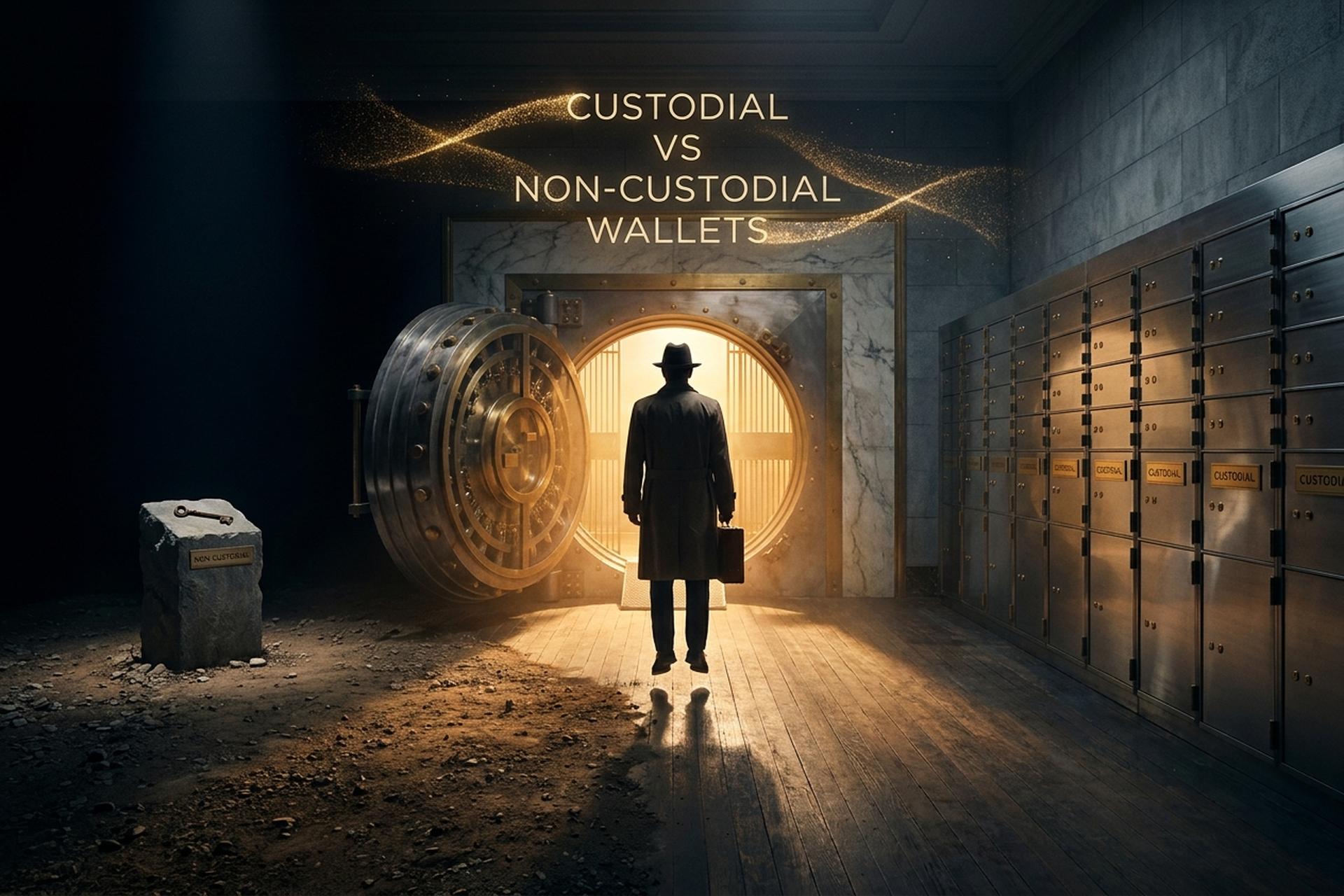
February 21, 2025. Bybit loses roughly USD 1.5 billion in a single breach, the biggest crypto heist anyone has ever recorded. Customers did not lose anything because Bybit absorbed the whole hit, but the lesson is older than crypto itself. The fight between custodial wallets vs non-custodial crypto wallets is really a fight about who eats the loss when something goes wrong. When someone else holds your keys, you are trusting their security, their solvency, and their legal position. When you hold your own keys, none of that applies. One new responsibility shows up instead: you are your own bank.
The choice between custodial wallets vs non-custodial crypto wallets is probably the single most consequential decision most crypto users will make. It shapes how you buy, how you store, how you trade, how you recover, and ultimately whether you survive the next bad year. This guide walks through how each type of wallet actually works, names the wallet services dominating each side, lays out the 2025-2026 data on hacks and user losses, and ends with a real framework for picking based on how much crypto you hold, how often you trade, and how much time you want to spend on security. Wallets can also combine features from both sides, and we cover that too.
CoinLaw data from 2025 says 59% of crypto users now prefer non-custodial wallets, with self-custody up 47% year-over-year and hardware wallet sales up 31%. Custodial services still hold most of the active trading population, though. Rarely an all-or-nothing answer. The real question in a custodial vs non-custodial wallets debate is how much of each you use, and for what. Consider this a guide to custodial and self-custody side by side.
What a cryptocurrency wallet is and who holds keys
Quick reality check: a cryptocurrency wallet does not store crypto. The coins live on the blockchain. What crypto wallets store is a pair of cryptographic keys. One is public (your address, safe to share). The other is private (the secret that proves you can spend what the address holds). Whoever controls the private key controls the digital asset. Simple as that.
So there are really two families of crypto wallet, split by one question: who holds the private key?
- A custodial wallet hands the private key to third parties. Usually that third party is a crypto exchange or wallet service, and they manage keys on your behalf.
- A non-custodial wallet (sometimes called self-custody or a self-custodying wallet) puts the key on your own device. You hold it, you back it up, you are responsible.
Every other difference between these two families is downstream of that one question. Custodial wallets give you a convenient login; non-custodial wallets give you full control and complete control over your crypto assets at the same time. Forgot your custodial password? Reset link. Forgot your non-custodial seed? Gone. Custodial wallets can freeze your account when a regulator asks; non-custodial wallets cannot, because there is no account to freeze. Each type of wallet earns a place in a serious portfolio, and custodial and non-custodial wallets offer a different balance of convenience and sovereignty.
What is a custodial wallet? Pros and cons overview
A custodial wallet is where a custodian holds and manages your private keys. That custodian is usually a licensed crypto exchange, a broker, or a wallet service running under some regulatory framework. The user experience is simple. Email plus password. Two-factor authentication turned on. Log in, see your balance, hit withdraw. The custodian runs the infrastructure behind all of it, secures the keys, and processes transfers.
Using a custodial wallet means getting a clean interface; what you give up are the keys, and with them, sovereignty. You need to trust a third party with your funds. A custodial wallet may also impose withdrawal delays, KYC (Know Your Customer) checks, and transfer limits based on whatever the compliance team decided this quarter. Custodial wallets provide recovery flows for all of those restrictions, which is part of their appeal. Custodial wallets also centralize regulatory exposure, which is part of the cost.
Household names in this bucket: Binance, Coinbase, Kraken, Crypto.com, Gemini, Blockchain.com. These exchange wallets feel more like an online bank than a crypto tool, which is basically the point. Institutional side sits BitGo, Fireblocks, and Cobo, where funds and fintechs need regulated custody with service-level agreements. On the consumer side again, Revolut, PayPal, and Cash App run custodial wallet services baked into their existing apps.
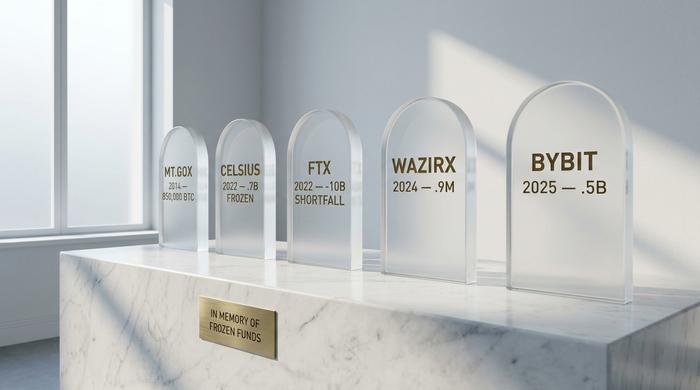
Pros are quick: easy onboarding, password recovery, fiat on-ramps, sometimes an insurance policy, clean UI. Cons are quick too: the custodian controls your crypto assets, you trust a third party with your funds, KYC is never optional, and if the exchange goes down or gets hacked, your access can disappear for months or years. Ask any Mt. Gox creditor who filed in 2014. Payouts only started landing in 2024 and 2025.
The reason most new users start in custodial is friction. The reason experienced users eventually leave is concentration: regulatory risk, insolvency risk, hacking risk, all stacked into one counterparty. What you do next usually depends on how much you hold.
Non-custodial crypto wallet: definition and examples
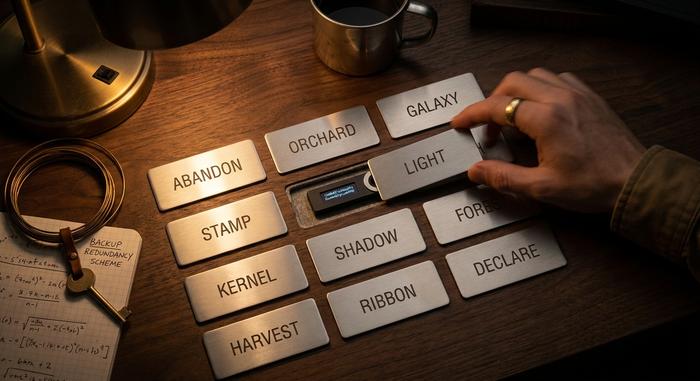
Non-custodial crypto wallet, also called self-custody. The private key goes on your device. Nobody else holds it. Non-custodial wallets give users the exclusive right to sign, the exclusive right to authorize a transfer, and the exclusive blame if something goes wrong. Setup generates a 12 or 24-word recovery phrase. Write it down somewhere physical. That phrase is the backup. If you lose it, the funds are gone and no human can help you recover them. Unlike custodial wallets, the recovery phrase is the only recovery.
The names people actually use are easy to list. MetaMask for Ethereum. Trust Wallet on mobile (Binance-owned, roughly 220 million installs). Phantom on Solana (around 17 million monthly actives). Then Exodus, Electrum, Edge, Rabby, Zengo on the software side. Hardware is where serious money usually ends up. Ledger has shipped 7.5 million devices across ten years, 3.5 million of those in 2024 alone. Trezor shipped 2.4 million in 2024 and holds around 28-30% global hardware market share. Tangem and CoolWallet round out the rest.
The deal with non-custodial wallets is straightforward. Non-custodial wallets require users to eat the security burden themselves. What you get back is DeFi access, NFT access, any dApp on the chain. Non-custodial wallets allow signing smart contract calls that no custodian on earth would let you send from their platform. Using a non-custodial wallet gives you direct control over your funds at all times, not just when a regulator says you can withdraw. Since non-custodial wallet setups put full control into the user's hands, self-custody is a choice about sovereignty, not convenience.
Custodial wallets vs non-custodial crypto wallets: differences
Who controls the private key? That is the main difference between custodial and non-custodial crypto wallets, and it is the headline item in any custodial vs non-custodial wallets comparison. It is also the difference between a custodial model and a non-custodial one in a single sentence. Recovery, KYC, fees, DeFi access, all of those sit downstream of that one question. Non-custodial wallet architectures skip the middle party entirely; non-custodial wallets put full control over their private keys in the user's hands. The trade-off is visible from day one: institutional protection goes, personal responsibility arrives. The table below captures the trade-offs that matter in practice.
| Dimension | Custodial wallet | Non-custodial wallet |
|---|---|---|
| Who holds the private key | Custodian (exchange, service) | User |
| Account recovery if password lost | Yes, via KYC | No. If seed phrase lost, funds lost |
| KYC required | Yes, universally | Not for wallet creation |
| DeFi / NFT / dApp access | Limited, through custodian | Full, direct |
| Can be frozen by provider | Yes | No |
| Insurance | Sometimes (Coinbase $320M, Gemini $125M) | No |
| Hacking target | Entire custodian | Individual user |
| Typical user | Trader, newcomer, institution | Long-term holder, DeFi user |
| Cost | Trading + withdrawal fees | Gas only (hardware: one-time $50-170) |
Custodial wallets often also layer in spread costs on top of the visible fee schedule. Custodial wallets typically charge trading fees in the 0.1-0.5% range and withdrawal fees of USD 1-20 depending on the chain and congestion. Non-custodial wallets have no provider fees but you pay network gas on every on-chain action. Over a year, a heavy DeFi user often pays less through self-custody than through an exchange; a buy-and-hold spot trader often pays more, mostly in gas, unless they keep activity low.
Private key vs public key: who really controls crypto
A crypto private key is a long random number that authorizes transactions. A public key (or, in most chains, a shorter address derived from it) is what receivers see. You can hand out your public key freely. You cannot hand out your private key without giving up the funds.
In a custodial setup the private key lives on the custodian's servers behind hardware security modules, encryption, and access controls. You never see it. Access to your crypto flows through the custodial wallet service's interface, and account recovery passes through customer support rather than cryptography.
In a non-custodial setup the key is derived from a recovery phrase that only you ever see, and wallets store either the key itself or the seed locally, often encrypted with a password you set. Using hardware wallets raises the bar further: the key sits inside a secure chip that never exposes it to an internet-connected device. Transactions are signed inside the hardware, and only the signed transaction leaves. Non-custodial hardware devices are the gold standard for large amounts of crypto.
The practical test is this: if the wallet you choose can be used from a brand-new device with just your login, it is custodial. If it demands the seed phrase to restore on a new device, it is non-custodial. No middle ground.
Custodial crypto wallets: Coinbase, Binance, Kraken
Coinbase, Binance, Kraken. Those three names cover most of the retail custodial wallet market. Each has millions of users. Each has a very different regulatory past. Wallets must comply with local money-transmitter rules nearly everywhere they operate, and any trust in a third party sits on that compliance layer underneath.
Coinbase lives the most visibly regulated life. It is US-listed. Its Q4 2025 filing showed around 9.2 million Monthly Transacting Users. The last time it published a verified-user number was 108 million back in 2022, and it has kept quiet on that stat since. USD 320 million in commercial crime insurance. USD cash gets FDIC pass-through up to USD 250,000 per depositor. Crypto itself gets no FDIC and no SIPC. No US exchange can offer either, because regulators have not approved it.
Binance runs the volume crown. 300 million+ registered users by December 2025, with peak monthly actives above 100 million. The DOJ settlement in late 2023 was USD 4.3 billion, and Binance is operating under a compliance monitor since. Odd detail: Binance owns Trust Wallet, which is non-custodial. Users can jump between the two sides inside one company's brand.
Kraken keeps things tidier. Around 15 million customers. Very careful US posture for years. Launched Kraken Wallet (non-custodial) in 2024. SEC dropped its 2023 case on March 27, 2025. Nice timing.
Then there is the institutional layer, which is its own world. BitGo and Fireblocks run multi-signature and MPC setups for funds and fintechs. Gemini keeps USD 125 million in custody insurance, broken out as USD 25 million hot and USD 100 million cold. Not retail wallets, but these institutions hold a chunk of the crypto supply that ends up in custodial hands.
Non-custodial crypto wallets: MetaMask, Ledger, Trust
Four names show up everywhere in the self-custody conversation.
MetaMask is the one most people meet first. It is a browser extension and mobile wallet, around 30 million MAU by ConsenSys' 2025 count, and the default front door to Ethereum DeFi. Every EVM chain works. Hardware wallets plug in. Blockaid now screens each contract call before you sign, which cut a lot of phishing pain compared with 2023.
Trust Wallet got picked up by Binance years ago, and it shows. 220 million people have installed it at some point; about 17 million open it in any given month. Mobile-first, supports 100+ chains, and ships with a swap feature that makes it easy to move between tokens without leaving the app.
Ledger is the hardware name everyone recognizes. 7.5 million devices sold over a decade, 3.5 million in 2024 alone, and about USD 70.9 million in 2024 revenue. The Nano X goes for around USD 149. The Ledger Live app handles balances, swaps, and transaction signing, and the device itself stays offline unless you plug it in.
Trezor is the other half of the hardware duopoly. SatoshiLabs built it, shipped 2.4 million units in 2024, holds roughly 28-30% of the hardware wallet market. The Safe 5 is USD 169. Open-source firmware, which is a real argument in the Bitcoin crowd where trust in closed hardware is thin.
Beyond those four, wallets like Phantom (17 million MAU on Solana), Rabby (the EVM power-user wallet with pre-signature simulation), Exodus (multi-chain desktop and mobile), Electrum (Bitcoin-only, running since 2011), and Zengo (MPC-based, no seed phrase to back up) fill specific niches. A non-custodial wallet may feel overwhelming at first install. It is not. Install, write the seed down on paper or metal, test it. That is the setup. Examples of non-custodial wallets include a mix of software wallets, mobile apps, and hardware devices. The choice depends on how much crypto you hold and how often you transact.
Security risks: hacks, KYC, and lost seed phrases
Both wallet models fail, but they fail differently. Custodial failures are rare but catastrophic at scale. Non-custodial failures are frequent but small per incident, and usually traceable to one user's mistake.
The table below lists the worst custodial failures of the last decade.
| Year | Platform | Loss | Users affected |
|---|---|---|---|
| 2014 | Mt. Gox | ~850,000 BTC (~$450M then; $50B+ now) | ~24,000 creditors |
| 2022 | Celsius | $4.7B customer debt | 1.7 million accounts frozen |
| 2022 | Voyager | ~$1.3B exposure | ~3.5 million account holders |
| 2022 | FTX | $8-10B customer shortfall | Millions |
| 2022 | BlockFi | $1-10B liabilities | 100,000+ creditors |
| 2024 | WazirX | $234.9M (Liminal breach) | 4.4 million locked out |
| 2025 | Bybit | $1.5B | Covered by Bybit (FBI attributed to North Korea) |
Celsius froze about 1.7 million user accounts in June 2022, cutting off access to their funds overnight and letting no one lose access more dramatically in a single moment; roughly 600,000 depositors were later classified as unsecured creditors. FTX creditors are being paid 118-142% of their November 2022 claim in cash, but those claims were dollar-denominated and missed the 2023-2025 BTC rally. That is a hidden cost of custodial exposure.
Non-custodial losses skew toward phishing, address poisoning, and lost seed phrases. Scam Sniffer logged USD 494 million drained across 332,000 Web3 victims in 2024, then USD 83.85 million across 106,106 victims in 2025, an 83% year-over-year drop partly credited to wallet-level transaction simulation (MetaMask Blockaid, Rabby pre-signing alerts). The largest single phishing theft of 2025 was USD 6.5 million via a malicious Permit signature. Ledger's Connect Kit supply-chain exploit in December 2023 drained only about USD 600,000 and Ledger reimbursed affected users.
The silent tax on self-custody is lost seed phrases. Chainalysis has estimated that roughly USD 140 billion of Bitcoin sits in wallets where the owner lost the keys, around 20% of all BTC ever mined. Non-custodial wallets do not have a password reset. If you cannot produce the seed, the crypto is gone. Forever.
KYC is the trade-off on the other side. Custodial wallet users supply government ID, proof of address, and sometimes source-of-funds attestations. The IRS can and does receive reports on custodial activity. Non-custodial wallet services do not require KYC for wallet creation, although on-ramps and off-ramps connecting non-custodial wallets to fiat usually do. Wallets are subject to different regulatory regimes depending on whether a custodian is involved.
Crypto custody fees and digital asset wallet costs
Custodial wallets bundle convenience into fees you may not see individually. Typical cost lines include:
- Trading fees: 0.1% to 0.5% per trade on major exchanges, higher on retail interfaces like Coinbase Simple.
- Bitcoin network withdrawal: USD 1-3 off-peak, USD 10-20 during congestion.
- Ethereum network withdrawal: USD 5-15 off-peak, USD 30-50 during congestion.
- Fiat deposit/withdrawal fees: 1-2% on card, lower on bank rails.
Non-custodial wallets do not charge platform fees. You pay only network gas on the chain you use. Hardware is a one-time purchase: around USD 60 for a Trezor Model One, USD 149 for a Ledger Nano X, USD 169 for a Trezor Safe 5. That cost pays back fast for anyone holding more than a few thousand dollars of digital assets.
Insurance is worth a close read. Coinbase's USD 320 million commercial crime policy covers their hot wallets against theft from the custodian, not against customer-side losses from phishing or lost passwords. Gemini's USD 125 million custody insurance applies similarly. Neither FDIC nor SIPC covers cryptocurrency itself. For comparison, the Bybit 2025 hack alone exceeded every major custodian's insurance policy by an order of magnitude.
Regulation 2026: MiCA, FinCEN, and custodial rules
Custodians are financial institutions wherever the jurisdiction takes crypto seriously. Non-custodial tools have mostly slipped past that framing, because the developer never holds customer funds. 2024 moved the line a little. 2025 moved it more.
Start with Europe. MiCA hit full effect on December 30, 2024. That is the Markets in Crypto-Assets regulation for crypto-asset service providers, or CASPs if you like acronyms. Custodial wallet providers in the EU now have four new chores: segregate client assets, meet operational-resilience standards, disclose outsourcing arrangements, comply with the Travel Rule. Grandfathering for pre-MiCA providers ends July 1, 2026. Every major custodian in the EU is either racing to get licensed or packing up.
Across the Atlantic, the SEC essentially pulled back in 2025. Coinbase case dismissed in February. Kraken dismissed on March 27. Binance US dropped on May 29. Chair Atkins arrived, and the enforcement direction flipped. FinCEN still enforces money-transmitter rules, and the IRS still sees every on-ramp and off-ramp through its reporting pipeline. That part did not change.
Non-custodial tools got squeezed elsewhere. DOJ arrested the Samourai Wallet co-founders Keonne Rodriguez and William Lonergan Hill in April 2024; late 2025 sentencings landed them 60 and 48 months. zkSNACKs closed the Wasabi CoinJoin coordinator that June, citing regulatory pressure. On the flip side, OFAC lost the Tornado Cash fight. Fifth Circuit ruled immutable smart contracts were not property. Treasury lifted Tornado Cash sanctions on March 21, 2025.
Where that leaves us: custodial wallets now carry a heavier compliance load with clearer rules and real licensing obligations. Non-custodial code itself is legal. The humans running privacy tools on top of that code can still be prosecuted. That tension is not going away soon.
Which is better: custodial or non-custodial for you?
No universal answer here. The right call depends on three things: how much crypto you are holding, how often you trade it, and how much personal responsibility you want to carry.
A working rule of thumb from people who have been around a few cycles: hold what you actively trade on a reputable custodial wallet, and keep your crypto long-term on a non-custodial hardware wallet. Choosing between a custodial and a non-custodial wallet should match the dollar value at stake. Under roughly USD 500 in crypto? Custodial is fine. Above USD 5,000? Counterparty risk starts biting, and cold storage looks smart. In between, it really depends on two things: time spent on key management, and whether DeFi or NFTs are part of your week.
Choosing between custodial and non-custodial wallets (or choosing between a custodial wallet and a non-custodial one on any given day) is rarely a one-shot decision. Wallets allow multiple approaches in one portfolio. Sophisticated users tend to split across both. A custodial account for trading liquidity and fiat rails. A non-custodial hardware wallet for cold reserves, often a cold wallet that stays physically offline in a drawer. Sometimes an MPC wallet or smart-account wallet in between for daily DeFi activity. Using custodial and non-custodial wallets together is common, and Coinbase, Binance, and Kraken all ship their own self-custody apps alongside the exchange now. Wallets are usually easiest to manage when they live in one product family, but the security gains of mixing usually beat the convenience cost.
Pick one, then stick to the rules you set for it. That is the part nobody actually does well. Wallets give you a choice about risk, not a guarantee against it. Wallets usually hide that fact behind convenience. The best way to stay safe is knowing which risks you have accepted. For most readers, self-custodying your crypto above a certain dollar threshold is the cleanest way to kill counterparty risk, while keeping a small custodial float for trading and fiat rails. The conversation around custodial services and self-custody is not ideological. It is a balance sheet.



