SoulGen AI is an AI-powered image generator for creating anime and realistic characters.
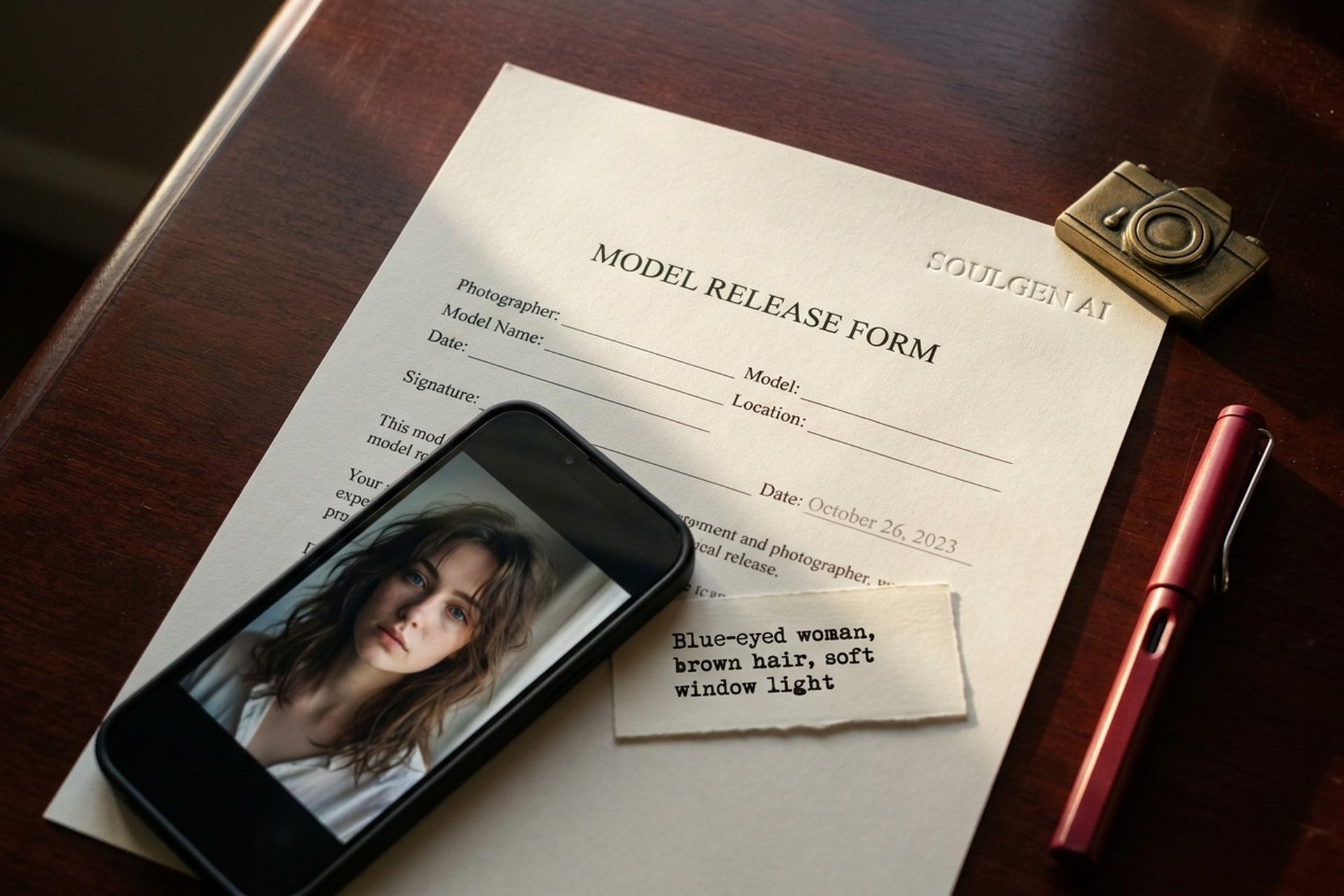
You type a sentence, hit enter, and a few seconds later a photo-quality person stares back from the screen, and if you did not know better you would not guess she came out of a model rather than a camera. That first image is the pitch for generative art, and it is also, increasingly, the problem nobody expected to grow this quickly. SoulGen AI has become one of the more popular content creation tools in this corner of the internet, a small case study for how fast generative imagery moved from a party trick to something regulators on three continents now watch closely.
This review walks through what SoulGen AI does in 2026 and what it costs. It also digs into the harder question: why the same transformative features that make the product useful for creators park it at the center of a global fight. That fight is over consent, deepfakes, and the limits of a virtual likeness that looks rather too much like a real person.
What is SoulGen AI, the app, and how a text prompt works
So what actually is SoulGen AI? Strictly speaking, it is an ai-powered image generation and video generation platform that builds lifelike or anime characters from a text prompt. The operator is Wave Dance Intellengic, a company registered on Hysan Avenue in Causeway Bay, Hong Kong, which matters more than it sounds and we will come back to it. By November 2025, according to Semrush, soulgen.ai was pulling 1.13 million monthly visits, a 107 percent jump over the month before. Under the lid, the core engine runs on Stable Diffusion, tuned with custom fine-tuning and deep learning layers that push the app toward photorealistic faces and body shapes rather than illustrative ones.
The workflow is intentionally simple, and most users figure it out without reading anything. A new user opens soulgen.ai, signs in with email or Google, and picks a mode, either AI character, edit, video, or chat. Type a prompt of up to 800 characters, choose a style, pick an aspect ratio, and click Create. A few seconds later the platform returns an image. Each creation eats 1 credit, or 2 credits if you toggle the Looks Like feature that conditions the output on an uploaded reference photo.
One detail shapes the trust conversation before we even touch features. SoulGen's original Android app was unpublished from Google Play on October 1, 2023, after reaching about 20,000 lifetime downloads. The product is now web-only, with no native store listing to hold accountable if something goes wrong. SoulChat, the platform's chatbots feature, lives inside the same account. Under the hood, SoulGen runs on deep neural networks that stitch together millions of visual patterns. Feed in identical prompts twice and you get slightly different outputs, because the model samples noise. That randomness is part of the appeal, and also part of the problem we will get to later.
Realistic AI character image, portrait creation, and edit tools
Most users come to SoulGen AI for one reason, which is realistic portrait creation. The app generates images up to 2048 by 2048 pixels, enough for social media, thumbnails, and small print runs. Describe a person in natural language and the model renders them in three to six seconds. Blue-eyed woman, shoulder length brown hair, soft window lighting. That is already enough for a usable image, though not a striking one.
Prompt craft is the difference between a stock portrait and something you would actually post. Short vague requests like "pretty woman" give you what you asked for, which is not much. The platform rewards specificity, so name the materials, the lighting, the composition, the emotional state, plus a quality booster like "photorealistic" or "hyper-realistic." Most users generate four variations per prompt before committing a credit to an upscale or an edit. Generation quality is sensitive to prompt length and the order of descriptors, which is why experienced creators keep a working file of phrasings that survive across projects.
The Smart Edit tools are where most of the actual image editing happens. You run follow-up text prompts on finished images to change the background, swap the outfit, adjust the pose, or run face swapping against a reference photo. The results look convincing at social-feed resolution. Zoom in and the seams show on hands, ears, and jewelry, which is a persistent weakness of stable diffusion based image generators heading into 2026.
One detail to sit with: every ai image produced on the platform is stored in your account gallery. SoulGen says outputs are private by default, but the company also reserves a license to use prompts for model training. For a creator whose style takes years to develop, that line in the terms is not a small thing.
SoulGen AI video generator and output quality in 2026
In July 2025, SoulGen AI shipped its image-to-video feature, which finally let users turn those static images into short animated clips. The ai video generator rides on a separate pipeline bolted to the top of the image model, which is why the first few months felt unstable. The workflow itself is simple: upload or generate a starting frame, describe the motion in a text prompt, and back comes a clip somewhere between 3 and 10 seconds long. Preview frames arrive close to real-time, while the final render takes 30 to 90 seconds depending on whatever server load looks like at that moment.
Video generation on SoulGen now supports 720p and 1080p output, plus a beta option for realistic lip-sync that matches a character's mouth to typed dialogue. Immersive sound, light camera motion, and cinematic color grading are part of the output settings. The model is younger than the image side and it shows. Faces drift between frames, and complex motions like running, hugging, or crowd scenes still break down in ways that no amount of prompt massaging fixes.
For marketers, social creators, and the sort of independent storytelling crews that used to hire a small film studio for a pitch, the appeal is easy to see. A 6-second clip that would cost several hundred dollars to shoot lands for two or three credits, preserves a consistent character across frames, and needs no specialist video editing skills needed to stitch anything together. The tool is built to deliver fast turnaround without specialized software, and for clean use cases that really is a genuine win, especially when a developer wants to translate a concept deck into a moving pitch over lunch. The problem arrives when someone else decides to deliver something very different. The same capability that lets a small studio turn a concept sketch into a trailer clip also lets someone animate a non-consenting lookalike, which is the exact feature that privacy groups have flagged as dangerous.
SoulGen pricing, free trial, and cancel subscription
SoulGen AI runs on a credit system tied to a monthly or annual subscription. The free trial gets you a handful of images before the paywall lands, and then you pick a plan. None of the paid tiers on SoulGen AI offer unlimited generations, which is worth flagging because competing companion apps routinely market that way. Paying unlocks blur removal on adult-style outputs, priority processing, multitask mode, and the full feature set including the ai video generator.
| Plan | Price (USD) | Credits included | Effective cost per credit |
|---|---|---|---|
| Free trial | $0 | 2 to 5, one-time | n/a |
| Pro Monthly | $12.99 / month | 100 credits | about $0.13 |
| Pro Annual | $90.99 / year | 1,200 credits | about $0.08 |
| Credit top-up (Pro only) | from $9.99 | 50 to 500 extra | varies by pack |
The annual plan works out to about $7.58 per month, or roughly $0.08 per credit if you actually use all 1,200. The monthly tier is pitched at 50 percent off list price, the annual at 70 percent off, which is a form of anchoring that sits on the homepage year-round and stops feeling like a discount pretty quickly once you notice it never moves.
Billing happens through soulgen.ai directly or through the mobile app stores. Most user complaints cluster here. Reddit threads and consumer review sites repeatedly flag that the subscription is easy to start and harder to cancel, a classic dark-pattern trap. To cancel a SoulGen subscription bought through the website, you sign in, open account settings, hunt for the Manage Subscription button, and confirm cancellation before the next billing cycle. Subscriptions purchased through the Apple App Store or Google Play have to be canceled in the respective store, not inside the SoulGen app itself, which catches plenty of people. Miss that step and the charge renews.
Ethics and consent: hidden risks of realistic AI portraits
This is where the story changes, and not in a good way. SoulGen AI markets itself to digital artists, anime fans, and general content creators. In practice, a substantial share of the realistic AI portraits generated on platforms like this one are images of women, often built from reference photos uploaded without the woman in question ever knowing. The Looks Like feature is the sensitive part of the product. It takes a real person's face and renders a new persona that resembles them, sometimes in scenarios the person never agreed to and would not if asked.
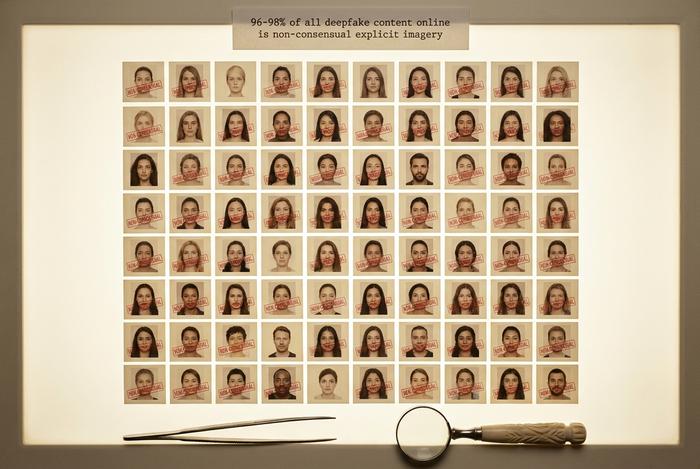
The research leaves little room for ambiguity, and the numbers are harsher than most casual users expect. Compiled data from Sensity AI and DeepTrace, cited in a 2025 Keepnet review, put somewhere between 96 and 98 percent of all deepfake content online in the non-consensual explicit category, and between 99 and 100 percent of its victims are female. The Internet Watch Foundation's March 2026 report, called "Harm Without Limits," logged 8,029 ai-generated child sexual abuse images and videos assessed during 2025 alone, and of those 3,443 were videos. A year earlier the IWF had confirmed only 13 AI videos in the same category, which works out to a 26,385 percent jump. Sixty-five percent of the new videos fell into Category A, meaning the most severe tier. On the US side, the National Center for Missing and Exploited Children received 1.5 million CyberTipline reports with a generative ai nexus during 2025, compared with 67,000 the year before. Stanford researchers have cautioned that much of the volume involves hash-matched older material rather than newly generated content. Even adjusted for that caveat, the trendline goes one way.
School-age victims are now the face of the harm, not some hypothetical future problem. In August 2025, a middle school in Thibodaux, Louisiana saw ai-generated nudes of eight female students circulating on Snapchat and TikTok. One of the victims was suspended for 89 days while the alleged creator, per AP reporting, faced no school discipline. Comparable incidents have surfaced in South Korea, in Spain, in New Jersey, and almost certainly in towns that have not yet made the news.
SoulGen's own terms of service prohibit "pornographic, indecent" content and anything that could "harm or exploit children," which is a solid paragraph to point to in a meeting. Enforcement is something else entirely. Reviewers have repeatedly shown that moderation filters can be bypassed with creative phrasing. In December 2025, paying users lit up message boards complaining that previously accepted NSFW prompts were suddenly rejected. The pattern reads less like principled moderation and more like reactive cleanup after press attention. Once an image is on a user's screen, the creator controls it, not the platform.
The ethical question is not whether creation is fast. It clearly is. The question is what happens afterward, when a lifelike image of a real person, made without their consent, ends up in a group DM, a school Snapchat, or a revenge site that barely bothers to put up a takedown form. SoulGen did not invent any of this, and it is one of many apps in the mix. What it offers, for anyone paying attention, is a useful lens on where the wider industry is heading.
Deepfake laws, privacy, and moderation on soulgen.ai
Regulation moved quickly in 2024 and 2025, and the speed is worth pausing on. In the United States, the TAKE IT DOWN Act was signed into federal law on May 19, 2025, criminalizing publication of non-consensual intimate imagery (ai-generated included) and forcing online platforms to act on takedown requests within 48 hours. Penalties go up to two years in prison, longer when minors are involved. Public Citizen's tracker counted 45 US states with laws addressing sexually explicit deepfakes by mid-2025, up from 32 just months earlier at the start of the year. A proposed Minnesota bill, SF1119, goes further still, adding a minimum fine of $500,000 per unlawful act of nudification.
Europe is not far behind. The EU AI Act's transparency rules take effect in August 2026, requiring deepfakes to be labeled and demanding that generators watermark their output. Penalties for non-compliance can reach €35 million or 7 percent of global annual revenue, whichever stings more. The UK's Data (Use and Access) Act 2025 criminalized the creation of non-consensual intimate images and designated it a priority offence under the Online Safety Act, with up to two years in prison. Meanwhile, San Francisco's City Attorney filed suit against 16 leading nudify sites in August 2024, and by late 2025 ten of them were no longer accessible in California. That is what enforcement actually looks like when a prosecutor decides to treat generative abuse like any other commercial harm.
Apple and Google have moved reluctantly, which is the polite phrasing. A January 27, 2026 Tech Transparency Project investigation, picked up by CNBC, counted 47 nudify apps live on Apple's App Store and 55 on Google Play, together amounting to 705 million lifetime downloads and $117 million in revenue. Thirty-one of those apps carried age ratings suitable for minors, which is the number I keep coming back to. Apple removed roughly 27 of them only after the report landed. SoulGen AI is not in that nudifier bucket, but in a sector where a rival site like Clothoff drew 27 million visits in the first half of 2024 alone and pushed out 200,000 images a day, the regulatory heat on adjacent platforms is always one investigation away.
Privacy is the other pressure point, and it deserves a harder look than most reviews give it. The SoulGen privacy policy covers user prompts, uploaded images, device identifiers, and usage patterns, with a stated deletion window of seven days after processing. Because Wave Dance Intellengic is registered in Hong Kong, enforcing GDPR or California's CCPA data-deletion rights against SoulGen is meaningfully harder than going after an EU or US incorporated entity. No test case has actually hit court yet, which is a data gap, not a reassurance. If you upload a reference photo, think twice about what you are handing over and to whom.
Copyright, training data, and commercial AI output use
Generative ai tools are still in the middle of a long and messy legal fight over the data they were trained on. Stability AI, which built the underlying model SoulGen runs on, has been sued by Getty Images over claims that more than 12 million copyrighted photos, captions, and pieces of metadata were scraped from Getty without permission. On November 4, 2025, the UK High Court delivered its ruling on Getty Images v. Stability AI, rejecting the central copyright claim while finding limited trademark infringement, which pleased nobody completely. A separate US class action, Andersen v. Stability AI, is slated for trial in the Northern District of California on September 8, 2026. Disney and Universal piled on earlier in the year with a lawsuit against Midjourney.
None of these cases name SoulGen directly, yet each of them sets the legal temperature for every AI image generator that happens to rely on LAION-5B or on similar web-scraped datasets. In December 2023, a Stanford Internet Observatory audit validated 1,008 known child-abuse hashes inside LAION-5B, the same dataset used to train many Stable Diffusion variants. That single finding is why regulators in 2026 now treat the provenance of training data as a safety question, not just a copyright squabble.
For anyone actually using SoulGen AI, the copyright situation is layered enough to give a cautious lawyer a headache. The platform grants commercial use rights on generated output for paid subscribers, and at first read that sounds clean. In practice, the US Copyright Office reconfirmed during 2025 that purely machine-generated images are not eligible for copyright protection at all, which means anyone can copy the ai image you paid to make. Creators should avoid prompts referencing living public figures unless they have licensed the rights, and they should log every prompt and every output. Provenance is the strongest defense when a dispute shows up, and the fine print in SoulGen AI's terms quietly shifts the liability onto the user rather than onto the platform.
SoulGen AI alternatives and how rivals handle ethics
SoulGen is far from the only realistic AI portrait tool on the market. The 2025 and 2026 lineup is crowded, messy, and split along one axis that really matters: how seriously each platform takes moderation and who it will let you try to render.
| Platform | Focus | Identity check | Adult content policy | Starting price |
|---|---|---|---|---|
| SoulGen AI | Realistic and anime characters, video | Email only | Restricted on real likenesses | $12.99 / month |
| Candy AI | AI companion, chat, images | Email only | Adult content allowed on paid tier | $9.99 / month |
| DreamGF | AI girlfriend, chat, images | Email only | Explicit content on paid tier | $9.99 / month |
| Midjourney | General AI art | Discord account | Strict, realistic nudity blocked | $10 / month |
| Adobe Firefly | Commercial-safe generator | Adobe ID | No explicit content, no real faces | Included in CC plans |
| Stable Diffusion (local) | Open model, self-hosted | None (local) | User responsibility | Free |
The split is pretty clear once you put them side by side. Commercial-first tools like Adobe Firefly and Midjourney have tightened their policies around real faces and explicit imagery to the point where many prompts just will not run. Companion-focused apps went the opposite way, leaning hard into adult content behind paywalls as their entire value proposition. Free ai tiers are shrinking across the category because operators are finally absorbing the moderation costs, and the best ai image generators for commercial work now cap what a single prompt can produce. SoulGen occupies the awkward middle, letting you do realistic character creation while officially banning the non-consensual work its moderators sometimes catch and sometimes do not. Holding that middle gets harder as laws tighten, and the category-wide concerns regarding training data, consent, and the line between creative tool and weapon are not shrinking.

Who should (and shouldn't) use SoulGen AI in 2026
SoulGen AI is a capable realistic ai image and video generator with an intuitive interface, a usable free trial, and fair pricing for steady creators. For fantasy portrait work, anime art, game concept pieces, and marketing visuals that do not involve real people, it is a reasonable choice in 2026 and worth the price of a short trial.
It is the wrong tool for anyone who wants to generate images of identifiable real persons, particularly without their consent. That use case is increasingly illegal, platform-hostile, and personally expensive in ways a $12.99 subscription cannot cover. The victims of non-consensual ai imagery already number in the tens of thousands, most of them women and girls, and every new feature that pushes realism forward raises the stakes again.
If you are going to try SoulGen AI, a few practical notes that the marketing page will not spell out. Pay the annual plan rather than monthly. Cancel through the correct channel before the renewal date, because the store app rules differ from the website rules, and that catches far more people than it should. Think twice before you ever upload a reference photo of anyone other than yourself. Choosing to upgrade is the easy part, and the button is one click away. Use the tool to make art smarter, not to build a lifelike likeness of someone who never agreed to sit for it. The credit is $0.08, which sounds cheap. The downside, when you get it wrong, can be a great deal more expensive than that.