GLXY Stock: Galaxy Digital’s Big Bet on AI Data Centers
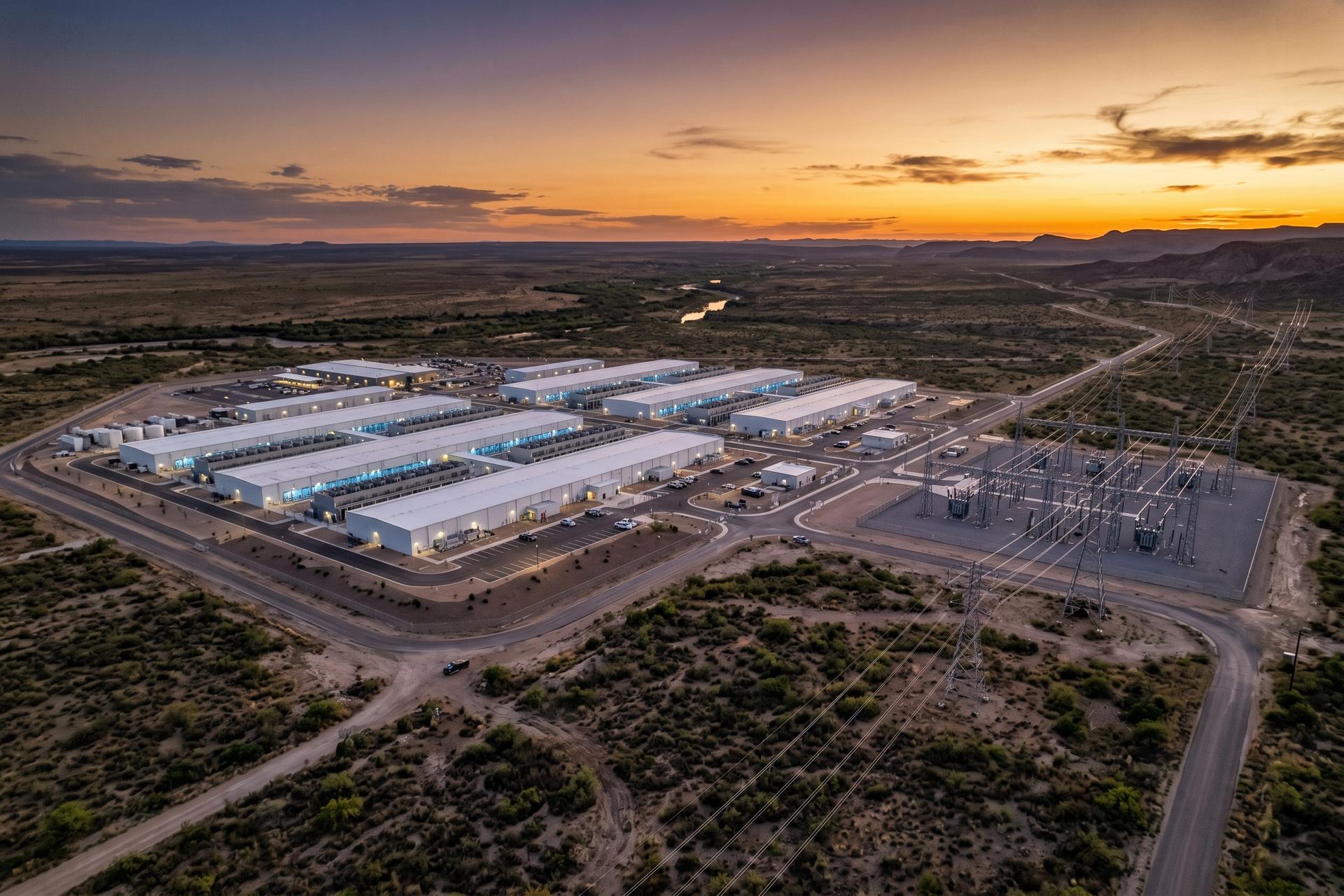
GLXY stock belongs to a crypto company that is quietly turning into something else. Galaxy Digital made its name as a trading and asset-management firm run by Mike Novogratz, a place where institutions go to buy, sell, and borrow against digital assets. Yet the thing now moving the share price the most is not a Bitcoin trading desk. It is a fifteen-year lease on a data-center campus in the West Texas desert, signed with an artificial-intelligence cloud company.
That single contract is why the market is starting to reprice GLXY. For years the stock traded as a pure bet on crypto. In 2026 it is becoming a hybrid: a crypto-finance business bolted to an AI-infrastructure landlord with a billion-dollar-a-year income stream coming online. This article explains what Galaxy actually is, what drives GLXY stock, the Helios data-center pivot that has become the real story, what the latest earnings show, and the risks worth weighing before anyone buys.
What is Galaxy Digital (GLXY)?
Galaxy Digital Holdings is a crypto-focused financial-services company that trades on the Nasdaq under the ticker GLXY. It was founded by Mike Novogratz, a former hedge-fund manager who became one of the more visible institutional voices in crypto.
The company runs three distinct businesses. Global Markets is the trading arm: it offers institutional access to trading, lending, derivatives, and capital-markets and advisory services around digital assets. Asset Management runs funds, staking products, tokenization initiatives, and ETFs, with roughly $8 billion in assets under management, or AUM, the industry term for the total client money a manager oversees. Digital Infrastructure is the newest and most talked-about segment. It began as a Bitcoin mining operation and is now being rebuilt into data-center infrastructure that rents computing power to companies building artificial intelligence.
One structural change matters for US investors. In May 2025, Galaxy completed a move of its legal home to the United States and listed directly on the Nasdaq, giving American investors clean access to GLXY stock. Before that, the shares mostly traded in Toronto. For a reader who is not deep in crypto, the appeal is simple: GLXY bundles exposure to crypto markets and the AI data-center boom into a single ticker.
What actually drives GLXY stock?
Four forces move this stock, and it pays to take them in order.
The first is the price of Bitcoin and crypto more broadly. Galaxy carries about $3.67 billion of digital assets on its own balance sheet, so when crypto prices move, the value of that pile moves with them. The accounting term is mark-to-market: the holdings are revalued at current prices each period, and the gain or loss runs straight through earnings. A 10% swing in Bitcoin can move Galaxy's reported results by several hundred million dollars. That is why GLXY still trades, day to day, like a crypto proxy.
The second force is the cycle in trading and asset-management revenue. When crypto volumes are high and AUM is rising, both businesses earn more; when markets go quiet, both shrink. This income is real and recurring, but it is tied to sentiment.
The third force is the Helios data-center option, which we will come to shortly. Investors are increasingly pricing in the future lease income from that campus, even though almost none of it has landed yet.
The fourth force is the cost of building all this: project debt, convertible notes, and new share issuance that funds the data-center buildout. The table below shows where the stock stood in early June 2026.
| GLXY stock snapshot | Figure (as of June 4, 2026) |
|---|---|
| Share price | ~$28.41 |
| Market capitalization | ~$11.1 billion |
| 52-week range | $16.43 - $45.92 |
| Analyst average target | ~$41.56 (Buy, 16 analysts) |
| Exchange | Nasdaq (ticker GLXY) |
| US Nasdaq listing | May 2025 |
Galaxy's three businesses, briefly
It helps to see how the pieces earn their keep before judging the pivot.
Global Markets is the engine. The trading desk, lending book, and banking unit generate most of Galaxy's operating income, but the amount swings with market activity. In the first quarter of 2026, the segment produced about $31 million in gross profit, up 3% from the prior quarter even though sector-wide trading volumes fell roughly 25% over the same stretch. Holding ground while volumes drop is a decent sign of the franchise's stickiness.
Asset Management is the steadier, fee-based business. It ended the first quarter with around $8 billion in AUM and $69 million of net inflows, spread across funds, staking, and listed products. Fee income does not spike the way trading does, but it also does not collapse as fast.
Digital Infrastructure is the wildcard. It is the former Helios Bitcoin-mining site, now being converted into an AI and high-performance-computing campus. Today it contributes almost nothing to revenue. Tomorrow, if the buildout lands, it could become the largest single source of profit. That gap between today and tomorrow is the heart of the GLXY story.
The Helios pivot: from Bitcoin mining to AI landlord
The CoreWeave lease
The center of the thesis is a lease. Galaxy is renting the Helios campus to CoreWeave, an AI cloud provider, to house the servers that train and run artificial-intelligence models. The deal covers 800 megawatts of gross power capacity and 526 megawatts of what the industry calls critical IT load, meaning the power that actually feeds the computers rather than cooling and overhead. It runs for fifteen years. At full utilization, Galaxy projects the lease will generate more than $1 billion in average annual revenue at roughly 90% EBITDA margins, a measure of operating profitability before interest, taxes, and accounting charges. Those terms come from the company's August 2025 project-financing announcement.
The buildout
A lease is only worth what gets built. Galaxy delivered the first data hall at Helios to CoreWeave in April 2026, with the first full phase of 133 megawatts targeted for the second quarter of 2026 and a larger second phase of 260 megawatts slated for 2027. The bigger number is the runway: regulators in Texas have approved more than 1.6 gigawatts of power capacity for the site, double the amount approved a year earlier, according to a January 2026 release, with studies underway that could push the long-term buildout toward 3.5 gigawatts.
Why it matters
The appeal is that this revenue is contracted, driven by AI computing demand, and largely uncorrelated to crypto prices. A trading firm whose results lurch with Bitcoin would gain a steady, fifteen-year annuity that pays the same whether Bitcoin is at $40,000 or $120,000. That is a genuinely different risk profile. The honest caveat is timing: lease revenue only begins flowing in the second quarter of 2026. For now, the $1 billion figure is a promise on the income statement, not a result on it, and the market's willingness to price it into GLXY stock ahead of delivery is itself a risk.
Reading the latest GLXY earnings
The recent numbers look alarming until you read them carefully. Galaxy reported a net loss of $216.3 million for the first quarter of 2026 as the total crypto market fell about 20% over the period; for full-year 2025 it reported a net loss of $241 million, per its FY2025 results. Most of that red ink is the mark-to-market effect described earlier, not cash walking out the door.
A second figure needs context. Galaxy reports "gross" trading revenue that can run to $10 billion in a single quarter. That number includes the cost of the assets it trades, so it vastly overstates what the company actually keeps. Net revenue is a tiny fraction of the gross flow. Treat the $10 billion headline as turnover, not profit.
The data-center segment, meanwhile, is still almost invisible in the accounts: about $3.1 million in the first quarter, essentially interest income, with no lease revenue yet, and $7.2 million in adjusted gross profit for all of 2025. That changes from the second quarter of 2026 onward.
| Galaxy financial snapshot | Figure |
|---|---|
| Q1 2026 net loss | -$216.3M |
| FY2025 net loss | -$241M |
| Asset Management AUM (Q1 2026) | ~$8B |
| Cash & equivalents (Q1 2026) | ~$910M |
| Digital assets on balance sheet | ~$3.67B |
| Q1 2026 capex (mostly Helios) | ~$337.9M |
| Data Centers segment profit (FY2025) | $7.2M |
| Gross trading revenue (Q1 2026, gross flow) | ~$10.04B |
The balance sheet is the reassuring part. Galaxy ended the first quarter with roughly $910 million in cash and about $3 billion in equity, alongside that $3.67 billion of digital assets. But the buildout is hungry: capital spending hit $337.9 million in the quarter, most of it Helios.

GLXY among the crypto-to-AI peers
Galaxy is not alone in this move. Across 2024 to 2026, a wave of crypto and mining companies has repurposed power and land into AI data centers. CoreWeave, Galaxy's tenant, is the common thread: it also signed a roughly $10.2 billion deal with Core Scientific. TeraWulf reported some $12.8 billion in long-term high-performance-computing contracts during 2025, and Applied Digital grew quarterly revenue around 250% year over year.
What sets Galaxy apart is scale and diversification. Its 1.6 gigawatts of approved capacity dwarfs the 200-to-500-megawatt footprints of many rivals, and it pairs the data-center bet with established trading and asset-management arms. The shared weakness across the group is concentration: CoreWeave is the anchor tenant for several of these campuses, and CoreWeave itself leans heavily on a few customers, with its top two accounting for about 65% of its own first-quarter 2026 revenue, a single-tenant dependency that applies to GLXY stock as much as to any peer.
The risks every GLXY investor should weigh
Start with Bitcoin, because it still sets the near-term mood. The coin traded near $62,875 on June 5, 2026, roughly 50% below its October 2025 all-time high of about $128,000, and down sharply on the week amid record outflows from spot Bitcoin funds. With $3.67 billion of digital assets on the books, weak crypto means more mark-to-market losses.
Then there is customer concentration. The entire data-center thesis rests heavily on one tenant. If CoreWeave stumbles, Galaxy's marquee growth story wobbles with it, and CoreWeave is itself a young public company dependent on a handful of large AI customers.
Execution and leverage are the third worry. A multi-phase, multi-billion-dollar buildout is hard, and Galaxy is funding it with a $1.4 billion project facility, $1.3 billion of exchangeable notes, and new equity. That adds both debt and dilution, and the heavy spending shows up every quarter. On top of that, meaningful lease revenue does not arrive at scale until 2027, so earnings stay crypto-correlated in the meantime. Add the usual key-person risk around Novogratz and an unsettled regulatory backdrop for crypto, and the picture is clear: this is not a low-volatility stock.
So, is GLXY stock a buy right now?
It depends on what you are buying. The bull case is that GLXY offers a diversified crypto-finance franchise plus a contracted, roughly 90%-margin, crypto-uncorrelated data-center annuity that is just starting to switch on, with analysts on average targeting about $41.56 against a price near $28.41. The bear case is that it is still a Bitcoin proxy posting quarterly losses, leaning on a single tenant, piling on leverage, with lease revenue that exists mostly on a slide deck so far.
The honest framing is that GLXY is two bets in one ticker: crypto holding up, and Helios delivering on time. If both go right, today's price may look modest in hindsight. If either disappoints, the stock has plenty of room to fall. Position size and risk tolerance, not excitement about AI, should decide whether GLXY stock fits a portfolio. None of this is investment advice.