OXXO: Mexico’s convenience store giant and payment rail
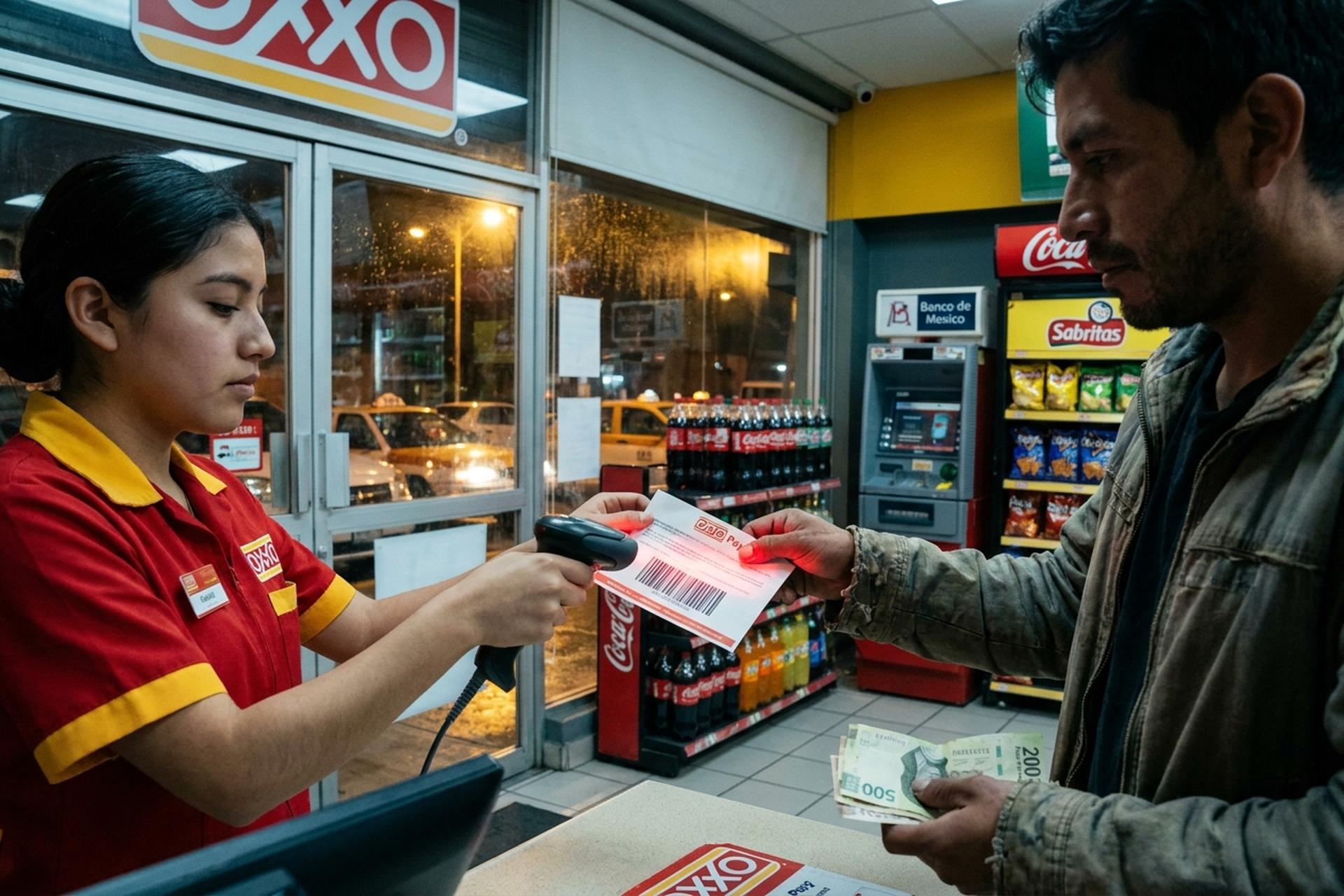
Walk any street in Mexico City and you pass an OXXO every few blocks. Step into a small town in Veracruz and the same red-and-yellow logo sits on the corner. FEMSA, the Monterrey conglomerate that owns the chain, reported 23,206 OXXO stores in Mexico at the end of 2024, plus another 1,000 or so across Colombia, Chile, Peru, Brazil, and (newly) the United States. Forty-seven years old. Largest convenience-store network in Latin America. Upwards of 140,000 employees on the payroll.
The chain matters for two reasons most foreign readers underestimate. First, it is a cultural fixture, the way 7-Eleven is in parts of Asia. Second, it is a payment rail. Through OXXO Pay, the chain processes a substantial share of Mexican ecommerce. Roughly half the country's adults are unbanked. They still settle online purchases in cash, and OXXO handles about half of that voucher flow. This article walks through what OXXO is, how its payment system works, where its limits show, and how newer rails (Banxico's SPEI, crypto-backed gateways) are filling in the gaps.
What is OXXO and why everyone in Mexico knows it
OXXO is a Mexican chain of convenience stores, open twenty-four hours, sized somewhere between a corner shop and a small supermarket. The typical OXXO convenience store sells snacks, drinks, coffee, beer, prepaid mobile airtime (locals use the verb "prepay" almost as a generic for topping up phone credit), bus tickets, lottery, bill payments, and OXXO Pay vouchers. The chain is so dense and ubiquitous in Mexico that a running joke says if you cannot find one of these stores, look behind you. As of YE 2024, this convenience store chain operates 23,206 locations across Mexico, plus over a thousand more elsewhere in Latin America and a fast-growing footprint of convenience stores in the U.S., concentrated in Texas. Coverage is national in Mexico and increasingly regional across the Americas.
The history of OXXO from 1977 Monterrey to today
First OXXO store: late 1970s, Guadalupe, Nuevo León. A working-class suburb of Monterrey. FEMSA founded the chain with a clear motive. Soft-drink trucks were already running every day across northern Mexico. Pushing higher-margin convenience products through the same trucks was the obvious next step.
Growth was slow for two decades, then took off. Store number 1,000 opened in 1998, twenty-one years after store one. By July 6, 2010, the network hit 9,000 in Oaxaca. Four years later the chain had passed 15,000 stores across Mexico. FEMSA's YE 2024 report tallied 23,206 stores in Mexico, with another 1,104 net new openings in 2025.
A compact view of the expansion timeline:
| Year | Milestone |
|---|---|
| Late 1970s | First OXXO store opens in Guadalupe, Nuevo León |
| 1998 | 1,000th store opens |
| 2009 | First international store, in Colombia |
| 2010 | 9,000th store opens (Oaxaca, July 6) |
| 2014 | More than 15,000 stores across Mexico |
| 2024 | 23,206 stores in Mexico (FEMSA YE 2024 report) |
| 2024-2025 | First US store opens (Odessa, Texas, February 2025) after $385M Delek acquisition |
The company is now opening roughly three OXXO locations every working day in Mexico alone. For reference, that puts the chain on the same scale as 7-Eleven Japan in absolute store count, while occupying a country with roughly two-thirds of Japan's population.
Two structural factors drove the expansion. First, Mexico's high-cash, low-banking-penetration retail environment made convenience stores essential for daily needs: soft drinks, prepaid phone credit, voucher redemption, utility bills, cash withdrawals. Second, FEMSA's logistics scale meant new stores could be opened profitably in towns where a standalone supermarket would not break even. The story is less about retail innovation than about distribution scale.
FEMSA and OXXO: business inside a Coca-Cola empire
A question that surfaces almost every time someone asks where these stores come from: does Coca-Cola own OXXO? Short answer, no. The parent and majority owner is FEMSA (Fomento Económico Mexicano), a Monterrey-based conglomerate. FEMSA stock trades on the Mexican Stock Exchange and as an ADR on the NYSE. The Coca-Cola link is real but indirect. FEMSA owns Coca-Cola FEMSA, the largest Coca-Cola bottler on Earth by volume, which makes FEMSA one of the most important commercial partners The Coca-Cola Company has anywhere.
The relationship matters at the retail level. Coca-Cola FEMSA's bottling and distribution network feeds the convenience stores cold drinks at a cost structure smaller chains cannot touch. Vertical integration: bottling plant, truck, shelf, customer. That is the moat. FEMSA earmarked MX$58 billion in 2025 capital expenditure across OXXO, the Spin fintech unit, and other Proximity Americas businesses, which gives some sense of the cash keeping the expansion running.
OXXO Pay: how cash payment vouchers actually work
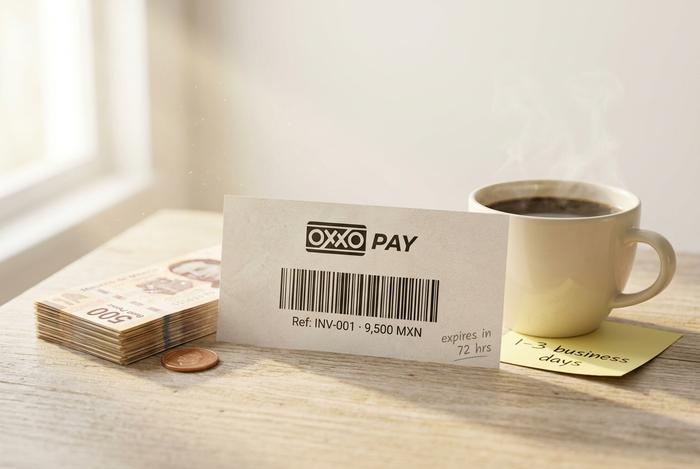
OXXO Pay is the rail that lets unbanked or card-averse Mexican shoppers pay for online purchases in cash at any participating store. The flow is simple in principle. At checkout on a merchant's site, the customer selects "Pay at OXXO" instead of a credit card. The merchant's payment processor (Stripe, Conekta now Digital Femsa, Nuvei, Adyen, EBANX, PayU, Mercado Pago, Braintree) generates a voucher with a reference code and a barcode. The customer prints the voucher or saves it to a phone, walks into any branch, hands it to the cashier, pays in pesos, and walks out. The cashier's scan triggers a settlement webhook that eventually reaches the merchant.
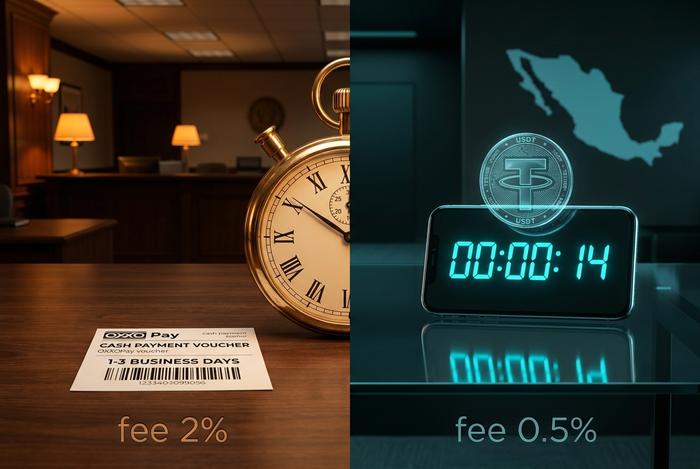
Three limits define what OXXO Pay can and cannot do. First, the per-voucher cap is 10,000 MXN, roughly USD 550 at mid-2025 exchange rates. Some processors apply tighter caps closer to 7,000 MXN. Second, voucher expiry defaults to three days; configurable up to about five business days. Third, and this is the one merchants underestimate, confirmation latency. Stripe documents that OXXO Pay confirmation can take up to one business day — other guides put settlement at one to three business days in total. The merchant does not know whether a sale closed until OXXO settles and the webhook arrives.
Merchant fees on OXXO Pay typically sit around 2% per transaction, varying by processor. The customer sometimes pays an additional convenience charge of around 1% at the counter, depending on the processor and the merchant's pricing. Compared to credit-card processing in Mexico (often 3-4% all-in), the rate is competitive, especially when the alternative is no sale at all. Roughly 21% of Mexican ecommerce purchases settle in cash, and OXXO accounts for around half of that voucher volume; call it 10% of all Mexican online TPV.
OXXO's expansion across Latin America and into Texas
Colombia got the first overseas store, in 2009. Sixteen years later, Colombian count: 569 (YE 2024). Peru followed in February 2015 with a store in Lima; by YE 2024 the count was 203. Chile broke the pattern. Rather than build, FEMSA bought. Mid-2016: the local Big John chain. Rebrand, repaint, re-shelve. By the end of 2024 the Chilean network counted 235 stores. Brazil arrived in December 2020, weirdly enough, through a joint venture with Raízen (the Cosan-Shell fuels group).
Then came the surprise. August 2024. FEMSA agreed to buy 249 Delek US convenience stores for USD 385 million. The first US conversion opened February 26, 2025, in Odessa, Texas. The Texas play targets customers who already drive south to shop at Mexican branches, plus the broader Latino retail market across the US southwest.
OXXO Pay limits that push merchants to alternatives
OXXO Pay works well for what it is. It also has structural ceilings that nudge certain merchants toward other rails. The 10,000 MXN cap kills higher-ticket items: B2B invoices, a flight, an annual SaaS subscription paid in one shot, a piece of furniture above the cap. The one-to-three-day settlement latency kills anything that needs an instant pay-or-fail decision: subscription billing, gaming top-ups, marketplaces releasing goods only after payment clears. Cash-handling overhead at the branch adds friction at scale. And though voucher payments avoid chargebacks, they also strip out the fraud-signal layer card networks provide, leaving merchants more exposed to certain abuse patterns.
Two categories of alternatives matter for merchants that hit those ceilings. Bank-rail instant payments (SPEI, CoDi, DiMo) for the banked half of the market. Crypto-payment gateways for cross-border, higher-ticket, or instant-settlement cases.
The table below summarises the trade-offs across the three main rails available to a Mexican merchant.
| Rail | Typical fee | Settlement time | Per-transaction ceiling | Bank account required | Best for |
|---|---|---|---|---|---|
| OXXO Pay | ~2% merchant + ~1% customer | 1-3 business days | 10,000 MXN (~USD 550) | No | Unbanked retail, sub-cap ecommerce |
| SPEI / CoDi (Banxico) | Free to ~MX$8 per transfer | Seconds | None practical | Yes | Banked retail, B2B, refunds |
| Crypto gateway (USDT/USDC) | ~0.5-1% flat | Minutes | None | No | Cross-border, higher ticket, instant settlement |
Crypto payments as an OXXO alternative for higher tickets
Mexico is, structurally, a stablecoin country. Chainalysis ranked Mexico fourth in Latin America in its 2025 Geography of Crypto Report, with USD 71.2 billion in crypto value received between mid-2022 and mid-2025. More striking: Mexico carried 47% of all Latin American stablecoin transaction volume in the first half of 2025 — up from 45% one year earlier — per Bitso Business research. Stablecoins overtook Bitcoin in LATAM crypto purchases in 2025 and now account for roughly 40% of regional crypto buys. Bitso, the country's dominant exchange, is on a USD 15.6 billion Mexico TPV annualized run-rate.
That depth makes crypto gateways a credible alternative for the use cases where OXXO Pay breaks. A merchant integrating a crypto-payment processor like Plisio settles in USDT, USDC, or BTC; the customer can pay from a wallet anywhere in the world. Plisio charges a flat 0.5% per transaction (against OXXO Pay's roughly 2% merchant fee), supports more than fifty cryptocurrencies, and ships nineteen ecommerce-platform plugins including WooCommerce, Magento, and OpenCart. Settlement happens in minutes, not days. No 10,000-peso cap. No chargebacks. No bank account required at either end of the transaction.
The trade-offs are real. Crypto rails depend on the customer already holding stablecoins or being willing to buy them, a hurdle for the unbanked OXXO customer who would otherwise pay in cash. Volatility is contained by stablecoins but not eliminated. And tax treatment of crypto payments in Mexico is still evolving. The honest picture: OXXO Pay and crypto rails are complementary, not substitutes. OXXO covers the unbanked cash-paying customer at lower tickets; crypto covers the higher-ticket, cross-border, instant-settlement case that OXXO structurally cannot reach.
OXXO vs SPEI and CoDi: where Banxico's rails fit
Mexico has its own instant-payment system, SPEI (Sistema de Pagos Electrónicos Interbancarios), run by Banxico. In 2024 SPEI processed 5.34 billion transactions worth MX$219 trillion (roughly USD 12 trillion), with transaction volume up 39% year on year. CoDi, the QR-based retail layer on top of SPEI, handled around 17 million transactions in 2024, up 23%. DiMo, the newer mobile-phone-number-based scheme, had crossed 7 million registered accounts by May 2024.
These rails compete with OXXO Pay only for the banked half of the Mexican population. SPEI requires a bank account; so does CoDi; so does DiMo. The unbanked customer who pays in cash at the OXXO counter is structurally outside Banxico's instant-payment system. SPEI is taking share from cards and wire transfers, not from OXXO. The OXXO question is about cash, not speed.
Pronunciation, memes, and OXXO in Mexican culture
How do you pronounce OXXO? In Mexican Spanish: "OK-so." Double X reads as a single soft "ks." Visual joke baked into the brand: the four letters O-X-X-O trace the silhouette of a shopping cart from above, two Xs as the wheels. Whether that was the original design intent or post-hoc folklore is genuinely contested. What is not contested is the cultural footprint. Memes about omnipresence. Memes about the eerie sameness of every store layout. The strange comfort of a 3-a.m. soda from one. For better or worse, OXXO is part of how Mexico thinks about everyday convenience.