B2B Payments: Methods, Process, and How They Work
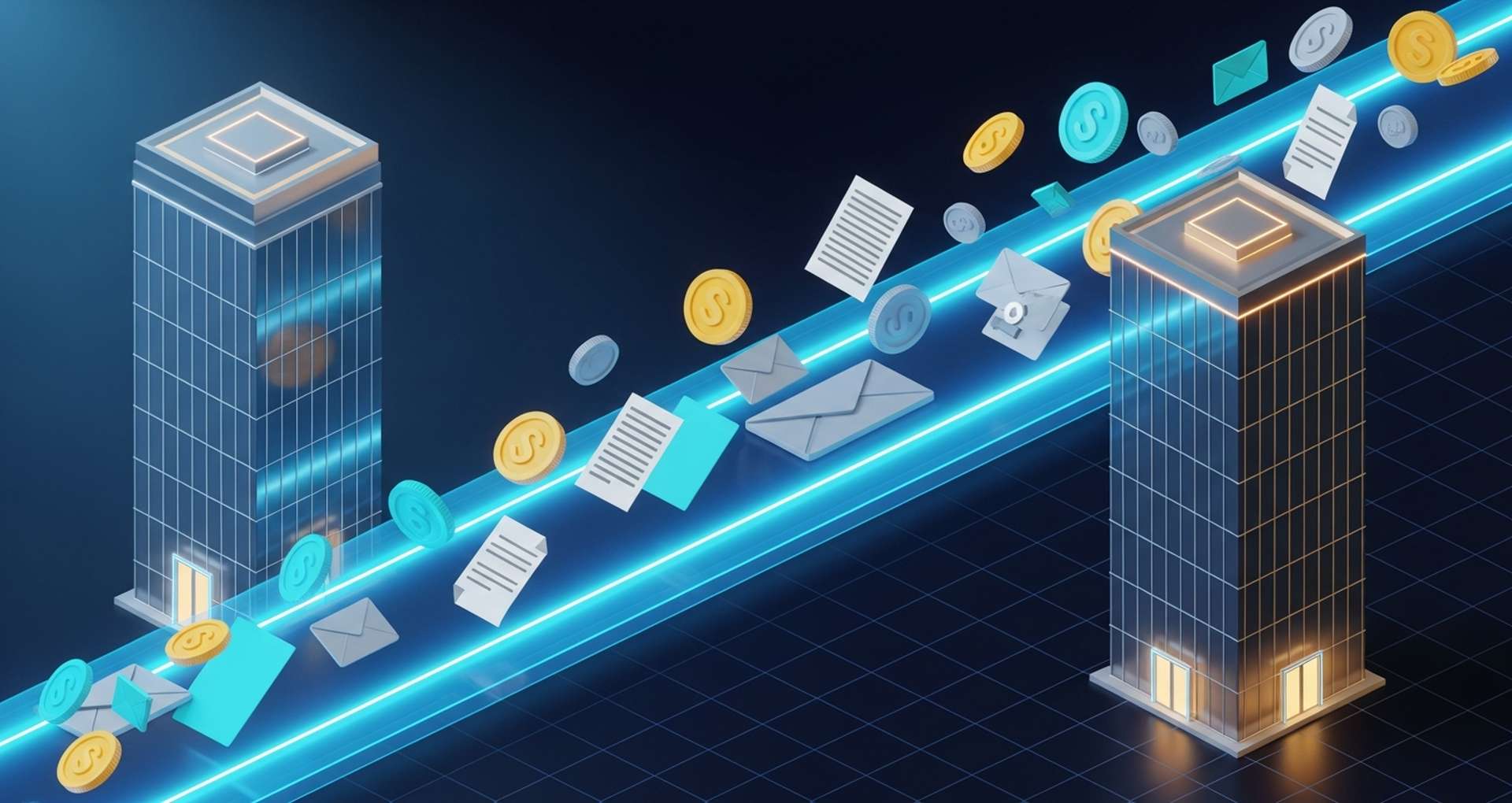
Something like $1.5 trillion moved between businesses globally in 2022. That figure is on track for $3.7 trillion by 2032. And most of it still moves through systems designed in the 1970s.
Paper checks that take a week to clear. ACH batches that process overnight on banking days only. SWIFT wires routed through three correspondent banks, each taking a cut, arriving days later. This is how B2B payments work today — not because better options don't exist, but because switching is slow and institutional habits run deep.
What follows is a practical breakdown: what B2B payments actually are, how the payment cycle works end to end, what each payment method costs, and where digital payment solutions — including crypto — are starting to change the math.
What Are B2B Payments?
A B2B payment is money moving between two businesses. That is the short version. The longer version is that this simple movement of funds usually involves a purchase order, a delivery confirmation, a formal invoice, a multi-person approval chain, and a payment timeline stretching 30 to 90 days after the goods already changed hands.
A steel manufacturer selling to a car parts factory. A design agency billing a retailer for six months of work. An e-commerce brand paying the 3PL handling its warehouse. These are all B2B transactions — business-to-business in the most literal sense, with terms and workflows that have no equivalent in consumer purchases.
The money amounts get large fast. Individual B2B transactions routinely run into six figures. Which is why nobody just clicks checkout. Procurement teams review the purchase order. Finance approves the spend. Legal may review the contract. Only then does payment actually happen.
And the timing is entirely different from retail. Net-30, Net-60, Net-90 — these are the payment terms businesses agree to, meaning a supplier delivers in January and might not see money until April. That gap has real cash flow consequences for anyone on the receiving end.
How Do B2B Payments Work?
Money does not move instantly in B2B. The payment cycle is a sequence, and the sequence has friction built into every step.
It starts with a purchase order. The buying company documents what it is ordering, at what price, under what terms. The vendor fulfills, then issues a delivery receipt. An invoice follows, referencing the original PO with line items and totals.
Then comes the part that causes most delays: 3-way matching. Someone on the accounts payable team has to confirm that the PO, the delivery receipt, and the invoice all tell the same story. Quantity discrepancies. Unit price differences. A PO number typed wrong on the invoice. Any mismatch stops the process until it gets resolved.
Once matched, the invoice goes through internal approval. On larger amounts, multiple sign-offs are required. Only after the last approval does the payment actually initiate — via ACH, wire transfer, check, card, or increasingly, crypto.
Settlement follows. The vendor gets the funds. Both sides update their accounting records.
Here is the full B2B payment cycle laid out as steps:
- Purchase order (PO) creation — the buyer documents what is being purchased, at what price, and under what terms.
- Delivery — goods arrive or services are rendered; the seller issues a receipt or delivery confirmation.
- Invoice submission — the vendor sends an invoice tied to the original PO, listing quantities, unit prices, and the total due.
- 3-way matching — the accounts payable team checks that the PO, the delivery receipt, and the invoice all agree.
- Approval — depending on deal size, one or more internal approvers must authorize payment.
- Payment initiation — the buyer sends funds via ACH, wire transfer, check, card, or crypto.
- Settlement — the vendor receives funds in their account.
- Reconciliation — both sides update their books.
The average US business takes 34 days to pay an invoice. Add Net-60 terms on top of a slow approval workflow and the total payment cycle from PO to cleared funds can stretch past 90 days. Manual invoice processing costs businesses about $8 per invoice — not a lot individually, but painful at volume.
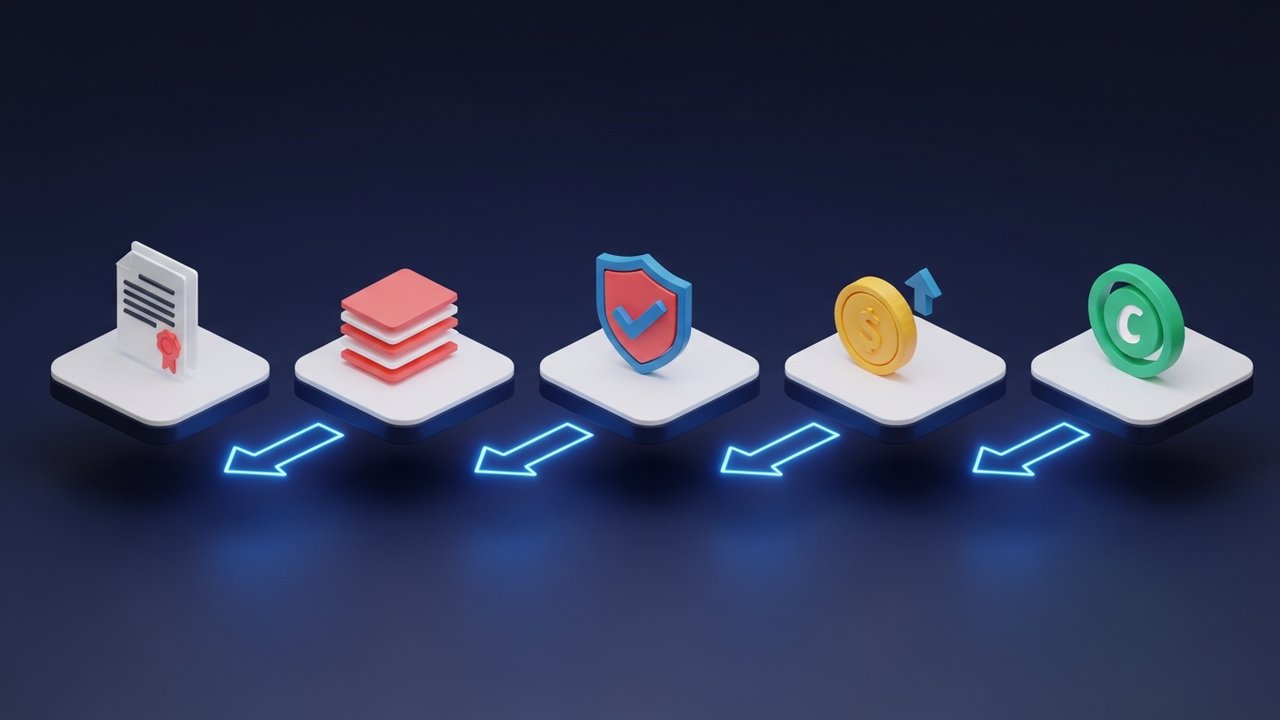
Common B2B Payment Methods
The choice of payment method shapes the entire experience on both sides of a B2B transaction — how fast money arrives, what it costs to send, and how much manual work it creates.
| Method | Settlement Time | Typical Cost | Best For |
|---|---|---|---|
| Paper checks | 3–7 days | $4–20 per check | Legacy vendors requiring checks |
| ACH transfer | 1–3 business days | $0.25–$1.50 | Domestic recurring payments |
| Wire transfer | Same day–24 hours | $15–45 domestic / $20–100 international | Large, urgent one-off payments |
| Credit/debit card | 2–3 business days | 1.5–3.5% of transaction | Smaller B2B purchases |
| Virtual cards | 2–3 business days | Often rebate-eligible | AP automation, controlled spending |
| Crypto / stablecoin | 5–30 minutes | 0.1–1% | Cross-border, instant settlement |
Paper checks are still more common than most finance teams want to admit. As recently as 2025, 26% of US B2B payments were made by check — down from 33% three years earlier, but still significant. Checks cost $4 to $20 each to process, take 3 to 7 days to clear, and introduce real fraud risk through mail handling.
ACH (Automated Clearing House) transfers are the dominant digital alternative for domestic payments. They cost almost nothing — $0.25 to $1.50 per transaction — and work reliably. The limitation is that ACH runs on banking hours and batch cycles. Same-day settlement exists but is not universal, and it does not work on weekends.
Wire transfers solve the speed problem for large or urgent payments. Domestic wires can settle the same day. The catch is cost: $15 to $45 for a domestic wire, $20 to $100 for international. Route it through SWIFT internationally and you may also lose 2 to 5% on currency conversion on top of the fee.
Virtual cards are gaining ground in AP automation. Each one is a single-use 16-digit number tied to a specific invoice amount. That structure makes reconciliation cleaner and fraud harder.
Cryptocurrency and stablecoins round out the picture as the newest option. They settle in minutes, 24/7, at costs well below wire transfer fees. More on how they fit into B2B payment workflows in the section below.
B2B vs B2C Payments: Key Differences
B2C payments (business-to-consumer) and B2B payments run on completely different logic. A checkout optimized for consumer purchases will fail in a B2B context, and vice versa.
| Factor | B2B | B2C |
|---|---|---|
| Transaction size | $500 – $500,000+ | $10 – $500 typically |
| Payment terms | Net-30 / Net-60 / Net-90 | Immediate at checkout |
| Approval process | Multi-step procurement review | Single-click purchase |
| Relationship type | Long-term contracts | One-time or repeat consumer |
| Invoicing | Formal, PO-referenced | Receipt at point of sale |
| Dispute resolution | Contracts, arbitration | Chargeback via card issuer |
B2B needs invoice management, payment terms, multi-currency support, and approval routing baked into the payment system. Most consumer gateways do not offer any of that.
Challenges in Traditional B2B Payment Processing
The B2B payment process has barely changed in four decades. The same problems show up across industries, company sizes, and geographies.
- Float locks up working capital. ACH takes 1 to 3 business days; a paper check takes up to a week and still requires someone to physically deposit it. Every day of float is money the business cannot deploy elsewhere.
- Manual 3-way matching is a reliability problem. Comparing PO, delivery receipt, and invoice by hand means humans touching every transaction. One wrong line item, one transposed digit, one missing PO reference — payment stops and someone spends an afternoon tracking down the discrepancy.
- International wire transfers are expensive in ways that are easy to miss. SWIFT fees of $20 to $100 per wire plus a 2 to 5% FX conversion spread means a $50,000 supplier payment might deliver $46,500 to the vendor. That gap compounds fast across multiple international payments per month.
- Tracking wires in transit is genuinely difficult. Once a wire leaves your bank, status updates are sparse. Days can pass with nothing more than confirmation it is in the system somewhere.
- Check fraud remains a real operational risk. Altered amounts, counterfeit instruments, mail theft. ACH fraud adds a different layer: debits can be disputed and reversed for up to 60 days, leaving recipients uncertain whether received funds will stay.
- Reconciliation is where the hours go. Finance teams matching payments to invoices manually — across multiple vendors, currencies, and payment methods — routinely spend multiple working days per month on a task that should take hours.
These are not edge cases. They are the default experience for most businesses still running traditional payment rails.
Crypto and Digital Solutions for B2B Payments
This is where the real shift is happening — and where most B2B payment guides stop short. None of the top-ranking articles on this topic properly address cryptocurrency and stablecoins as practical business payment tools. That gap exists; this section fills it.
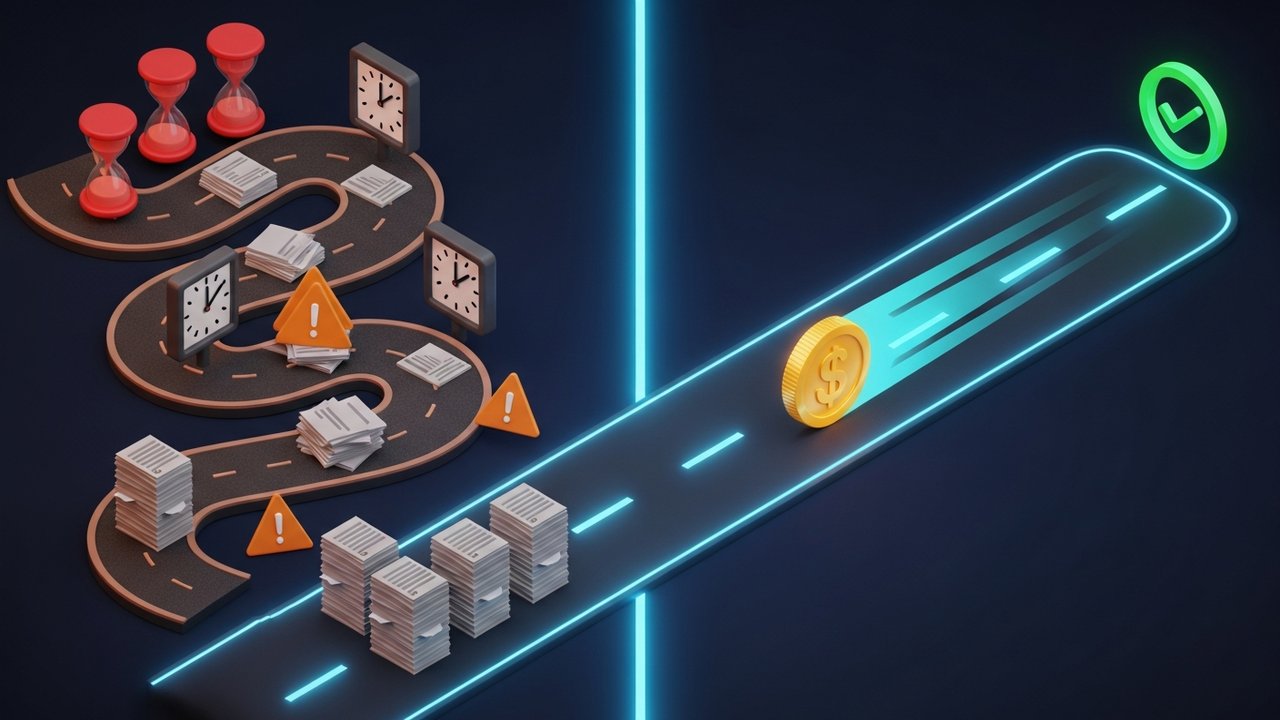
Blockchain payments settle in minutes, around the clock, every day of the year. No banking hours, no batch windows, no correspondent banks stacking fees. A payment that would take five business days via SWIFT and cost $80 in fees settles in 20 minutes on-chain at a fraction of the cost. For international B2B specifically, this is not a marginal improvement. It is a category shift.
The obvious objection to crypto in business payments is price swings. Nobody wants to send $100,000 to a supplier and have it arrive worth $85,000. Stablecoins solve this. USDC and USDT are pegged 1:1 to the US dollar — they move on blockchain rails at crypto speed but carry no price risk for either party.
A buyer in Singapore can pay a German supplier in USDC. It clears in 15 minutes. No FX spread. No SWIFT fees. No bank closed for a holiday.
Beyond speed, blockchain adds things that wire transfers simply cannot offer:
- Immutable records — every transaction is timestamped and permanently on-chain. There is no ambiguity about whether payment was sent or when.
- Settlement finality — unlike ACH, which stays reversible for up to 60 days, a confirmed blockchain transaction cannot be undone. That removes a significant fraud vector.
- Automated reconciliation — each transaction has a unique hash and verifiable metadata. Matching payments to invoices can be automated rather than done by hand.
Settlement speed compared:
| Method | Settlement Time |
|---|---|
| ACH transfer | 1–3 business days |
| Wire transfer (domestic) | Same day |
| SWIFT (international) | 2–5 business days |
| Crypto / stablecoin | 5–30 minutes |
For businesses making regular international B2B payments, the cumulative savings on fees alone justify the switch. A company moving $500,000 per year in cross-border payments at a blended 3% cost saves $15,000 annually by routing through stablecoins instead.
Plisio is a crypto payment gateway built for exactly this use case — businesses that want blockchain settlement speed without managing wallet infrastructure. It supports multiple cryptocurrencies including stablecoins, handles automatic fiat conversion where needed, and integrates into existing payment workflows without requiring in-house crypto expertise.
Best Practices for Efficient B2B Payment Processing
Better B2B payments come from process design as much as technology choice. These seven practices make a consistent difference:
- Automate invoice processing. Manual data entry is where most errors start. Automation software extracts line items, matches them to POs, and flags discrepancies before they cause delays.
- Put payment terms in writing — everywhere. Net-30 goes in the contract, the PO, and on every invoice. Ambiguity about payment dates is the leading cause of disputes.
- Replace checks with ACH for domestic recurring payments. A check costs $4 to $20 to process. ACH costs $0.25 to $1.50 and eliminates the mail-theft risk entirely.
- Integrate your payment platform with your accounting software. Disconnected systems mean double data entry and reconciliation mismatches. Native integrations with QuickBooks, Xero, NetSuite, or SAP save hours every month.
- Give suppliers multiple payment methods to choose from. Different vendors have different banking setups. ACH, wire, card, and crypto options reduce friction on both sides.
- Use stablecoins for international supplier payments. Cross-border payments routed through SWIFT accumulate fees and delays. Stablecoin transfers cut both significantly.
- Track accounts payable aging every week. Late payments trigger penalties and damage supplier relationships. A simple aging report — showing what is due, overdue, or approaching — keeps the whole pipeline visible.
How to Choose a B2B Payment Solution
There is no single best B2B payment platform. A company running $2M a year through domestic ACH has entirely different requirements than one managing cross-border supplier payments across 15 currencies. The starting point is getting specific about what you actually need.
Payment method coverage is usually the first filter. If your suppliers are in Germany, Brazil, and South Korea, you need a platform that handles those corridors — not just US domestic ACH. Crypto settlement is increasingly relevant here because it sidesteps the correspondent banking chains that make international wire transfers slow and expensive.
The fee structure deserves more scrutiny than it usually gets. Per-transaction costs are the number providers advertise. But monthly platform fees, minimum volume commitments, and FX conversion margins can change the math considerably. Model your actual usage before assuming the headline rate reflects what you will pay.
Integration with your accounting stack is what determines whether you gain efficiency or just shift the manual work. A digital payment solution that talks to QuickBooks or NetSuite turns reconciliation into an automated step. One that does not connect to anything means someone still exports CSVs and matches records by hand.
Compliance matters in B2B more than in consumer payments because the transaction sizes are larger. PCI DSS certification, AML screening, KYC for business entities — these are protections, not checkboxes. Find out what the platform actually does in each area, not just what the sales deck says.
For teams with engineering resources, API access can turn the entire payment workflow into an automated backend process. Without an API, someone is still triggering payments manually or uploading batch files. Decide early which you actually have.