PolyBuzz AI Review: AI Character Chat App, Tested

Here is the strange thing about PolyBuzz. On Apple's store it holds a 4.4-star rating from more than 431,000 reviewers on the Apple App Store. On Google Play it scrapes 3.9 from nearly a million Android users. Same app. People adore PolyBuzz AI and quietly resent it, often for the same reasons. So this review goes after that split head-on: how the AI character chat actually feels, what the paid plans really cost, whether your conversations stay private, and how PolyBuzz holds up against Character AI, Replika and the rest of the field.
What PolyBuzz AI is, and the Poly.AI rebrand
PolyBuzz did not start from scratch. The app is Poly.AI under a new name, and that history explains a lot of its rough edges. The maker is Cloud Whale Interactive Technology LLC, a developer registered in Delaware with a Singapore arm, which rebranded Poly.AI as PolyBuzz on January 25, 2025. The pitch did not change. It is an AI chat platform built around immersive roleplay and character creation, not the dry question-and-answer style of a general AI chatbot.
Underneath the genres, PolyBuzz is a library of AI characters you talk to. The company claims more than 20 million of them, most built by users, filed under tags like anime, fantasy, horror, celebrity and a long list of romance categories. Pick a persona, or build your own, and you start chatting. One thing worth clearing up early, because it trips people up: the image and video tools many users expect live in the parent platform, WeShop AI, not inside PolyBuzz itself. The app you download is a chat app first.
That focus paid off in raw reach. PolyBuzz sits around #5 in the Entertainment category on Google Play in the US, and it still ships updates often, with a release landing in late May 2026. Not bad for a product that did not exist under this name two years ago. It also sets up the tension running through this whole review: an app this popular should not annoy its most loyal users as often as it does.

How PolyBuzz AI character chat and roleplay work
The core loop is simple. You chat with AI characters that hold a persona, and the system keeps the scene moving. Good enough to explain the downloads, clearly. According to AppBrain's tracker, PolyBuzz has passed 49 million installs on Android alone as of June 2026, about 2.2 million of them in a single month. People keep coming back. The catch, which I will get to, is that almost everything good here is metered.
How a conversation actually starts
You open the app to a feed of characters, the way you open a video app to a feed of clips. Tap one. You drop straight into a chat, usually with a written greeting that sets the scene. Each character carries a persona: a short backstory, a speaking style, a mood. You can also set up your own profile so the bot calls you by a chosen name instead of your account name. When it works, the replies feel natural, less like talking to a tool and more like texting someone who stays in character. When it slips, it slips hard, and the illusion is gone.
Creating your own AI character
Character creation is where PolyBuzz earns its community. You give a character a name, a backstory, an opening line, a voice and a dialogue style, then set it public or private. Public ones can be found and collected by other users, which is how the catalogue grew into the millions. Build an original character, watch strangers chat with it, and the appeal clicks. This is the feature that keeps creative writers and anime fans here instead of on a plain assistant.
How PolyBuzz memory works by plan
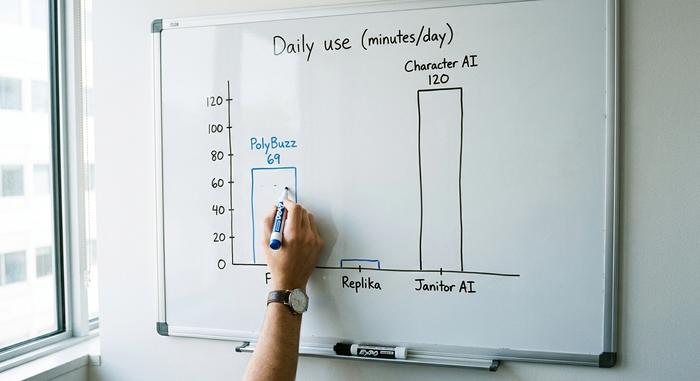
Memory is the biggest immersion-breaker, and it is tied to your wallet. On the free tier the AI holds only a short stretch of recent conversation and prunes the rest, so a character forgets what you told it twenty messages ago. Paid plans stretch that window. The top tier promises permanent memory that carries across sessions. For an app whose whole appeal is continuity, locking memory behind a paywall is a pointed choice, and users notice. It matters more here than on a general chatbot, because roleplay lives or dies on whether the character remembers the story you have been building. PolyBuzz users reportedly spend around 69 minutes a day in the app. Nothing burns through that goodwill faster than a companion that resets mid-scene.
PolyBuzz AI pricing: free tier vs paid plans
Think of the free version as a demo with ads. Reviews keep reporting an interruption roughly every five messages, which is exactly often enough to break a scene. The real product starts at $9.90 a month. Three paid tiers, plus a microcurrency of "coins" and "opals" you buy for one-off unlocks.
| Plan | Monthly | Annual | What you actually get |
|---|---|---|---|
| Free | $0 | — | Full catalogue, short memory, ads every ~5 messages |
| Basic | $9.90 | $99 ($8.30/mo) | Ads removed, longer memory window |
| Premium | $19.90 | $199 ($16.60/mo) | Advanced model, unlimited voice, image unlocks |
| Ultimate | $29.90 | $299 ($24.90/mo) | Top model and permanent cross-session memory |
The coins and opals sit alongside the subscriptions as a second spending lane. You buy them in packs to unlock single things without committing to a plan, which suits people who dip in now and then but quietly adds up for anyone who does not. Annual billing trims the cost: Basic drops to about $8.30 a month, Ultimate to roughly $24.90. So the best deal goes to whoever is already sure they will stay.
Against rivals, none of this is unreasonable, and plenty of long-term subscribers say so. The friction is not really the Basic plan's price. What stings is that the features people care about most, ad-free chat and memory that lasts, are the ones held back until you pay.
Where PolyBuzz AI chat falls short
The recurring complaints are not bugs. They are product decisions you either accept or you do not. Start with that rating gap: 4.4 on iOS, 3.9 on Android, and the Android number rests on nearly a million reviews, so it is no fluke of a small sample. The usual explanation is ad load on the free Android tier, where the interruptions land hardest. An ad every five messages turns a flowing conversation into a stop-start grind. Free users on Android feel it more than anyone.
Two smaller bugs come up again and again in the community. Characters sometimes break the fourth wall and insist they are real people, which shatters the roleplay you came for. And the app occasionally swaps in your profile name instead of the character's, so the bot calls you by the wrong name mid-scene. Neither is fatal, but both chip at the illusion the whole product is selling.
Then there is filter whiplash. Moderation tightens without warning when the app updates, and paying adults are the ones who feel it, because they signed up for one thing and got a stricter version after a patch. Rules that move after you have paid erode trust fast. The last gap is transparency. PolyBuzz never says which language model powers its characters. You do not know if you are talking to a fine-tuned open model or something proprietary, which makes quality drift hard to judge over time.
Is PolyBuzz AI safe? Privacy policy and NSFW
"Private" is doing heavy lifting in PolyBuzz's marketing. The app tells you your chats are confidential, and in the ordinary sense, that other users cannot read your private conversations, that holds. The harder question is what the company itself does with them. Here the privacy policy goes quiet.
Age gating is clear enough. PolyBuzz is rated 18+ on iOS and High Maturity on Android, so it is not built for minors, which matters given how much of the catalogue leans romantic. Public NSFW content is officially banned and policed through a mix of AI screening and human moderation. In private chats the filters loosen, though they never fully switch off, which is the uneasy middle ground a lot of these apps occupy.
What is missing is the part that should not be missing. The privacy policy does not say whether your conversations are used to train the AI, a gap confirmed across more than one independent review. For an app that invites people into intimate, personal roleplay, silence on training is not a small omission. It is the difference between a private diary and a focus group you did not know you joined. And it is not unique to PolyBuzz; the whole companion category wrestles with it, and regulators have started to circle. Italy temporarily restricted Replika in 2023 over data and minor-safety concerns, a reminder that "private" AI companions sit closer to the regulatory spotlight than their marketing lets on.
PolyBuzz AI vs Character AI, Replika and rivals
PolyBuzz lives in a crowded room. It wins on mobile breadth and price. It loses on stickiness and trust. The market around it is large and moving fast: Fortune Business Insights valued the broader AI companion market at $37.73 billion in 2025 and projects $49.52 billion in 2026, a 31% jump in a single year.
Character AI is still the one to beat. DemandSage puts its monthly active users near 20 million in 2026, down from a peak of about 28 million in mid-2024, and its users average close to two hours a day. PolyBuzz's reported 69 minutes a day is strong for the category, but that is roughly half, and that engagement gap is the honest measure of which app people cannot put down. Replika took a different road, leaning into one emotional companion rather than a sprawling cast, with a user base its CEO has put above 30 million and reported revenue around $24 million a year. Janitor AI, web-only and more permissive, pulls the crowd that finds the others too filtered; its last clear public figure was about 8.7 million monthly users, and it has no mobile app at all. PolyBuzz is the only one of the four built mobile-first, which is both its edge and the reason ads hit so hard.
| App | Platform | Scale | Daily use | NSFW stance | Price floor |
|---|---|---|---|---|---|
| PolyBuzz | Mobile + web | ~78M downloads | ~69 min | Filtered, looser in private | $9.90/mo |
| Character AI | Mobile + web | ~20M MAU | ~2 hours | Strict, no NSFW | Free / $9.99 |
| Replika | Mobile + web | 30M+ users | High | Romance gated to paid | ~$19.99/mo |
| Janitor AI | Web only | Millions | Moderate | Permissive | Free / token cost |
Read down the table and PolyBuzz's spot is obvious. It is the mobile-first generalist: broader variety than Replika, looser than Character AI, more polished and app-native than Janitor AI. It leads no single column. That is its weakness, and for plenty of users it is also exactly the balance they want.
Who should start chatting on PolyBuzz
So who is PolyBuzz AI actually for? If you want to browse a huge cast of characters on your phone, build your own, and start without paying upfront, it is one of the easiest places to start chatting in the whole companion space. If you need memory that lasts without a subscription, or you care about knowing which model you are talking to and where your data goes, the gaps are real, and you should weigh them before you get attached. The app is great at the first hour and demanding by the hundredth. Try the free tier with that trade-off in mind, then decide whether continuity is worth $9.90 to you before a character forgets your name.