Kipper AI Review 2026: Essay Writer, AI Detector, and the Truth Behind Undetectable AI Essays
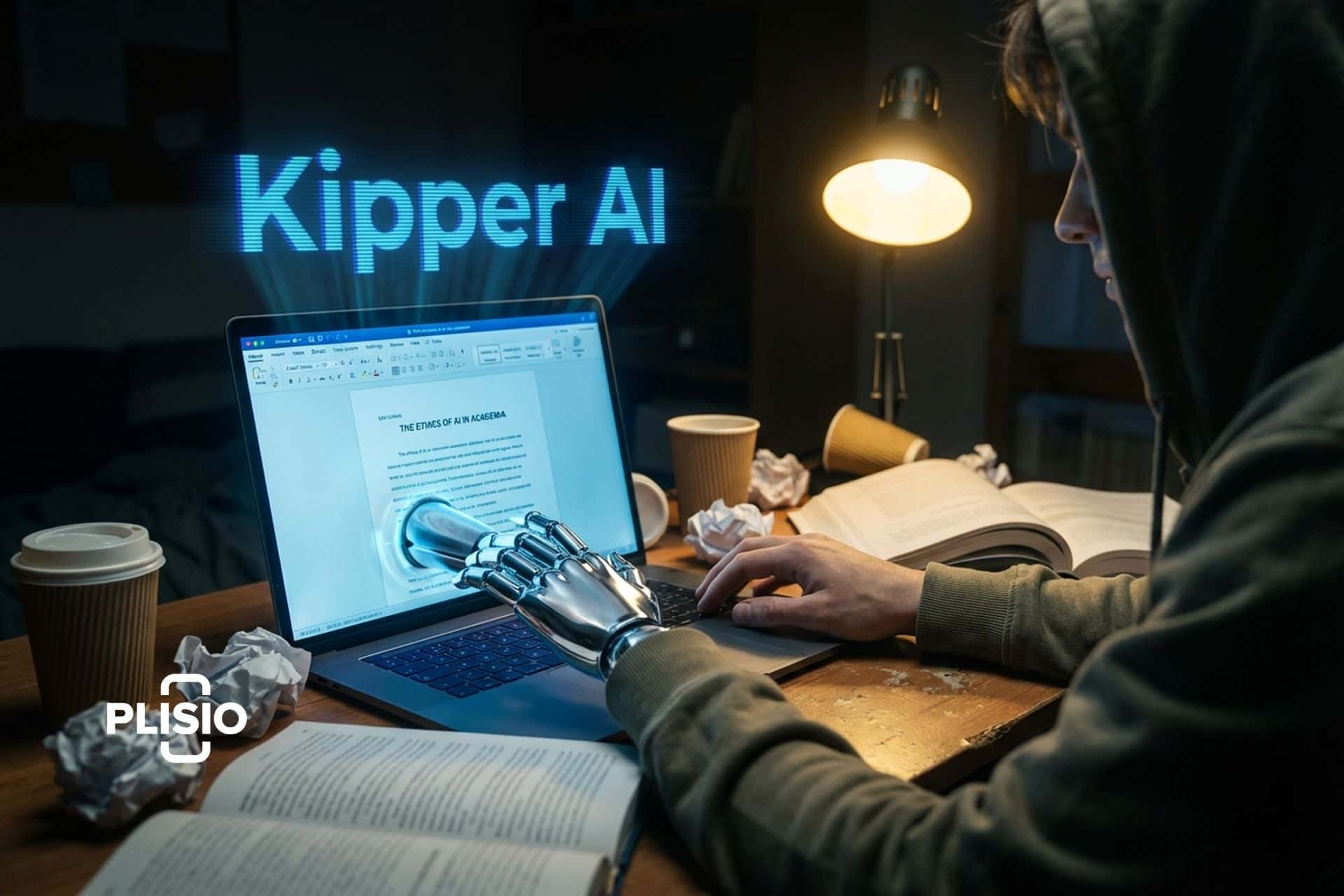
Someone on Reddit asked last month whether Kipper AI is legit or a scam. The replies were predictably all over the place. Half the people said it saved their semester. The other half said they got charged for months after trying to cancel.
That thread stuck with me because it captures exactly what Kipper AI is in 2026: a tool where your experience depends entirely on which version of the product you encounter. The marketing says you can paste a topic, hit a button, and get an undetectable essay in under sixty seconds. Some users report exactly that. Others end up locked in a subscription they cannot escape, holding an essay their professor flagged before they even finished reading the title.
I dug through every Trustpilot review (all 93 of them), the independent test results, and about a dozen comparison articles. None of it painted a simple picture. The ratings split hard at the extremes: 68% five stars, 26% one star, barely anything between. Kipper's built-in AI detector? Gives you totally different numbers than GPTZero does for the same text.
Here is what I actually found after all that reading. Some things work, some things really do not, the pricing makes no sense, and you might be better off spending your money elsewhere.
What is Kipper AI and how does Kipper AI work?
If you strip away the marketing language, Kipper AI is basically an academic writing assistant with some study tools bolted on. Essay writer, summarizer, grammar fixer, chatbot tutor, flashcards, practice exams. The student-focused design is what separates it from just typing your assignment into ChatGPT and hoping for the best. There is also a math solver and a live lecture note-taker that I did not see mentioned in most reviews, but they exist on the platform.
The company behind it is hard to pin down. Stephen Liberatore is listed on LinkedIn as co-founder, based in Canada. The iOS app credits a developer named Arshaluys Asriyan. Beyond that? No company name, no registered address, no "About Us" page. The privacy policy is hosted on Google Docs rather than a proper legal page. That level of opacity is unusual even for a startup.
The essay writing part works like you would expect. Type in a topic, pick your length, choose a citation style (MLA, APA, or Chicago), and this AI-powered tool generates a draft in 30 to 60 seconds. Natural language processing under the hood, same as every other AI tool that claims it can write essays for you. Kipper AI offers what amounts to a paraphrase-and-generate pipeline: it takes your prompt, produces AI-generated text, and then optionally rewrites it to reduce detection scores.
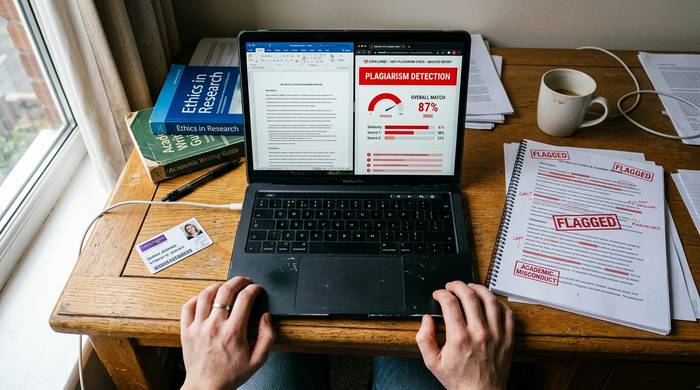
What Kipper AI tries to do differently is the "humanizer." You generate an essay, then run it through this second tool that rewrites your sentences to sound less machine-like. The idea is that professors and their AI detection software will not be able to tell the difference. Nocramming.com tested this pretty thoroughly and gave the platform 2.4 out of 5. Their finding: users often need "at least a dozen attempts" to produce something that reads like a human wrote it. Twelve rounds of clicking for a tool that markets itself as a one-step solution.
There is also a built-in AI detector. Paste text in, get a score for how likely it is to be flagged. I will explain later why this tool gave me some real concerns, but the quick version: Kipper's detector and GPTZero do not agree on much.
| Feature | What It Does | Rating (avg across reviews) |
|---|---|---|
| Essay Writer | Generates full essays from topic prompts | 7/10 |
| Summarizer | Condenses long texts into key points | 7.5/10 |
| Text Enhancer | Grammar correction and style improvement | 7/10 |
| AI Detector | Checks if text appears AI-generated | 6/10 |
| Chatbot Tutor | Interactive Q&A for studying | 8/10 |
| Flashcard Maker | Creates study cards from content | 8/10 |
| Practice Exams | Generates quiz questions with feedback | 7.5/10 |
| Citation Generator | Adds MLA/APA/Chicago references | 6.5/10 |
The chatbot tutor is, in my view, the best thing on the platform. Blockchain Council rated it 9 out of 10. Kipper AI helps students who need quick explanations of hard topics more than it helps anyone trying to generate essays or produce long-form academic work. Students who actually used it for studying rather than essay generation had much better things to say than those who just wanted the essay writer to do their homework for them.
Kipper AI pricing: free plan, Pro Plan, and hidden costs
This is where things get weird. I checked Kipper AI pricing across five different review sites and the platform's own website. I got five different answers. That alone tells you something. And buried in the terms of service is this line: "We no longer offer refunds for our subscriptions. Once you opt for a paid subscription, the fees are non-refundable."
Here is what I could piece together as of early 2026:
| Plan | Price | What You Get |
|---|---|---|
| Free Plan | $0 | 1,000 words per month, basic features |
| Pro Plan (monthly) | $9.99-$19.99/month | Unlimited access to all tools |
| Pro Plan (annual) | $29.99/year (~$2.50/month) | Same as monthly, discounted |
| Business Plan | Custom quote | Volume pricing for institutions |
| Free Trial | 7 days | Full access before billing starts |
The inconsistency is hard to ignore. Global Tech Council's review lists the Pro Plan at $29.99 per month. AcademicHelp found $19.99 monthly and $59.99 annually. Textero's review mentions $0.99 per day, which works out to about $30 per month. Kipper.ai's own website seems to show different numbers depending on when you visit. I have never seen a legitimate SaaS product with this much pricing confusion, and the refund policy makes it worse: "We no longer offer refunds for our subscriptions." Students who need writing tools and want to save time should know what they are paying before committing.
The free Kipper AI plan gives you 1,000 words per month. That is one short essay, maybe two if they are very short. After that, you hit a wall. And here is the part that really bothered me: Textero's review found that "some tools remain locked behind referral requirements despite paid subscription status." So you pay, and you still cannot use everything.
The paid plan billing situation gets worse when you look at Trustpilot. Out of 93 reviews, 26% are one star. The recurring complaint? Users cannot cancel their subscriptions. One person described having to open browser developer tools and manually delete code that was blocking the "manage account" button. Others just kept getting charged month after month, with support emails going unanswered. That is not a bug report. That is a pattern.
The cons of Kipper AI: what reviews actually say
Every AI writing tool has issues. But after reading through dozens of reviews, I think the problems with Kipper AI are more structural than typical early-stage bugs. Kipper AI claims to generate essays that bypass detection, but the reality that reviewers describe does not match that promise.
Start with the essays themselves. The platform generates plagiarism-free essays, or at least that is what the marketing says. AcademicHelp ran a formal test and scored the paper quality at 26.7 out of 50. The test essay? 961 words, generated in 45 seconds, scoring 59.2 out of 100 on their rubric. Their conclusion was blunt: "the AI struggles with creating logically coherent and grammatically correct content." I have seen student work graded more charitably than that.
The AI detector issue is what really got my attention. Kipper AI markets itself around undetectable, AI-generated essays. But when Textero tested it, the platform's own detector "frequently flags its generated content as almost entirely AI-generated." One Trustpilot reviewer did the math: 6% plagiarism on Kipper's internal checker, 71% on external tools. That is not a minor discrepancy.
Customer support is basically email-only. No live chat, no fast response channel. Multiple Trustpilot reviewers say their emails went unanswered. If you are a student with a deadline tomorrow and something breaks, you are on your own.
The humanizer tool is supposed to make AI text sound human. In practice? One Trustpilot reviewer said the output reads "as if a toddler wrote it." It breaks sentence flow and introduces new grammar mistakes while trying to fix the AI-sounding ones.
And I keep coming back to the cancellation problem. This is not one angry person on the internet. It shows up on Trustpilot, Reddit, and review sites from completely different audiences. People get charged $30 a month after they think they have canceled, and the account management page does not work properly.
Does Kipper AI actually generate undetectable AI-generated essays?
Let me be direct here: no, not reliably.
I went through every independent test I could find. Nocramming's team ran a Kipper essay through plagiarism scanners and got 7% flagged. That sounds low until you realize the bigger problem is not plagiarism but AI detection. GPTZero and Turnitin's AI detection module do not look for copied text. They look for writing patterns. And Kipper's output has them: the sentences are too uniform, the paragraph transitions too predictable.
The worst part is the gap between the internal detector and external tools. A Trustpilot reviewer ran the same essay through both. Kipper's checker: 6% plagiarism. External tools: 71%. That is not a rounding error. That is a detector built to make you feel confident rather than to tell you the truth.
Here is what I think matters most for students reading this. Universities are not using one detection tool anymore. They layer them. Your essay might slip past Turnitin's plagiarism check and still get flagged by their AI detection module. Getting past one does not mean getting past all of them. And the consequences of getting caught, which can go from a zero on the assignment all the way to expulsion, are not worth the 45 seconds you saved.
My honest recommendation: use the chatbot tutor and summarizer to understand your source material, then write the essay yourself. Those study tools actually work well. The essay writer is where this whole thing falls apart. And keep in mind: Kipper's own marketing includes lines like "Bypass Turnitin. Use Kipper AI for school without fear of getting caught." Any tool that openly markets academic dishonesty should make you think twice about trusting their other claims.
Best alternatives to Kipper AI for students in 2026
If what you have read so far makes you hesitant about Kipper AI, you are not stuck. There are other writing tools out there, and most are more transparent about what they can and cannot do. Students who need help with academic work have real alternatives for students at every price point.
| Tool | Best For | Free Tier | Paid Price | Key Advantage |
|---|---|---|---|---|
| ChatGPT | General writing & brainstorming | Yes (GPT-3.5) | $20/month (Plus) | Versatility across any topic |
| Grammarly | Grammar, clarity, tone | Yes (basic) | $12/month | Strongest editing tool available |
| QuillBot | Paraphrasing & summarization | Yes (limited) | $9.95/month | Multiple rewrite modes |
| AI Blaze | Student essay drafting | Yes (100% free) | Free | Chrome extension, no paywall |
| Undetectable AI | AI text humanization | Limited | $9.99/month | Focused on bypassing detection |
| Mindgrasp | Source analysis & notes | Limited | $9.99/month | Processes PDFs, videos, lectures |
| Wordvice AI | Academic editing | Limited | Varies | Scholarly tone refinement |
| GPTZero | AI detection verification | Yes | $10/month | Industry-standard detection |
Tools like Kipper AI are not the only option for students who need help with academic work. Some of these advanced tools focus on text quality rather than trying to bypass detection. Here is my quick take on each.
ChatGPT does everything Kipper AI does and more, without the academic packaging or the "undetectable" claims. The free version runs GPT-3.5. The $20/month Plus plan gives you GPT-4, which writes significantly better. It does not pretend its output will fool detection software, and I respect that honesty.
Grammarly is not in the essay generation business at all. It catches grammar problems, suggests clearer phrasing, and checks for plagiarism in writing you have already done. If what you need is editing rather than writing from scratch, this is the tool.
AI Blaze caught my eye because it is genuinely free. This kipper AI alternative works as a Chrome extension, covering essay drafting, research, citations, and proofreading without a paywall. The downside: Chrome only. If you use Firefox or Safari, you are out of luck.
QuillBot is where I would go for paraphrasing. It gives you multiple rewrite modes (Standard, Fluency, Formal, Creative) that let you rework source material in different ways. Useful if you need to synthesize research into your own words.
GPTZero is the odd one out because it does not generate anything. It detects AI writing. But here is my honest opinion: running your own essay through GPTZero before you submit it is probably more valuable than any "undetectable" generator on the market.
Kipper AI review: Trustpilot ratings and real user experience
I actually read through all 93 Trustpilot reviews. Took a while. The 3.7 out of 5 average score does not tell you much on its own because the reviews cluster at opposite ends.
The five-star crowd genuinely likes the citation tools. One reviewer called them "game-changers for academic writing," which might be overstating it, but the sentiment is real. The chatbot tutor gets consistent praise for explaining hard topics. Several students credit the summarizer and flashcards with helping them study more effectively.
The one-star crowd tells a completely different story. Charges that keep coming after cancellation attempts. Support emails that disappear into a void. Essays that professors flagged as AI-generated despite the platform's promises.
What really jumped out to me after reading all of it: the satisfied customers are the ones who use Kipper AI for studying. The angry customers are the ones who wanted it to write their essays for them. That is a pretty clear signal about what this tool actually does well and where it falls apart.
One more thing worth noting: the website claims "over 1 million students" in some places and "300,000 users" in others. Google search interest peaked at 74,000 monthly searches in March 2024 and has since dropped to about 33,100 as of February 2026, a decline of roughly 55%. The iOS app, launched October 28, 2024, has only 4 ratings on the App Store (average 4.0/5). At 30.1 MB, the app is clearly a thin client calling a backend API rather than running any AI locally. These numbers paint a picture of a product that went viral briefly and has been losing momentum since.
How to use Kipper AI effectively (without academic integrity issues)
If you still want to use Kipper AI after weighing the pros and cons, here is how to get actual value from it without crossing ethical lines.
Start with the summarizer, not the essay writer. Feed your source materials into the text summarization tool, whether those are articles, textbook chapters, or lecture notes. Use the condensed versions to map out key arguments and evidence. This is legitimate research assistance, no different from SparkNotes or CliffsNotes.
When you hit a concept you do not understand, switch to the chatbot tutor. The interactive Q&A format is genuinely useful for building comprehension before you start writing. Several reviewers called this the most valuable feature on the platform, and I think they are right.
If you use the essay writer at all, use it for outlines and topic sentences. Then rewrite each section yourself using your own research. The outline gives you a starting point; the writing should be yours.
Do not trust Kipper AI's built-in detector as your only check. Run your final submission through GPTZero or another independent tool. If it flags AI content, revise until it passes. The internal detector has shown too many inconsistencies to rely on alone.
One more thing: verify every citation. Kipper AI generates references, but they are not always accurate. Check page numbers, confirm quoted material actually appears in the referenced work, and make sure the source exists. Submitting fabricated citations is academic fraud regardless of how the essay itself was produced.