Shashank Kumar: Razorpay Co-Founder and India’s Fintech Innovator

A software engineer quits Microsoft, flies home to India, and starts fixing a payment gateway problem nobody at a big company wanted to touch. Ten-ish years later, he's a billionaire running one of India's largest fintech companies. That's Shashank Kumar, in short.
He's co-founder and Managing Director of Razorpay these days. Millions of Indian businesses now run their payments through infrastructure he helped build from a scrappy Bangalore startup. There's a lot in his path worth unpacking, especially around product focus and artificial intelligence.
This piece covers how he built Razorpay with Harshil Mathur, what his day-to-day looks like as MD, and where a fiat-first company like Razorpay stands next to crypto payment options.
Who Is Shashank Kumar? Early Life and Education
Shashank Kumar was born and raised in Patna, the capital of Bihar. His father worked as a branch manager at the State Bank of India. His mother managed the household. It was a solidly middle-class upbringing, and it shaped his practical, product-first approach to business later on.
He attended St. Xavier's High School in Patna before earning a place at one of India's most competitive engineering schools.
- Hometown: Patna, Bihar, India
- Schooling: St. Xavier's High School, Patna
- Higher education: BTech in Computer Science Engineering, Indian Institute of Technology (IIT) Roorkee
- Key connection made at IIT: met Harshil Mathur, his future Razorpay co-founder
Kumar crossed paths with Mathur on that IIT Roorkee campus. Neither of them knew it yet, but the friendship would eventually reshape digital payments in India.
Growing up in a bank employee's household gave Kumar an early, practical view of how financial systems actually work for ordinary people: long queues, manual paperwork, processes that hadn't caught up to the internet age. That stuck with him well past his school years. It later shaped how he thought about Razorpay's own products, favoring friction removal over flashy features. Engineering school gave him the technical chops. His upbringing gave him the problem sense.
Shashank Kumar's Journey From Microsoft to Razorpay
Kumar's first real job out of college was software engineering at Microsoft in the US. Good pay in dollars, a comfortable life, the career ladder every engineering graduate back home was told to want.
He quit anyway, a couple of years in, and went back to India to build something of his own. Before Microsoft US, there'd been an internship at Microsoft's Hyderabad office, where he built a data-mining prototype that classified user feedback with almost 87% accuracy. Small detail, but it says something about the technical depth he'd later bring to Razorpay.
Quitting a secure US job for an unproven startup idea wasn't an easy call back then. Comfortable career or a problem worth solving? He went with the problem.
A lot of engineers at Microsoft, Google, Amazon talk about moving back to India someday to build something. Few actually do it. Even fewer time the move around a genuine gap in the market instead of just a vague itch to "start something." Kumar and Mathur weren't chasing an abstract idea, though. They'd already found a specific pain point in Indian online payments. And since Kumar could code himself, he skipped the months most founders waste hunting for a technical co-founder. He just started building.
Building Razorpay in India: The Co-Founding Story
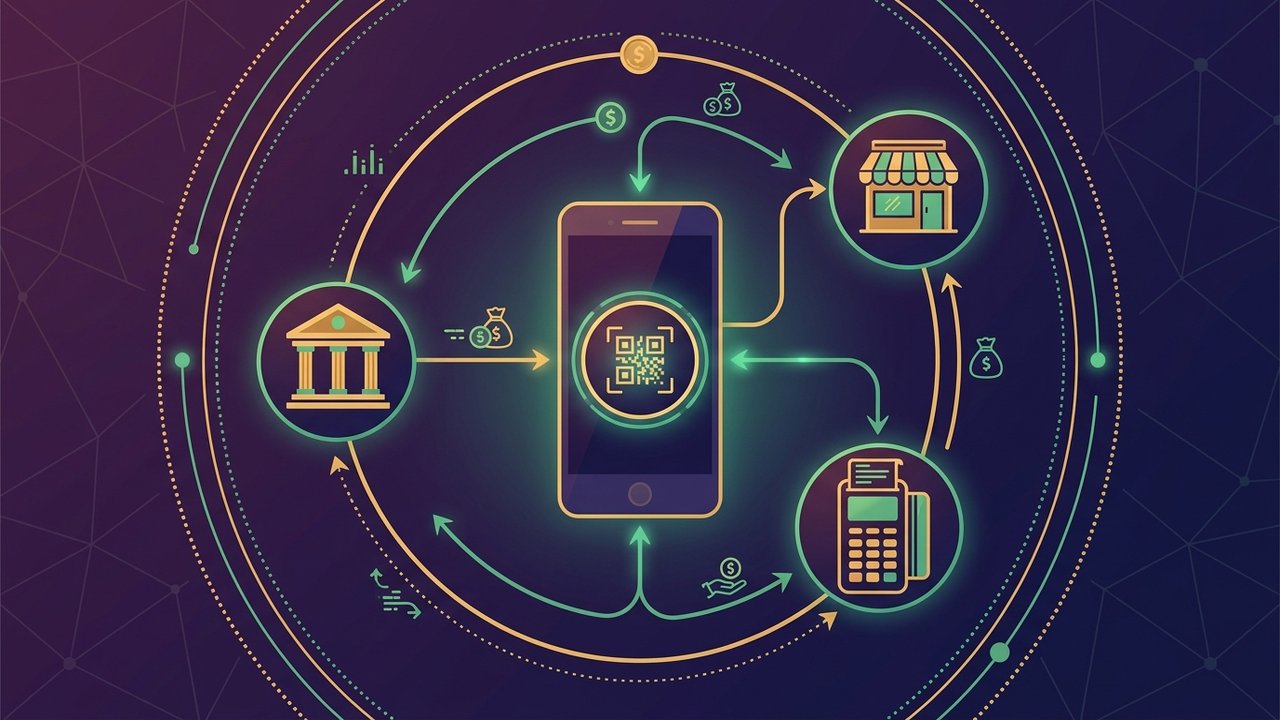
Digital payments in India in the early 2010s were clunky and fragmented, hostile to small businesses in particular. Existing gateways were built for large enterprises. That left startups and small merchants stuck with painful integration processes and inconsistent success rates. Kumar and Mathur saw the gap and decided to fix it. What began as a two-person Indian startup with almost no resources ended up rewriting how small merchants across the country accepted online payments.
- 2013–2014: The initial idea. Kumar and Mathur, still connected from their IIT Roorkee days, started exploring a simpler way for Indian businesses to accept online payments.
- Y Combinator W15 batch. The duo joined Y Combinator's Winter 2015 cohort, sharpening their product and business model alongside other early-stage startups.
- Razorpay's official launch. They built India's first payment gateway explicitly designed for startups and small businesses, at a moment when established players like PayPal faced regulatory friction in the Indian market.
- Early product focus. Kumar, as the technical co-founder, took the CTO role and led product development, prioritizing developer-friendly integration over enterprise sales cycles.
- Scaling the merchant base. Razorpay steadily added banking partners, payment methods, and merchant tools, growing from a niche gateway into a full payments platform.
Mathur became CEO. Kumar ran technology and product as CTO. Each founder stuck to what he was actually good at.
That split mattered more than it might sound. Plenty of co-founder pairs struggle because both people want to own the same parts of the business. Kumar and Mathur avoided that by dividing early: Mathur focused outward on strategy, fundraising, and partnerships, while Kumar focused inward on making sure the product actually worked at scale. Razorpay's early reputation for reliable uptime and clean developer documentation traces back directly to that split. Kumar treated the payment gateway as the product itself, not just plumbing behind a sales pitch.
Shashank Kumar's Role as Razorpay's Managing Director
People knew Shashank Kumar as Razorpay's CTO for years, the guy who turned a messy payments problem into working code and an architecture that could actually scale. In 2022 that changed when he got promoted to Managing Director.
Razorpay had simply outgrown a CTO-shaped role by then. One payment gateway had turned into banking-as-a-service, lending, payroll, business banking products, the whole stack. Whoever ran that much breadth needed to understand both the tech and the company's overall strategy at once, and Kumar had been living in both worlds since day one anyway.
He's still close to product decisions as MD, for what it's worth. People credit him as one of the architects behind parts of India's Unified Payments Interface (UPI) ecosystem that payment service providers build on. He never really stepped back into a pure executive chair.
That hands-on habit shows up everywhere in how Razorpay ships things. Instead of handing every roadmap call to a layer of product managers, Kumar keeps a direct line into engineering priorities. Founder-CTOs who move into executive roles often do this, refusing to fully let go of the build side. And for a company running payments infrastructure that millions of merchants depend on, that kind of continuity actually matters.
Razorpay's Growth Into India's Fintech Unicorn
Razorpay's growth curve is one of the steeper ones in Indian fintech. Few people expected the unicorn startup label to arrive as quickly as it did for a company that started by solving a narrow integration headache for small businesses. Today it processes payments for millions of merchants, from early-stage startups to household names.
| Milestone | Detail |
|---|---|
| Founded | 2013–2014, by Shashank Kumar and Harshil Mathur |
| Accelerator | Y Combinator, Winter 2015 (W15) batch |
| Unicorn status | Reached in 2020 after a $100 million funding round |
| Peak valuation | Over $10 billion at its highest funding rounds |
| Notable clients | Facebook, Swiggy, Zomato, and thousands of smaller businesses |
| Leadership today | Harshil Mathur (CEO), Shashank Kumar (Managing Director) |
Razorpay's expansion beyond simple payment processing, into lending, payroll (through its acquisition of Opfin), and banking tools, turned it from a single-product gateway into infrastructure businesses build on for multiple needs, not just checkout.
That breadth also makes Razorpay a useful reference point for anyone studying Indian fintech. Instead of staying a narrow payment gateway forever, it grew outward one adjacent product at a time: payroll after payments, banking tools after payroll, always tied to the same merchant base it already served. Expanding through existing customer relationships, rather than chasing brand-new markets, explains a lot of why the valuation climbed so steeply.
Shashank Kumar on AI, Payments, and the Future
Kumar talks a lot about resisting the urge to chase every fintech trend. His argument, in a nutshell: for Razorpay's first six or seven years, the company deliberately skipped buy-now-pay-later, neobanking, crypto payments, all of it. One payments product, done extremely well, before touching anything else.
That focus hasn't kept Razorpay out of artificial intelligence, though. Kumar's been talking about Agent Studio, an AI-agent platform built on Anthropic's Claude models. It lets businesses run automated agents that recover abandoned carts, resolve payment disputes, forecast cash flow. He calls AI a chance for India's fintech sector to "leapfrog," not just play catch-up.
Pretty pragmatic, honestly. Adopt new tech when it solves a real problem for merchants. Skip the feature just because everyone's talking about it.
Same logic explains why Razorpay stayed out of crypto payments while smaller startups were busy experimenting with it. Kumar isn't saying crypto or blockchain have no value. His point is narrower than that: expand into a new category only once your core product is genuinely excellent and your team can actually do the new thing properly. As a playbook, it's not "avoid crypto" or "avoid AI." It's "don't chase a category you can't commit to building well."

Shashank Kumar's Net Worth and Key Achievements
Razorpay's growth has translated directly into personal wealth for its founders. Kumar went from Microsoft engineer to listed billionaire in roughly a decade, which is fast even by startup standards.
- Net worth: Approximately ₹8,643 crore (roughly $1 billion), according to Hurun and Forbes billionaire rankings
- Recognition: Named among India's youngest self-made billionaires, alongside co-founder Harshil Mathur
- Award: EY Entrepreneur of the Year 2021, in the financial services category, shared with Mathur
- Industry standing: Regularly featured as a speaker at fintech and AI conferences discussing product strategy and payments infrastructure
- Investing: Active angel investor in multiple fintech, enterprise tech, and AI startups outside Razorpay
These figures are reported valuations and rankings, not investment advice or a guarantee of continued growth. Startup valuations and personal net worth estimates shift with market conditions, sometimes quickly.
What stands out about Kumar's trajectory isn't just the size of the number. It's the timeline. Reaching billionaire status roughly a decade after co-founding a company is fast even within India's crowded startup boom, where most fintech unicorns took considerably longer to hit comparable valuations. He's also part of a small group of Indian tech founders whose wealth sits almost entirely in a company they still run day-to-day, instead of one they stepped back from after an early exit.
Razorpay vs Crypto Payment Gateways for Indian Business
Razorpay does one thing really well: fast, reliable fiat payment processing for Indian businesses, tied tightly into UPI, cards, and local banking rails. That's exactly why Kumar kept the company focused there instead of spreading thin into crypto payments too.
Problem is, that focus leaves a gap. What about businesses that need to take payments from customers outside India's fiat banking system? Think freelancers getting paid internationally, e-commerce stores selling to a crypto-native audience worldwide, or platforms just trying to dodge card-network chargebacks and cross-border fees.
That gap is exactly what a dedicated crypto payment gateway fills, and it doesn't have to compete with a Razorpay-style setup at all. Plisio lets businesses take Bitcoin and dozens of other cryptocurrencies directly, with a simple API, no chargebacks, and settlement in crypto or fiat, whichever you'd rather have. Think of it as an extra layer for merchants who want Razorpay's local strength plus crypto acceptance that works across borders.
Different problems, genuinely, which is why treating the two as either/or rarely makes sense once a business starts growing. Razorpay goes deep inside one regulatory and banking environment, so it's extremely reliable for domestic UPI, cards, bank transfers. A crypto gateway goes wide instead, no separate banking relationship required in every single country a business wants to sell into. Selling to customers in Mumbai, Manila, and Miami all at once? Running both rails side by side beats forcing one system to do a job it was never built for.
Final Thoughts
Shashank Kumar's path from a Microsoft engineer in the US to Managing Director of one of India's biggest fintech companies is a story about narrow focus paying off. He and Harshil Mathur didn't chase every new payments trend. They built Razorpay around one problem, making payments simple for Indian businesses, and only expanded once that foundation was solid.
For businesses looking at the broader payments landscape, Razorpay's success is a reminder that fiat and crypto payment rails increasingly need to coexist rather than compete. Companies wanting that same local-plus-global flexibility can explore Plisio as the crypto layer alongside their existing payment stack.