What Is VAR? How the Video Assistant Referee Works
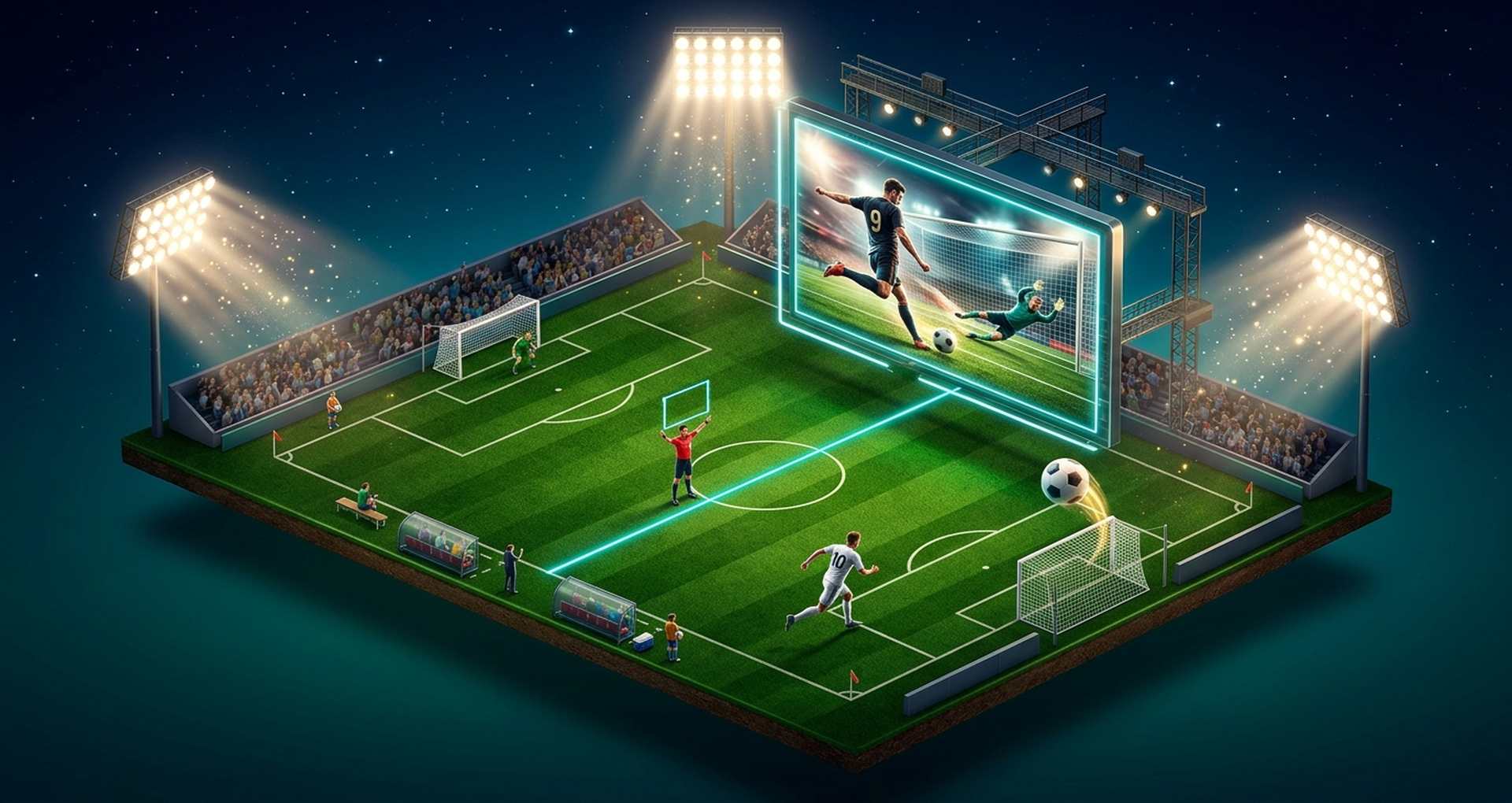
You know the scene. Your striker scores, you're halfway out of your seat, and then the ref touches their earpiece and the screen flashes "Checking goal." A minute and a half of nothing. Goal gone. So what is VAR, and who actually took that goal away? Short answer: VAR, the video assistant referee, is a handful of officials in a room miles from the stadium, watching replays and buzzing the ref when he or she has got something big badly wrong.
(If you landed here looking for Value at Risk, the "VaR" number banks use to size up losses, wrong page, sorry. This is the football one.)
What Is VAR in Football and Why Does It Exist
The word gets used two ways. Sometimes it means one person, the lead video official. More often it means the whole setup, so cameras, replay operators, a couple of assistant video officials, and an audio line straight into the on-field referee's ear. The VAR team sees every incident live and can rewind it from any angle the TV crew has.
Why bother? Think about where the referee stands. They get one look, at full speed, often with three bodies in the way. You at home get ten looks in slow motion from six angles. For decades that gap meant a whole country could see a clear handball while the one person who mattered couldn't.
The lawmakers' motto for the system is "minimal interference, maximum benefit," and it's worth taking literally. VAR isn't there to re-referee every tackle or settle 50/50 calls. It's there for the howlers. Think of a goal from an offside position, a penalty won by a dive, an elbow nobody on the field noticed.
A Short History of the Video Assistant Referee
Rugby, cricket and American football used video replay for years before football gave it a try. The push finally came from the Netherlands.
- Early 2010s: The Royal Netherlands Football Association (KNVB) launches its "Refereeing 2.0" project to test video support for officials.
- 2012–13 season: Mock trials run in the Dutch Eredivisie. Video officials watch matches and log what they would have changed, without contacting the referee.
- July 2016: The first live trial takes place in a friendly between PSV and FC Eindhoven.
- September 2016: VAR is used in a competitive match for the first time, Ajax vs Willem II in the KNVB Cup.
- 2017: Several top leagues, including Australia's A-League and Major League Soccer in the US, start live trials.
- March 2018: The International Football Association Board (IFAB) writes VAR into the Laws of the Game permanently.
- Summer 2018: The FIFA World Cup in Russia becomes the first tournament to use VAR at every match.
- 2019–20 season: The Premier League introduces VAR in England's top flight.
Who Sits in the VAR Room: Officials and Their Roles
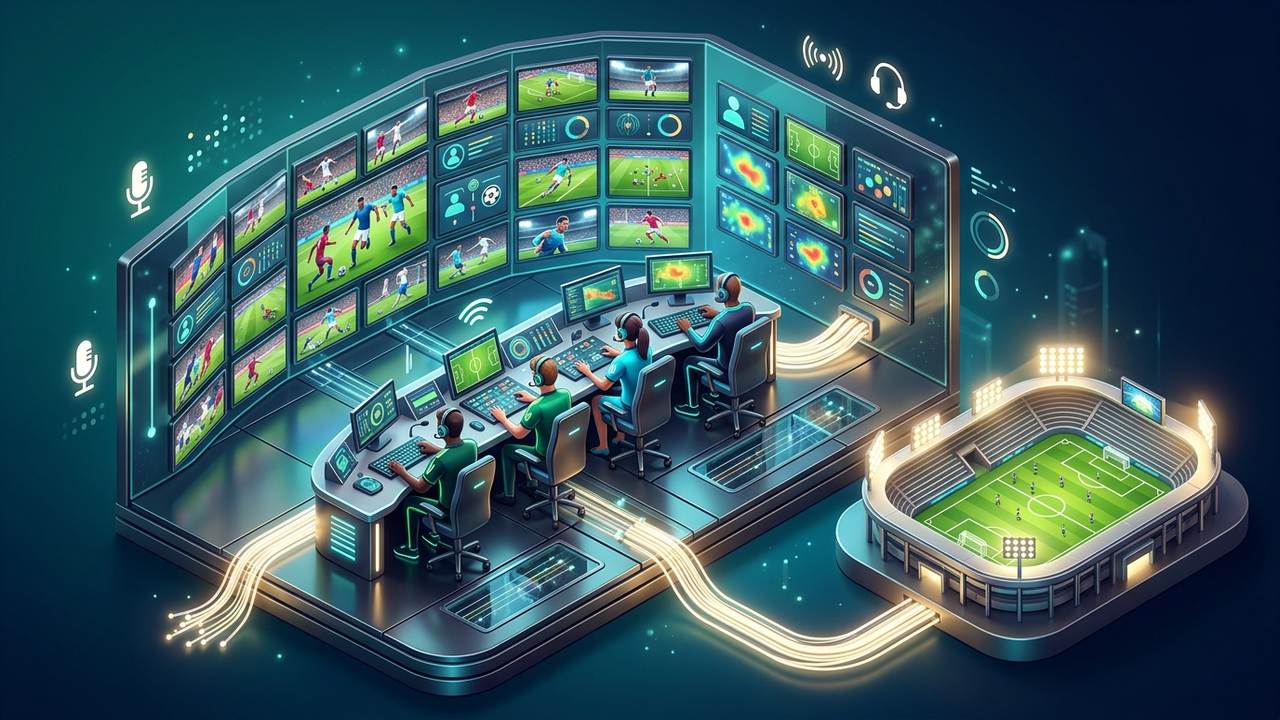
The officials don't sit in the stands. At most top competitions they work out of a Video Operation Room (VOR), basically a dark room full of screens. In Qatar, every one of the eight stadiums fed into a single room in Doha over fibre-optic cable. The Premier League runs all its games from one hub in London.
A typical VAR team looks like this:
| Role | Who they are | Main job |
|---|---|---|
| VAR | An experienced, qualified referee | Leads the team, reviews incidents, talks to the on-field referee |
| AVAR1 | Assistant video assistant referee | Watches the live main camera while the VAR is busy with a replay |
| AVAR2 | Assistant at the offside station | Checks offside situations and draws or verifies offside lines |
| AVAR3 | Assistant for broadcast feed | Watches the TV output and helps communication between VAR and AVAR2 |
| Replay operators | Technical staff, usually three | Find and cue the best camera angles as fast as possible |
Unlike the assistant referees on the touchlines, AVARs never see the game live from the pitch. Smaller competitions get by with a VAR, one assistant and one operator. Whatever the size, the VAR is always a trained referee, and that's on purpose. A camera can show you a tackle. It takes a referee to say whether it was reckless.
How Does VAR Work During a Match, Step by Step
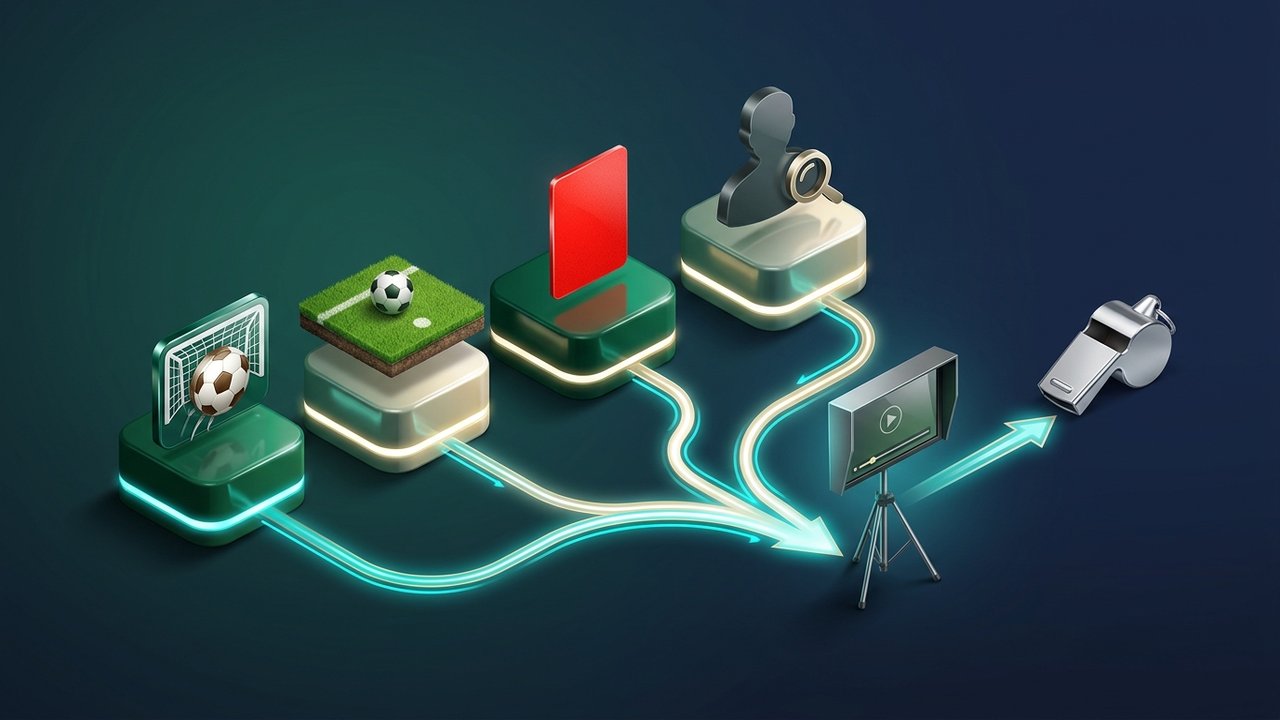
The VAR team checks every goal, every penalty decision and every red card, plus any incident that could involve mistaken identity. Most of these checks happen silently. Fans only notice when something gets changed. In practice, the VAR work on a big call goes like this:
- An incident happens. The referee makes a decision on the field, or chooses not to make one (for example, waves play on after a challenge in the penalty area).
- The VAR check begins. The VAR team reviews the footage from all available angles. Play usually continues while they look, unless the ball goes dead naturally.
- The VAR decides if there was a clear error. If the footage confirms the referee's call, or the call was reasonable, the VAR tells the referee "check complete" and nothing changes.
- The VAR makes a recommendation. If the footage shows a clear and obvious error, or a serious incident the referee missed, the VAR tells the referee to stop play at the next neutral moment.
- The referee reviews or accepts. For factual calls such as offside, the referee usually accepts the VAR's information directly. For judgment calls, the referee goes to the pitchside monitor for an on-field review.
- The final decision is made and signalled. The referee draws the outline of a TV screen with both hands, then gives the new (or original) decision.
- The outcome is announced. In many competitions, the referee now explains the decision over the stadium public-address system.
At big tournaments, video officials can access more than 40 broadcast cameras, including super slow-motion feeds. Slow motion is used for factual questions, like where a foul happened. For the intensity of a tackle, officials watch at normal speed, because slow motion makes almost any contact look worse.
When Can VAR Intervene? The Four Reviewable Situations
Plenty of fans think VAR can look at anything. Nope. The Laws of the Game give it four jobs.
| Situation | What VAR checks | Typical example |
|---|---|---|
| Goals and the build-up to a goal | Offside, handball, fouls by the attacking team, ball out of play | A goal is ruled out because the scorer was offside by a shoulder |
| Penalty / no penalty | Was there a foul or handball? Was it inside the penalty area? | A foul on the edge of the box is moved inside, and a penalty is given |
| Direct red card | Serious foul play, violent conduct, biting, spitting, denying an obvious goal-scoring opportunity | A late, studs-up tackle that the referee only punished with a yellow |
| Mistaken identity | Did the referee book or send off the wrong player? | A red card shown to the wrong defender in a crowded box |
See the word "direct" in that red card row? It matters. A second yellow used to be off limits, and a plain yellow still is, though a few competitions now let VAR undo a second booking that was obviously wrong. More on the new powers further down.
Throw-ins, most corners, a soft free kick 30 metres out, a routine booking? Tough luck. That's all the referee's, and VAR stays out of it.
Then there's the bar. VAR acts on a clear and obvious error or a "serious missed incident," not on a call it would have made differently. A handy test is to picture ten good referees. If they'd split six to four, it isn't clear and obvious, and the original call should stand. Facts don't work like that. Offside is offside. The ball crossed the line or it didn't.
Handball is where most of the shouting happens. Was the arm "unnaturally" big? Two honest people can watch the same clip and disagree, which is exactly why handball reviews feel random. One exception is simpler: if an attacker handles it and the ball goes straight in, that's treated as a fact, not a judgment.
VAR Check vs On-Field Review: Who Makes the Final Decision
Commentators throw "check" and "review" around like they're the same thing. Not quite.
A VAR check is the quiet one. It runs in the background while play carries on, and honestly most of them end with a shrug and "check complete." The crowd never hears about it. Only if something's off does it turn into a review.
An on-field review (OFR) is the bit you see on telly. The referee jogs over to the referee review area, bends over a monitor, and twenty players crowd round trying to look innocent. The VAR picks which angles to show. The referee does the judging.
So whose final decision is it? The ref's. Always. They can take VAR's word for it, or walk to the screen and flip the call, or walk to the screen and keep it.
That last option is rare. Once a ref is sent to the monitor, the call gets reversed almost every time, which is why some pundits call the walk theatre. Offside, or whether a foul landed inside the penalty area, normally doesn't need the screen at all. Whether a challenge was a red card does.
Timing catches people out. VAR has to get in before the restart. Miss that window and the wrong call stays wrong, with two carve-outs: mistaken identity, and certain sending-off offences such as a punch thrown off the ball.
Managers can't demand a look, not under the normal rules, and a player who mimes a TV screen at the ref is basically asking to be booked. Smaller competitions may get another route, though. FIFA has been trialling Football Video Support (FVS): no video team watching everything, just a couple of coach challenges per game and a monitor for the ref.
Semi-Automated Offside Technology and Other VAR Upgrades
Remember the early days? Somebody in a booth dragging lines across a frozen frame for four minutes, arguing over an armpit. Semi-automated offside technology (SAOT) was football's answer to that mess.
Qatar was where it first showed up at a World Cup. Roughly how it works:
- 12 dedicated tracking cameras mounted under the stadium roof follow the ball and every player.
- 29 data points per player (limbs and extremities) are tracked about 50 times per second.
- A sensor inside the match ball sends data around 500 times per second, which pinpoints the exact moment the ball is played.
- Software combines the data and alerts the video officials when an attacker is in an offside position at the kick point.
- A 3D animation of the moment is shown on the stadium screens and on TV, so fans can see why the call was made.
A human still signs off before anything reaches the ref. Hence "semi." England caught up later, and the Premier League says its version shaves about 30 seconds off the average offside check.
It's moved on again since. At the latest World Cup, assistant referees got a beep in their ear the moment a player strayed more than 10 centimetres offside (earlier trials only beeped at 50). Each player had been 3D body-scanned beforehand, so the system knew exactly where a knee or shoulder sat. Obvious offsides got flagged on the spot, no VAR check needed.
A few other things have changed lately too:
- Referee body cameras, first trialled at the Club World Cup, giving broadcasters a first-person view of key moments.
- Live referee announcements over the stadium PA after every VAR review, a move that many leagues have adopted to improve transparency.
- Wider VAR powers in some competitions: overturning a clearly wrong second yellow card, correcting a corner awarded in clear error, and flagging grappling or blocking before a set piece is taken.
Criticisms of VAR: Delays, Consistency and Fan Experience
VAR made football more accurate. Happier? Not really. The criticisms of VAR you'll hear on any phone-in:
- Delays. Reviews are supposed to be quick, but complex ones can take several minutes. The average review has been estimated at around 80 seconds, which feels very long in a stadium full of people who do not know what is happening.
- Lost celebrations. Fans now hold back after a goal, waiting for the check.
- Inconsistent subjective calls. Two very similar handballs or penalty incidents can get different outcomes in different matches. The "clear and obvious" bar is applied differently by different officials.
- Lack of transparency. For years, fans in the stadium had no idea what was being checked or why. Referee announcements and the release of VAR audio in some leagues have helped, but trust took a hit.
- Technical problems. Lines drawn on the wrong player, communication breakdowns and missing camera angles have all led to high-profile errors.
"Has VAR ruined football?" gets asked every single season. Fair enough. But the defenders have numbers on their side. FIFA says 99.3% of key calls at the 2018 World Cup were right, against roughly 95% without video help. And when one Premier League club actually tabled a motion to scrap it, the rest voted it down by a mile and went for reform.
So the row isn't really about whether VAR stays anymore. It's about how it's run.
Where VAR Is Used: Premier League, World Cup and Beyond
These days you'll struggle to find a top-flight competition without it. The use of VAR covers the Premier League, La Liga, Serie A, the Bundesliga, Ligue 1, the UEFA club tournaments, MLS and both the men's and women's World Cups. Drop a division or two, though, and it often disappears. Running it properly means extra officials, trained operators and proper broadcast cameras at every single ground, and plenty of clubs simply can't pay for that.
Football was late to the party. Rugby has had its Television Match Official for years, cricket has DRS (the Decision Review System), and tennis players challenge line calls with ball-tracking. In those sports the players drive the reviews. Football went the other way and kept players out of it, which is what makes FIFA's FVS trial interesting.
The Bottom Line: What VAR Means for Football
So what is VAR, really? A few referees in a dark room with a lot of screens, trying to catch clear and obvious errors on goals, penalties, red cards and mistaken identity. They advise. The referee still has the final decision.
Is it perfect? No. Reviews drag, handball still starts arguments, and consistency comes and goes. But offside lines are drawn by computers now, referees explain their calls to the crowd, and checks are getting shorter. Next time a goal sits "under review," you'll at least know who's in that room and what they're looking for.