Tensor NFT: how Solana’s pro trading platform became the largest NFT marketplace and what TNSR means for traders
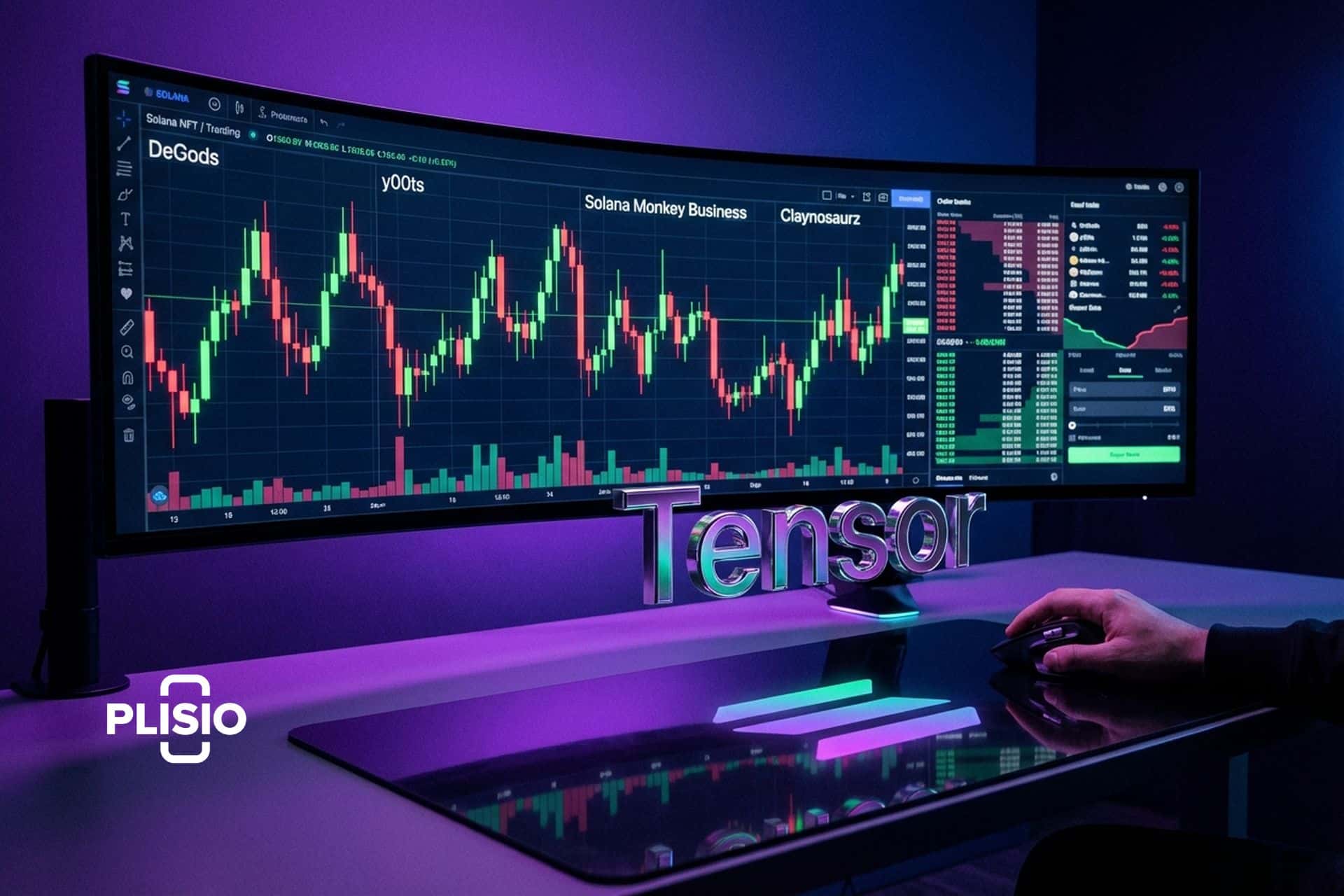
I tried Tensor for the first time in late 2023 because someone on Twitter said it was "like having a Bloomberg terminal for NFTs." I laughed at the comparison. Then I opened the site and saw candlestick charts for JPEG collections, real-time order books, trait-based bidding, and bulk sweep tools. Nobody was joking. Tensor genuinely built the kind of trading infrastructure that did not exist in the NFT space before.
Tensor launched in July 2022 on Solana and has since processed over $2 billion in cumulative trading volume across more than 30,000 collections. It overtook Magic Eden as the dominant Solana NFT marketplace by volume, capturing roughly 60% of Solana's NFT market share at its peak. The platform's approach is different from everything else in the NFT space: instead of building for casual collectors, Tensor built for traders. Real-time data, advanced order types, an on-chain automated market maker for NFTs, and a fee structure (0% maker, 2% taker) designed to reward active participants.
The TNSR governance token launched in April 2024 with a community-heavy allocation. Price Locks, their NFT options product, introduced leveraged positions on collections. And Vector protocols are extending the infrastructure cross-chain. This is a platform that takes NFTs seriously as a tradeable asset class, not just as collectibles.
This deep dive covers how Tensor works, why pro traders chose it over Magic Eden, what the TNSR tokenomics look like, and whether the platform's bet on "NFTs as financial instruments" is paying off in 2026.
How Tensor works and what makes it different
At its most basic, Tensor is an NFT marketplace and aggregator on Solana. It pulls in listings from Magic Eden, Solanart, Hadeswap, and its own marketplace. One search, best price across all venues. That part is not revolutionary. 1inch does the same thing for token swaps.
What made me go "oh, this is different" was everything else.
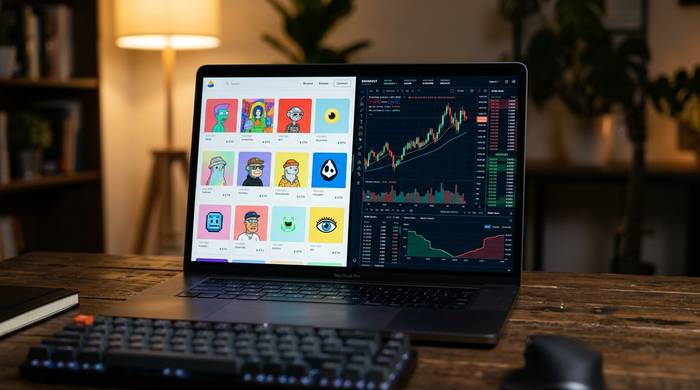
Real-time charts and data. Every collection on Tensor has candlestick price charts, volume histograms, floor price tracking, and listing depth visualizations. If you have ever used a stock trading platform, the interface will feel familiar. For NFTs, this level of data granularity was unheard of before Tensor. On Magic Eden, you see listings and recent sales. On Tensor, you see the equivalent of a full market data feed.
Advanced order types. Collection bids let you place a single bid that matches against any NFT in a collection at your specified price. Trait-based bidding goes further: you bid specifically for NFTs with certain rarity attributes. Sweep buying lets you purchase multiple NFTs in one transaction. Ladder selling incrementally increases your listing price after each sale. These are tools borrowed from traditional finance order books, adapted for NFTs.
TensorSwap AMM. This is the feature that separates Tensor from every other NFT marketplace. TensorSwap is an automated market maker for NFTs. Liquidity providers deposit SOL and NFTs into pools, and the AMM sets prices algorithmically. Traders can buy or sell NFTs instantly against the pool without waiting for a counterparty. The AMM provides constant liquidity, which is the single biggest problem in NFT markets where finding a buyer can take days or weeks.
Price Locks. This is essentially an options market for NFTs. You can take a long position (betting the floor price goes up) or a short position (betting it goes down) on any collection. The cost is 3-4% of the NFT's value. Liquidity providers on the other side of the trade earn yields that can reach 500% APY. It sounds wild, but the mechanics mirror traditional call and put options adapted to the NFT market.
| Feature | Tensor | Magic Eden | OpenSea |
|---|---|---|---|
| Primary chain | Solana | Multi-chain (Solana focus) | Multi-chain (Ethereum focus) |
| Trading charts | Full candlestick + depth | Basic | Basic |
| Order types | Collection bids, trait bids, sweep, ladder | Collection bids, sweep | Basic bids |
| AMM pools | TensorSwap | No | No |
| Options/Price Locks | Yes | No | No |
| Maker fees | 0% | 0% | 0.5-2.5% |
| Taker fees | 2% | 2% | 0.5-2.5% |
| Aggregation | Yes (multiple Solana venues) | Limited | Yes (170+ venues via OpenSea Pro) |
| Focus | Pro traders | Broad market | Broad market |
TNSR token: governance, rewards, and tokenomics
The TNSR token launched on April 8, 2024. It serves as the governance token for both Tensor protocols (Solana NFT trading) and Vector protocols (cross-chain expansion).
Here is how the 1 billion total supply breaks down:
| Allocation | Percentage | Vesting |
|---|---|---|
| Community (treasury + rewards) | 55% | Half vests over 3 years, half unlocked |
| Core contributors | 27% | 3-year linear vesting, 1-year cliff |
| Investors and advisors | 9% | 3-year linear vesting, 1-year cliff |
| Development reserve | 9% | Varies |
| Initial airdrop | 12.5% (of total) | Immediately unlocked |
| Power-user airdrop | 2.3% | Immediately unlocked |
The 55% community allocation is one of the highest in any DeFi or NFT project. For comparison, many token launches give 50% or more to insiders. Tensor's structure puts the majority in the hands of users, which builds alignment between the platform and its traders.
TNSR holders vote on protocol fees, treasury spending, and operational decisions through the Tensor DAO. Holding TNSR also gives you trading fee discounts on the platform, which creates direct utility beyond governance.
The seasonal points program is how most people earn TNSR. You accumulate points by trading, bidding, listing, and providing AMM liquidity. Points convert to TNSR allocations at the end of each season. The program excludes wash-traded collections and spoofed bids, which is important because points-based systems in NFTs have historically been gamed aggressively.
The Tensorians NFT collection
Tensor launched the Tensorians collection in August 2023. It is a 10,000-item PFP (profile picture) collection that functions as the platform's superfan membership pass.
Owning a Tensorian unlocks exclusive Discord access, enhanced point multipliers (1.10x to 1.50x based on how many you stake), special trading features, and referral bonuses. At mint, Tensorians cost 1.69 SOL (about $40 at the time). At their peak in December 2023, they traded for over $11,400. After the TNSR airdrop in April 2024, prices dropped roughly 60% as holders sold to realize profits.
The Tensorian model is interesting because it ties platform loyalty directly to economic incentives. Staking more Tensorians gives you better point multipliers, which means more TNSR tokens, which makes your trading cheaper through fee discounts. It creates a flywheel where the most active users are also the most rewarded.
Tensor vs Magic Eden: why pro traders switched
This is the question everyone in the Solana NFT space has debated. Magic Eden was the dominant marketplace. Tensor took the lead. Why?
I think about it like this. Magic Eden went wide. Ethereum, Bitcoin Ordinals, Polygon, other chains. Smart strategy for reaching more people. But the Solana experience became one of many priorities instead of the only priority. The interface stayed good. Not great. Good.
Tensor went deep. Just Solana. Everything focused on making Solana NFT trading as close to professional stock trading as possible. The charts, the AMM, the advanced orders, the Price Locks. All of it was designed for people who trade NFTs like they trade tokens: frequently, with data, and at scale.
The numbers told the story. At Tensor's peak, its 86,000 active wallets generated more volume than Magic Eden's 116,000. Fewer users, more revenue per user. That is the signature of a platform that serves power users well.
Does Magic Eden have advantages? Yes. Their multi-chain presence means they serve a larger total addressable market. Their brand is more recognizable to casual NFT buyers. And their expansion into Bitcoin Ordinals gave them a market that Tensor does not serve. But for Solana-native NFT traders, Tensor became the default.

The Solana NFT market and where Tensor fits in 2026
I have watched Solana's NFT market go through three mood swings since I started using Tensor. Late 2023 was euphoric. Early 2024 was peak greed. Then the air came out, the way it always does, and by mid-2025 volume was a fraction of what it had been. Tensor's revenue tracks these cycles directly because the platform only makes money when people trade.
What keeps Tensor relevant even in quieter markets is the AMM infrastructure. When fewer people are manually trading, the AMM pools still provide liquidity. Traders who believe in long-term value can deposit NFTs and SOL into pools, earn fees from trades, and wait for the next cycle.
The Price Locks product adds another dimension. In a flat or declining market, you can short collections and profit from the downside. This is something that did not exist in NFTs before Tensor. In traditional finance, the ability to go short is what separates mature markets from speculative ones.
For Tensor's bet to pay off long-term, Solana NFTs need sustained trading activity. Not just speculative booms, but consistent volume from collectors, gamers, and DeFi users who interact with NFTs as part of broader on-chain activity. The platform is ready for that future. The question is whether the market arrives fast enough.
How to get started on Tensor: the practical walkthrough
If you have never used Tensor before, here is what the first session looks like.
You need a Solana wallet. Phantom is the most common one, but Solflare and Backpack work too. Fund it with some SOL from any exchange. Go to tensor.trade and connect your wallet. That is the setup. There is no account creation, no KYC, no email registration. Welcome to decentralized trading.
The interface defaults to a clean overview of trending collections. Click any collection and you get the full treatment: floor price chart with candles, listing depth, recent trades, holder distribution, and rarity data. If this overwhelms you, Tensor has a "Lite" mode that simplifies the interface to just listings and a buy button.
To buy an NFT, you either click "Buy Now" on a specific listing or use the sweep feature to grab multiple at once. To bid on a collection (meaning you will buy any NFT in the collection at your price), set a collection bid. To bid on specific traits (say, you only want rare-background apes), use the trait bid feature.
Listing an NFT is equally straightforward: select it from your wallet, set a price, sign the transaction. Your NFT stays in your wallet until sold, similar to how OpenSea operates. Tensor never takes custody of your assets.
One tip from personal experience: start by watching the order book before you trade. Tensor's order book visualization shows you where the real demand sits. If there are 50 SOL in collection bids at 2.0 SOL and the floor is 2.3 SOL, you know there is strong demand 13% below floor. That kind of data helps you decide whether to hold, list, or bid. On Magic Eden, you would not see this level of detail.
The rewards program runs in seasons. You earn points for every trade, bid, listing, and AMM interaction. At the end of each season, points convert into TNSR allocations. The more active you are, the more you earn. Staking Tensorians amplifies your multiplier. It is designed to reward the traders who use the platform most, which is consistent with Tensor's pro-trader identity.
For liquidity providers interested in TensorSwap, you can deposit NFTs and SOL into AMM pools. The pool earns fees from trades. It is similar to providing liquidity on Uniswap, except instead of token pairs you are pairing NFTs with SOL. The returns can be substantial during high-volume periods, but you take on impermanent-loss-like risk if the floor price moves significantly while your assets are in the pool. Start with a small position to understand how the mechanics work before committing serious capital.