Best Crypto Trading Bots 2026: AI Automation Platforms to Trade

On October 10, 2025, USD 3.21 billion in leveraged crypto positions were liquidated in 60 seconds. Most of that selling was not human. It was bots, stop-loss engines, and deleveraging algorithms doing what they were built to do: react faster than any person could. That one minute captured the current state of the market. Automation is no longer an edge. It is the baseline.
The best crypto trading bots in 2026 are not magic money machines. They are tools that follow rules, manage entries and exits, and remove some of the emotion from crypto trading. Using a cryptocurrency trading bot well means accepting that the bot is only as smart as its rules; it will not invent alpha that is not already in your strategy. Picking the right one depends on what you trade, how often, and how much you want to pay per month. This guide compares the top platforms side by side, with actual 2026 pricing, real user counts where disclosed, and the strategies each tool supports best.
We cover Pionex, 3Commas, Cryptohopper, Coinrule, Bitsgap, TradeSanta, Gunbot, Kryll, and WunderTrading, with pricing tables, strategy maps, and a clear risk section. No hype, no affiliate rankings, just the data. If you are a Reddit regular in r/algotrading or you hang around crypto Twitter, you already see these names on every shortlist. The question is not which bot exists. It is which one fits your budget, your trading experience, and the market you actually trade.
What crypto trading bots do for the average trader
Think of a cryptocurrency trading bot as a very patient clerk. You hand it a set of trading rules, it watches the market, and it fires orders when your rules say fire. Simple rules work fine: "buy BTC every Monday with USD 100." Complex rules work too: "open a grid between USD 60,000 and USD 70,000, rebalance hourly, sell if volume drops 40%." Either way, the bot pings a cryptocurrency exchange's API and places the order. No mystery. No black box. Just rules plus execution.
The appeal, for a retail trader, is time. Markets run 24/7. You don't. A bot can sit on a position through a 3 a.m. wick, take profit at a level you set last Tuesday, and start again before breakfast. That's the whole pitch of fully automated trading: the bot works while you sleep, as long as your rules and risk caps are honest.
Some numbers to set the scale. Grand View Research pegs the automated crypto trading market at USD 22.23 billion in 2025, USD 25.32 billion in 2026, and a projected USD 66.61 billion by 2033 at a 14.8% CAGR. Industry analyses estimate 70-80% of total crypto trading volume is now executed by algorithms. Back in 2020, that figure sat around 50%. The shift is real, and it's fast.
Here's the catch. Bots do not print money. They follow rules. Rules can be wrong. The point is consistency, not alpha. A disciplined bot won't panic-sell a 15% dip if you told it to hold. A disciplined human often will. Strip the emotion, keep the rule. That's the real value of using bots.
How bots connect to a crypto exchange to trade
Most bot platforms never touch your funds. You keep your capital on a leading crypto exchange (Binance, Coinbase, Kraken, Bybit, take your pick) and hand the bot an API key with limited permissions. Trading: yes. Balance reads: yes. Withdrawals: no. That's the standard security model across 3Commas, Cryptohopper, Coinrule, Bitsgap, and TradeSanta.
Pionex is the exception. It's a cryptocurrency exchange with bots baked in, so you deposit directly and skip the API dance. That cuts complexity for beginners. It also locks you into one venue.
Once the key is linked, the bot polls market data (price, order book depth, volume), matches it against your rules, and fires orders. Execution quality depends on three things: how fresh the data feed is, how fast the bot reacts, and whether the exchange's matching engine is under stress. During the October 2025 cascade, plenty of bots froze because exchange APIs rate-limited them into uselessness. Put that failure mode into your risk plan, not after it finds you.
Pionex: built-in bots on one cryptocurrency exchange
Pionex is an exchange with 16 or more built-in trading bots bundled into its own spot and futures venue. There is no separate subscription. Pricing is completely free for the bots themselves; you pay only a flat 0.05% maker and taker fee on each trade. The platform claims over five million registered users and lists more than 430 coins across 500 trading pairs, with market-maker liquidity flowing in from Binance and HTX.
The bot menu covers the essentials: Grid, DCA, Martingale, Rebalancing, Spot-Futures Arbitrage, Leveraged Grid, and Smart Trade. Grid is the most-used strategy among Pionex customers, according to the platform. A demo mode lets you test trading before risking live funds. There is no built-in backtesting at depth, though a Python SDK covers advanced users.
Trade-off: you are locked to Pionex's order book. If a coin is not listed there, the bot cannot trade it. For a beginner who wants one login, one fee schedule, and no API setup, Pionex is a strong choice. For anyone running strategies across multiple exchanges, it is a dealbreaker. Simple as that. Pionex is often the first choice for beginners who want built-in bots without configuring API keys.
3Commas: a flexible crypto automation platform
3Commas is a cross-exchange automation platform with more than a million registered traders (platform claim) plugged into 14-23 cryptocurrency venues. Binance, Bybit, Coinbase, OKX, Kraken, KuCoin, Gate.io: all supported. Late 2025 pricing: Starter USD 15/mo, Pro USD 40/mo, Expert USD 110/mo. A free plan with reduced bot limits and a 7-day trial on paid tiers sweetens the entry.
The toolkit covers DCA bots, Grid bots, Signal bots running on TradingView trading signals, and SmartTrade for manual position management with trailing stops. An AI Assistant suggests parameters. Backtesting uses one-minute historical data up to a year back. You can create bots for spot or futures, then scale up once demo trading proves the strategy out.
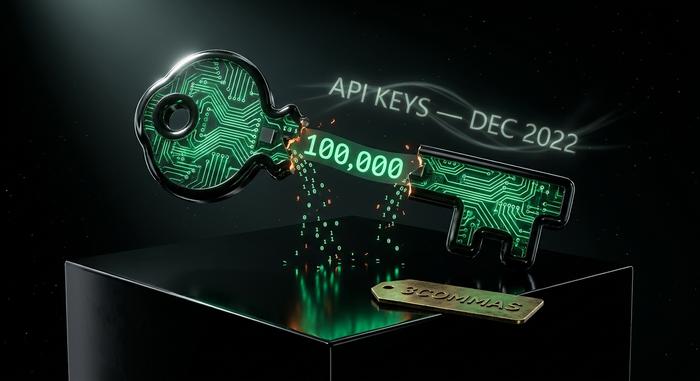
The platform has a scar. December 2022, a breach exposed 100,000 customer API keys. 86 victims across 32 countries lost roughly USD 22 million in the reporting that followed. 3Commas rebuilt its security posture, but the incident is the reason every serious bot user now creates IP-whitelisted, withdrawal-disabled API keys by default. Hard lesson, still remembered.
Cryptohopper: AI bot with social trading features
Cryptohopper hit one million registered users in May 2025, moving roughly USD 2 billion in monthly trading volume. It runs as a cloud-based platform, so no server to babysit. Tiers as of 2026: Pioneer is the free plan, Explorer sits at USD 24.16/mo, Adventurer at USD 57.50, Hero at USD 107.50. A free trial covers the paid tiers, and the free plan lets you start free with one exchange and no credit card. Easy onboarding.
Strategy Designer is the main draw. It's a visual builder that chains indicators into rules without code. Bolt on AI-optimized strategies, paper trading, backtesting against Binance, Coinbase, Kraken, and Bybit data, and you've got a serious toolkit. Market-making and arbitrage ship on higher tiers.
Where Cryptohopper really stands out is social trading. The bot marketplace lists hundreds of paid templates, mostly USD 10-99 per month on top of your base plan. Useful for learning. Expensive if you stack four of them at once and forget they auto-renew. Plenty of users have.
Coinrule: a no-code crypto trading bot platform
Coinrule is the most beginner-friendly bot on this list. Users build rules with an If-This-Then-That interface, no coding required. The platform supports over 20 exchanges including Binance, Coinbase, Kraken, KuCoin, OKX, Bybit, Bitget, and Hyperliquid, plus on-chain trading on Base, Arbitrum, BSC, and Ethereum. Stocks and ETF trading route through Alpaca.
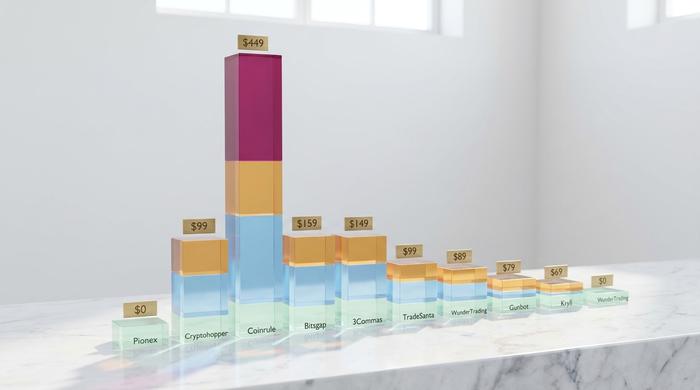
Coinrule offers a free plan with limited live and demo rules. Paid pricing as of April 2026: Investor at USD 29.99 per month, Trader at USD 59.99, and Pro at USD 449.99. The platform advertises 350+ preset templates covering DCA, grid, breakout, mean reversion, and portfolio rebalancing. Coinrule reports that its users have built more than 1.39 million trading strategies to date.
A 14-day money-back guarantee and a working demo exchange make it easy to try without commitment. The free tier is real: one exchange connection, two live rules, and up to USD 3,000 in monthly trade volume. Enough to validate a strategy before you pay.
Bitsgap, TradeSanta, Gunbot and other bot platforms
Four other bot platforms belong on any 2026 shortlist. None of them dominate, but each earns a slot for a specific use case.
Bitsgap. 800,000+ traders, 4.7 million automated bots launched, USD 9.46 billion in funds under bot management (platform claim). Pricing: free tier, then Basic USD 23/mo, Advanced USD 55, Pro USD 119. The hook is smart-order execution: grid, DCA, Combo bots, futures bots, plus an AI Assistant that recommends grid parameters based on recent volatility. Seventeen exchanges, Binance included.
TradeSanta. 210,000+ users, 22 million deals executed. Cheaper than the leaders: Basic about USD 25/mo, Advanced USD 45, Maximum USD 90. Grid and DCA on spot and futures, Telegram notifications, trailing stop-loss, take-profit orders. Fits mid-budget traders who want a clean cloud interface and don't need an AI sales pitch.
Gunbot is the self-hosted outlier. One-time lifetime license, EUR 44-499 in 2026 promos, running locally on Windows, Mac, or Linux. Supports 17 spot and 8 futures venues including dYdX v4 and Hyperliquid. TradingView webhooks work. Custom JavaScript works. Bad fit if you won't babysit a server. Strong fit if you want everything under your own keys.
Kryll. A visual drag-and-drop strategy builder sitting on top of ten exchanges (Binance, Kraken, KuCoin, Bitfinex, Coinbase, Bittrex, and others). Fees are paid in the KRL token and scale with the capital allocated. The draw is a marketplace of verified strategies, and the audience is users who want copy trading without leaving the platform.
WunderTrading. 30 million crypto traders connected, USD 50 billion cumulative volume (platform claim). DCA, Grid, copy trading, TradingView signal bots. Twelve exchanges like Binance, Bybit, Coinbase, OKX, Kraken. Free tier includes one signal bot, one grid bot, one DCA bot, so you can automate your trading without a credit card. Paid plans: USD 19.95 to USD 89.95 per month.
Best crypto trading bots 2026: side-by-side pricing
| Bot | Free tier | Entry price | Top plan | Trading fee | Exchanges | Headline users |
|---|---|---|---|---|---|---|
| Pionex | Yes (all bots) | Free | Free | 0.05% flat | Built-in | 5M+ |
| 3Commas | Yes | USD 15/mo | USD 110/mo | Exchange rate | 14-23 | 1M+ |
| Cryptohopper | Yes | USD 24.16/mo | USD 107.50/mo | Exchange rate | 15+ | 1M+ |
| Coinrule | Yes | USD 29.99/mo | USD 449.99/mo | Exchange + 0.02% vol. | 20+ | 250K+ |
| Bitsgap | Limited | USD 23/mo | USD 119/mo | Exchange rate | 17+ | 800K+ |
| TradeSanta | 3-day trial | USD 25/mo | USD 90/mo | Exchange rate | 9+ | 210K+ |
| Gunbot | No | EUR 44 lifetime | EUR 499 lifetime | Exchange rate | 25+ | Not disclosed |
| Kryll | No | Pay-per-trade | Variable (KRL) | Variable | 10+ | 100K+ (2022) |
| WunderTrading | Yes | USD 19.95/mo | USD 89.95/mo | Exchange rate | 12+ | 30M connected |
Prices current April 2026. Check each platform for active promotions. Ranking the best crypto trading bots purely by price misses the point; the right answer is the bot whose strategy toolkit matches what you actually plan to trade.
Trading automation strategies: grid, DCA, arbitrage
The bot trading platforms above support overlapping strategy menus. The strategy, not the brand, often matters more. A grid bot on Pionex and a grid bot on Bitsgap do very similar things. This is algorithmic trading rebranded for retail: the same logic hedge funds have used for 20 years, now packaged as trading software you can configure in a browser.
Grid trading places buy orders below and sell orders above the current price at fixed intervals. It profits from sideways chop. BingX alone reports over USD 670 million in Futures Grid bot allocations and 160,000 active grid users, which gives a sense of how popular the strategy is. Works poorly in strong trends.
DCA (dollar-cost averaging) bots scale into a position over time, averaging the entry price. Good for long-term accumulation of BTC, ETH, and major altcoins. Most platforms offer DCA out of the box.
Arbitrage exploits price differences between exchanges or between spot and futures. Spot-Futures Arbitrage is a Pionex specialty; cross-exchange arbitrage shows up on 3Commas, Cryptohopper, and Bitsgap. Profits are small per trade and shrink as more bots compete.
AI and signal bots promise fully automated AI crypto execution using either machine learning on historical data or TradingView-style indicator chains. 84% of automated strategies outperformed manual trading in an aggregated industry analysis of 1.2 million trades across 50 platforms. That figure comes from platform-side reporting, not a peer-reviewed study, so treat it as directional.
| Strategy | Works best in | Typical risk | Available on |
|---|---|---|---|
| Grid | Sideways, range-bound | Medium (range break) | Pionex, Bitsgap, 3Commas, TradeSanta, Gunbot |
| DCA | Long uptrends | Low to medium | All nine platforms above |
| Arbitrage | Any market | Low (thin margins) | Pionex, 3Commas, Cryptohopper, Bitsgap |
| AI / signal | Volatile, news-driven | High (model drift) | Cryptohopper, 3Commas, Coinrule, WunderTrading |
| Copy / social | Learning phase | Mirrors the leader | Cryptohopper, Pionex, Kryll, WunderTrading |
| Futures grid | Medium volatility | High (leverage) | Bitsgap, 3Commas, Pionex, TradeSanta |
Automate your portfolio using a trading platform
A good workflow for a new user:
Start with a free tier. Most of the best crypto trading bots on this list (Pionex, Coinrule, Cryptohopper, and WunderTrading) offer a free way to automate your crypto trading at zero cost. You need to see how the interface behaves before you pay anything. Using crypto automation well is not about buying the most expensive tier; it is about matching the tool to your strategy. Automatic trading that mirrors a Reddit screenshot you half-read will not save you. Link the bot to a small sub-account on Binance or Coinbase, not your main stack. Set spend caps. Turn on two-factor authentication and disable withdrawal permissions on the API key before you share it.
Pick one strategy and stick with it for a month. Most losses come from jumping between grid, DCA, and signal bots because the first run did not print money in a week. Patience is unpopular. It is also the part that works.
Keep records. Use CoinLedger, Koinly, or a similar tool to track every bot trade for tax purposes. In the United States, every crypto disposal is a taxable event, and bot volume adds up fast. A quiet 30-trade-a-day grid bot prints roughly 10,000 transactions in a year.
Risks every crypto trader needs to watch for
Bots don't save you from crypto risk. They change how it arrives.
Platform risk. Hand your API key to a platform, and you're trusting their security team. The 3Commas breach of December 2022 is the textbook case: 100,000 API keys leaked, about USD 22 million siphoned from 86 victims. And platform hacks are not the worst corner. The FBI's IC3 unit logged USD 9.3 billion in crypto fraud losses in 2024, up 66% year-over-year. That same year, the CFTC put out a customer advisory flagging "AI trading bot" pitches by name.
Market risk. October 10-11, 2025. Roughly USD 19 billion in leveraged positions liquidated in the largest cascade on record. Bots holding leveraged shorts got wiped. Bots holding longs got wiped. Grid bots with tight ranges blew through their floors in seconds. If your strategy assumes orderly markets, a 60-second cascade will find you eventually.
Regulatory risk. MiCA took full effect in the EU on December 30, 2024. Grandfathering window closes July 1, 2026. Algorithmic stablecoins: banned in the bloc. In the US, on March 17, 2026, the SEC and CFTC issued a joint interpretation on how federal securities laws apply to crypto. More rules are coming, especially for platforms that route orders across multiple exchanges.
Bot-itself risk. A bot does exactly what you told it to. Nothing more, nothing less. If the rule is bad, it loses money faster than any human ever could. Backtest first. Paper-trade next. Go live last. In that order.
Test trading before you start trading for real
Paper trading and demo mode are not optional. They are the difference between understanding a strategy and guessing at one. Cryptohopper, Bitsgap, Coinrule, TradeSanta, and 3Commas all ship paper-trading environments that mirror live exchange data without risking capital. Pionex offers a simulator with demo balances. Use these trading tools to configure the bot, stress-test market conditions, and watch a few losing trades before you touch live trading.
Run the bot for at least two weeks before going live. Two weeks covers one full weekly cycle in crypto, which usually includes a weekend chop and a Monday move. Write down the bot's rules in plain English before you deploy. If you cannot explain the rule to a friend, the bot will not save you from it. Once you go live, start with an amount you can afford to lose entirely. Scale up only after the strategy has survived a real drawdown.