What is Web3 and why should you care about it
So here's something that bugs me. Last week I posted a photo on Instagram. Took it myself, edited it, wrote the caption. And Instagram just... owns the whole thing now? They pick who sees it. They run ads next to it. I get hearts. They get billions in revenue.
Wild, right?
Now picture something different. That same photo sitting on a network where you're a part owner. You call the shots on who makes money from your stuff. No corporation can nuke your account on a Tuesday because they felt like it.
That's basically what Web3 is trying to do. It's this whole movement to rebuild the internet so regular people actually own their data and digital stuff instead of just handing it all to big tech on a silver platter. Blockchain tech makes it possible, at least in theory, by pulling control away from companies and giving it back to the people who create the value in the first place.
Idealistic? Sure. But real money is flowing in. Real developers are building things. A friend of mine quit his corporate dev job last year to go full-time Web3. So let me break down what this thing actually is, where it came from, and whether you should even care right now.
From Web 1.0 to Web3: how we got here
Okay so the internet didn't just wake up one day and become decentralized. It went through phases, and honestly looking back at them is kind of funny.
Web 1.0? That was the 90s internet. Static pages everywhere. Blinking text that hurt your eyes. GeoCities fan pages dedicated to Nirvana or whatever. You could look at stuff and that was about it. Pizza Hut threw up one of the first online ordering pages in 1995, but you still paid the delivery guy in cash. Yahoo and AltaVista helped you find things if you were lucky. Basically the whole web was a giant bulletin board. Companies posted stuff. You read it. End of story.
Then the mid-2000s hit and Web 2.0 flipped everything around. You could actually create things now. Facebook let you overshare your life. YouTube turned everyone into a broadcaster. Twitter handed a megaphone to literally anyone who wanted one. User content became the fuel running the whole machine. I remember thinking this was genuinely revolutionary.
But here's where it gets ugly. All those platforms that gave us these cool tools? They turned into some of the most powerful gatekeepers in human history. Google tracks every search you've ever made. Facebook maps your relationships. Amazon knows what you buy before you know you want it. You make the content, they pocket the profits.
So Web3 comes along as a response to that whole mess. It bolts on a third thing: ownership. Not just read. Not just read-write. Read-write-own. The pitch is that blockchain networks can step in where centralized servers used to be, letting you control your own data, your identity, your digital assets. No middlemen needed.
| Feature | Web 1.0 (1990s) | Web 2.0 (2000s-now) | Web3 (emerging) |
|---|---|---|---|
| User role | Reader | Creator | Owner |
| Content | Static pages | User-generated | User-owned |
| Architecture | Decentralized servers | Centralized platforms | Blockchain networks |
| Data control | Website owners | Corporations (Google, Meta) | Individual users |
| Revenue model | Banner ads | Targeted ads, data sales | Tokens, direct value exchange |
| Identity | Anonymous | Platform accounts | Crypto wallets |
| Trust model | Trust the publisher | Trust the platform | Trust the code |
None of this has fully happened yet. Could take another ten years, who knows. But the trend line is pretty obvious if you're paying attention.
How Web3 actually works (the technology explained simply)
I've watched people completely zone out the second someone says "distributed consensus mechanisms." Eyes glaze over. So I'll skip the jargon dump.
Blockchain is what makes Web3 tick. Easiest way to think about it: a giant shared spreadsheet maintained by thousands of computers all at once. Nobody owns the thing. Everybody has a copy. Everybody can check that the entries aren't fake. When a new entry gets added, the whole network has to agree it's legit before it goes through. That's how you get trust without some company sitting in the middle.
Smart contracts are the next layer and honestly the part that blew my mind when I first got into this. They're tiny programs living on the blockchain that execute automatically when conditions are met. Say you and I agree: you pay me 1 ETH, I deliver a design file. A smart contract handles that whole exchange. Code runs, payment transfers. Done. No escrow service. No PayPal skimming off the top.
Tokens and crypto come next. Tokens are basically the incentive engine of Web3. They can be money (ETH, SOL), ownership stakes in a project, voting rights in an organization, even access passes to some exclusive community. Crypto is just a specific kind of token that works as money on blockchain networks.
And then wallets. Your Web3 wallet works like your identity and bank account mashed together. Instead of logging in with email and password everywhere, you just connect your wallet. It stores your tokens, NFTs, transaction history, all of it. MetaMask and Phantom are probably the most popular ones out there. You hold the keys, so nobody can freeze your account. Flip side though? Nobody can help you recover it either. Lost your seed phrase? Tough luck.
Quick bit of history: Gavin Wood, one of Ethereum's co-founders, came up with the actual term "Web3" way back in 2014. He boiled it down to: "Less trust, more truth." You stop trusting corporations to play fair and start trusting cryptographic math instead. Sergey Nazarov from Chainlink has said something similar, that cryptographic guarantees are slowly worming their way into everyday business operations across all kinds of industries.

What you can actually do in Web3 right now
Alright, enough theory. What can you actually do with this stuff right now? More than you'd think.
DeFi, short for decentralized finance, is basically banking minus the banks. Aave lets you lend crypto peer-to-peer: deposit your coins, earn interest, or borrow against what you already hold. Uniswap? You swap one token for another, no centralized exchange involved. I've used Uniswap myself probably dozens of times at this point. It's not buttery smooth, but it works. And that's kind of the point.
NFTs got a bad reputation after the whole profile picture craze died down. Fair enough. But the tech underneath is actually solid and people are doing real things with it. Musicians sell albums straight to fans without a label taking most of the cut. Game devs build items that players genuinely own and can sell to other players. Artists get royalties every single time their piece changes hands.
DAOs are one of my favorite concepts. Picture an internet-native company where there's no CEO, no board. Members vote on every big decision using tokens. Some DAOs run investment funds worth millions. Others fund open-source projects and public goods. I think the corporate world should be paying way more attention to this model than it currently is.
Decentralized social media is early. Really early. But Lens Protocol and Farcaster are actually building something interesting: platforms where your posts, your followers, your whole social graph belongs to you. Decide to leave? Your audience comes with you. Try doing that with Twitter. You can't.
Storage is getting decentralized too. Filecoin and Arweave spread your files across a distributed network instead of stacking them on Amazon's servers. If one company tanks or rewrites their terms of service, your data doesn't vanish into nothing.
One thing that doesn't get talked about enough: parametric insurance. Arbol uses smart contracts to pay out farmers automatically when weather data shows a drought or flood actually happened. No filing claims. No waiting for adjusters. No delays. Honestly this part sucks the least out of everything in Web3 because it solves a real, immediate problem.
| Web3 category | Example projects | What they replace |
|---|---|---|
| DeFi (lending/trading) | Aave, Uniswap, Compound | Banks, brokerages |
| NFTs (digital ownership) | OpenSea, Zora, Sound.xyz | Licensing middlemen |
| DAOs (governance) | MakerDAO, Nouns, ENS DAO | Corporate boards |
| Social media | Lens Protocol, Farcaster | Twitter/X, Instagram |
| Storage | Filecoin, Arweave | AWS, Google Cloud |
| Identity | ENS, Spruce ID | Email logins, social sign-in |
| Oracles (real-world data) | Chainlink | Manual data feeds |
| Virtual worlds | Decentraland, The Sandbox | Centralized metaverse platforms |
Follow the money if you want to know whether something is real. a16z, one of the biggest VC firms in Silicon Valley, poured $2.2 billion into Web3 startups. Active Web3 developers nearly doubled through 2021 and hit around 18,000 people building stuff full time. That number wobbled since then, mostly because the hype cooled off. But the builders who stuck around shifted toward infrastructure and solving actual problems rather than launching the fifteenth dog themed token.
Advantages of Web3 over Web 2.0
Okay so why bother with any of this? Your current apps work fine, right? Fair question.
Data ownership is the big one for me. Right now your data lives on company servers. They mine it, sell it, feed it to AI models. You didn't agree to most of that. In Web3, your data stays in your wallet or on a decentralized network. You pick who gets to see it. And you can pull access whenever you want.
Censorship resistance sounds abstract until you need it. If you're living somewhere the government controls social media, a decentralized platform can't get shut down by calling one CEO or seizing one server farm. There's nobody to pressure. I think people in stable democracies underestimate how much this matters.
No single point of failure either. Remember when AWS went down and half the internet broke? That was fun. Blockchain networks spread data across thousands of nodes, so killing one does basically nothing to the rest.
Financial inclusion is something I saw firsthand when traveling through Southeast Asia last year. Billions of people don't have bank accounts. But they have phones. DeFi just needs a smartphone and internet. That's it. No paperwork, no minimum balance, no branch visit.
And the transparency angle is real. Smart contract code is open source, sitting right there for anyone to read. Every transaction is on a public ledger. You can go verify how a DeFi protocol works down to every line of code. Try doing that with your bank. Or with any app on your phone, really. When Instagram changes how the algorithm works they don't tell you. With a well built smart contract, the rules are right there.
The problems Web3 hasn't solved yet
Look, I've been poking around Web3 for years now. I genuinely like it. But if I didn't talk about the problems I'd be lying to you. And there are a lot of problems.
Using Web3 as a regular person is painful. Setting up a wallet, scribbling down a seed phrase, figuring out gas fees, clicking through transaction approvals that make zero sense. It's confusing and honestly kind of scary. Sent crypto to the wrong address? Gone. Forever. Lost your seed phrase? Same deal. There's no 1-800 number to call. Nobody's coming to help.
Scalability still isn't where it needs to be. When Ethereum gets busy, gas fees go insane. I've personally paid $50 in fees on a $10 transaction and wanted to throw my laptop. Layer 2s like Arbitrum and Base have made things cheaper, but we're not there yet.
Scams. Oh man, the scams. Billions stolen through exploits, rug pulls, phishing links. The whole "trustless" thing doesn't save you from some guy in a Discord DM convincing you to click a shady link. Or from buggy smart contract code. Seems like every week another protocol gets drained dry.
Environmental stuff has gotten better at least. Ethereum moved from proof-of-work to proof-of-stake in 2022 and slashed its energy use by something like 99%. But Bitcoin still chugs along on proof-of-work, and most people outside crypto still think the whole space is boiling the planet.
Regulation? Total mess. Governments everywhere are making it up as they go. Some countries roll out the red carpet. Others ban everything. That kind of uncertainty makes businesses and developers really nervous about going all in.
And honestly? I think this is the biggest issue. Most people just don't need Web3 right now. Your email works. Your bank works. Why switch? Until this tech becomes invisible, until nobody has to think about seed phrases or gas fees, mainstream adoption won't happen. People don't care what protocol runs under the hood. They care if the app is fast and easy. That's it.
Is Bitcoin Web3? How about Ethereum?
People mix these up constantly so let me try to untangle it.
Bitcoin showed up in 2009. Decentralized digital money. In the loosest definition, yeah, it counts as Web3 since it's a blockchain running without any central authority. But here's the thing: Bitcoin was built to be digital gold and a payment system. It wasn't made for apps or complex programs. It does one thing and does it well.
Ethereum came along in 2015 and that's when Web3 really became a thing. Smart contracts changed the game entirely. Suddenly you could build decentralized apps, DeFi protocols, NFT marketplaces, DAOs, all of it. Pretty much everything people think of when they hear "Web3" either runs on Ethereum or runs on a chain designed to play nice with it.
Other chains worth knowing about: Solana goes hard on speed and cheap transactions. Polygon and Arbitrum sit on top of Ethereum as layer 2 solutions, basically making it less expensive to use. Base, which Coinbase built, is picking up steam as a more beginner-friendly way in.
Simplest way I can put the crypto vs Web3 relationship: all Web3 runs on crypto infrastructure, but not all crypto is Web3. See the difference? Bitcoin sitting in a wallet is just cryptocurrency. A smart contract on Ethereum running a lending protocol? That's Web3 in action.
How to get started with Web3
Curious enough to dip your toes in? Cool. You don't need thousands of dollars. Like, at all. Start tiny.
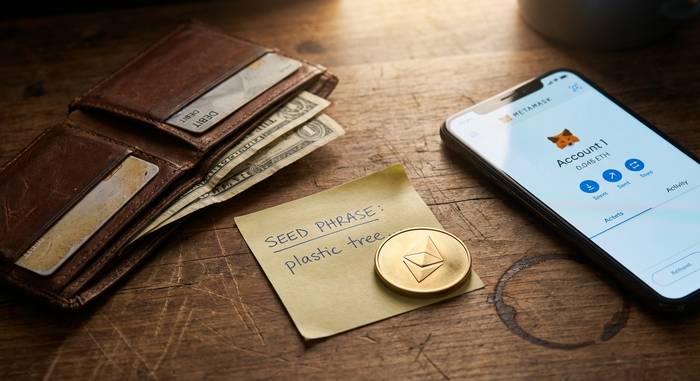
First thing: grab a wallet. MetaMask handles Ethereum and most Web3 stuff. Phantom is what everyone uses for Solana. Both are free browser extensions. Install one, set up an account, and write your seed phrase down on actual paper. Not your notes app. Not a screenshot. Paper. Stick it somewhere safe.
Next up, buy a little bit of ETH or SOL. You can do this right inside the wallet or through Coinbase. Only spend what you'd be fine losing completely. I'm dead serious. Think of it as paying tuition to learn something new.
Then go try something. Swap some tokens on Uniswap. Mint a free NFT on Zora. Cast a vote in an ENS DAO proposal. You're not trying to get rich here. You're trying to feel how these tools compare to the regular internet versions. That hands-on experience is worth more than reading ten articles.
Last thing: stay safe out there. Don't ever share your seed phrase with anyone. Ignore every DM promising free tokens. Bookmark the sites you actually use so phishing URLs can't trick you. And if something promises guaranteed returns? Run. In Web3, that's a scam roughly 100% of the time.
I'll be straight with you: your first few times will feel awkward and slow. Transactions need time to confirm. Gas fees pop up out of nowhere. Error messages read like they were written by an alien. Totally normal. It gets better every year but it's still pretty rough around the edges.