10 Best Crypto Exchanges in India for 2026: Fees, INR Deposits, and Crypto Trading Platform Guide
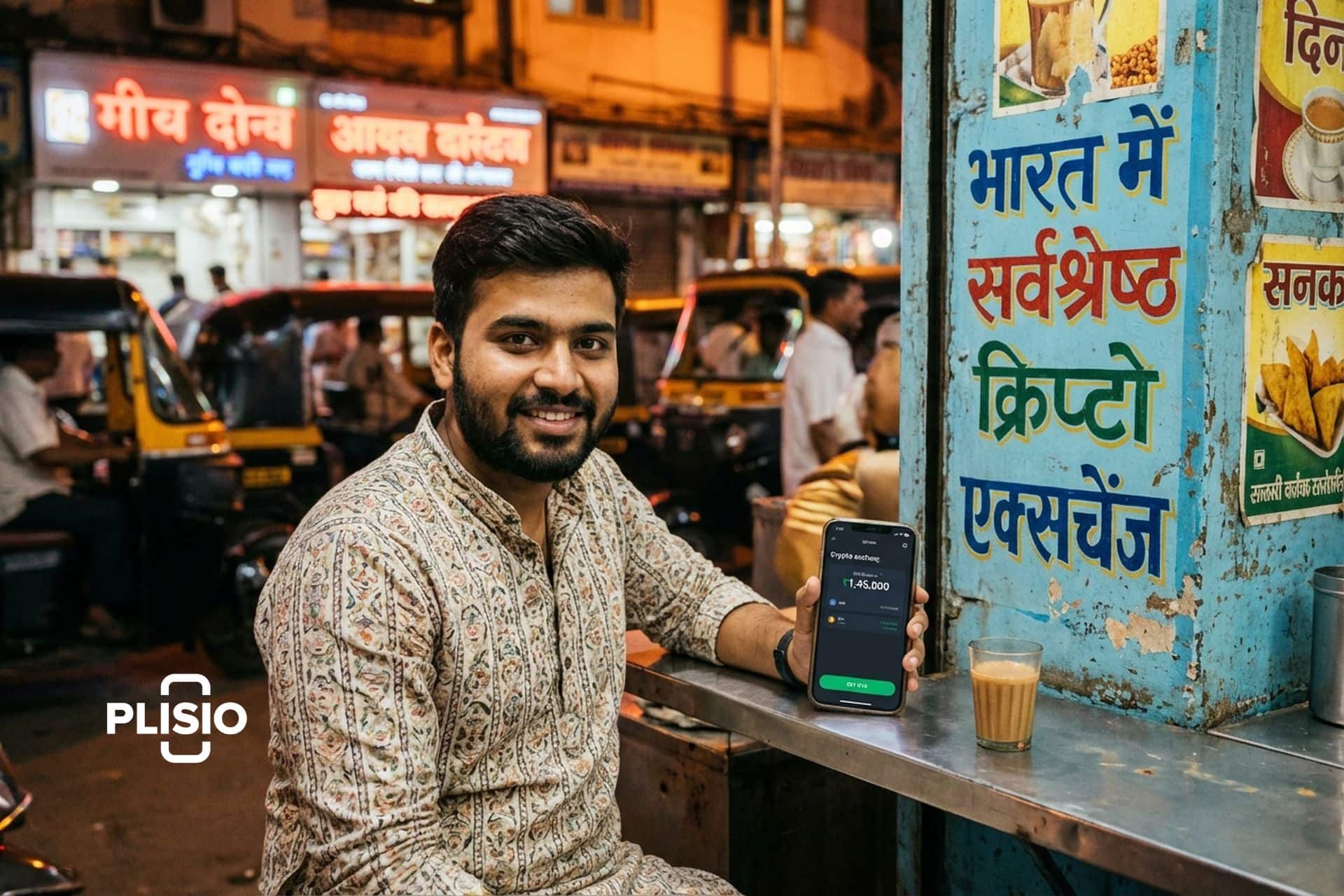
India taxes crypto at 30%. No offsets, no deductions, no mercy. On top of that, a 1% TDS gets clipped from every transaction above the threshold. And yet, 119 million Indians own crypto, making India the number one country in the world by user count. Transaction volume hit $2.36 trillion. CoinSwitch alone claims 25 million users. CoinDCX has 14 million. The appetite for bitcoin and altcoins is massive, even with one of the harshest tax regimes on the planet.
The question is not whether to buy crypto in India. The question is where. Some exchanges let you deposit INR via UPI in seconds. Others push you to P2P, which works but takes longer and carries scam risk. Some are FIU-registered with ISO certifications. Others operated for years without registering and got slapped by regulators. And then there is WazirX, which lost $230 million in a hack and is still sorting out recovery.
This guide ranks the best crypto exchanges in India for 2026, compares fees, explains the tax situation, and covers the regulatory landscape so you know exactly what you are getting into before you start crypto trading.
Best crypto exchanges in India: comparison table
| Exchange | Trading fee | Coins | INR deposit | FIU registered | Best for |
|---|---|---|---|---|---|
| CoinSwitch | ~0.1-0.5% | 400+ | UPI, bank transfer | Yes | Biggest user base, beginners |
| CoinDCX | 0.2% flat | 500+ | UPI, bank transfer | Yes | Low fees, futures trading |
| Mudrex | 0.1-0.2% | 650+ | UPI, bank transfer | Yes | Coin sets, INR futures |
| ZebPay | 0.1-0.2% | 100+ | UPI, IMPS, NEFT | Yes | Earn program (8.5%), cold storage |
| Giottus | 0.1-0.2% | 200+ | UPI, bank transfer | Yes | Tax filing integration |
| Binance | 0.1% | 500+ | P2P only (INR) | Not fully | P2P trades, global liquidity |
| Kraken | 0-0.26% | 200+ | Not INR direct | Not FIU | Advanced trade, margin |
| WazirX | 0.2% | 200+ | UPI, bank transfer | Yes | Familiar interface (use with caution) |
| Unocoin | 0.4-0.7% | 50+ | UPI, bank transfer | Yes | OG Indian exchange (since 2013) |
| KuCoin | 0.1% | 700+ | P2P only (INR) | Restricted | Coin selection, derivatives |
All fees are for standard spot trades. Express and instant buy features charge higher spreads. Exchanges marked "P2P only" for INR mean you cannot deposit rupees directly. You buy crypto from another user through the platform's peer-to-peer marketplace instead.
How to choose the right crypto exchange in India
FIU registration is your first filter. As of 2026, 49 platforms hold FIU-IND registration in India. After March 2023, every crypto exchange operating here must register under the Prevention of Money Laundering Act. 75% of Indian crypto users come from non-metro cities, so local-language support and UPI access matter more than advanced features. In early 2024, the FIU blocked access to nine foreign exchanges including Binance, KuCoin, and OKX for non-compliance. Binance later registered and was unblocked, but the message was clear: use FIU-registered platforms or risk losing access mid-trade.
INR deposit method matters more than you think. UPI is instant and free on most Indian crypto exchanges. Bank transfers via IMPS or NEFT also work, though settlement can take longer. P2P is available on Binance and KuCoin for INR, but you are dealing with individual sellers, not the exchange itself. Prices on P2P can be 1-3% above market, and dispute resolution is slow.
The 30% tax is unavoidable, but fees are not. CoinDCX at 0.2% per trade is cheap. Unocoin at 0.4-0.7% is not. On Rs 10 lakh ($12,000) in monthly trades, the difference between 0.1% and 0.5% fees is Rs 4,000 ($480) per year. That money compounds.
Check if you can actually withdraw your crypto. CoinDCX restricts crypto withdrawals to external wallets. That is a dealbreaker for users who believe in self-custody. CoinSwitch, ZebPay, and Mudrex allow withdrawals. Always verify before depositing.

CoinSwitch: India's largest by user count
25 million registered users. FIU-registered. ISO 27001 certified. CoinSwitch (formerly CoinSwitch Kuber) supports 400+ cryptocurrencies with INR settlement for both spot and futures trading.
What sets CoinSwitch apart is accessibility. Minimum investment is Rs 100. UPI deposits are instant. The app design targets complete beginners. CoinSwitch Alpha handles tax filing assistance, and there is a Crypto SIP feature for recurring automated buys, similar to mutual fund SIPs that millions of Indians already use.
The platform also runs a Rs 600 crore ($72 million) recovery and insurance program called CoinSwitch Cares. Trading fees sit around 0.1-0.5% depending on the product. For Indians who want the simplest possible entry point into crypto, CoinSwitch is where most people start.
CoinDCX: lowest fees among major Indian exchanges
14 million users. FIU-registered. CoinDCX charges a flat 0.2% on spot trades, making it one of the cheapest options for active crypto trading in India. The platform supports 500+ cryptocurrencies and offers futures trading alongside spot.
The referral program pays 20% lifetime commission on trading fees from referred users, which is generous by industry standards. Customer support is responsive for an Indian exchange, which matters in a market where many platforms have thin support teams.
The major limitation: CoinDCX does not allow crypto withdrawals to external wallets. Your coins stay on the platform. If self-custody matters to you, this is a non-starter.
Mudrex: best for INR futures and coin sets
3 million users. FIU-registered. ISO 27001 and SOC 2 Type 2 certified. Mudrex stands out because it lets you trade futures in INR directly, without converting to USDT first. That simplicity matters when you are already dealing with 30% tax and 1% TDS.
Mudrex offers 650+ coins and "Coin Sets," which are curated crypto baskets similar to mutual fund thematic portfolios. Instead of picking individual tokens, you buy a pre-built set tied to a theme like DeFi, Layer 2, or AI tokens. The platform also includes a tax calculator and fear/greed index.
The 0.1-0.2% fee range is competitive. Mudrex Prime members with higher trading volume get reduced fees and dedicated relationship managers.
ZebPay: best earning program and security
6 million users across 160+ countries. ZebPay has been around since 2014, making it one of the oldest Indian crypto exchanges still operating. The platform survived the 2018 RBI banking ban, which is a track record that newer exchanges cannot match.
The Earn program offers up to 8.5% returns on crypto holdings. ZebPay stores 98% of funds in multi-signature cold wallets with insurance protection. The exchange supports 100+ cryptocurrencies with over 400 trading pairs.
UPI, IMPS, and NEFT deposits in INR are all available. CryptoPacks offer curated portfolio options with built-in analytics. For users who want to earn passive income on their crypto while keeping it relatively safe, ZebPay combines both in one platform.
Giottus: best for tax compliance integration
Chennai-based. FIU-registered. Giottus supports 200+ cryptocurrencies and has built its niche around making the tax side less painful. The platform integrates directly with tax filing tools, generating reports that map to ITR forms. Given that Indian crypto traders face 30% flat tax plus 1% TDS, this saves real time during filing season.
Trading fees sit at 0.1-0.2%. UPI deposits are free and instant. The interface is more functional than flashy, aimed at users who care more about getting the numbers right than seeing green candles on a chart. Giottus also runs educational programs for new Indian crypto traders.
P2P trading: why it still matters in India
Your bank says no. UPI payment to CoinSwitch gets returned. HDFC, ICICI, some of the biggest names in Indian banking have been known to block crypto transactions even though the Supreme Court ruled the RBI ban unconstitutional in 2020. When that happens, P2P is plan B.
On Binance or KuCoin P2P, you browse sellers listing crypto for INR. Pick one. Send rupees via UPI or bank transfer. The exchange locks the seller's crypto in escrow until you confirm payment. Sounds clean. In practice, sellers add 1-3% markup over spot price. Disputes take days to resolve. Scammers exist, especially targeting first-time buyers.
Rule of thumb: if your bank allows direct UPI deposits to an FIU exchange, use that. Faster, cheaper, no counterparty risk. If your bank blocks it, P2P works but pick verified sellers with 95%+ completion rates and never release payment until the escrow shows confirmed.
The WazirX situation: what happened and where it stands
July 2024. A single transaction wiped $230 million from WazirX. The attackers hit a multi-signature wallet managed jointly by WazirX and custody provider Liminal. Blockchain investigators traced the hack to Lazarus, the North Korean group behind some of the biggest crypto thefts in history.
What followed was chaos. Withdrawals frozen. User complaints flooding social media. Indian courts stepping in. And a bitter public fight between WazirX founder Nischal Shetty and Binance over who actually owns the exchange. Binance said the acquisition never closed. Shetty disagreed. Users caught in the middle had no idea who to blame.
As of early 2026, WazirX has resumed trading (October 2025). About 85.5% of user balances were restored, with the remaining 15% converted into Recovery Tokens that may pay out as funds are recovered. Of the $234.9 million stolen, only about $3 million has been frozen. If you already have money stuck on WazirX, you are watching the courts. If you are choosing a new exchange today, CoinSwitch, CoinDCX, and Mudrex do the same things without the unresolved $230 million hole in the balance sheet.
Unocoin: the original Indian crypto exchange
2013. That is when Unocoin launched. Before CoinSwitch existed. Before CoinDCX. Before the RBI ban, the Supreme Court reversal, and the 30% tax. Unocoin is the cockroach of Indian crypto exchanges: unkillable.
Fees are not cheap. 0.4-0.7% per trade, roughly double CoinDCX. Only 50+ coins, which limits your altcoin options. But UPI works, bank transfers work, and the interface is built for people who want to buy bitcoin every month and forget about it. Systematic investment plans. No leverage. No futures. No complexity.
If you are a long-term holder who wants a platform that has survived literally every crisis the Indian crypto industry has thrown at it, Unocoin has earned that trust the hard way.
How INR deposits work on Indian exchanges
Three ways to get rupees onto an exchange. Four if you count P2P.
UPI is king. Scan QR, enter UPI ID, money hits the exchange in seconds. Zero fees on CoinSwitch, CoinDCX, Mudrex, ZebPay, and Giottus. Google Pay, PhonePe, Paytm. Whatever app you already have probably works. Nine out of ten Indian crypto buyers use this.
Bank transfers (IMPS, NEFT, RTGS) handle larger amounts. NEFT settles in batches. RTGS is real-time above Rs 2 lakh. First-time users usually need a one-time bank verification step. Takes a few hours to set up, works fine after that.
Cards? Available on some platforms. Usually 1-3% surcharge. Bad deal for regular buyers. Makes sense if you need to buy right now and your bank is blocking UPI to the exchange.
P2P on Binance and KuCoin is the fallback when all else fails. Covered in the P2P section above.
Crypto tax in India: the 30% flat rate and 1% TDS
India runs one of the most aggressive crypto tax regimes in the world. Here is how it works:
30% flat tax on gains. Sell bitcoin for a profit? 30% goes to the government. No slab rates, no deductions, no offsets from other losses. If you lose money on ETH and make money on BTC, you cannot net the two. Each asset is taxed independently. Add a 4% health and education cess on top.
1% TDS on every transaction. When you sell or transfer crypto above Rs 10,000 (or Rs 50,000 for specified persons), the exchange deducts 1% at source and sends it to the government. You can claim it back when filing taxes, but it hits your liquidity in the moment.
No loss carry-forward. Lost money trading? You cannot carry that loss to the next financial year. Gone.
| Tax type | Rate | Applies to |
|---|---|---|
| Capital gains | 30% flat | Any profit from selling/swapping crypto |
| TDS | 1% | Transactions above Rs 10,000 threshold |
| Cess | 4% on tax | Applied on top of the 30% |
| Surcharge | 10-37% | High-income individuals (above Rs 50 lakh) |
| Loss offset | Not allowed | Cannot offset crypto losses against gains |
The combined effective rate for high earners can exceed 40%. Indian exchanges like CoinSwitch, CoinDCX, and Mudrex handle TDS deduction automatically. Foreign exchanges like Binance and Kraken do not, meaning you must file and pay TDS yourself.

How India regulates crypto in 2026
Short version: legal but messy. You can buy, sell, and hold crypto in India without breaking any law. The regulatory framework is another story.
April 2018. RBI tells banks to stop servicing crypto exchanges. Industry panics. March 2020. Supreme Court says the ban was unconstitutional. Banks start processing crypto transactions again, slowly. Some still drag their feet or block payments outright in 2026. Nobody has been charged for owning crypto. The legal risk is zero. The banking inconvenience is real.
March 2023 brought the FIU crackdown. Every exchange operating in India had to register with the Financial Intelligence Unit under PMLA. KYC, suspicious transaction reporting, the works. Early 2024: the FIU blocked nine foreign platforms that ignored the requirement. Binance, KuCoin, Huobi, OKX, all gone. Binance eventually registered and got access back. The rest are still blocked.
Here is what India does not have: a crypto bill. The Cryptocurrency and Regulation of Official Digital Currency Bill was listed in Parliament in 2021. Never introduced. Never debated. As of April 2026, crypto regulation runs through the tax code, PMLA, and FIU rules stitched together. No standalone framework exists.
Will that change? India watches the EU MiCA rollout and Singapore's licensing system closely. A dedicated Indian law would probably cover exchange licensing and custodian standards. The digital rupee CBDC pilot keeps expanding. Some policymakers want to cut the 30% tax to bring traders back from offshore platforms. Whether any of this makes it into the next Union Budget is anyone's guess.